youtube.nixfred.com nixfred.com
Topic

Health

Everything tagged Health.

24videos

← All videos

1:41:26
Trace Institute

Traces of the Other: Are DMT Entities Real? Donald Hoffman and Andrew Gallimore in Conversation

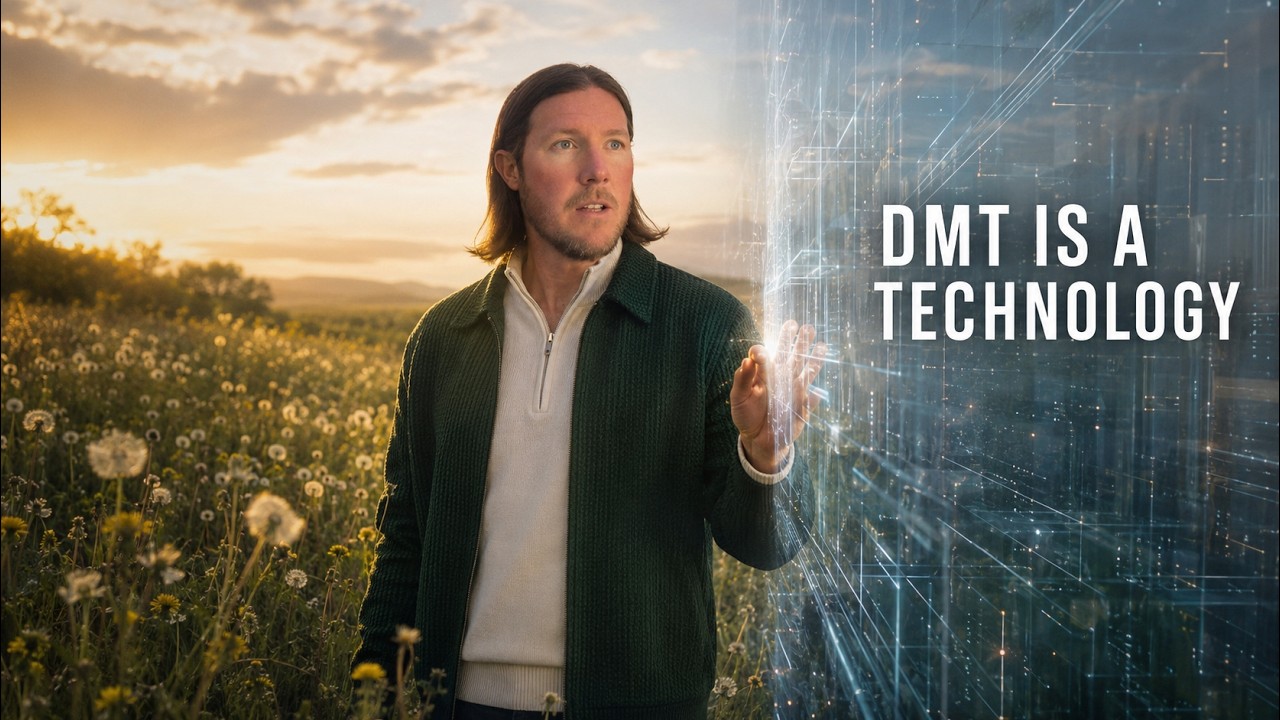
Cognitive scientist Donald Hoffman (UC Irvine, interface theory of perception, The Case Against Reality) and neurobiologist Andrew Gallimore (Okinawa Institute of Science and Technology, co inventor of the extended state DMTx protocol) spend an hour and forty minutes on stage in Los Angeles asking whether DMT entities are traces of conscious agents that are always there and normally imperceptible. They arrive from opposite directions and neither hides it. Hoffman builds from formal mathematics: observers as Markov chains, a trace as the dynamics a big system induces on a small window, and the Trace Institute's new claim that the trace relation gives a logic on all possible observers, a logic of zero surprise that recurses upward into agency and, he says, already shows the outlines of time dilation and length contraction. Gallimore builds from pharmacology: the world space, the consensus reality attractor basin, and DMTx, the target controlled infusion protocol he developed with Rick Strassman that turns a three to five minute breakthrough into an open ended experimental window, now validated at Imperial College London. The two lock together at the perception kernel, and Gallimore says the whole DMT phenomenology fell out of the mathematics. The back half is the sharp part: Hoffman tells the story of the swami who scored exactly zero in his lab, says the recursive trace logic just told him embodiment is measure zero and he is losing sleep over it, and names the one experiment that would move the field. An audience member lands the best objection of the night about sub agents and Fourier transforms. This page rebuilds the whole conversation in order, with both voices, and puts the honest assessment of what is established versus promissory at the end where it belongs.

SciencePhilosophyPhysicsJul 22, 2026
41:55
Human Chess

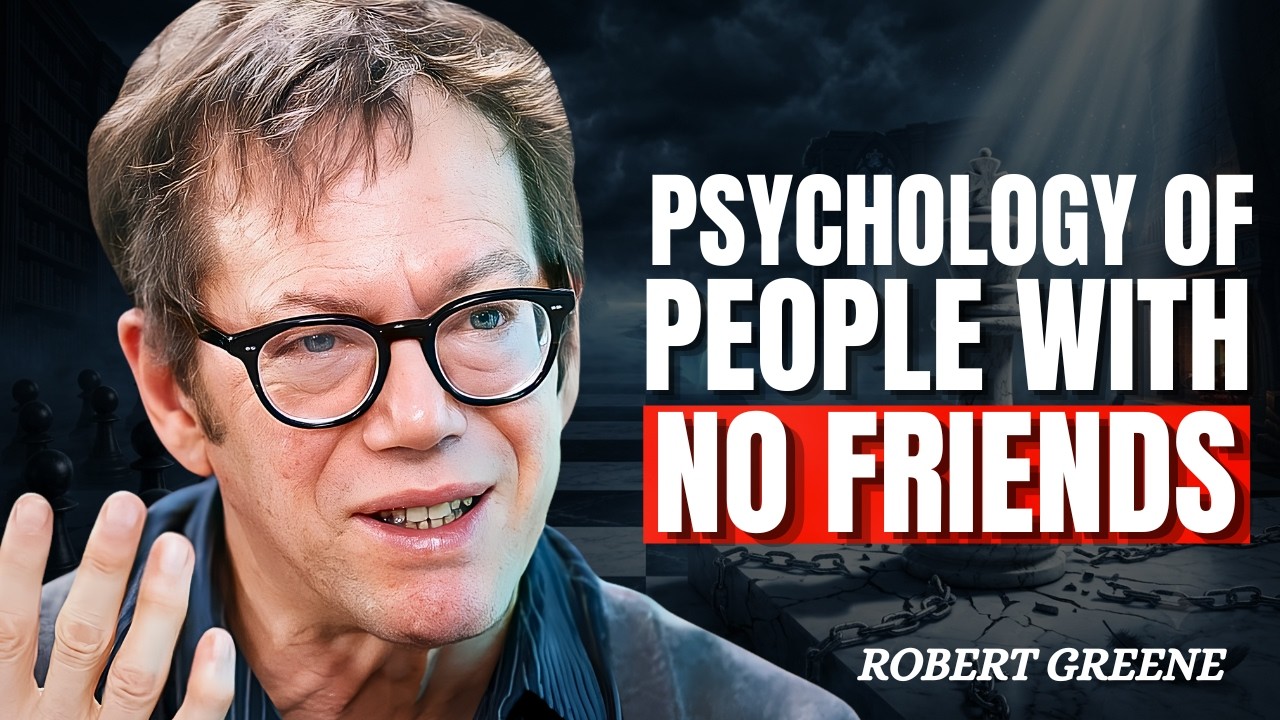
People Who Don't Have Friends Share These Five Personality Traits | Robert Greene Motivational

A 42 minute speech arguing that the person with very few friends is usually being read wrong: the empty calendar is often a decision rather than a verdict. It builds the case as five personality traits delivered in a fixed order, each presented as the precondition for the next. They value solitude over social approval, trust slowly and judge on consistency rather than charm, refuse fake relationships and hold their standards at the first compromise, become emotionally independent so confidence comes from action rather than applause, and speak less while observing more. A sixth movement ties them together into purpose over popularity. Robert Greene is invoked six times as the authority without a single book, law, or quote being named, so this page traces every one of those appeals back to where the argument actually lives, and weighs the video's central distinction between chosen solitude and imposed isolation against what the research says.

PhilosophyCultureHealthJul 15, 2026
36:17
Andrew Huberman

Essentials: Tools for Hormone Optimization in Males | Dr. Kyle Gillett

Andrew Huberman and physician Dr. Kyle Gillett give a full, quantitative field guide to optimizing male hormones across a lifespan. They start with what to measure in blood work (testosterone, SHBG, free testosterone, DHT) and work outward through diet, fiber, caloric restriction, stress, and exercise, then into the supplement stack that raises hormones without suppressing your own production: creatine, betaine, L-carnitine, boron, Tongkat Ali, and Fadogia agrestis, with specific doses. The back half covers low dose testosterone therapy and its whole body monitoring burden, clomiphene and SERMs, alcohol and aromatase, low dose tadalafil for the prostate, and how to fight hair loss without wrecking libido. The recurring theme is that a higher testosterone number is not automatically better, and the prescription tools demand real monitoring.

HealthScienceJul 2, 2026
2:33:25
The Sleepy Scientist

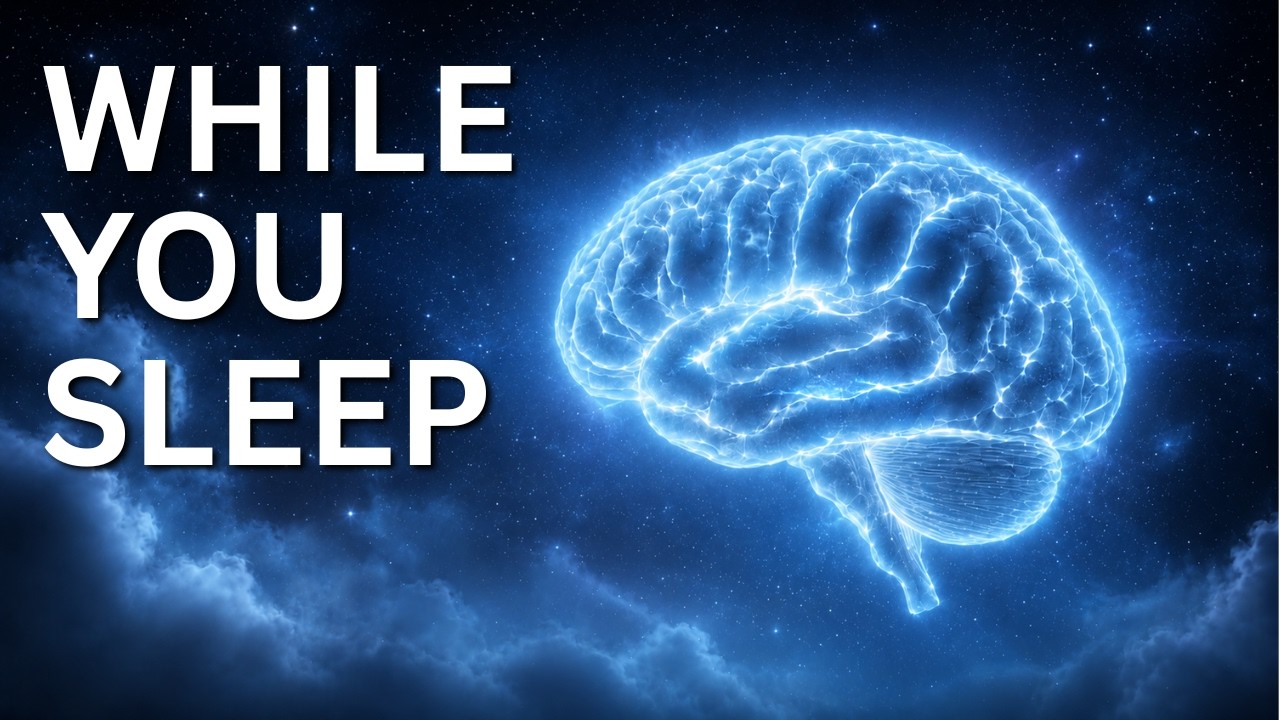
What Your Brain Does While You Sleep | The Sleepy Scientist

A calm, two and a half hour tour through modern sleep science: the circadian clock and sleep pressure that decide when you get tired, the brainstem circuitry that flips the brain from waking to sleeping, the NREM and REM architecture of a night, what each stage does for memory, forgetting, and emotion, why dreams feel so convincing, the glymphatic system that may wash metabolic waste from brain tissue during sleep, and how all of it changes across a lifetime. It names its sources throughout, from Hans Berger's first EEG to Maiken Nedergaard's glymphatic research, while keeping careful about what is established versus still being studied.

ScienceHealthJun 30, 2026
2:59:48
Andrew Huberman

Movement Practice to Strengthen Your Mind-Body Connection | Ido Portal

Andrew Huberman hosts movement teacher Ido Portal for a nearly three hour conversation that is less about exercise than about the internal models the nervous system runs. Portal argues the real object of practice is the body, emotional, and conceptual schemas, which either refine toward high resolution or harden toward a black and white world he links to depression. They work through his distinctions of discipline versus will, motivation versus play, and low versus high resolution, with practical protocols like the practice of will, the softening loop for resisting pulls like social media, and holding multistability. Huberman brings the neuroscience alongside, the anterior midcingulate cortex, allostasis and the body budget, antagonistic hypothalamic circuits, awe research, and fast sensory and motor plasticity, keeping it grounded and actionable. The result is a paradigm shift toward treating the whole day as practice and keeping every model refined by novelty and attention.

HealthSciencePhilosophyJun 29, 2026
11:24
TED

What Sitting All Day Does to Your Brain and Body | Keith Diaz | TED

Exercise scientist Keith Diaz argues that being highly sedentary is toxic, and that a daily workout cannot cover for a still day. The average adult now sits or is idle 187 days a year, and even elite bodies unravel fast: three days of bed rest costs athletes about 20 percent of their aerobic fitness, and 40 days ages a healthy heart like 50 years. His fix is small and frequent movement, since muscle is a metabolic sponge for blood sugar that dries out when idle. His lab found a five minute walk every half hour cut the post meal blood sugar spike by about 60 percent, and when 20,000 people tried movement breaks, they stayed for how it made them feel, energized and clear instead of drained.

HealthScienceBusinessJun 29, 2026
14:26
SOUP MOTO

I Learned More in 2 Hours Than 20 Years - How to Wheelie

Soup Moto has ridden dirt bikes since he was four years old, moved up through a 65, an 85 and a 125, and still could not do a real wheelie, only what he calls a crappy power wheelie done without ever covering the rear brake. So he asked his friend LoMoto, a supermoto stunt rider, for a lesson, and under two hours later he was hitting balance point and riding with a hand off the bars. The technique that unlocked it is the shift lock: hold your left toe up under the shift lever for the entire wheelie, which keeps the bike in second and anchors your body to the machine so your hands can go extremely light, because a death grip on the bars is an unintended steering input. Around it sits a full stack of cues, second gear instead of first because a spinning front wheel is what holds you steady side to side, taking the free play out of the rear brake before you pop the clutch so the pedal is live, sliding back on the seat, never pulling yourself forward like a pull-up, and reading the fork tubes against the horizon as a balance point gauge that doubles as a speed trend indicator. This page rebuilds the whole lesson cue by cue, in order, with the drill ladder LoMoto actually used and a before and after ledger of every rider input.

CultureHealthScienceJun 4, 2026
1:50:37
Doug Bopst

You’re Sabotaging Your Future Without Even Knowing It | Chase Hughes

Behavior and influence specialist Chase Hughes joins Doug Bopst for a long, practical conversation about the quiet ways people sabotage their own future. Hughes turns his interrogation and profiling toolkit inward, arguing that most of what we call fate is unconscious programming, and the whole game is making it conscious so it becomes a choice. He hands over concrete tools: the dopamine map, the childhood development triangle, the FATE model for leading your animal brain, neurogenic tremors for trauma, and the butler of your future self practice for discipline. Bopst, who rebuilt his life after addiction and prison, tests every idea against his own recovery, and the two also dissect how modern platforms keep people pacified, distracted, and sedated.

HealthCareerCultureMay 1, 2026
1:31:01
The Ezra Klein Show

The More You Study Consciousness, the Weirder It Gets | The Ezra Klein Show

Ezra Klein talks with the science writer Michael Pollan about his new book, A World Appears, the record of five years touring the science of consciousness. They walk the whole arc: a beeper experiment that catches the banality of inner experience, William James and the stream of consciousness, anesthetized plants and plant neurobiology, the evolutionary case that consciousness handles uncertainty too complex to automate, Alison Gopnik's lantern versus spotlight consciousness, and the discovery that feeling lives in the body. The conversation moves to a brain scan showing a thought firing four seconds before awareness, global workspace theory, the creative power of the wandering mind, and then the far edges, idealism and panpsychism and the brain as a radio receiver rather than a generator. It closes on a Copernican redefinition of the human, squeezed between conscious animals and seemingly conscious machines, on attention as a contested collective resource, and on wonder and the don't know mind rather than any answer.

PhilosophyScienceHealthMar 31, 2026
37:30
The Functional Melancholic

Notes From A Functional Outsider

A quiet, thirty seven minute spoken essay on how much effort it takes just to look like you are not losing it, and how to keep functioning in a world you have stopped believing in. The narrator threads his own introvert's melancholy through three thinkers: Fernando Pessoa, the invisible Lisbon clerk who kept a crowd of selves inside one anonymous life; Arthur Schopenhauer, whose porcupine's dilemma captures the tax we pay for company; and Diogenes, who dropped every mask and told Alexander the Great to stand out of his sunlight. The through line is the functional outsider, the person who keeps paying the bills and answering the emails while withdrawing to a fortress inside their own head. It argues for a lonely middle distance, cold enough to be honest and warm enough to survive, where the needles of the world are too short to draw blood.

PhilosophyCultureHealthMar 13, 2026
54:46
Veritasium

The asbestos problem is worse than we thought

Asbestos is a rock you can weave, and that single uncanny property is the whole story. Veritasium opens with researchers crawling over bright blue mineral outside Las Vegas, picking up something that looks like fluffy cotton but will not burn, then widens out into a 55 minute investigation of how a naturally fireproof mineral became the most useful and the most lethal building material of the twentieth century. The video does three things at once. It explains the chemistry, why a silica tetrahedron makes a rock and why a tiny mismatch between two mineral layers makes that rock curl into weavable fibers.

ScienceHealthFeb 17, 2026
3:03:24
Danny Jones

Harvard Doctor: “I Witnessed a Test That Shouldn’t Be Possible” | Diane Hennacy

Diane Hennacy Powell trained in medicine, neurology and psychiatry at Johns Hopkins, sat on the Harvard Medical School faculty, and has studied autism since 1987. Over three hours with Danny Jones she walks the whole arc of how a Harvard psychiatrist ended up testing non speaking autistic children for telepathy, the research that became the seed of The Telepathy Tapes, and what she recorded when a teenage girl named Haley returned 165 of 172 randomly generated digits across six hours of controlled testing. Along the way the conversation covers the hippocampus and the brain's spatial map, a woman strangled into permanent amnesia, ketones and Navy diver seizures, Oliver Sacks and the twins who traded twelve digit primes, astrocytes and microtubules, biophotons and nasal infrared light, the Antikythera mechanism, and a Scottish woman who can smell Parkinson's twelve years early. Hennacy is precise about where she is confident and where she is not, names the materialist explanation she takes most seriously for her own data, and says out loud which controlled test she has not yet run. This page rebuilds the entire conversation in its own order, with an honest look at where the science actually sits placed at the end.

ScienceHealthPhilosophyFeb 2, 2026
1:02:34
Jules

Ego Death

Jules spends an hour rebuilding samsara, the four noble truths and the eightfold path from the ground up, then turns all of it on himself. He runs from the wobbly axle of dukkha to the vultures that will eat his corpse, to the dead internet as a field of personal cemeteries, to a marketing machine that needs your ego hungry so it can keep selling you the next thing. His conclusion is that the title is a lie: there is no ego to kill, only a mirage to see through, and the practice is not killing desire but choosing which desires you keep. He ends up taking the Bhagavad Gita over nirvana, and the Desiderata line that hung in his grandparents' house: you are a child of the universe, no less than the trees and the stars.

PhilosophyCultureHealthDec 23, 2025
24:01
Veritasium

Why People Are So Confident When They're Wrong

Veritasium uses rogue trader Nick Leeson, whose hidden bets sank Barings Bank for $2.8 billion, as the spine of an argument that overconfidence is the most dangerous human bias. It walks through the calibration research showing people who feel 90% sure are right only 75% of the time, debunks the famous Mount Stupid graph that everyone mistakes for the real Dunning-Kruger curve, and shows overconfidence is partly a side effect of finite working memory. The twist is that overconfidence survived evolution because it wins status and triggers reward activity in listeners' brains, even when it cannot deliver. The fix is not more knowledge but feedback, calibration, and the humility to listen hardest to people who disagree with you.

ScienceHealthBusinessNov 12, 2025
32:34
The Opening

Why you don't actually exist inside your body

A 33 minute essay on the claim that the feeling of sitting behind your eyes is not a report about where you are but a computation your brain runs continuously, and can be edited from outside. It walks the evidence in order: Wilder Penfield's 1955 electrode that made a patient certain someone stood behind her, Michael Persinger's God helmet, Olaf Blanke's 2002 finding that a mild current to the right temporo-parietal junction switches an out of body experience on and off in two second bursts, and Roger Sperry's split brain patients who answered one question two different ways with two hemispheres. Then it pushes past the surgical evidence into DMT quieting the default mode network, and into near death cases: Pam Reynolds describing the bone saw and the song while her EEG was flat, Anita Moorjani's lymphoma remission, and Pim van Lommel's prospective study in which 18 percent of 344 cardiac arrest survivors reported an experience during clinical death. The proposal it lands on is that the brain tunes consciousness rather than manufacturing it, so when the filters fail awareness expands instead of ending.

PhilosophyScienceHealthOct 5, 2025
46:58
Veritasium

Exposing Why Farmers Can't Legally Replant Their Own Seeds

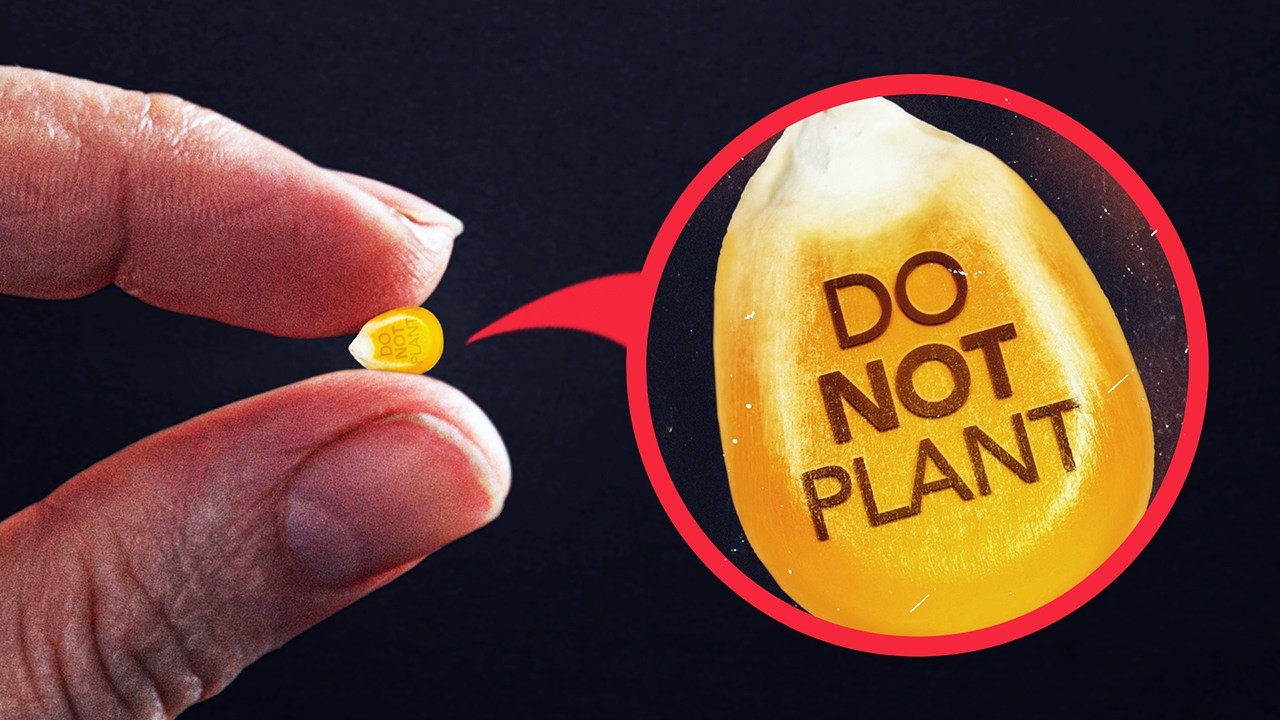
Veritasium traces how Monsanto came to own more than 80% of US seeds, starting from the 1942 discovery of the selective herbicides 2,4-D and 2,4,5-T and the dioxin contamination the company hid from its own poisoned workers and from Agent Orange in Vietnam. It explains the chemistry of glyphosate and Roundup, then how Monsanto fired a salmonella resistance gene into crops with a gene gun to create patented Roundup Ready seeds it could legally stop farmers from replanting. The film documents the enforcement machine of private detectives, the 1-800-ROUNDUP hotline, and over 400 lawsuits, then the 2015 IARC cancer ruling that unlocked the Monsanto Papers showing buried tumor data and ghostwritten safety studies. It ends with Bayer's acquisition, the $289 million Dewayne Johnson verdict, over $10 billion in settlements, and the lesson of what happens when industry captures the science meant to regulate it.

ScienceBusinessPoliticsAug 31, 2025
3:42:08
Aperture

The Philosophers Who Solved the Meaning of Life

A three hour, forty two minute anthology of nine thinkers who each tried to answer one question: what does it mean to live well. Aperture moves through Carl Jung and the shadow, Jung again on addiction and recovery, Sigmund Freud and the invention of therapy, Fyodor Dostoevsky and the man who fought death and won, Carl Sagan warning Congress about a warming planet in 1985, Friedrich Nietzsche and the death of God, Alan Watts and the illusion of time, Diogenes the cynic who owned nothing, Charles Bukowski on the cost of the nine to five, and Marcus Aurelius on stoicism. It rebuilds each thinker's actual machinery, from archetypes and the id to slave morality and the dichotomy of control, and names the honest cracks in each philosophy where the video names them.

PhilosophyCultureScienceAug 16, 2025
2:16:04
André Duqum

How to Embrace the Emotions You Resist & Find Lasting Freedom | Joe Hudson

Executive coach Joe Hudson joins André Duqum on the Know Thyself podcast for a two hour and sixteen minute conversation arguing that the emotions we refuse to feel quietly run our lives, and that the way out is to welcome them rather than fix them. Hudson lays out his core tools: the three brains of head, heart, and gut, the golden algorithm that explains why the same painful pattern keeps returning, and the reframe that an emotion fully felt turns into its clean form, anger into boundaries, fear into aliveness, sadness into love. Along the way they cover raising kids who never learn they are not okay, the voice in the head, what awakening does and does not solve, the VIEW framework for real connection, and apologies and forgiveness as freedom machines. The conversation closes on AI, where Hudson argues that as machines absorb knowledge work and skill work, wisdom work and emotional clarity are what remain valuable.

HealthPhilosophyCultureJul 29, 2025
2:54:55
Aperture

Everything We Dont Know About the Mind

Aperture spends two hours and fifty five minutes on one proposition: consciousness leaves out more than it takes in, and the things it leaves out are the ones that would relieve us if we knew them. Fourteen essays follow, each built on a question the science has not closed, and each one walks the competing theories of the gap and scores them on what they fail to explain. Ego death and the illusion of self, how to actually induce a lucid dream, the character Inside Out left out of a child's head, why a traffic jam forms on a circular track with no obstacle on it, black swans and the difference between Mediocristan and Extremistan, game theory, anti heroes, seven Greek words for love, why we laugh, and nostalgia. The specifics are countable: 55 percent of adults have had a lucid dream and under 1 percent are proficient, the worst jam in history ran 214 miles outside Sao Paulo, one billionaire is 99 percent of a sample's wealth while the heaviest person alive is under half a percent of its weight, and only 10 to 20 percent of human laughter follows anything resembling a joke. It ends inside a contradiction it does not resolve, on whether we exist in time or time exists in us.

PhilosophyScienceCultureOct 18, 2024
38:15
Josh Wolf

Doing Comedy High On Mushrooms | Josh Wolf Stand-Up Comedy

A 38 minute standup set filmed in Portland where Josh Wolf performs high on mushrooms in a loose question and answer format, with his son Jacob onstage as both straight man and caretaker. He rebuilds his best stories: swearing in front of his mom at his first show at 15, the front row wrestler who dared him to lift a kilt, three fights with Jacob that end in a boxing ring and a wax salon, and the family porn rental he still blames on Grandma and Grandpa. Between the filth he lands a genuinely sincere tip speech for the waitstaff, drawn from a life in the food and beverage industry. The running joke is his own memory: he keeps losing the thread and Jacob keeps handing it back, so the callbacks pay off because he forgot he set them up.

CultureHealthJul 29, 2024
25:47
Mulligan Brothers Interviews

The KEY To STOP Overthinking - SHAOLIN MASTER | Shi Heng Yi 2023

Shaolin master Shi Heng Yi, headmaster of the Shaolin Temple Europe, sits down with the Mulligan Brothers to answer one question: how do you stop overthinking? He splits overthinking into a scattered mind and a stuck mind, and argues the fix is not more focus but the trained ability to hold focus and open overview at once, which is what yin and yang not being separable means. The practical method is to turn the mind around and choose a single object, the breath or a slow deliberate movement, so mindful literally means your mind is full of what you chose. From there he widens into a philosophy of living where loss, anger, and fear are always the same feeling in new circumstances, each solved once. Drawing on Shaolin hardening methods that meet pain on purpose, he lands on his core line: life does not get easier, so you get stronger, and you overcome the suffering rather than wait for it to end.

HealthPhilosophyCultureDec 13, 2023
21:48
Veritasium

The Science Behind Dogs' Incredible Sense Of Smell

Veritasium visits a NIST fluid dynamics lab where researcher Matt Staymates photographs air with mirrors, lights and lasers. The hook is dogs: a dog smells by breathing out and in about five times a second, and the turbulent backward exhale is what pulls a fresh scent sample toward its nose, a bellows action that extends reach by roughly a factor of 18. Staymates 3D printed dog style nostrils onto a commercial vapor detector and improved its detection performance 16 to 18 times. From there the video becomes a tour of flow visualization: Schlieren imaging, shadowgraphs that read a bullet's speed and loudness from its shock cone, and laser sheets that reveal invisible gunshot residue and drug contamination. It closes on trace detection, Locard's principle, and mask research that shows exactly how much air escapes a face mask.

SciencePhysicsSecurityDec 24, 2022
52:09
Sublime Minds

Letting Go - Alan Watts

An Alan Watts lecture on letting go, built around one claim: faith is where you let go, not where you hold on. Watts starts from the meaning of the word Buddha, the man who woke up, and the trance of separateness he calls avidya, then argues that clinging is the disease and releasing is the cure, using a falling cat, a chicken on a chalk line, and a man kicked off a precipice. He traces how Indian Buddhism crossed into China, gained humor and Taoism, and became Zen. The second half opens the machinery of Zen training: how a master refuses to give a student anything to hold until the student sees there was never anything to get.

PhilosophyCultureHealthMay 3, 2021
12:52
Aperture

Stoicism: Become Undefeatable

Aperture's primer on Stoicism, built around Zeno of Citium watching his fortune sink in a shipwreck and refusing to be destroyed by it. It reconstructs the whole working philosophy: what Stoicism actually is, the slave, statesman, and emperor who carried it (Epictetus, Seneca, Marcus Aurelius), and the core practices of voluntary discomfort and the dichotomy of control. The spine is a single idea, that you control almost nothing that happens to you but everything about how you respond, walked through the four cardinal virtues and Viktor Frankl's space between stimulus and response. It closes with Nelson Mandela rebuilding rather than avenging after twenty seven years in prison, and with Stoicism living on in modern therapies like REBT and Logotherapy.

PhilosophyCultureHealthApr 30, 2021