At a glance
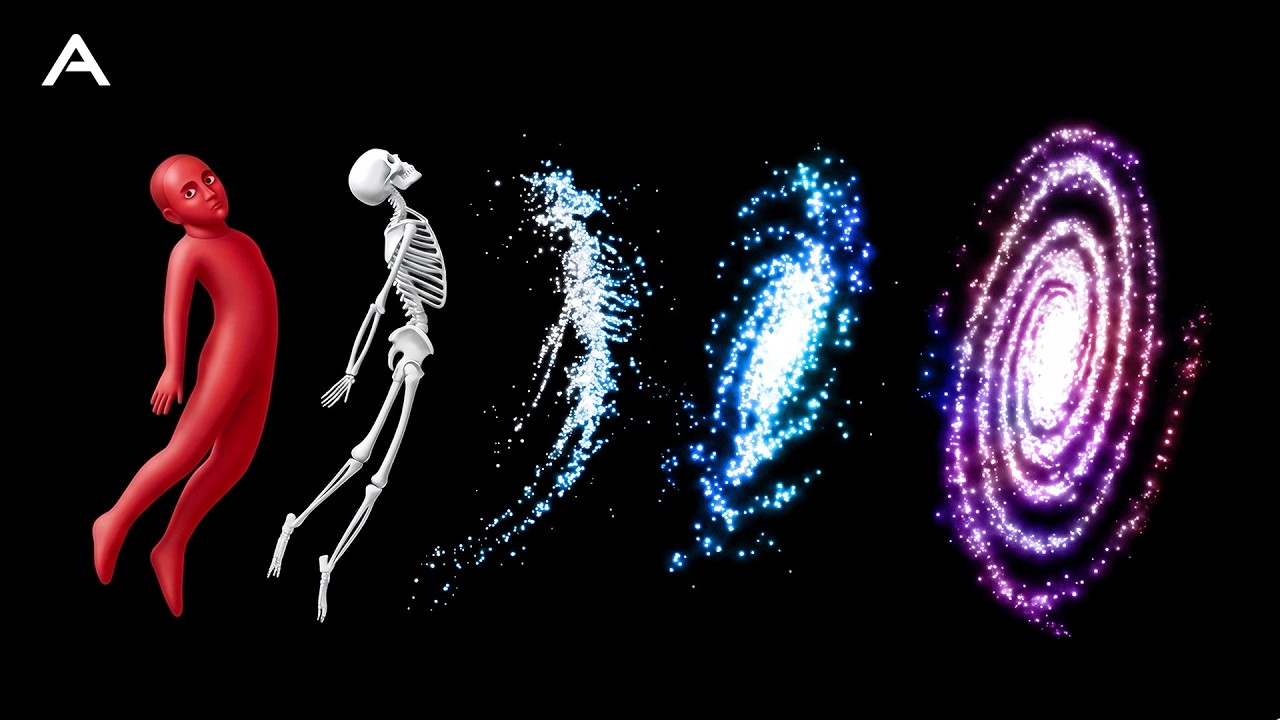
The Mulligan Brothers sit down with Shi Heng Yi, headmaster of the Shaolin Temple Europe, with one question: how do you stop overthinking? His answer is patient and unhurried, and it moves in a straight line. First he splits overthinking into two failure modes, a mind scattered across too many thoughts and a mind stuck grinding one thought forever, and says neither is a problem if you can switch it off at will. The real fix is not to worship focus but to train the ability to hold focus and open overview at the same time, the way a driver watches both the wheel and the whole street. That, he says, is what yin and yang not being separable actually means.
Then he hands over the practice. Instead of following whatever thought shows up, you turn it around and decide what to put on your mind for the next five minutes: the breath, or a slow deliberate movement where you always know where your hands are. That is what mindful means, your mind full of the thing you chose. From there the conversation widens into a whole philosophy of living: acknowledge what happens, learn to tell present from absent, and understand that the feeling of loss, anger, jealousy, and fear is always the same feeling wearing new circumstances. Drawing on Shaolin Kung Fu hardening methods that meet pain on purpose, he lands on the line that carries the whole video: life is not going to get easier, so you make your mind and body stronger, and you overcome the suffering rather than wait for it to end.
The interview, rebuilt in full
The question, and two ways the mind overthinks
The interviewer opens plainly: people want to know how to stop overthinking, or ruminating on things. Shi Heng Yi says the easy answer, right now, would be to learn how to meditate. But he wants to bring it into perspective first, because "overthinking" is not one thing.
The first kind is a mind that fluctuates all the time. There is too much input available and it jumps from one thing to another. He calls it a "restlessness of the mind," continuously jumping, which means it is too much: you are thinking about too many different things at once.
The second kind is the opposite shape. You have only one thing keeping you busy, but you turn it over and over and never come to any conclusion. That is rumination tied to a single subject. Simplified, he says, these are the two problematic states: the scattered mind and the stuck mind.
It is only a problem when you cannot switch it off
Here he makes the distinction that reframes the whole issue. Neither state is a problem in itself. The problem is only the loss of control. If you can regulate it about yourself, so that when you want to be focused you can be focused, when you want to dream you can dream, and when you want to brainstorm you can open up for brainstorming, then you have a range of adjustment and there is nothing wrong. A problem is when you need to stay focused but instead you are shattered. Those are the moments, he says, when it makes sense to learn methods.
Focus is a narrow beam, and you also need a wide one
He is careful not to sell focus as the cure. Focus, he explains, is a limited type of view you deliberately put yourself in. It is the collection of your awareness, the summary of intention gathered into one specific spot so that spot can grow faster or develop faster. All the energy is bundled into a single point. To push something forward, yes, you need focus.
But then the harder question: among all the options a human has, how do you know what to focus on? Should you focus on social media, on family, on business number one or business number two, on wife number one or wife number two? There are so many options, and so what you also need is overview, a sense of your whole life. The wide angle is a different faculty from focus. Focus says "I only watch you." But the deeper you sink into that narrow view, the more you forget that she is sitting there, that your brother is there, that your friends are there.
Both at once: yin and yang cannot be separated
The skill to develop, he says, is holding both at the same time. Knowing who is sitting where, while also knowing exactly which direction you are pointing your words. Something open in this moment, and something focused, together. He reaches for driving as the image. Of course it matters what you do with the steering, the direct focused interaction, but only in interplay with all the other drivers on the street. So which matters more, watching the others or watching your own driving? Both, at the same time. That, he says, is what it means that yin and yang cannot be separated.
Practice them apart first, then let them merge
To reach that union, he says, you sometimes have to practice each side separately. This is a focused state, this is an open state. Get clear and be able to distinguish for yourself: this is focus, it feels like this; this is open, it feels like that. And then comes the magic, combining both into the same moment. That is something everyone has to figure out for themselves, and it is where the real shift happens: you stop living in "either that or that" and start living in "both of it at the same time."
The practical fix: turn the mind around with a chosen object
Now he gets concrete about overthinking. You choose one object. In many cases this is what he calls a "meditation object," and it can be the breath. Instead of following up whatever comes into your mind, which is exactly the problem when there are too many thoughts, you turn it around. You decide what you are going to put onto your mind for the next five minutes. That chosen thing is your meditation object.
So you tell yourself: for the next five minutes I am going to place my attention only on the breath. I feel how the breath enters my body, and I feel how it comes out. The mind is no longer picking the thoughts. You are.
Movement as the object: mindful means the mind is full of what you chose
For people who find the breath too hard, he offers movement instead. Now the meditation object is the movement itself, the up movement, the down movement, but the focus is still there. This is what he means by mindful: you are full of what you do, your mind is full of something, and that something is what you put into it. That is why it is called mindful practice.
"I know exactly where I put my hands. I make it slow." It does not matter what the movement is. What matters is that as long as you do it, you know what you do. You do not leave the movement to coincidence. For two or three minutes you take something into full responsibility and awareness, and you concentrate on it completely.
He is clear this is not about the movement for its own sake. Just doing the movement will not bring you much physical benefit, not yet. The slow movement exists so you can first learn to focus the mind. That is step one, and it is the whole point.
Why mindfulness is the whole game
Then, he says, comes the payoff. After a while you can feel it directly, especially in conversation. You know when you are present and when you are not. You start to notice: right now my awareness is not with you, it is gone. And you feel the difference between "now I am mindful" and "now I am not." That ability to distinguish is why he calls it so essential.
Because, he argues, if there is anything a human can actually do about their life, it can only be done while you are mindful. His blunt line: "If you don't know you have a problem, you can't solve it." That is the reason for all the emphasis on mindfulness. If you do not know what you are doing, your life is a coincidence. And a coincidence is not what a life is supposed to be. It is supposed to be what you put onto your mind, the way you want to see yourself, what you want to achieve in this lifetime. That should be possible, but only if you use the chance that has been placed into your own hands.
| The mind that runs you | The mind you run | |
|---|---|---|
| Who picks the thoughts | The input does. A thought jumps in and you follow it. coincidence | You do. You place the mind on a chosen object. responsibility |
| Range of control | Stuck on or stuck off, no dial. | Focus when you want focus, open when you want to dream or brainstorm. |
| In conversation | Awareness drifts and you are not really there. | You feel presence, and you feel the moment it leaves. |
| Loss and pain | Avoided, so it returns again and again. | Faced in the present moment, then solved for this lifetime. |
| The life it builds | Things happen to you. a coincidence | You become what you put onto the mind. a choice |
Your potential, your action, and the will of destiny
He returns to something he told the interviewer at their first meeting: he strongly believes we all have something that comes from us, that we hold in our own hands. When that potential is merged with your awareness and your action, and then combined with the will of God, or the will of destiny, or destiny itself, then it is going to happen. But if you put something onto the mind that is not in harmony with the will of nature, of God, of destiny, you can try as hard as you like and it will not happen.
Discover your place, and let life run through you
So the discovery, he says, is to find your place in this hugeness and submit. He is quick to correct the word. Submit does not mean bad, and it does not mean you give up. It means it is incredible that something like this exists. It is not giving up on life. It is finally allowing the fullness of life to flow through you. You can read the word many ways, he says, but the one he means is: allow life to run through you. Put another way, what happens happens for a reason. And that is why acknowledgement matters so much, because acknowledgement is the first step of understanding. All of what we go through belongs to the process.
The feeling of loss is always the same feeling
What is the process? Every human, he says, moves through stages of challenges. Take one: loss. When you were a small child and someone took something away, some of you already cried, because even that young you felt what losing means. Ten years later, as a teenager, someone took something away again, and it was the same feeling. Today someone takes something you feel truly belongs to you, and the same feeling comes up. Across all the decades, the circumstances change, but the feeling of loss is always the same. The feeling of loss is the feeling of loss.
The same is true of everything. Whether you are angry that your car got scratched or angry that you lost something or angry that someone took something from you, the anger is the same. There are not fifty kinds of jealousy, only fifty reasons you become jealous, but the jealousy is the same. The anger is the same, the loss is the same, the hate is the same, the joy is the same, the happiness is the same.
The ladder of challenges: loss, then anger, then fear
From this he draws a sequence. Each human is confronted with loss, and the question is how you individually deal with it. As long as you have not found a solution for loss, losing will be part of your challenges over and over again. Once you have found your solution to loss, the next thing shows up: things that make you angry. Small things, big things, always the same anger, until you find the solution, until you can say the anger cannot manage me, it must be the other way around. Anger solved, and the next one arrives: the question of life and death, of fear, until you have solved for yourself how to deal with fear.
- 01Loss. The first challenge everyone meets, from the child whose toy is taken to the adult who loses what feels like theirs. The same feeling wears new circumstances until you find your own solution to it.
- 02Anger. Once loss is handled, anger steps forward. Small things and big things provoke the same anger, until you flip the relationship: the anger no longer manages you, you manage it.
- 03Fear. With anger solved comes the question of life and death, of fear, and it stays until you have worked out, for yourself, how to meet it.
- ·Each solved once, for good. When you truly overcome a level, it is finished. You walk through it one time, and the next thing you feel is a different challenge, not the same one returning.
Shaolin hardening: meeting pain on purpose
He is convinced of this sequence, he says, because it mirrors why the Shaolin Kung Fu training uses hardening methods. Hardening, like the fellow monk the interviewer saw earlier striking himself (the captions render the name as Shi Xuan), uses many tools to get in touch with pain. They take for granted that the pain is coming. When you start these methods, the pain will come, and they want it to come. Why? Because now you can go in. In the present moment, and that is the special part, you find the way to release it.
There is a saying, he adds: when you have overcome a certain level of pain, overcome means it is never coming back, it is finished. You walk through that level of pain once, and the next pain you feel is a different one. So there is a real difference between something showing up and you ignoring it, avoiding it, running from it, and something showing up and you facing it. You face the fear, the jealousy, the pain, the thing you do not like, the fact that you are out of your comfort zone. Because you know that once you overcome it and find your solution, it is solved for this lifetime.
Life does not get easier, you get stronger
This is his suggestion for how to see the methods, and it rests on a saying he clearly loves: life is not going to get easier. Instead your mind and your body become more resistant, more strong. The same situation, met more relaxed, because you have finally found a solution that is within your reach, within your hands.
Overcome the suffering, do not wait for it to end
What keeps him committed after so many years, he says, is exactly this pairing of physical practice with spiritual and mental development, the way the Shaolin Temple frames it. Many institutions and philosophies talk about ending the suffering. Shaolin, as he hears it, talks about overcoming the suffering, and that difference gives him perspective.
Overcome the suffering means the suffering is still going to be there. You are going to lose your mother and your father. You will lose animals and humans you love. You will lose money. People will hurt you even when you do not know what you did wrong. To wait for better times, when the world is completely at peace and you can walk the street with no fear that someone will do something to you, is a fantasy, because the world is just the way it is. But knowing this, preparing yourself, learning useful ways to develop yourself physically and mentally so you can walk through this lifetime, that is available to us. You only have to drop the fantasy that better times are simply going to arrive. As he puts it, if we do not create the better times, nothing is going to happen.
The interviewer's closing reflection
The interviewer closes in his own voice. Overthinking, he says, can plague you at a very random time. You might think you never experience it, and then a downward turn in your mental health arrives and suddenly you overthink random things, the simplest mundane relationship issues, whatever it is. For him, Shi Heng Yi's message is fantastic. He tries to be mindful, tries to be peaceful, and finds that meditation helps. He points viewers to more from the master, thanks the people who support the channel, and mentions that six new projects with Shi Heng Yi and a documentary are on the way, a side of the master nobody has seen before.
Key takeaways
- Overthinking comes in two shapes: a mind scattered across too many thoughts, and a mind grinding one thought with no exit. Both are only a problem when you cannot switch them off.
- The goal is not more focus. It is a dial, focus when you want it, openness when you want it, and eventually both at once, which is what yin and yang not being separable means.
- The practical fix is to turn the mind around. Instead of following whatever thought appears, choose one object, the breath or a slow deliberate movement, and place your attention there for a few minutes.
- Mindful literally means your mind is full of what you chose to put in it. The core skill is learning to tell, moment to moment, when you are present and when your awareness has left.
- If you do not know what you are doing, your life runs on coincidence. Mindfulness is the precondition for changing anything, because you cannot solve a problem you cannot see.
- The feeling of loss, anger, jealousy, and fear is always the same feeling. Only the circumstances change. Growth is finding your own solution to each, once.
- Overcome the suffering rather than wait for it to end. Life will not get easier, so make your mind and body stronger. If we do not create the better times, nothing happens.
Chapters
0:00 Cold open: life is not going to get easier 0:15 The question: have you suffered from overthinking? 0:22 Sponsor break: Mulligan Brothers 2024 sale 1:30 How do people stop overthinking? The easy answer is meditate 2:05 Two kinds of overthinking: scattered versus stuck 3:00 Only a problem if you cannot switch it off 3:55 Focus is a narrow, bundled view 4:45 What should you focus on? You also need overview 5:50 Focus and openness together: yin and yang 7:00 Practice them apart first, then combine 8:15 The meditation object: turn the mind around with the breath 9:40 Movement as the object: mindful practice 11:10 It is mind development, not the movement itself 12:20 Learning to tell mindful from not mindful 13:25 Why mindfulness matters: otherwise life is coincidence 14:45 Your potential merged with the will of destiny 16:00 Discover your place and let life run through you 17:15 Acknowledgement is the first step of understanding 18:00 The feeling of loss is always the same 19:10 Anger and jealousy: the emotion is the same, the reasons differ 20:00 The ladder of challenges: loss, then anger, then fear 21:05 Shaolin hardening: getting in touch with pain on purpose 22:20 Overcome a level of pain for good, and face what you avoid 23:15 Life does not get easier, you get stronger 23:55 Overcome the suffering, do not wait for better times 24:40 Closing reflections and outro
Notable quotes
"The easy answer would right now be: learn how to meditate." (1:32, Shi Heng Yi)
"If this is the range of adjustment you have about yourself, then it's not a problem. A problem is if you need to stay focused but then you're shattered." (3:10, Shi Heng Yi)
"Only this, focus and the openness at the same time, this is what means yin and yang cannot be separated." (6:20, Shi Heng Yi)
"Instead of following up what comes into your mind, we turn it around: you are deciding what you are going to put onto your mind for the next five minutes." (8:30, Shi Heng Yi)
"You are mindful, full of what you do. Your mind is full of something, full of what you have put into it." (9:55, Shi Heng Yi)
"If you don't know you have a problem, you can't solve it." (12:55, Shi Heng Yi)
"If you don't know what you do, your life is a coincidence. And that's not what it's supposed to be." (13:30, Shi Heng Yi)
"You finally allow the fullness of life to flow through you. This is called submission." (16:20, Shi Heng Yi)
"There are 50 different reasons why you become jealous, but the jealousy is the same." (19:20, Shi Heng Yi)
"Once you have overcome it and find a solution for it, it's solved for this lifetime." (22:45, Shi Heng Yi)
"Life is not going to get easier, it's just that your mind and your body become more resistant, more strong." (23:20, Shi Heng Yi)
"If we don't create the better times, nothing's going to happen." (24:30, Shi Heng Yi)
Resources mentioned
- Shi Heng Yi, the interviewed Shaolin master, headmaster of the Shaolin Temple Europe.
- Shaolin Temple Europe, the order and training center he leads, in Otterberg, Germany.
- Shi Heng Yi's TEDx talk, on the five hindrances to self mastery, the wider public talk that made his teaching well known.
- Mulligan Brothers, the interviewers and channel, whose 2024 store sale, Not A Journal, and Memento Mori posters (the ones that remind you you are going to die) are promoted in the video.
- Meditation and mindfulness, the practices at the center of his answer.
- Breath meditation, the first meditation object he suggests.
- Moving meditation and qigong, the slow deliberate movement he offers as an alternative object.
- Yin and yang, his frame for holding focus and openness together.
- Shaolin Kung Fu and its Chan Buddhist roots, the tradition behind the hardening methods he describes.
- Rumination, the psychological term for the second kind of overthinking he names.