The Price of Not Thinking | Why Civilizations Fail
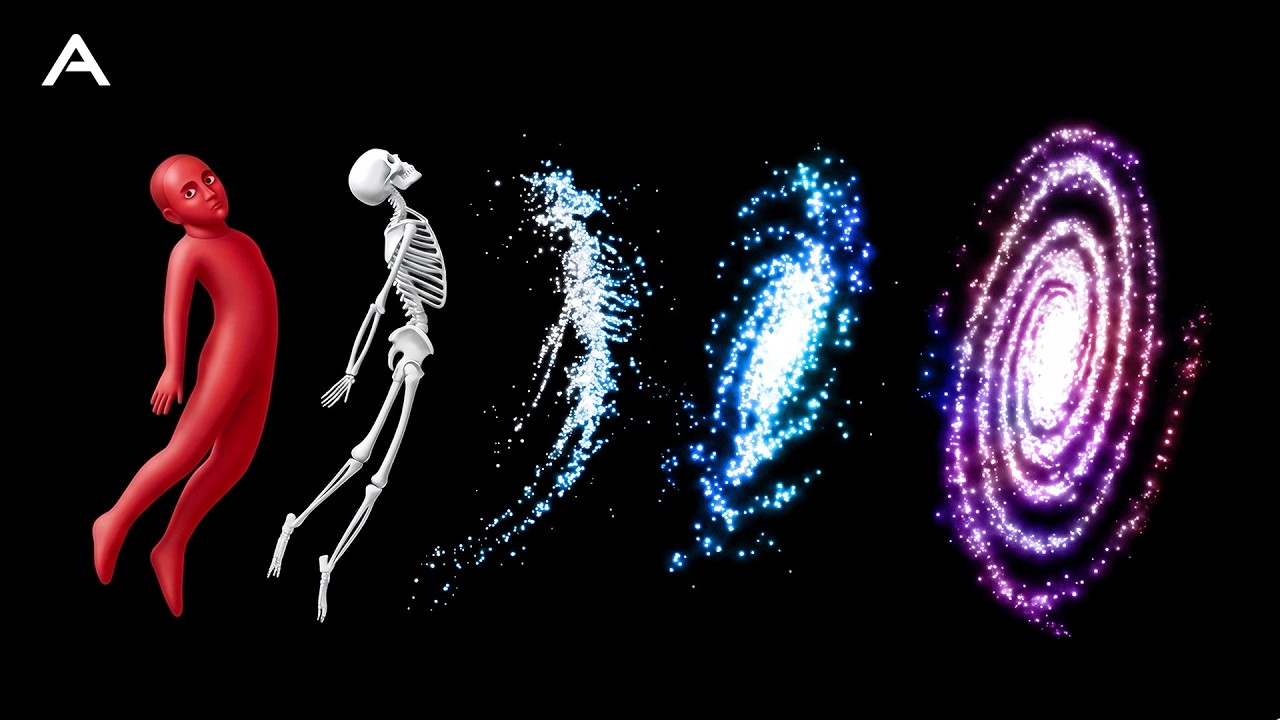
Aperture combines two essays into a feature length argument about why intelligent groups make catastrophic decisions. Part one traces the death of critical thinking to group think and cognitive offloading, the habit of handing memory to Google, navigation to GPS, and now thinking itself to AI. Part two turns documentary, bringing in four researchers to walk through the evidence: collapsing IQ scores in the reverse Flynn effect, attention spans that fell from two and a half minutes to forty seven seconds, an MIT brain scan study showing ChatGPT writers retain less and barely recognize their own words, and a five hundred year old blood libel that shows what a new information technology does to a public that cannot tell print from truth. The thesis is that critical thinking is a muscle a society can lose in a single generation, and the closing note hands the keys back to the viewer, arguing the same tools can be turned back into instruments of thought.
Published Jul 3, 20261:37:02 video47 min readAdded Jul 5, 2026Open on YouTube →
At a glance
Aperture stitches two essays into one feature length argument about why intelligent groups do stupid things. Part one, How to Save Your Mind, traces the death of critical thinking to two forces working together: group think, the pressure to conform that overrides clear judgment, and cognitive offloading, the habit of handing mental work to tools. We gave our memory to Google, our navigation to GPS, and now our thinking itself to AI. Part two, The Death of Intelligence, turns documentary and brings in four researchers to walk through the hard evidence: collapsing IQ scores, attention spans that fell from two and a half minutes to forty seven seconds, an MIT brain scan study showing that people who write with ChatGPT retain less and barely recognize their own words, and a five hundred year old blood libel that shows exactly what a new information technology does to a public that cannot tell print from truth.
The thesis is blunt. Critical thinking is not a permanent possession, it is a muscle, and a society that stops using it can lose it inside a single generation. The video does not end in despair. Its last move is to hand the keys back to the viewer: the same devices that are hollowing out our minds can be turned back into instruments of thought, if we choose to use them that way.
Part one: How to Save Your Mind
Group think, the engine of collective error
History is full of moments that make no sense, whole groups of seemingly intelligent people making choices that look, in hindsight, totally stupid. When we look back we always ask the same thing: what were they thinking? The essay proposes that the question is wrong. Often they were not thinking, or at least not thinking critically.
Group think is the mechanism. It is a psychological phenomenon where the desire for harmony inside a group overrides the ability to think clearly. Under pressure to fit in we stop questioning, we stop thinking for ourselves, and to protect the status quo we may even band together to silence the people we disagree with. That is how individually smart people make irrational choices, and how an entire group can convince itself it is right when it is obvious to any outsider that it is not. The video names the darkest textbook case: group think is often cited to explain why so many ordinary Germans embraced the Nazi party, as propaganda, grievance, and conformity fused into one deadly monolithic mindset.
If you believe in steady intellectual progress you might assume we outgrew this long ago. Not long ago that belief felt reasonable. Today the opposite is true. Instead of fading into the history books, group think is accelerating, and with it the slow erosion of our ability to think at all.
Cognitive offloading, from writing to GPS to AI
For thousands of years humans have used tools to reduce their cognitive load, often to wonderful effect. Writing meant we no longer had to hold everything in memory. Calculators spared us tedious arithmetic. GPS let almost anyone navigate anywhere without studying a map. We store less than we used to because we know the answer is one Google search away. Offloading can free the mind for more important work. Taken too far, it quietly impairs the very faculties it was meant to assist: memory and critical thinking.
None of those older tools holds a candle to the one we are reckoning with now at work, in the classroom, and at home. It is AI, by far the most significant source of cognitive offloading we have ever faced, and the early consequences are troubling.
Figure 1. The failure mechanism the essay keeps returning to. Each convenience removes a reason to think, a weaker thinker leans harder on the tool and the crowd, and the loop tightens. Group think sits at the hub because a mind that has stopped practicing judgment defers to whatever the group already believes.
Sam Altman and intelligence you rent
In a recent interview Sam Altman suggested that one day soon intelligence will be a resource you pay for, like water, gas, and electricity. The key word is pay. The idea that critical thinking could become an essential utility living outside your own head is something humans have never had to contend with, and that future may be staring us in the face.
The classroom ChatGPT already broke
The clearest early example is education. Large language models like ChatGPT have arguably rendered the current school system obsolete. If ChatGPT can write the essays, do the research papers, and answer the math homework in a way that is increasingly hard to distinguish from human work, what is left for a student to learn? When we learn to write we are feeling our way through an argument, thinking in a sophisticated way that is only possible on paper. The student who has an LLM write the paper misses that cognitive development entirely, and probably does not do a robust editing job either.
The evidence is not hypothetical. In a study run by MIT, researchers compared students who wrote an essay with their own brain against students who used an LLM. Over four months the LLM users underperformed significantly on neural, linguistic, and scoring tests, and they remembered far less of what their own papers contained. Offload the writing to AI and you lose exactly what writing used to give you: the thinking skill and the knowledge that the process itself deposits in your head.
Some argue the students are learning to prompt. The essay is dismissive: that is like saying you are learning to use a smartphone, a tool designed for everyone to use without thinking. The amount of thought required to write a prompt is limited and, by design, should shrink further with every AI update. These students will carry that absence of critical thinking into the workplace, assuming AI has left any entry level jobs by then.
The office and the rise of work slop
Work leans on outcomes over process, which is a big reason AI slots so easily into white collar roles. But the same trap applies. Just as the student does not absorb the essay, the worker does not absorb the work an AI does for them. That makes a person worse at explaining their own output, worse at understanding their industry, and worse at internalizing what their Customers actually need when the emails are written by a machine. The less you engage with your work, the less it becomes part of you.
This assumes the work is good to begin with, which brings in a new office plague: work slop. A coworker hands you something to review, a public facing email. The sentences are individually fine, but the whole thing feels absent mindedly assembled, like something imitating human communication rather than the real thing. You wonder if you are the problem. You go to ask questions and the writer cannot answer them, because they used AI and, oddly, are not even ashamed of it. You rewrite the email almost completely and lose hours you never planned to spend. What should strike you is the missing critical thinking. Editing AI output can take longer than writing from scratch, so under time pressure the editing step is the first thing cut.
Group think comes for the workplace
Why do managers lower their standards for public work when quality was once a workplace virtue? Group think again. The working world has near universally embraced AI regardless of its shortcomings. Companies are pivoting to it in name alone. The essay reaches for a mocking example, a nearly bankrupt shoe brand it names as Allbirds, which in its telling rebranded around AI and watched its stock jump six hundred percent with no new product and nothing of value, just a new name. Your superiors will expect you to make your work more efficient with AI even where there is no obvious way, or where you have already shown it does not help. Say anything negative about AI and you risk being cast as a Luddite holding the company back.
That pressure holds even against strong evidence. Another MIT report found that ninety five percent of organizations are not seeing any measurable return on their AI investments. Meanwhile Amazon lays people off on the assumption that AI will lift productivity, while employees report the tools are adding work as they clean up code slop, and feel they are training their own replacements. The whole project looks shortsighted at every turn. If the tools really can replace enormous numbers of workers, who will companies sell to, and what happens to an economy with mass unemployment and no universal basic income? The thought leaders give these existential questions only a passing glance, or raise them to excite investors with a potential that may in fact be horrifying.
The social media experiment
AI was not our first mass foray into group think. For well over a decade we have been running a social experiment on ourselves. The early days of social media were fun, connecting with strangers and old friends and sharing photos and the occasional funny video. Then the algorithms grew more complex and changed what we see. We went from random status updates to a feed engineered to provoke a strong reaction, tuned by likes, reposts, and user data to keep us on the platform longer so we see more ads. The more time we spend, the more addicted we get to the instant gratification. Notifications and likes pour in and pull us away from the sustained thought that critical thinking requires. Doomscrolling feeds us a constant stream of alarming news we never fully process, and leaves us in cognitive overload, emotionally exhausted, with a shorter attention span.
And much of that content is not fact checked. A UNESCO survey found that sixty two percent of content creators do not confirm the accuracy of what they share, and roughly forty percent judge a source by whether it is popular. Worth remembering the next time something online alarms you.
Echo chambers, the culture war, and the fear of punishment
A quieter damage is that we can no longer let ourselves be bored. Given a spare minute, most of us reach for the phone before it is up. Social media also breeds a distinct form of group think. When algorithms tailor content to our existing beliefs they build echo chambers, feeding us more of what we already think and hardening it. This plays on confirmation bias, our pull toward information that confirms what we believe, which makes us less open minded and less curious. We oversimplify events to fit the bias and actively exclude the views outside it.
Society has grown more polarized as a result. Factions form into what we call the culture war. Each side attacks the other online while finding reinforcement inside its own group, sharing memes that mock the cultural enemy and tailoring content to please the tribe first. These chambers do not stay online. Politicians pick up culture war talking points and turn them into bizarre policies that do little for people but a lot to excite voters. Layered on top is the fear of punishment: step out of line with your side and you risk being shamed or cancelled. The essay is careful to exclude genuine matters of human rights and civilian safety, which should stay non negotiable.
Therapy speak, authority as a weapon
Running alongside the culture war is therapy speak. If you exist online you know someone who calls people narcissists, throws around gaslighting, toxic, and trauma. These were clinical terms meant for professionals in a care setting. Online their meanings are watered down for mass use, deployed to diagnose the people in our lives, usually unflatteringly. The language of therapy has been weaponized. Calling someone a narcissist is rarely an invitation to sympathy, it is a way to mark them as bad, even though the supposed narcissist did not choose to be that way. The words also over pathologize ordinary life. Impatience, insecurity, and selfishness become clinical disorders. Ordinary conflict becomes trauma, disagreement becomes abuse, and every negative interaction turns into a medical diagnosis.
The deeper problem is what happens to our judgment in the presence of such words. Therapy speak carries epistemic authority, so we tend to accept it at face value rather than question it. A complaint dressed in a scientific label gets waved through. Suppressing critical opinion in the presence of authority is a classic ingredient of group think.
The hive mind on screen: Pluribus and McNamara
All of these attacks work in concert. Feeds full of AI slop, posts written by AI, and therapy speak used to disparage people in public start to feel, for anyone still thinking critically, like living inside a hive mind that is always hunting for transgressors who will not toe the line. The essay points to Pluribus, the series from Vince Gilligan, where almost the entire human population is unified into a hive mind while a few individuals remain separate. The main character, Carol, is one of them, distraught and frustrated by the unison around her and its one immoral imperative, that everyone should be absorbed. She is a champion of critical thought as she resists merging her mind with the group.
Even the most intelligent people fail at critical thinking at the worst moments. Robert McNamara, the architect of the Vietnam War, was considered brilliant, yet he kept advocating for the war even after it was demonstrably a disaster. He was captured by the sunk cost fallacy, swayed more by the investment already made than by an honest evaluation of the war as it unfolded.
What critical thinking actually is: Dewey's definition
To restore something you have to define it. Critical thinking is one of the central goals of education, yet it is hard to pin down. At its core it is careful, deliberate thought aimed at a goal, the kind where you actively evaluate information, question assumptions, and consider alternatives. Philosophers, educators, and psychologists differ on the details but agree on one thing: it takes effort and does not happen automatically. The American philosopher John Dewey, who first defined it, believed it would raise individual happiness and reduce societal waste. To foster it, teachers should honor students' demand for reasons and explanations, encourage self sufficiency, and initiate children into rational traditions like history, science, and math, ultimately preparing them to be democratic citizens who can think. Those very skills are now under assault by technology, and even the base skill of reading is at risk, with teachers on social media reporting alarming numbers of students who cannot read.
The turn: reading, cinema, and Dr Gloria Mark's advice
The essay refuses to end part one in gloom. There are signs people are taking the problem seriously. Generation Z, predicted to abandon theaters for short clips, is instead returning to the cinema, reportedly seeing about seven films a year on average, more than older generations. A wider trend has people proudly sharing the long form content they consume, films, books, podcasts, and lengthy articles. The fact that these video essays keep getting longer is itself a sign that audiences are choosing to spend more time with substance over scrolling slop.
To help, the essay brings in Dr Gloria Mark, professor of informatics at the University of California, Irvine and author of Attention Span. Her advice: accept that scrolling has no real value and replace it with something that does, like immersing yourself in a book, which stays with you in a way that half an hour of short form content never does. Instead of grabbing the phone the instant a notification excites you, raise awareness of the action. Probe yourself: why am I about to check the news, is now a good time, or am I just bored? Give yourself permission to rest in the form of real breaks, because a fatigued mind is more prone to compulsive checking. Track your peaks and valleys of focus and schedule your hardest work for your peak hours.
The poison arrow
The final instruction of part one is to take action, framed by a parable from the Buddhist Sutta Pitaka. A monk badgers the Buddha about metaphysical questions like what happens after death. The Buddha redirects him to the immediate problem, suffering. You have a poison tipped arrow inside you, and your job is to pull it out first. Treat disastrous screen use like that arrow. Focus on removing it rather than expecting happiness from the toxins. Do that and you improve not only your own mind but the creepy hive mind problem too, since so much of it flows from the algorithms filling our feeds.
The last threat: love and attachment
Even off the screens, group think finds you, lurking around every corner and asking for obedience, whether from others or from your own biases. It is not always bad. It can push you to drop the phone and go read alongside your peers, and we are often better off trusting genuine authorities than doing rigorous research with no standards. But we want critical thinking available at the ready for the moments that need it.
The deepest threat is also one of the things that makes life worth living: love. Our attachment to people and ideas can severely limit thoughtful choice. Algorithms feed off our pre existing love of certain ideas, then reward us with belonging among like minded people, and we drift further from critical thought. With love comes hate, the vehement rejection of ideas that contradict what we hold dear. This is not new, attachment has been compromising rational decisions since the dawn of humanity, and the Buddha's answer was mindfulness meditation to loosen craving and clear the mind for deep thought. Whatever method you choose, the essay closes part one on its central image: you have in you the capacity to pull out that poison arrow, and you will be thankful you did.
Part two: The Death of Intelligence
Part two shifts from essay to documentary. It opens by leaning into the very slang it is worried about, brain rot and Skibidi Toilet, then asks a serious question: what happens when an entire generation never develops critical thinking, and how does a society cope in a world where poorly reasoning people make the decisions? To answer it the filmmakers interview the researcher who invented the study of attention spans, the professor who led the charge against ChatGPT cheating, and the MIT scientist measuring what AI does to the brain.
Are we actually getting stupider? The Flynn effect goes into reverse
It is easy to be cynical and say the world is sliding into a real life Idiocracy. But there is evidence, and it is dramatic. Starting in the 1930s, for half a century, American IQ rose steadily year over year, a pattern known as the Flynn effect, driven by better education, healthier food, and reduced exposure to brain harming elements like lead. Since the turn of the century the tide reversed. The reverse Flynn effect has IQ falling, not only in the United States but across Europe. American high school math and reading skills have hit all time lows, and college students test as less verbally skilled than their peers from fifty years ago. There is cultural evidence too, from pop lyrics that keep getting simpler to entertainment that has slid toward literal brain rot.
The essay heads off the obvious objection. Yes, people panicked over every technology from excessive reading to the radio to the Walkman, and there were once fears that riding in cars could dangerously stretch your brain. Every device has been accused of robbing the youth of their intelligence. But something today genuinely feels different, more transformative and more destructive, and there is hard data behind the feeling. Critical thinking is in decline and the decline is accelerating, even though people worldwide are far more educated than their grandparents. In 1900 global literacy was barely above twenty percent. Today nearly nine in ten people can read and write, and average years of schooling have ballooned. The world holds more knowledge than ever, yet the importance we attach to knowledge seems to be moving the other way.
The value of education falls off a cliff
Among young people the perceived value of education is falling fast. In just six years, from 2018 to 2024, the share of American teens who considered going to college a priority dropped by almost forty percent. It is not hard to see why. Previous generations are saddled with student loans and cannot find jobs even with degrees, while an endless parade of seemingly self made online entrepreneurs flaunt wealth beyond the average graduate's dreams. Education starts to look like a bad bet. But even that does not explain why simple intellectual curiosity seems to have walked out the door, and the essay concedes the point its narrator jokingly dreads: your mom was right, it is that damn phone. Partly.
Dr Gloria Mark and the forty seven second attention span
Dr Gloria Mark returns, now as the pioneer of the field. Trained as a psychologist, she noticed her own attention fraying while multitasking with technology in the early 2000s, asked colleagues if it was just her, heard that it was not, and decided to study it empirically. No one had measured attention spans before 2004, so she had nothing to compare against. Her first results astonished her. People switched activities on average every three minutes, and on screens every two and a half minutes. She had expected something like fifteen minutes, or at worst seven or eight.
It only got worse. By 2012 the average on screen attention span was seventy five seconds. From around 2016 through 2020, just before the pandemic, it fell to forty seven seconds, a figure replicated by other researchers. And this is not just the young. Across ages roughly twenty five to sixty five, in college students and workers alike, her team looked for age differences and did not find them.
Figure 2. Dr Gloria Mark's core finding, rebuilt from the numbers she gives on camera. In under two decades the time a person holds attention on a screen before switching collapsed from two and a half minutes to forty seven seconds. Rapid switching means no depth of processing, which means weaker comprehension and weaker recall.
GPS, hippocampus, and depth of processing
Leaning on digital products as a crutch changes the brain physically. Mark gives GPS as a concrete example. Heavy GPS users complain they have lost the ability to navigate, and brain imaging shows their hippocampus has actually shrunk, across more than one study. The converse also holds: London taxi drivers, who must memorize the city's convoluted streets, have larger hippocampi than people who do not.
How do these shifts touch daily life? Through stress and shallow thinking. There is a correlation between shorter attention spans and stress, and the World Health Organization has called stress an epidemic of the twenty first century. When you switch attention rapidly you are not thinking deeply, not reflecting, not deliberating. Psychology has a name for what you lose: depth of processing, the principle that the more actively you engage with information the better you comprehend and retain it. That does not happen with short snippets. K to 12 educators tell Mark that students are having a much harder time paying attention, so they adjust content to fit shorter spans, and Mark worries about a gradual slide to a new normal where short attention spans, and the refusal to do the cognitive work of learning, are simply accepted. Devices are consciously engineered for this, demanding attention not in long stretches but in endless small bites, with infinite scroll layouts that are easy to start and never end. Simply being in the same room as your phone has been shown to lower mental performance.
Renee DiResta and the people who turn lies into reality
For Renee DiResta, the door to this world cracked open in 2013. Researching preschools, she noticed that childhood vaccinations for deadly diseases like measles, which she had given her own child without a thought, were treated as optional in her California Bay Area community. Public health databases showed some neighborhood schools with measles vaccination uptake as low as thirty three percent. Despite a measles outbreak linked to Disneyland, local law allowed voluntary opt out for any reason. She and a few other mothers she met online started a group called Vaccinate California to back a state law led by a senator who was also a pediatrician.
She quickly discovered a passionate, well organized world she had not known existed. The antivaccine movement had been online for a long time and was practiced at harassment as a tool to push opponents out of the conversation, because it works. Zealots took photos from her unlocked Facebook profile, one of her and her baby at Disneyland dressed as Maleficent and a little crow, and shared them into harassment hashtags claiming they were Satanists. Other mothers endured the same, including messages sent to their teenage children asking if they knew what their mothers were doing. The intent was to make participation feel like a liability. Those experiences led her, now a research professor at Georgetown, to write Invisible Rulers: The People Who Turn Lies into Reality.
From misinformation to fear, and the collapse of institutional trust
Notice the word lies in her title, where most of us would say misinformation. DiResta finds that label misleading. Misinformation implies a wrong fact that, once corrected, people will simply drop. But you can present ten studies showing something is safe and it changes nothing, because the fact was never the point. The point is the fear. So she places the blame not on the army of angry commenters but on the malicious few who cultivate the warped views. When she had her first baby in 2013 her Facebook feed filled with recommended mom content, much of it antivaccine, because that was where the high engagement was. Click through and the sites were heavily monetized, selling oils, supplements, books, and kits. She has real empathy for the fearful and uncertain, and draws a sharp line between them and the profiteering grifters, the queen bees whose volunteer worker drones carry out the outreach and intimidation.
Why do so many disregard doctors in favor of online charlatans they have never met? Because faith in traditional institutions is failing fast. Trust that government, church, and media will tell us the truth and act in our interest has fallen by half over the last fifty years. For many, expert now means elite, and elite means enemy. What follows is asymmetric online warfare in which the institutions we were taught to trust operate at a disadvantage. Two things can be true at once: institutions do screw up and should be more transparent and reckon with it, and the relentless effort to undermine them is driven by an incentive, because the influencer maximizes attention and money by tearing them down. Social media targets our most basic emotions, excitement, fear, and disgust, and those responses keep us glued and coming back. Tech giants know we respond to novelty, to intricate conspiracy theories and exciting gossip, no matter how far fetched. Be honest: have you ever shared a tantalizing story first and fact checked it later? None of us are immune.
Logic, epistemology, and the Lincoln Douglas yardstick
Real life, unlike most online content, is nuanced and complicated. The health of a democracy depends on a voting public that values and can use logic, structured thinking, the very opposite of going with your gut. The gold standard is the Greek philosophy of epistemology: separate fact from belief, and establish fact on credible evidence and reason. The essay sets a devastating benchmark. In 1858 the Lincoln Douglas debates between Senator Stephen Douglas and former congressman Abraham Lincoln drew whole towns of ordinary citizens, many illiterate and uneducated, to weigh carefully constructed arguments and counterarguments in events lasting three hours. Contrast that with the 2024 United States presidential election, whose front lines were largely inflammatory short clips and nonstop political memes.
It is not only politics. When all eyeballs are on short form content, how does anyone convey more than the simplest idea? Scientists who want to reach beyond their field have to settle for thoroughly dumbed down videos. Comparing and contrasting competing information is mentally taxing, and many people who claim to want news and truth are really just looking for something that hits them in the feelings. In an online world that increasingly seems like the only world that matters, bold, unambiguous, sensationalist messaging is the recipe for the widest reach.
Doing your own research, and the celebration of ignorance
We are told we live in a post truth society, but the irony is that verifiable truth is rarely more than a Google search away. So why do people who care about spicy subjects rush to flood feeds with dodgy content yet never take a second to check it? Because deep down they are not looking for truth, they are looking for arguments that confirm what they already believe. There is a power in embracing your own set of facts. Much of the irrationality in our culture comes from people who dislike getting answers from authority figures but lack the critical thinking skills to evaluate information themselves. As a channel that loves the idea of people doing their own research, the narrator notes the bitter joke: it always seems to end up confirming the biases they began with.
There is a deeper driver, a sense that our cultural superiors have looked down on the little people for too long, and now the mob is taking its revenge. In this dopamine driven arena, boring facts get shouted down and replaced with sexier fake news, and opportunistic political figures have noticed the anti intellectualism and embraced it. The film cuts to Donald Trump: "I love the poorly educated." Mistrust in institutions like government and academia, stoked by outsider figures, makes people more doubtful of science. DiResta notes that over the last decade the anti science movement has gone mainstream, pointing out that Robert F. Kennedy Jr. once came to California to fight alongside the antivaxxers and now runs the CDC and Health and Human Services.
Nataliya Kosmyna and your brain on ChatGPT
Calculators made us worse at arithmetic. Google, through what researchers call the Google effect, made us more forgetful. So what happens when a tool arrives that lets us outsource not just arithmetic or trivia but all of our curiosity, mental and emotional, with a few clicks? People began emailing the MIT team saying they felt their memory had worsened since they started using ChatGPT. The tool is barely three years old and it is already everywhere, yet no one had run a study on what it does in the brain. So they designed one.
Nataliya Kosmyna, a research scientist at the MIT Media Lab who has worked on brain computer interfaces for sixteen years, led the study Your Brain on ChatGPT. Students wrote essays while wired to EEG. One group used ChatGPT, one used a search engine, and one used only their own mind. The finding, in the simplest terms: the more powerful the technology a subject was allowed to use, the less information they retained. Brain only writers showed the strongest, most distributed neural connectivity, search users moderate, and LLM users the weakest. The tiny details matter, and by skipping the cognitive work of reading through the material, LLM users were less knowledgeable, slower to respond, and less fluent when asked about their own essays.
How you wrote the essay
Brain only
Search engine
ChatGPT
Brain connectivity on EEG
Strongest, most distributed
Moderate
Weakest
Recall of your own words
High
Moderate
Struggled to quote a line
Sense of ownership
Full
Partial
Low
Over four months
Skills held
Skills held
Underperformed on neural, linguistic, and scoring tests
Figure 3. The three writing conditions in the MIT work, combining the four month classroom result the essay describes with the EEG findings from Kosmyna's Your Brain on ChatGPT study. The pattern is consistent: the more the tool does, the less the mind keeps.
Why is this different from a calculator? As Kosmyna puts it, you do not talk to your calculator about your feelings, your worries, or your stresses at work, you do not go to bed with it, and you do not check it first thing in the morning. AI is a transformative technology, a quantum leap from Googling. Googling still requires active mental participation, an aid to thought rather than a replacement: you search, process, analyze, and pull it into a coherent story for yourself. With an LLM you issue a command and it produces output, so there is no depth of processing. Full disclosure, the video notes, Kosmyna later joined Google as a visiting researcher, a relationship that began after the project finished.
Much of the mainstream reaction played up the darkest reading, which Kosmyna calls a classic case of confirmation bias, people seeing what they and their audience want to see. She is personally excited about AI, and a paper her team released two weeks later connected ChatGPT to a person's brain activity to actually improve outputs. Like it or not, it is here to stay, insinuated into every corner of the online world. We all use it, she says, you hate it and you still use it. Still, her eyes are open to the danger. Social media is her cautionary tale, a train that already left the platform, a thing we failed to regulate and where we missed so much. Government oversight, she argues, needs to be proactive rather than reactive. We knew ChatGPT was coming, it was not released randomly in December 2022, so why were researchers the only ones monitoring it, when LLMs are ten to a hundred times more powerful than social media?
The children who may never build the base
Governments were not the only ones caught flatfooted. For all we know, higher education is on the brink. Darren Hick, associate professor of philosophy at Furman University, remembers the date, December 12, 2022. Grading end of semester exams, he hit an essay that was not the usual plagiarized junk. It was well written, showed excellent understanding of one thing, then got something else absolutely wrong, a set of red flags he had never seen. He had heard people mention ChatGPT online, played with it, and produced the same verbal quirks. It was his first encounter with a ChatGPT hallucination. He contacted his administrators and posted a warning to the internet that was shared seventeen thousand times, deciding, as he put it, to pull a Paul Revere and say the AI is coming. Looking at his own assignments, including ones for the coming semester, it was as if he had written them to be answered by ChatGPT. He has thought more about teaching in two and a half years than in the previous twenty.
Even before AI, many were panicked about academia. Hick sees students who are more skeptical of claims made to them, which is a good start, though not always paired with the skills to research whether a claim is true. He believes many genuinely want to learn, calling them stunted but balanced by a greatly increased curiosity and willingness to do a first stage of research on things they care about, a new set of self developed skills. Yet the world has let too many of them down. Students who were in elementary and high school during the pandemic show a definite drop in college readiness. As helpful as ChatGPT is, Hick warns it might be the worst thing that could happen to students, who should be building reasoning power by pouring mental energy into research and writing, and can now get a personal Jarvis to skip the reps their developing brains desperately need.
Kosmyna sounds the deepest alarm about children. She and the narrator were born before LLMs, so they developed the ultimate skill of asking a question, understanding the answer, building an argument, disagreeing politely, holding a conversation in society. We have no results on what LLM use does to children, no data that a child taught with an unsupervised LLM will develop those base skills, the skills of living in a human society and forming human relationships. Without a base it is very hard to do math, and without a base it is very hard to build a conversation. The idea that a child might not be able to pull two words together, or build real human conversations and relationships, could be genuinely devolving for society, and it could happen within a single generation, very fast. No one wants that devolution.
GPT-5 and the friend people mourned
That dark vision is not far off. When OpenAI released GPT-5, many people complained, not because AI was taking their jobs but because they felt OpenAI had taken away their friend. The model was designed to be less warm, and the outrage was so strong that OpenAI reopened access to older models, because people were already too emotionally attached. Sam Altman was moved to state publicly that the parasocial bonds people were forming with ChatGPT were a bad idea, alluding to disturbing incidents in the headlines. Removing companion mode was a wise precaution but only a band aid. With a few tweaks it could return, and where there is demand, supply will present itself. If OpenAI will not provide virtual companions, competitors will. As we struggle to find common ground on truth, we may be moving into a world where humans no longer seek to connect with one another at all.
Trent, 1475: what a new press does to a frightened public
So that is where we are: collapsing IQs, compromised critical thinking, insufficient attention, the embrace of ignorance, and opportunistic leaders stoking the flames, all supercharged by information systems that discourage deep thought and alienate us from each other. To show this is an old pattern, the essay travels to Trent, Italy, in 1475. A two year old child has gone missing, and without evidence a Franciscan preacher, Bernardino da Feltre, seizes the moment to spread antisemitic hate, accusing the local Jewish population of killing the child and drinking its blood, a blood libel. The Pope denounces the story and is completely ignored. A local politician rounds up the city's entire Jewish population. Dozens are tortured, fifteen are burned at the stake, and the Pope, supposedly the messenger of God's will on earth, is helpless to stop the madness.
Why? Forty years earlier in Germany, Johannes Gutenberg had invented the printing press. Almost overnight, sensational handbills flooded Europe, and propagandists competed to spread the most effective gossip, hearsay, and slander. Local populations were intoxicated by the stream of inflammatory content. Distrust of powerful figures like the Pope, who had controlled information from the top down and abused it at the peasantry's expense, made common people eager to believe alternative facts that fed their worst prejudices. Too few understood that something printed on paper was not necessarily true. Sound familiar? Political influencers are the modern analog of those handbill authors. No one really knows what happened to the child, whose name was Simon of Trent. The only certainty is that the accusations were false, and yet the boy was canonized as a martyr and remained a saint for centuries, proof that fake news can have real staying power.
Here is the silver lining. That episode was arguably the darkness before the dawn. Gutenberg's press supercharged bad information, but it also spread new religious and philosophical ideas that had been unavailable to common people, and it is mostly remembered for the good it did and the movement it enabled. No medium is inherently good or bad, it is what we make of it. That is the kind of movement the essay says we could use now: a new enlightenment.
What stupidity actually is: Godin, Dunning Kruger, Machiavelli
For a video about stupidity, it is worth defining the word. Stupidity is easy to spot and hard to define, and it is not the same as ignorance. Ignorance means you do not know things, or not yet. Stupidity means you cannot learn, or simply do not want to. The French philosopher Christian Godin, in his essay on whether stupidity exists, notes that stupidity avoids and distrusts complexity. As soon as an explanation gets complicated or counterintuitive, the stupid person grows frustrated and shuts off, which is why phrases like it is not that deep are more popular than ever. Stupidity dislikes change and the unfamiliar, puts its faith in stability, and views the unknown with suspicion and fear. When confronted with disagreement it resorts to mockery, and it finds comfort in blindly following rules and herd mentality. Godin adds that very few people think they are stupid, and being blind to one's own shortcomings is an easy tell.
A Swedish professor the essay cites makes the paradoxical point that feeling stupid can be a sign of intelligence, because smart people are aware of the holes in their knowledge and, rather than feeling threatened, are motivated to fix them. A 2015 study of everyday stupidity from Lund University assigned the highest order of stupidity to what you might call confident ignorance: believing you are the smartest person in the room and acting on it, only to reveal yourself as the dumbest, like the thief in the study who hatched a clever plot to steal a batch of GPS devices. This link between high confidence and blindness to one's own ignorance is the Dunning Kruger effect, which explains why the dumbest voice in the room is often the loudest. It calls to mind Machiavelli, who preached that a strong, charismatic leader speaking in grand, simple statements will often outmaneuver a smarter, better qualified rival, because intelligence tends toward caution and self doubt while less able people act boldly. Looking at the geopolitical landscape, the essay asks, do those words remind you of anyone?
The way back: agency, consensus reality, and a new enlightenment
The tide may already be turning, because the first step in fixing any problem is admitting it exists. Dr Mark returns with a rallying line: we are not mere pawns, people can take agency and take back their attention, though it takes work. There is a real cost to the time we waste online, an opportunity cost, because that same time could be spent getting immersed in a book, which stays with you. Her practical toolkit: raise automatic actions to conscious awareness, what she calls meta awareness, by probing yourself every time you feel the urge to check the news, which makes you more intentional and lets you form a plan. Take more breaks, because a fatigued executive function is more susceptible to distraction. And learn your attentional rhythms, the daily peaks and valleys, then schedule your hardest work for your peak and refuse to waste that window on email or social media.
Society senses the need for change. Most Americans support at least some limits on smartphones in schools, almost half believe much of what they encounter online is likely false, even more admit they struggle to tell fact from fiction, and four in five agree we urgently need a better way to filter online information. In the face of vast irrational forces, what we choose to believe matters, with real world consequences. DiResta warns that a democracy needs consensus reality, the shared ability to agree that a set of data is accurate and that experts are reading it correctly, and we do not have that now, which is what makes this dangerous. Her hope is that as we realize the information ecosystem is not serving us, either it evolves or we look elsewhere. She sees institutions belatedly wising up, no longer relying on top down broadcast press conferences and boring fact sheets, but fostering physicians who speak as influencers with real followings and counter bad information in ways designed to go viral.
Kosmyna reminds us the AI revolution is still in its infancy, and that LLMs are almost a thing of the past compared to what is coming: robotics, then neural computing, then brain computer interfaces, not in thirty years or even ten, but in two, three, and five. AI has already changed lives for the better by handling the menial mental chores we get no satisfaction from. Many fear it will render human art primitive, but if history is a guide it will just as likely hand us new tools to reach new creative heights, exactly as cameras and digital instruments did after each was derided as the death of art. We hold the keys, we are the drivers, and each of us votes for the world we want with every click and keystroke. AI will become as helpful or destructive as we allow, through our choices about when and how we and our children use it.
The phrase doing your own research has come to mean googling for the things you already wanted to believe, which is where trouble starts, especially when it curdles into reflexive distrust of every institution. But the real solution lies in our collective willingness to do our own research the right way, with the humility to say there are people who know far more than me on this, and the tools to go deeper, pulling down papers, uploading them, and asking for help processing them in thinking or deep research mode. The time has come to prioritize actual information over sensationalized sound bites, to get out of our bubbles, question received wisdom and group think, and stay humble and brave enough to revise our beliefs when the evidence demands it. The time has come to make our devices work for us again rather than making slaves of ourselves, to pick and choose what screens are good for and when to shut them down, and to earn the deep satisfaction that can never come from outsourcing a task to a chatbot. The time has come for all of us to get smart.
1440sGutenberg's printing press arrives in Germany. Information explodes across Europe, and so do gossip, hearsay, and slander on sensational handbills.
1475Simon of Trent. A preacher's blood libel over a missing child leads to fifteen people burned at the stake. The Pope's denial is ignored, and the boy is made a saint for centuries.
1858The Lincoln Douglas debates. Whole towns of ordinary, often illiterate citizens weigh three hour arguments and counterarguments.
1930s to 2000The Flynn effect. American IQ rises year over year for half a century on better schooling, food, and less lead.
2000sThe reverse Flynn effect. IQ falls across the United States and Europe. Math and reading skills hit record lows.
2004Attention spans first measured. People switch focus on a screen every two and a half minutes.
2012 On screen attention span falls to 75 seconds.
2016 to 2020 It falls again to 47 seconds, across all ages.
Dec 2022ChatGPT ships. A philosophy professor catches its first hallucinated essay and warns that the AI is coming.
2025GPT-5 pulls its warmth and users mourn a lost friend, forcing the older model back online.
Figure 4. The recurring shock the video traces. Every leap in information technology, from the press to the feed to the chatbot, hits a public that cannot yet tell signal from noise, and the same failure repeats. The attention numbers are Dr Gloria Mark's.
Key takeaways
Critical thinking is a muscle, not a possession. It requires deliberate effort, it does not happen automatically, and a society can lose it inside a single generation.
Group think is the engine of collective error. The desire to fit in overrides clear judgment, and in the presence of authority or a group consensus we suppress our own doubts.
Cognitive offloading has a hidden cost. Writing, calculators, and GPS all traded effort for convenience, but AI offloads thinking itself, and the MIT evidence shows the mind keeps less the more the tool does.
The data is real, not nostalgia. IQ is falling in the reverse Flynn effect, and on screen attention spans collapsed from two and a half minutes in 2004 to forty seven seconds by 2020.
The fear is the product, not the fact. Misinformation persists because correcting the fact does not touch the underlying fear, and engagement rewards the people who cultivate it.
Consensus reality is the thing at risk. A democracy needs a shared agreement on what counts as accurate, and that shared ground is eroding.
The tools are neutral. The printing press spread both blood libel and the Enlightenment. We hold the keys, and the same devices can be turned back into instruments of thought.
Chapters
0:00:00 How to Save Your Mind
0:01:30 Group think, how smart groups make stupid choices
0:03:03 Cognitive offloading, from writing to GPS
0:04:13 AI and Sam Altman's intelligence you pay for
0:05:36 The classroom and the MIT essay study
0:08:12 Work slop in the office
0:10:30 Group think embraces AI, the ninety five percent with no return
0:13:53 The social media experiment and doomscrolling
0:16:26 Echo chambers, the culture war, and cancellation
0:18:40 Therapy speak as a weapon
0:21:13 The hive mind on screen, Pluribus and McNamara
0:22:53 What critical thinking is, John Dewey
0:25:09 The turn back to books and cinema, Dr Gloria Mark's advice
0:28:10 The poison arrow parable
0:30:04 The last threat, love and attachment
0:31:36 The Death of Intelligence
0:33:20 The Flynn effect goes into reverse
0:35:58 The falling value of education
0:37:41 Dr Gloria Mark and the forty seven second attention span
0:40:48 GPS, the hippocampus, and depth of processing
0:44:47 Renee DiResta and the antivaccine world
0:47:54 Invisible rulers, fear over fact, and lost institutional trust
0:54:13 Logic, epistemology, and the Lincoln Douglas debates
0:56:55 Doing your own research and the celebration of ignorance
1:01:11 Nataliya Kosmyna and your brain on ChatGPT
1:12:38 The children who may never build the base
1:14:56 GPT-5 and the friend people mourned
1:17:08 Trent 1475, the printing press, and Simon of Trent
1:20:27 What stupidity is, Godin, Dunning Kruger, Machiavelli
1:24:20 The way back, agency and consensus reality
1:35:56 The time has come to get smart
Notable quotes
"Critical thinking isn't something that we permanently have. It's something we can lose." (0:00:47)
"The idea that critical thinking will become an essential tool that exists outside of your brain is something that we've never had to contend with. But that future could very well be staring us right in the face." (0:04:05)
"The study, the fact, that is not the point. The point is the fear." Renee DiResta (0:49:11)
"You do not talk to your calculator about your feelings, about your worries, about your stresses at work. You do not go to bed with your calculator." Nataliya Kosmyna (1:02:45)
"I thought I'll just put this out there on the internet and, you know, pull a Paul Revere and say the AI is coming." Darren Hick (1:09:37)
"Too few were able to truly comprehend that just because something was printed on a piece of paper did not mean it necessarily contained the truth." (1:18:49)
"You do need consensus reality. You do need that ability to come together and say, we all agree that this data is accurate. And we don't have that now. And that is what I think is dangerous." Renee DiResta (1:29:53)
"We hold the keys. We are the drivers. Each of us votes for the kind of world that we want to live in with every click and keystroke." (1:33:43)
"The time has come now for all of us to get smart." (1:35:56)
This is a video essay with a point of view, and it argues its case hard, so it is worth separating what is settled from what is contested. The strongest empirical claims hold up. The reverse Flynn effect is real and documented across several countries. Dr Gloria Mark's attention span numbers come from her own two decades of measurement. The MIT Media Lab study is real, though it is a preprint with a small sample, its authors caution against overreading it, and Kosmyna herself, who is openly pro AI, calls much of the doom coverage a case of confirmation bias. The ninety five percent no return figure is from a 2025 industry report about enterprise pilots, not a claim that AI is useless. The essay's own rebrand jab, the shoe company it names that supposedly jumped six hundred percent on an AI name, is told loosely and flagged as such in the narration, so treat it as color rather than a verified case. The historical parallel to Gutenberg and Simon of Trent is genuine and chilling, and the essay is careful to note the printing press ultimately enabled the Enlightenment. Where the video is making a values argument rather than a factual one, chiefly that outsourcing thought is corroding us, it says so, and it ends not with a prophecy of collapse but with agency: the tools are neutral, and what we do with them is the whole question.
Full transcript
History is filled with moments that make no sense. Entire groups of seemingly intelligent people making decisions that, at least in hindsight, just seem totally stupid, disasters that could have been avoided. And there are atrocities that should have been unthinkable. And when we look back, we always ask the same question. Well, what were they thinking? But what if that question is inherently the wrong one to ask? What if they weren't thinking at all? Or at least they weren't thinking critically? Because the uncomfortable truth is that critical thinking isn't something that we permanently have. It's something we can lose. And right now, our society seems to be collectively losing it faster than ever before. We are outsourcing our thinking to AI. Our opinions are being outsourced to social media influencers and our desires to algorithms. And the more we do it, the less we notice it happening until one day we'll look up from our phones and realize that we're no longer making decisions for our own lives. We're just accepting them. But it's not too late. We can change course right now and build a better future. But for that to happen, we must first understand what's causing it. This is the death of critical thinking and how to save your mind. Group think is a psychological phenomenon where our desires for harmony within a group overrides our ability to think clearly under pressure to fit in. We stop questioning things. We stop thinking for ourselves and simply do as we're told. To make matters worse, in an effort to maintain the status quo, we might even join together to silence those we don't agree with. This is how individually intelligent people can end up making irrational choices and how entire groups can convince themselves they're right, even when it's clear to any outsider that they're not. Group think is often cited as an explanation for why so many Germans embrace the Nazi party. Propaganda, grievance, and conformity lead to a deadly monolithic mindset. If you believe in the steady intellectual progress of humanity, you might assume that group think is something we should have outgrown by now. Over time, we've become more rational, independent thinkers. And honestly, not that long ago, that belief felt reasonable. But today, nothing could be further from the truth. Instead of fading away, lost in the books of history, group think seems to be accelerating. And with it, the slow erosion of our ability to think critically at all. All of this has been made even worse by technological advancements that have made it easier than ever to offload all of our cognitive tasks. For thousands of years, humans have had used tools to reduce our cognitive load to amazing results. When we started writing things down, we didn't need to put as much effort into remembering information. Calculators helped us avoid tedious math. GPS systems allowed pretty much anyone to navigate anywhere in the world without needing to study maps or remember directions. We store less information than we used to because we know that we can always Google the answer that we need. Offloading can free up mental capacity for other more important tasks, but when taken too far, it can impair our critical thinking and our memory. None of the tools that I've mentioned so far hold a candle to what we're currently dealing with at work, in the classrooms, and at home. You've probably already guessed what I'm talking about. It's AI. It's by far the most significant source of cognitive offloading that we've ever had to reckon with. And so far, the consequences are already deeply troubling. In a recent interview, Sam Alman suggested that one day soon, intelligence would be a resource you would need to pay for, just like water, gas, and electricity. The key word here is need. The idea that critical thinking will become an essential tool that exists outside of your brain is something that we've never had to contend with. But that future could very well be staring us right in the face. One of the clearest examples of this is in our current education system. It's safe to say that LLMs like ChatGpt have pretty much rendered the current school system obsolete. If chat GPT can write all the essays, do all the research papers, correctly, answer all the math homework, all in a way that's becoming increasingly difficult to distinguish from human written work, what exactly will be left for the kids to learn? When we learn to write, well, we're feeling our way through an argument. We're thinking in a sophisticated way, which is only possible on paper. The student who gets an LLM to write their paper is missing out on this cognitive development. They're outsourcing their thinking altogether. And let's face it, they're probably not doing a robust editing job. In a study conducted by MIT, researchers compared three groups of students. One used their brain to write an essay, while another group used an LLM. Over the course of four months, the LLM users underperformed significantly at neural, linguistic, and scoring tests. They also remembered much less information from the papers that they wrote compared to the people who did it on their own. Ultimately, when we offload the writing process to AI, we lose what we used to gain from it, critical thinking skills and the information that came from the writing process itself. In an educational environment, that doesn't exactly make a whole lot of sense. Some have argued that the students are learning how to prompt. But to me, that's like saying you're learning how to use a smartphone. It's a tool designed for everyone to use without thinking. Let's not act like you need a degree to get chat GPT to do whatever you want it to. Please. The amount of thinking you have to do when writing your prompts is limited. and theoretically should be reduced over time by the advancement of AI. The challenges in prompting that supposedly have to be overcome will likely be eased or eliminated in a future update. These students will eventually take this absence of critical thinking into the workplace. That is if AI has left any room for entry-level jobs by then. In the workplace, there's a greater emphasis on outcomes over process, which is a big reason AI works perfectly for most white collar roles. But I think we run into many problems when we think of work in this limited way. Just as the student doesn't absorb the information from their essays, neither do workers intake the work they put into an AI to do for them. Now, you might be asking, why is that a problem? It effectively makes one useless at communicating their work to others. If what they produce requires explanation, well, that is a problem. That same worker also has a worse understanding of the industry that they work in. They won't internalize the needs of their clients, sending emails written by AI. The less you engage with your work, the less it becomes a part of you. Now, this all assumes that work is good to begin with, which brings us to an unfortunate new trend plaguing employees everywhere. Work slop. If you work in an office, you may have already experienced this. A co-orker gives you something to review. Let's say it's a public-f facing email. You start reading it, and the writing is pretty good. But slowly, you start to get a strange feeling. So, the individual sentences make sense, but the whole thing put together feels strange, like something is missing. The writing feels absent-mindedly put together. It's as if you weren't receiving human communication, just something imitating it. Uh, so you wonder if you're the problem. Maybe maybe stress is lowering your ability to comprehend it. So, you go to the writer to ask some questions about it, but they're unable to answer. Eventually, they finally admit that they used AI to write it. They're oddly not even ashamed of that fact. You then have to rewrite the email almost completely, wasting hours that you didn't plan to spend doing this. This is a typical work slop scenario. What should strike you right away is the lack of critical thinking on display. workers across the country are assuming it's okay to trust an LLM to do their work and not even bothering reviewing it afterwards. Editing the AI output requires a lot of time, even more than simply writing it yourself in some cases. Therefore, the editing process quickly gets cut if workers are looking to save time or if there's pressure for time. And this behavior is reinforced by upper management who typically love AI and want their employees to use it so they can justify cutting human labor or possibly increasing productivity overall. You may be wondering how so many people in higher positions can lower their standards for acceptable work. Quality work has historically been a virtue in the workplace, especially when it's for the public. Well, that brings us back to group think. The working world has almost universally embraced AI regardless of its perceived shortcomings. Countless companies are pivoting to AI. Even Allird's Shoes that was almost bankrupt, is apparently now an AI company, and their stock shot up 600% simply because they changed their name to Bird AI or something stupid like that. They have no product, no service, nothing of value. They just changed their name. Your superiors will expect you to find ways to make your work more efficient with AI, even if there is no obvious way or you have already demonstrated that it's not helpful. To say anything negative about AI in the workplace is a big faux paw, or at least it's a sensitive subject when you have to tiptoe around it. Otherwise, you may be categorized by your peers as a lite who's holding the company back. The eyes of your peers will all turn white as they stare at you in unison. And okay, you get it. But the reality is you will likely face consequences for demonstrating critical thinking about AI. The pressures of group think push for conformity on the issue. That's why even when people bring up criticisms, they usually couch it by opening with, "Look, I'm not against AI, but and that's even in light of strong evidence that AI isn't really providing much value." Another report from MIT suggests that 95% of organizations are not finding any measurable return on their investments in AI. Meanwhile, companies like Amazon are laying people off under the assumption that AI will improve productivity. Its employees, however, aren't finding good results with the new tools. Many suggest it's actually adding to their workload when they have to clean up code slop, for example. Then there's the fact that workers feel like they're training AI to replace them, which is obviously hugely demoralizing. The whole AI project just seems shortsighted at every turn. If the tools improve and are legitimately able to replace enormous amounts of workers, then who will companies try to sell to? What impact would that have on the overall economy? If we have mass unemployment without some form of universal basic income, what kind of world will that be? And as less and less of work is actually being done by humans, why would a business need anyone, why would we then need specific businesses? Would it not eventually whittle down to one master AI? Is is that the ultimate goal? Just the end of Monopoly with your weird uncle finally having enough and flipping the table over? There's a lot of existential questions AI raises that the thought leaders in the space only really give a passing thought to. And when they do consider them, it's possible they're just trying to excite investors by flouting the enormous potential AI has, even if that potential is in fact horrifying. In a few different ways, I think we've been perfectly conditioned for this moment. AI wasn't our first mass foray into group think in recent history. We've all been undergoing a large social experiment for well over a decade now. If you were around for the early days of social media, it was a pretty fun time. You connected with strangers or old friends and shared your thoughts, your pictures, and the occasional funny video. And it seems like from there things have just gone terribly, terribly wrong. Algorithms that powered social media feeds developed with more complexity and they changed what we see. We went from reading random status updates from friends to seeing mostly updates that generated a strong reaction. likes, uh, reposts, and user data determine the content you are shown, all for the purpose of keeping you on the platform longer so that you can see more ads. The more time we spend on social media, the more addicted we are to the instant gratification that we get from it. Notifications and likes pour in, constantly distracting us from the kind of sustained thought that is necessary for critical thinking. We crave the dopamine responses we get from the distractions, often running away from our own thoughts. When we doomscroll, we're taking in a constant feed of bad news that we never fully reckon with. We become perpetually attracted to content that alarms us. In the throws of all this distress, we experience a cognitive overload that hinders our brain's ability to process and assimilate information effectively. A lot of this content is also not fact checked very well. According to a survey by UNESCO, 62% of content creators say they don't confirm the accuracy of the content they're sharing with their audience. 40% of influencers base their sources reliability based on whether it's popular or not. So, I guess keep that in mind the next time you're alarmed by something that you read online. From our doom scrolling, we're left emotionally exhausted with a shorter attention span and a reduction in our ability to sustain thought. A big reason social media impacts our critical thinking skills is that we're unable to just let ourselves be bored. When we have a quiet moment, most of us will reach for our phone before even a minute has passed. Social media is having a direct impact on your cognitive abilities, but it's also introducing a unique form of group think that has shaped the world significantly in the past 15 years. When algorithms try to tailor content to our pre-existing beliefs, they create echo chambers. We are fed content that reinforces our biases, usually because we're interacting with similar content. Our beliefs become more entrenched because we keep seeing more and more similar content to reinforce that bias. The algorithms are playing off of our confirmation bias, which is our inclination to prefer information that confirms our existing beliefs. This effectively makes us less open-minded and less capable of exploring our intellectual curiosity. We oversimplify events to fit the bias and actively tried to exclude opinions that exist outside of that. Society has by and large become more polarized. As a result, factions have formed, creating what is commonly referred to as the culture war. Each side attacks the other online but also finds reinforcement for their opinions from others in their own group. They share memes that mock their cultural adversary, often tailoring their content to please their group first and foremost. These echo chambers don't just stay online, however. They make their way into the real world. Politicians use culture war talking points in their campaign promises, leading to bizarre policies that do little to help people, but a lot to excite some potential voters. There's also the fear of punishment that leads to heightened group think among social media users. If you belong to one side of the culture war, there's a lot of pressure to keep all of your opinions in line with the consensus of the group. You risk being shamed or in worst case scenarios getting cancelled if you dare to have a different opinion. And of course, I'm not talking about opinions on matters like human rights or the safety of civilians. Those are always going to be or always should be non-negotiable. Running alongside this ideological culture war is another trend that is undermining our critical thinking in a unique way. Therapy speak. If you exist online, then you definitely know someone who frequently uses terms like narcissist, gaslighting, toxic, and trauma. This is all therapy speak. Terms like that were originally supposed to be used by professionals in a proper health care setting and now they've proliferated social media and have had their meanings watered down for mass consumption. They're used by just about everyone to diagnose the people in their lives and typically in an unflattering way. In other words, the language of therapy has been weaponized against other people. A therapy speak is often used to antagonize others. When people use the word narcissist, for example, they're typically not trying to invoke sympathy for that person. They want you to think of that person as bad, even though the supposed narcissist probably didn't choose to be the way they are. These words also tend to over pathize behavior. Normal human flaws like impatience, insecurity, selfishness all are reframed as clinical disorders. Ordinary conflict becomes trauma. Disagreement becomes abuse. Suddenly, every negative interaction turns into a medical diagnosis. When therapy speak gets evoked, it's rarely receiving a critical response. We have a habit of taking the utterance at face value given the authority that the words carry. Complaints about someone's behavior are given a scientific label and then we accept these labels as true. We forego critical thinking in the presence of language with epistemic authority. This is a common component of group think. In the presence of authority, we are more likely to suppress critical opinions. So, we have several ways in which our ability to think critically is under attack and they are all working in concert. Our social media feeds are filled with mindless AI slop. We're also getting AI to write our posts for us, especially on LinkedIn. Our posts are also stuffed with therapy speak, which is often used to disparage someone in a very public way. For the critical thinkers out there, this all starts to feel like we're living inside of a hive mind, always on the lookout for transgressors who won't tow the party line, always targeting the enemy of their belief system. The recent TV series from Vince Gilligan, Pluribus, captures this feeling very well. In the show, almost the entire human population has become unified as a hive mind while several humans remain individuated. The main character, Carol, is one of those individuals. She's immediately distraught and frustrated by the hive mind working in unison, expressing a strict moral code that governs their behavior. They do have one imperative that most of us would consider immoral that everyone should be absorbed into the hive mind. In a way, Carol is a champion of critical thought as she attempts to resist joining her mind with the group. While many of you watching probably consider yourselves disconnected from the many forms of group think out there, I think we're all probably struggling to some extent with technology impacting our cognitive capacity. Our attention spans and our willingness to explore one subject are probably greatly diminished. I also wanted to point out that some of the most intelligent people in the world have struggled with deploying critical thinking at important moments. Robert McNamera, the architect of the Vietnam War, was considered a highly intelligent person. But even after the war was demonstratively a disaster, he continued to advocate for it. He was compromised by the sunk cost fallacy. Rather than properly evaluating the war as it was going on, he was more persuaded by the investment that had already been made. So how can we restore our critical thinking abilities and free ourselves from group think? Let's start the restoration by understanding what critical thinking is to begin with. Critical thinking is widely considered to be one of the central goals of education. But defining it precisely isn't so simple. At its core, critical thinking refers to careful, deliberate thought directed towards some goal. The kind of thinking where you actively evaluate information. You question assumptions and you consider alternatives. Exactly what counts as careful thinking or even what the goal should be is still under debate. Philosophers, educators, and psychologists all approach it slightly differently, but they do agree on one thing. It requires effort and it does not happen automatically. The American philosopher John Dwey who first defined critical thinking believed that it would be greatly valuable to the individual and to society. It would increase individual happiness and reduce societal waste. To foster critical thinking, he thought teachers should respect students by honoring their demand for reasons and explanations. Education should encourage their self-sufficiency and initiate children in rational traditions like history, science, and math. It should ultimately prepare students to become democratic citizens with critical thinking skills. As we've already discussed, these skills that people like Dwey wanted to foster are under assault by technology. Even basic skills such as the ability to read are at risk. There's a recent trend of teachers on Tik Tok suggesting that their students are in alarming numbers not able to read. Getting your mind back is an imperative. Let's face it, the more harm we are doing to our critical thinking skills, the more vulnerable we are to feeling terrible and allowing harm to proliferate. We're nearly defenseless against a barrage of negative content. Luckily, it sounds like people are starting to take this issue very seriously. Gen Zed, for example, is starting to return to the cinema. Many had predicted that movie theaters would die with younger viewers sticking to shorter form content, but that may not be the case. According to a recent survey, Gen Zed is going to see seven films a year on average, ranking above all of the older generations. There's also a wider trend of people sharing the longer form content they're consuming. They're watching films, they're reading books, they're listening to podcasts, and they're reading lengthy articles. The fact that we've gradually made our videos longer also shows this. People are intentionally choosing to spend more time with educational content rather than watching scrolling slop. I know that trends come and go, but this also could be a promising sign of things to come. Imagine instead of just scrolling through slop on your phone, you go to a movie with friends and discuss the film afterwards. That's a much more worthwhile experience than doomcrolling a stream of bad news in bed. Perhaps the dissatisfying reality of consuming feeds is finally settling in and turning into action. And to help encourage this move, I want to discuss ways in which you can change your habits to give you more time alone with your thoughts. This advice comes from Dr. Gloria Mark, professor of informatics at the University of California, Irvine. Dr. Mark suggests that we acknowledge that scrolling has no real value for us and that all we have the option to replace it with is something valuable. Immersing yourself in a book, for example, is a powerful and memorable experience. Compare that to scrolling, where after a half an hour of ingesting short form content, we can barely remember what we've experienced. We're often just left with a vague, uncomfortable feeling to sit with. Instead of clamoring for the phone when a notification excites you, Dr. Mark suggests we raise awareness of our actions. Probe yourself. Ask why you're going to check the news. Is now a good time for it? Or am I just checking the news out of boredom? Instead of allowing yourself to compulsively check the internet, give yourself permission in the form of breaks. Your mind does need to relax after focused work. You're fatigued and you'll be more likely to do compulsive things in this state. Taking a break is not a bad thing. We all have peaks and valleys of when our focus is strongest. Track these moments and prioritize your work in the times of day when you are at your peak. I think you'll find that you're much more productive when you work within your body's rhythms. The last thing I want to say on this subject is that you need to take action. There's a great parable in the Buddhist text, the Suta Pitaka, that works nicely here. A monk questions the Buddha about metaphysical matters such as what happens after you die. In response, the Buddha suggests thinking of the immediate problem here and now, that of suffering. You have a poison tipped arrow inside of you, and you should be focused on getting that out first. Treat your disastrous screen use like a poison tipped arrow inside of you. You need to focus on getting it out rather than expecting happiness from all the toxins. By taking this discipline seriously, you will not only improve your cognitive capacity, but you will also help with that pesky group think problem that I described earlier. So much of our creepy hive mind behavior comes from the algorithms that fill our feeds. But beyond the screens, the unfortunate thing is that group think can still find you. It is lurking around every corner, asking for obedience to a belief system, whether it's coming from others or from within your own biases. And you know what? In some ways, group think is not always a bad thing. It may inspire you to drop the phone and go read along with all of your cohorts. And we're more often than not better off believing in authorities on a subject matter than doing research without standards of research. But we do want our critical thinking to be accessible at the ready. There are key moments where we will need it and we need the capacity to be careful and considerate. Digging deeper, however, there's still a remaining threat to our critical thinking abilities. And I this is the last one. I I promise. One of the greatest threats to our ability to reflect deeply is also one of the things that makes life worth living. Love. Our attachment to people and ideas can severely limit our ability to make thoughtful choices. When algorithms feed off our cognitive biases, they're feeding off our pre-existing love of ideas, we then find belonging among other like-minded people and drift further away from critical thought. With love and attachment often comes hate. We vehemently reject ideas that contradict those that we hold dear. We spew hateful comments at the people who hold opposite opinions. But of course, this is not a recent phenomenon. Our attachment has been compromising our rational decision-making since the dawn of humanity. But we've found ways to help with this problem along the way. The Buddha most famously suggested we rid ourselves of craving and attachment to avoid suffering. His method of mindfulness meditation prepares the mind for deep thoughts on the subject, allowing our critical thinking to go on less impeded. But whatever way you go about improving your critical thinking skills, just remember that you have in you the capacity to pull out that poison arrow, and you will be thankful that you did. If you want to learn more about how to think for yourself, we made this video talking about the highest levels of thinking and how you can rise to the very top. Society is getting dumber chimpanzi.
Sorry to be so shalong. It's just you've got a level 10. No glaze.
IQ and critical thinking skills are in freef fall. Young people don't want to go to school anymore and Hollywood is actually making a movie about Skippy toilet. I fear that we as a generation might be cooked and what we're witnessing could be the slow death of human intelligence. What happens when an entire generation of humans don't develop critical thinking skills? And how will our society cope in a world where dumb people make all the decisions? To figure it out, I spoke to the researcher who literally invented the idea of measuring our attention spans, the professor who led the charge against chat GP cheating and the MIT expert who's trying to understand what AI is doing to our brain. And what I discovered was that the problem is not as simple as you might think. And the solution is even more difficult.
You know, tornadoes don't care if you believe in them or not. They're going to level your house anyway, right? Pathogens don't care if you believe in them or not. You're going to get sick. So, first things first, are we really getting stupider? It's so easy to be cynical and say the world is devolving into a real life idiocracy. But actually, it turns out there is evidence. You might even say proof, and it's pretty dramatic. Starting in the 1930s, for half a century, America's IQ rose steadily yearover-year. This phenomenon became known as the Flynn effect. Well, why? Greater access to education, but also improved access to healthy foods and reduced exposure to environmental elements harmful to our brains like lead. But since the turn of the century, the tide has shifted drastically, resulting in what is now known as the reverse Flynn effect. IQ is in freef fall, not only in the US, but across Europe as well. US high school math and reading skills have plummeted to all-time lows, and college students have been found to be less verbally skilled than their peers from 50 years ago.
It's not unusual for a student to have not read a book prior to coming to college.
There's also plenty of cultural evidence that our intelligence is falling. No one reads books anymore. The lyrics of the pop songs that top the charts have gotten increasingly simplistic and childlike. And our standards of entertainment in general have changed from this to well literal brain rot. And I I promise this isn't just some old man yells at Sky moment. It would be easy to point out things like screen time and the internet for why we're getting dumber, but we've had pretty much the exact same reaction to every technological innovation from excessive reading to the radio, the Walkman. In fact, for a moment, there were even fears that riding in cars could dangerously stretch your brain. Every smart device devised by man has been accused of robbing the youth of their native intelligence. But something today really does feel different, more transformative, more destructive. And that's not just a feeling. There's hard data to back it up. Critical thinking skills are in decline, and that decline is accelerating. All of this in spite of the fact that people worldwide are far more educated than their grandparents and great-grandparents were. In 1900, the global literacy rate was barely above 20%. Today, nearly 9 out of 10 people worldwide can read and write. The average number of years a human being spends in school has ballooned over the last century. The world is indisputably more knowledgeable than it used to be. So, shouldn't there be some relationship between the amount of knowledge we possess and the amount of importance that we attach to said knowledge? Because sadly, it seems to be the opposite. The value of education is falling drastically among young people. In fact, in just six short years, from 2018 to 2024, the percentage of American teens who considered going to college a priority dropped by almost 40%. And it's not hard to see why. When you look at previous generations saddled with student loans and unable to find jobs even with their degrees, while at the same time an endless array of seemingly self-made online entrepreneurs flaunt lifestyles and wealth beyond the wildest dreams of the average college grad, well, you can see why education starts to look like the worst bet. But even if traditional education has lost its allure, it doesn't explain why simple intellectual curiosity seems to have gone out the door as well. Well, now you are actually going to have to listen to my old man yells at Sky rant because truly your mom was right. It's that damn phone. Well, part of it. My name is Gloria Mark. I am Chancellor's Professor Ammerita at University of California Irvine. I am the author of the book called Attention Span and I write a Substack on the same topic called the future of attention.
Dr. Mark's interest in this subject originated from her personal experience back in the early 2000s. I was trained as a psychologist. So I had this very deep interest in how the mind works. And I became especially interested in it from my own experience. Noticing how my own attention started to be diminishing when I was using tech, how I was multitasking. And I asked colleagues, is it just me? Does anyone else have this experience? and others said yes, they've noticed the same thing. So I figured I have the tools to be able to study this empirically, right, as a scientist. And so that's how I uh began to study it.
What's crazy to realize nowadays is that at the time this was pioneering work.
Yeah. So unfortunately, no one had ever studied attention spans before 2004. And so we really had nothing to compare it against.
And the initial results were shocking.
So what we found at the time was that people switched any activity on average every 3 minutes. But if we just looked at their attention on screens, they switched on average every 2 and 1/2 minutes. Now, at the time, this astonished me because I didn't expect and I thought, well, maybe people might spend 15 minutes, maybe at worst 7, 8 minutes, but I really didn't expect to see this kind of switching of attention on screens every 2 and 1/2 minutes on average.
And it's only gotten worse. So in 2012, the average attention span was 75 seconds on screens. And then starting from around 2016 through 2020, right before the pandemic, the average comes to 47 seconds average on a screen before switching. This has been replicated by others as well. And this isn't just something that happens with young people like the news or your grandparents would have you believe.
In our research, we have not seen a difference. I've looked at college students and people in the workplace roughly between the ages of 25 and 65 and we've looked for age differences and we've not seen them.
For everyone across all ages, depending on digital products as a crutch does affect your brain physically. I'll give you one concrete example and that's with the use of GPS. You know, a lot of people complain that they've lost their ability to navigate because they're reliant on GPS, but studies of brain imaging show that the hippocampus size has actually shrunk for people who are heavy GPS users. There's more than one study that shows this. There's actually a very interesting study that shows the converse. It shows that London taxi drivers who have to memorize a map of the convoluted streets of London in their mind they have very large hippocampus sizes larger than people who don't have to do it. So we are seeing an effect of this uh in terms of hippocampus size. Okay then, but how do these changes affect our lives?
It certainly is affecting us. Um, certainly we're seeing a correlation of stress with shorter attention spans. And in fact, the the World Health Organization had designated stress to be an epidemic of the 21st century because when you're switching your attention so rapidly, you're not thinking deeply. you're not reflecting, you're not deliberating over the material. There's a psychological concept called depth of processing, which means that the more people are actively engaged with information, the better they are able to comprehend it and to retain it. That doesn't happen when we're, you know, looking at short snippets of content. From uh educators in K through 12 who I've been speaking with, they tell me that students are having a much harder time paying attention than earlier years. And so what they're doing is they're adjusting content to match shorter attention spans. I worry about a gradual shift in society to not only reinforce our short attention spans, but to accept them, that we're reaching a a new level of normal where it's fine to have short attention spans. It's fine to not do the cognitive work to be able to learn something. And I I really worry about the effects that this is going to have.
No rational adult believes tick tock style content is an acceptable substitute for real learning. But when generations of kids raised on YouTube shorts make it to the classroom, what if that's the only thing their brains are capable of digesting? Is this the future of history class or biology 101? Smartphones and social media have been consciously engineered to demand our ongoing attention. Not for long sustained periods of time, but in endless small bites. Endless scroll layouts create feeds that are easy to start but never actually end. Multiple apps, tabs, and devices encourage stopart peacemeal multitasking. These constant external and internal reminders create a world in which sustained focus and sustained thought becomes increasingly challenged. So much so that simply being in the same room as your phone has been demonstrated to lower mental aptitude. How far has our collective brain power devolved? What happens to a society when too few of its citizens possess the intellectual curiosity and the mental stamina to seek out facts and evaluate objective truth? For Renee Desta, the doorway to a scary new world cracked open back in 2013. In researching preschools, Renee noticed that childhood vaccinations for deadly diseases like measles, which she had given her own child without a second thought, were in her California Bay Area community, seemingly seen as optional at best.
I actually um went to the California public health databases and there were some schools in the neighborhood that had measles rate uptake in like 33%. And I said, "My god, this is this is insane actually." Um, so I started writing about it.
Despite a measel outbreak in California linked to Disneyland, local law at the time allowed for voluntary opt out of vaccinations for any reason. Leading the charge against that law was a state senator who also happened to be a pediatrician.
When I got involved in that legislative fight, me and a couple of other moms who I didn't even know uh started a organization called Vaccinate California. we met on the internet.
At that point, Renee quickly became acquainted with a passionate group of whose existence she was previously unaware.
The antivaccine movement had been very wellworked online for a very long time and they had also been very accustomed to using techniques like harassment to push people out of the conversation for a very long time because unfortunately it works. Uh you can use intimidation. Renee was shocked to see that for antivax zealots, few tactics were actually off the table.
I had a Facebook profile where which I hadn't locked down in a million different ways yet. I didn't know better at the time. Um, and they went and they took pictures from my profile of me with my baby. We were at Disneyland for Halloween. I was dressed as Maleficent. He was dressed as the little crow. and they said that uh you know they took those photos and they started sharing them into harassment hashtags saying that we were Satanists.
Other moms in Vaccinate California endured the same.
They would send instant messages to people's older kids to kind of like high school age kids you know saying like do you know what your mom is doing? So it was these these sort of tactics that were gross really but the intent was to make it feel like it was a liability to participate. This isn't unique to the antivaccine movement. Of course,
these and other eyeopening experiences led Dr. Desta, now a research professor at Georgetown, to write a book called Invisible Rulers: The People Who Turn Lies into Reality. We reached out to Renee to help us first understand why junk science and other mistruths wield so much power in online dialogue, increasingly nowadays, spilling over into the real world. Notice the use of the word lies in her book's title. A term we would commonly apply to antiax content is misinformation. But Renee finds that label misleading.
Misinformation implies that there is a fact that is wrong and that if you just correct the fact, people are going to say, "Whoops, I got it wrong." And, you know, they're going to maybe change their mind. And so it it's not necessarily misinformation where the problem is the fact where you can say no no here are 10 studies that show that this is safe. Here are 10 studies that show that this doesn't cause that. Here are 10 studies because the study the fact that is not the point. The point is the fear. She therefore lays the blame not with the army of angry online commentators and trolls, but with the malicious few who have carefully cultivated their warped views.
I had my my first baby in 2013. I have three kids. Um, but when I had my first, my Facebook feed fundamentally changed. All of a sudden, I started getting recommended mom content. And a lot of the mom content that I got recommended was antivaccine content. Uh, and it's because that's where a lot of the high engagement stuff was. And oftentimes if you would click through and go to their websites, they would be very, very heavily monetized because what they would want to do is they would want to sell you alternative products. So, get my oils, get my supplements, get my books, get my kits, get my 10-part web series. Right? So I have a great deal of empathy for the people who are fearful, who are uncertain, who are hesitant, who don't know who to trust, who don't know what messages to believe. And I think that that is very distinctly different from the prophetering grifters who do what I just described.
Like queen bees, thought leaders in community like these, driven by attention and profit, enjoy the outreach and intimidation efforts of their many volunteer worker drones. What drives that passion and that fear? In the case of the antivax crowd, why are so many so willing to disregard the advice of the medical establishment and trusted family doctors in favor of online charlatans that they've never even met? It's easy to just point and laugh, but the reality is much more nuanced. Overall faith in traditional institutions is failing fast. Government, church, media, our collective belief that these one-time pillars will tell us the truth and have our best interests at heart has fallen in half over the last 50 years. In the past, they were experts and by and large people listen to them. But then for a wide variety of reasons, cracks in that armor began to appear. For many, experts is now synonymous with elites, and elites, of course, are the enemy. What follows from here is a kind of asymmetric online warfare. The institutions we have been taught to trust operate at a natural disadvantage.
So, there is still somewhere inside an expectation that this group of institutional media is going to tell you the truth. Actually, that experts do in fact know what they're talking about. But that that gotcha model drives a lot of engagement. Two things can both be true. Institutions screw up sometimes. They should be more transparent. They should reckon with things when they do. Also, at the same time, that effort to undermine them constantly is happening because of an incentive where the influencer themselves is maximizing economically and in terms of attention from undermining that institution. And the thing about a lot of social media is that it targets and elicits very basic emotional responses from us. So basic responses like excitement or fear or disgust. These kinds of basic emotional responses keep us glued to the site because we want to experience these, you know, especially happiness or excitement or shock. Those kinds of responses are intriguing for us and want us keep going for more.
Every time you open an app, it is using all the tools at its disposal to figure out ways to keep you scrolling. Tech giants know we don't just respond to the things we like. We respond to novelty, to intricate conspiracy theories and exciting gossip, no matter how far-fetched. It's easy to judge, but have you ever seen a social media story so tantalizing you foolishly shared first and fact checked it later? At the end of the day, none of us are immune. Unlike the vast majority of online content, real life is nuanced and complicated. The health of a society and a democracy depends on the voting public valuing and being able to employ logic. Logic means structured thinking. It is the very antithesis of going with your gut. The gold standard of logical and productive human thought is the Greek philosophy of epistemology. The idea is separate fact from belief. Fact is determined on the basis of establishing truth based on credible evidence and the use of reason. In 1858, a series of famed debates between Senator Steven Douglas and former President Abraham Lincoln involved whole towns full of ordinary citizens, many of them illiterate and uneducated, evaluating carefully constructed arguments and counterarguments in events lasting 3 hours. Contrast the world in which Lincoln Douglas debates were conducted with the 2024 US presidential election, the front lines of which were largely inflammatory Tik Toks and non-stop political memes. And that's not just politics when all eyeballs are on short form content. How is anyone supposed to convey more than the simplest thoughts and ideas? Scientists who hope to communicate their research and findings outside of their own specialized community have to settle for thoroughly dumbed down YouTube videos. But it's not just that we like our viral content short and sweet. It's also that comparing and contrasting competing information is mentally taxing. Many people, although they claim to be interested in the news and truth, are really just looking for something that hits them in the fields. In the online world, which increasingly seems like the only world that matters, bold and unambiguous sensationalist messaging is the ultimate recipe for reaching the widest possible audience. You'll sometimes hear it said that we live in a post-truth society. Well, the irony is that a world of verifiable truth to separate fact from fiction is rarely more than a Google away. Unless you indulge in the most extreme conspiratorial thinking and believe little readily available online information can be trusted, the truth is out there and it's usually not hard to find. This then is the real question. Why do people who care about spicy subjects rush to flood your feed with dodgy content, but are never interested in taking a quick second just to see if any of it is actually true? Well, largely because deep down they're not looking for the truth. They're looking for arguments and evidence to confirm what they already believe. There's a sort of power that comes from embracing ignorance or maybe just your own set of facts. Much of the irrationality infecting our cultural dialogue can be attributed to people who don't like getting their answers from authority figures, but who also lack the critical thinking skills to evaluate information for themselves. Now, of course, as a YouTube channel that enjoys pondering and exploring all of life's great mysteries, we love the idea of people doing their own research. But isn't it funny how whenever they do, it always seems to end up confirming the biases they went in with at the start. Perhaps there is an even deeper reason so many people are embracing and even celebrating ignorance. There's a sense that our so-called cultural superiors have taken advantage of us little people and they're looking down on us and they've been looking down on us for too long. And now the mob is finally getting their revenge. In the dopamine driven online arena, boring old facts get shouted down and replaced with sexier fake news and conspiracy theories. Opportunistic political figures have observed this phenomenon of anti-intellectualism and embraced it.
I love the poorly educated. We're the smartest people. We're the most loyal people. Mistrust in public institutions like the government and academia stoked by unconventional outsider political figures makes people even more doubtful of scientific information. And now the lunatics are running the asylum. Over the course of the last decade, Renee Desta has been a firstirhand witness as the anti-science movement has gone mainstream.
Robert F. Kennedy Jr. showed up to California to kind of fight with the antivaxers to support in defense of measles was kind of how I put it. But now he runs the CDC and and health and human services. Right.
As if we didn't already have it bad enough in the last 2 years that problem has gotten much much worse. What would you say happened to our collective ability to do mental math when calculators came along? I think we'd all agree everyone got worse at arithmetic. What happened to our ability to remember basic facts post Google? We all got more forgetful, right? So, what then happens when a new kind of tool comes along? but one that allows us to outsource not just mental arithmetic or trivia but all of our curiosity about everything both mental and emotional providing endless answers with only a few mouse clicks. I started getting these emails saying, "Hey, I started using this tool called CH GPT and I I think my memory became worse. I can be like, hey, can we can we measure that enough?" This new tool, right? It's barely 3 years old barely. And it's been right now introduced in all of the aspects of our lives everywhere, right? And so, of course, the question was naturally, okay, so do we actually know what's happening in the brain? No. No one really ran a study. So we decided to design one. My name is Natalik Smina and I'm a research scientist at MIT Massachusetts Institute of Technology Media Lab and I work on what is known as brain computer interfaces or BCIs for the past 16 years. And today we're going to be talking about one of the recent studies we released called your brain on charge. Given that her lab is on a college campus, the basic outline of the study was easy enough to drum up. Gather a bunch of students, ask them to write essays. Some can use chat GPT while others use search engines, and then others still have to rely on the power of their own mind. In the most basic terms, Dr. Cosmina and her team found that the more robust the technology a given test subject was allowed to use the less information they retained.
The details as we know tiny tiny things do matter. We actually saw this also with our paper and reaction to our paper. By not doing this cognitive work and reading through the scenes you would not be as knowledgeable. You would not be able to respond as fast. You would not be as comfortable and fluent in some of those responses. But how is this any different from things like calculators that came before?
You know, you do not talk to your calculator about your feelings, about your worries, about your stresses at work. You do not go to bed with your calculator. Literally, don't wake up and check your calculator first thing in the morning.
In her well-informed opinion, AI is a transformative technology, a quantum leap forward even from old school Googling. So in case of Google, right, this definitely calls to attention that was found back in 2008, 2011, changes in our working memory, short-term, long-term memory and recall.
But googling still requires active mental participation. It's an aid to thought and not a replacement for it.
The idea there is that you'd still need to work your brain to search for that information. So you like, hey, what is this? Oh, this is about that. Okay. So, you kind of need to incorporate what you are looking for, process it, analyze it, kind of pull it together in some coherent story for yourself. So, you kind of need to work your brain, if I may say so.
Full disclosure, Dr. Cosmina recently joined Google as a visiting researcher, although this relationship began after the project was completed. In contrast, LLMs like ChatGpt or even Google's Gemini do not allow you to interact with the concepts in the same way. There is no analysis, so you retain a lot less information. The more you actively engage with material, the better able you are to understand and to retain it. What do we do with large language models? We issue a command and it produces output. That's very different than doing that directly yourself. So, we're not doing depth of processing when we're using LLMs. Predictably, much of the mainstream reaction to the MIT study played up the potentially negative implications of a world in which many of our day-to-day mental tasks are outsourced to AI. Natalia largely considers this a classic case of confirmation bias. people seeing what they or what their audience want to see.
So I'm personally very very excited for AI. The paper we released literally two weeks after this one actually does connect child GPT and brain activity of a person literally to actually improve and change some of the outputs. So here you go. so much for
and like it or not, it's already here and it's here to stay having insinuated itself into every corner of the online world.
We all use it. We already all use it. You hate it. You still use it. You still use it.
Still, her eyes are wide open to the unprecedented dangers that it might represent.
Social media is a great example of what we have already lost. like the train that already left the platform. Social media is an excellent uh awful excellent example in this way of things that we didn't regulate well. We missed so so much.
In a perfect world, the powers that be would have been ready for the challenges presented by LLMs.
Government oversight needs to happen in a more proactive and not reactive way. Right? This social media like why haven't we learned anything from that example? LLMs are ultimately you would say on the scale are tenfold 100fold ultimately more powerful. So why that is not being taken into consideration? They were not just released randomly in December of 2022. That product was in the making and we knew about it. So why it's only researchers that are monitoring that governments weren't the only ones that were caught flatfooted. For all we know, the entire higher education system could very well be on the brink of collapse.
I want to say the 12th of December, 2022, and I was grading exams and it's the end of the semester. Look, a plagiarized essay normally screams its nature, right? It's it's a piece of crap. It's a a cobbled together document that shows they have no idea what they're supposed to be writing about. This was not that, right? This was not a piece of crap. It was well written enough. Uh, it showed an excellent understanding of something I expected them to understand and then just absolutely got him wrong on something else. That's odd. That's just not a set of red flags I'd ever seen before. And I had heard people talking about this chat GPT thing on the internet, but I I would say broadly and in general, we had no idea what it was capable of. So I turned to this AI thing, right? what is this? And I played with it and eventually I came out with something that was producing verbal quirks that looked very much like what this essay looked like.
Dr. Hick had just encountered his first example of what we now know as chat GPT hallucination.
I'm Darren Hick. I am associate professor of philosophy at Ferman University. And in addition to contacting his school's administrators, Darren then went online and made a post, one that would ultimately be shared 17,000 times. My first move after doing that was to then explain all this to the internet. I thought, I've got a lot of friends on Facebook right now who are also crunching their way through essays. There's a solid chance they're going to encounter this thing, which at that point was two weeks old. And so I thought I'll just put this out there on the internet and uh you know it sort of pull a Paul Rivere and and say the AI is coming.
It was immediately obvious that academia was in for a massive challenge.
So I looked at all my assignments including the assignments I had coming up that next semester and it was like I had specifically written these things to be answered by chat GPT. it screamed at me and said, "You are you are in for it." I've thought more about teaching in the last 2 and a half years than I've taught about it in the last 20.
Even before AI came to college campuses, many were already panicked about the contemporary state of academia.
I think that our students today have had a healthy dose of skepticism uh drilled into them. I would say my students now are more skeptical about claims that are made to them. I don't know if they have been given the same skills for actually going and doing the research and finding out whether it was true, but I I think their skepticism is a good place to start.
And he believes many of them possess a genuine desire to learn.
I would say they're stunted. However, I think that this is balanced out by a greatly increased curiosity and willingness to at least do a first stage of research on things that they are personally interested in without there being a project associated with that. So, I think we're seeing a new set of uh skills that they've self-developed,
but in far too many cases, the world that they were born into has simply let them down. students who were elementary school students and high school students during the pandemic. There uh has been a definite drop off in their preparedness for college. We are just starting to work our way out of that thing, but there's some weird effects we're seeing. It's not unusual for a student to have college. It's becoming more obvious. I'll put it that way. As helpful a tool as chat GPT is, it might be the worst thing that could happen to students. Young people should be building up their reasoning powers by pouring mental energy into researching and writing schoolwork. And now they can just get their own personal Jarvis to do much of it for them, skipping the reps their developing brains so desperately need. If you think chat GBT has ruined your critical thinking skills, consider future generations who might not ever even have the chance to develop them in the first place. We have entered truly uncharted territory, a brave new world
here. It potentially could be a danger for the whole development of critical thinking. in the very beginning, right? Think about it. You know, you and me were born when LLMs were not a thing, right? So, we developed the skill and ultimate skill to ask a question and also obviously have the answer, understanding the answer, having the argument, disagreeing, right? Having it hopefully polite as a discourse, the conversation in the society. Now, think about a child, right? We don't have right now results on any of these uses of LLMs on children. However, that is the real risk we are running here, right? If you have been, you know, taught with an LLM and there were no way of supervising it, right? We do not have actually data that would show that you would be able to develop these critical, you know, thinking skills, skills of being in a society, in a human society and more importantly actually developing any human relationships. We don't have this data. I'm not talking specifically of adults who already developed them. That's ex exactly you know already the case. You have already developed it. Most likely you will also lose some of it. But I'm talking about the base right the base skills the base understanding. You don't have base it will be very hard for you to do any maths. If you don't have a base it's going to be very hard for you to build a conversation. So the idea that you would not be able to pull two words together literally and more importantly you would not be able to build real human conversations and more importantly relationships. Right? So all of this can actually be really really devolving for our society and that can actually happen within one generation. So very very fast and I'm pretty sure no one wants this you know this devolution.
This dark vision of the future does not seem all that far-fetched or even that far off. When Open AI released chat GPT5, many people complained, not because AI was stealing their jobs, but because they felt that OpenAI was taking away their friend. The GPT5 model was designed to be less friendly, and the outrage was so much that Open AI had to reopen access to the older models because people were already too emotionally attached to it. It was so bad that Sam Alman had to make a statement that the parasocial bonds people were forming with Chad GBT was a pretty bad idea and was moved to make an online statement detailing his discomfort with these parasocial bonds. The statement seemingly alluded to some deeply disturbing incidents that have recently been making headlines. Removing companion mode for the time being was a well-advised precaution, but it was only a band-aid. With a few tweaks, it might well be back for version 6.0. And even if it's not, as we all know, where there's demand, supply will inevitably present itself. If open AI won't provide virtual companions, then their competitors will. As we reckon with a world in which humankind struggles to find the common ground of a agreed upon truth, are we already moving into a new one in which humans no longer seek to connect with each other at all. So that's where we are. collapsing IQ's, compromised critical thinking skills, insufficient attention spans, the embrace of ignorance coupled with opportunistic leaders stoking the flames of stupidity. All of which is supercharged by information distributing systems that discourage deep thought and further alienate us from one another. It all sounds pretty dark. In the city of Trent, Italy in 1475, uh, a 2-year-old child has gone missing and without evidence, a Franciscan preacher named Bernardo Develtra seized the opportunity to spread anti-semitic hate, accusing the local Jewish population of unaliving the child and drinking its blood. Moving swiftly and decisively, the Pope denounces the story, but he's completely ignored. A local politician orders a roundup of the entire city's Jewish population. Dozens are tortured. 15 of them are burned at the stake. And all the while, the Pope, traditionally held up as the messenger of God's will on earth and an authority on the level of kings, is helpless to stop the madness. Why? 40 years earlier in Germany, Johannes Gutenberg had invented the printing press. Almost overnight, sensational hand bills became ubiquitous throughout Europe. Propagandists competed to see who could spread the most effective gossip, hearsay, and slander. Local populations were intoxicated by the steady stream of inflammatory content. Distrust of powerful figures like the Pope, who had previously controlled the flow of information from the top down and abused their power at the expense of the peasantry, made common people all too eager to believe alternative facts that fed into their worst prejudices. Too few were able to truly comprehend that just because something was printed on a piece of paper did not mean it necessarily contained the truth. Now, after I've said all of that, does it sound familiar at all? Political influencers are the modern analog of the authors of these inflammatory hand bills. No one really knows what happened to that abducted child. The only certainty is that Father Feltra's hateful accusations weren't true. And yet the child named Simonino was canonized as a martyr of the Christian faith at the hand of bloodthirsty infidels. He remains a saint to this day over 500 years later. Proof that fake news can sometimes have real staying power. But here's the silver lining. This whole episode was arguably the darkness before the dawn. While Gutenberg's printing press supercharged the dissemination of dodgy info, it also helped spread new religious and philosophical ideas previously unavailable to the common man. No medium of communicating information is inherently good or bad. It's just what we make of it. And ultimately, Gutenberg's printing press is mostly associated with the good it did and the movement that it enabled. That's the kind of movement we could use right now. A new enlightenment. Considering that this is a video about stupidity, it's pretty dumb that we've made it this far without establishing what stupidity actually is. You see, the thing with stupidity is that it's very easy to spot, but it's actually pretty hard to define. For one thing, stupidity is not the same thing as ignorance. Ignorance means you don't know things, or at least not yet. Stupidity means you aren't able to learn or you simply don't want to. French philosopher Christian God puts several fine points on what stupidity is and is not. He notes that stupidity avoids and distrusts complexity. As soon as an explanation becomes complicated or counterintuitive, you can see the stupid person become frustrated and shut off. It's why phrases like sa bow, shut your ass up, just put the fries in the bag, bro. Or, it's not that deep, are now more popular than ever. No one wants to engage in critical thinking or any sort of complex discussion. Stupidity dislikes change in the unfamiliar. It puts faith in stability and what it knows and views the unknown with suspicion, derision, and fear. When confronted with disagreement, stupidity resorts to mockery. Stupidity finds comfort in blindly following rules and sticking with herd mentality. God also notes that very few people think they're stupid and indeed that being blind to one's shortcomings is an easy tell that someone lacks true intelligence. Swedish professor Sarah Spultchra agrees pointing out that paradoxically feeling stupid can often be a sign of intelligence. Uh many stupid people assume that they have everything figured out. Smart people are aware of the holes in their knowledge and rather than feeling insecure and threatened because of them are motivated to fix them and overcome them. Uh no one knows everything and and no one holds the correct opinion on every issue large or small. One of the smartest things you can do is to maintain the humility to accept that everyone, including, yes, ourselves, is stupid in some way. A 2015 study of everyday instances of stupidity assigned the highest order of stupidity to what you might call confident ignorance. Believing that you are the smartest person in the room, and acting on that belief, revealing yourself to be the dumbest. Here's an example. A thief who cleverly hatched a plot to steal a bunch of GPS devices. This link between high confidence and being blissfully unaware of one's own ignorance leads to what is known as the Dunning Kruger effect, which explains the dumbest voice in the room is often the loudest. It also calls to mind the political philosopher Makaveli who preached that a strong and charismatic leader who speaks in grandiose and simple statements is likely to outmaneuver a more intelligent and likely more qualified rival for the simple reason that intelligence often leads to caution and self-doubt even when well warranted and less bold action. In looking at our current geopolitical landscape, do those words remind you of anyone? Perhaps in some small ways, the tide against ignorance and unfettered distraction is already turning. The first step in fixing a problem is always simply recognizing and acknowledging that it exists. If it sometimes feels less like you own a phone and more that your phone owns you, Dr. Mark encourages you to fight the good fight.
People, we're not just mere pawns, you know. I believe that people can take agency to take back their attention. Uh it takes work.
There's a real cost to the time that we spend and honestly waste online.
So the time that you're spending on social media, right? And maybe it depends on the person, but a lot of people don't feel very fulfilled when they go on social media, but after they're off, they say, "Wait, what did I just look at for the last 30 minutes?" But there's an opportunity cost because we could instead spend that time reading something that's a lot more powerful and inspiring. Getting immersed in a book. immersion is is such a powerful mechanism and you know when you think back to when you've read a book that just captured your attention so much and after reading it it wasn't lost on you right it stays with you because it affected you in some way so I think we should be thinking about replacing time spent with something that doesn't provide value with some other activity that does.
Luckily, as our society's leading expert on the subject, Dr. Mark has some practical advice for how to reclaim and restore your ability to focus and cut your personal attention deficit.
All right. So, what what can people do? So, a notification on your screen that's creates an automatic response to look at that blinking notification. I might click on it automatically. So what can we do about that? Well, one thing we can do is to raise these automatic actions to a more conscious awareness. I call this meta awareness, which means probing yourself to become more aware of the things you're doing. So every time I have an urge to go to read the news, I'll stop myself and I'll probe myself. Do I have to read it right now? Why do I have to read it? Usually, it's cuz I'm procrastinating or I'm curious or I'm bored. But that question causes me to reflect. It makes me more conscious of my actions. When you're more conscious, you can be more intentional. When you're more intentional, you can form a plan. And so, my plan might be, okay, I'm going to work 20 more minutes and then I'm going to take a break. Next, stop setting unrealistic expectations for yourself. Pace yourself and realize that breaks aren't a bad thing.
Another thing we can do is to take more breaks. When our minds are fatigued, executive function becomes fatigued and we become even more susceptible to distractions. So by taking breaks, it can help us replenish our cognitive resources, helps our executive function, you know, kind of get back up to speed.
And finally,
another thing we can do is to be aware of our attentional rhythms. What what do I mean by that? So we've studied people throughout the day and we find that there are peaks and valleys of when people are focused. It's very easy to figure out when your attentional peaks are. Are you an early type, a late type? Uh you can also just keep a a simple journal. And what you can do is to plan your day in terms of putting the hardest work that has to be done to do it at those times when your attention will be at its peak. And don't waste that time doing uh doing email or going on social media. Reserve that time.
By this point, society is aware that change is needed. Most Americans support at least some limits on the use of smartphones in school. And almost half of us believe much of the information we encounter online is likely false. Even more admit to difficulty in distinguishing online fact from fiction. Furthermore, four out of five people agree that we urgently need a more effective way of managing and filtering online information to differentiate between fact and fantasy. In the face of vast and powerful irrational forces, what we believe or choose to believe matters. It's not just about likes and followers. There are real life implications. You know, tornadoes don't care if you You do need consensus reality. You do need that ability to come together and say, "We all agree that this data is accurate. We all agree that that these experts are processing it accurately and correctly." And we don't have that now. And that is what I think is dangerous. Hopefully, as we collectively realize that the internet information ecosystem is not serving us, either it will evolve or we will evolve and look elsewhere. There is some evidence that traditional institutions of information and expertise are belatedly wising up and realizing that they need to combat bad information and bad actors on their own terms and on the modern battlefield. the idea that you're going to continue to communicate the way you did in the era of top- down broadcast era press conferences like no it's not going to work. This is the era that we're in now. Adapt to the era that we're in now and move forward. You would see the institutions and um public health officials put out, you know, these very boring fact sheets and they wouldn't speak in stories, they wouldn't use memes. They wouldn't really do very much that was designed to go viral. Uh they wouldn't engage with influencers. Now you're starting to see a rise of a whole lot of physicians who are speaking as influencers themselves who have now, you know, a million followers who are out there saying, "We're going to put out content." When a government speaker who's not giving accurate information says something, we're going to counter it. We're going to put out good information and we're going to do it in a way that goes viral so that other people can share it.
It can be easy to be intimidated by the prospect of ever more powerful artificial intelligence. Dr. Cosmina reminds us that the AI revolution is still in its infancy.
But there are new tools like LLMs are a sin of the past so to say. I know it's crazy when I'm saying that, but you have new ones that are coming like you have robotics, but then you will have neural computing. You will have BCIs. Are we ready for robotics? Are we ready for BCI? We are not. So what why is it so? Is it because oh this is this is the thing in in in 30? No, it's not in 30 years and it's not even in 10 years. It's in 2, 3, and five.
For all the talk of chat GPT brain rot and machine learning eliminating human careers, AI has undoubtedly already changed many of our lives for the better, handling the menial and mundane mental chores from which we derive no satisfaction. But what else will it become? Many fear AI will someday surpass and render unnecessary mankind's more elevated pursuits. Perhaps it will make human created art look primitive and uninspired. But if history is any guide, it will just as likely provide us with tools to take our own creative expression to new heights. Just as cameras, digital musical instruments, and so many other innovations, each derided as the death of human art on their arrival did in the past. We hold the keys. We are the drivers. Each of us votes for the kind of world that we want to live in with every click and keystroke. Far-fetched dystopian fantasies aside, artificial intelligence will likely only become as helpful or destructive as we human beings allow it to be through the choices about when and how we use it and allow our children to use it. Likewise, we hold the keys to the intellectual future of our species. The phrase doing your own research has come to function as shorthand for the worldview of people who are hostile to actual facts.
I think a lot of the times that phrase has come to mean I googled for the things that I already wanted to believe. That's where you get into trouble. Right? When that turns into a reflexive contrarian distrust for every institution out there, that's where I think you start to have some problems. But ironically, a big part of the solution to the problems that we collectively face lies in our collective willingness and ability to do our own research, only to do it the right way. And we have the tools at our disposal to help us in that pursuit that would have seemed like sci-fi futurism to our forefathers, the very same ones that so many of us fear. And I think that having that humility and saying there are people who know a lot more than me on this topic and I can do my own research meaning I can go I can go and I can pull down papers. I can upload them to chat GPT if I want to now and I can ask it to you know in thinking mode like help process a paper. I can ask it in deep research mode for more recommendations. You know there's different ways that you can use certain types of tools to go deeper into research. Now,
it's time to collectively prioritize, seeking actual information over sensationalized sound bites. Rather than seeking out evidence to confirm our existing convictions, to go get out of our own bubbles, question received wisdom and group think, and to remain humble and brave enough that we are prepared to revise our own beliefs and opinions when confronted with compelling evidence to the contrary. The time has come to make our devices work for us again, rather than giving them an endless amount of our time and attention and making slaves of ourselves. The time has come for us to pick and choose what screens are good for and when to shut them down, to do some mental heavy lifting, and to earn the deep soul satisfaction that can never come from outsourcing a task to a chatbot. The time has come now for all of us to get smart.