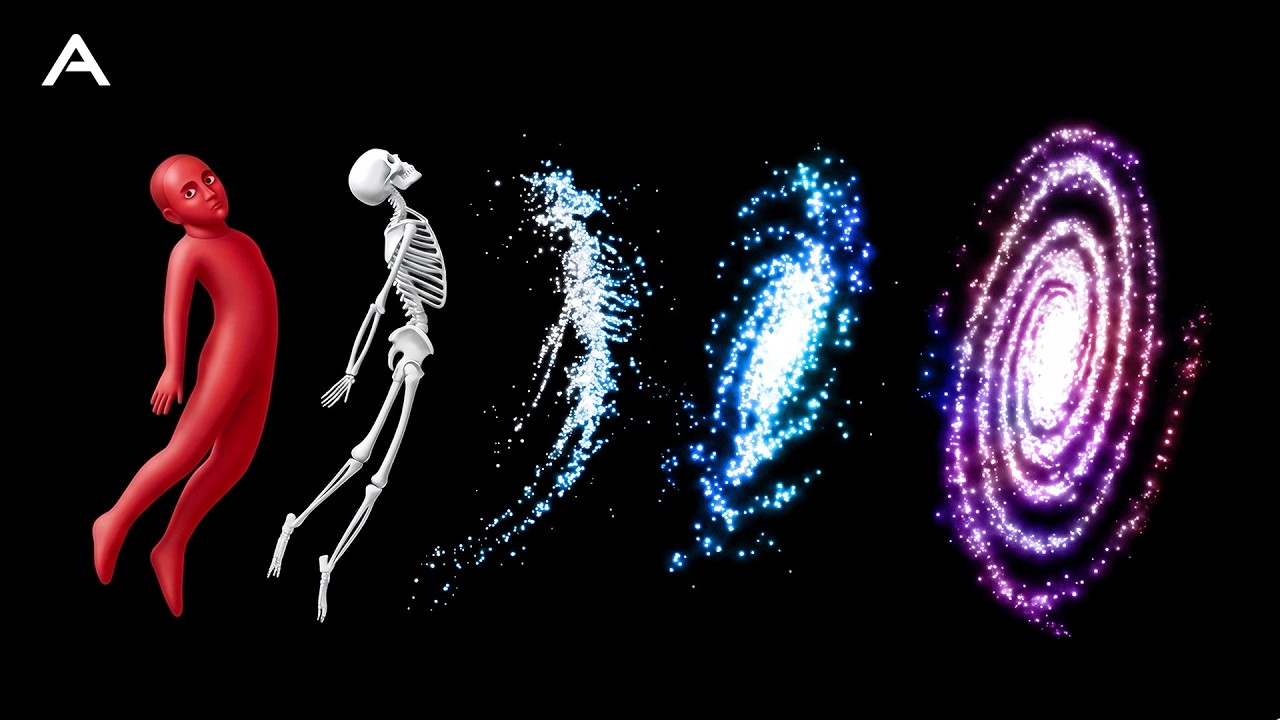
An Aperture essay on Arthur Schopenhauer and his idea of the will, the blind, restless striving underneath every thought and object that wants endlessly for the sake of wanting. Because to want something is to live in its absence and every desire reloads the moment it is met, Schopenhauer concluded that suffering is the basic structure of life, pleasure only the brief silence of pain, and existence a pendulum swinging between wanting and boredom. The video traces his loophole in Kant, why humans suffer worse than animals through memory and the fear of death, and how the modern attention economy industrialized the loop. It then maps his three exits, art, compassion, and the denial of the will to live, and closes on the strange comfort that your restlessness is not a personal flaw but the universe briefly awake.
Published Jun 28, 202639:47 video29 min readAdded Jul 1, 2026Open on YouTube →
At a glance
This is a 40 minute Aperture essay on Arthur Schopenhauer, the philosopher who looked at the one feeling everyone knows, the way a longed for thing goes flat the moment you finally have it, and built an entire theory of reality out of it. His answer was the will: a blind, restless striving underneath every thought and object in the universe, a force that wants endlessly for the sake of wanting and can never be satisfied. Because to want something is to live in its absence, and every desire reloads the instant it is met, Schopenhauer concluded that suffering is not a malfunction of life but its basic structure.
The video walks his argument in full: how a loophole in Kant let Schopenhauer turn inward and find the will, why pleasure is only the brief silence of pain, the pendulum that swings between wanting and boredom and never rests in the middle, why humans suffer worse than animals because we carry the past, the future, and the certainty of death, and how the modern attention economy has industrialized the whole machine. Then it turns to the exits Schopenhauer mapped: art as a day off from wanting, compassion as a crack in the wall between self and other, and the denial of the will to live as the monk's permanent escape. It closes on the comfort buried inside the darkness: your restlessness is not a personal flaw, it is the universe, briefly awake, doing exactly what it was built to do.
The moving goalpost of happiness
The film opens on a feeling you have almost certainly had and maybe never named. It arrives after a promotion you chased for years, after a purchase you told yourself would change your life, after finally winning the attention of the person you could not stop thinking about. For a moment it feels incredible. Then the feeling fades, not all at once, just enough for a quiet thought to slip in: now what?
The promotion becomes a regular day at the office. The purchase becomes another object in the room. The person becomes just a person. And before long your mind is already reaching for the next thing, not because you decided to, it just happens. Two hundred years ago Schopenhauer looked at that exact feeling more closely than anyone before or since, and what he found was dark enough that he became known as the greatest pessimist in the history of philosophy. The unsettling possibility the video raises is that he was not being pessimistic at all. He was simply the one paying the most attention.
The one philosopher who saw restlessness where everyone else saw progress
At the dawn of the 19th century, Europe was intoxicated with the idea of progress. Science was expanding what humanity understood. Industry was remaking entire nations. Philosophers spoke confidently about reason, advancement, and the steady march of civilization toward something better. To most great thinkers of the age, humanity's endless striving looked like proof of a higher purpose. We wanted more because we were going somewhere.
Schopenhauer looked at the same world and saw the opposite. Where others saw progress, he saw restlessness. Where others saw purpose, he saw insatiable longing. Where others saw humanity climbing toward a brighter future, he saw people trapped in an endless loop of desire and disappointment. The video credits this contrarian eye to his study of Immanuel Kant.
Kant had argued, in his transcendental idealism, that the world we see, hear, touch, and measure is not reality itself. It is reality filtered through the machinery of the mind. Time, space, and causality are not features of the world as it truly is, they are lenses through which we are forced to experience it. What we perceive is a representation, never the thing in itself. Kant's conclusion was humbling: the true nature of existence, the thing behind everything we see, is locked away forever, beyond the reach of human reason.
The world as will
Schopenhauer noticed a loophole in Kant's reasoning. If Kant was right that we can never know the reality behind things because we always stand outside them as observers, then there was one object in the universe that Kant was not observing from the outside: himself. What happens when you examine the one thing you experience not as an object out there but from within?
You might expect to find a thinking self, a rational mind, a stable personality sitting behind your eyes. That is not what Schopenhauer found. Turning inward, he discovered something far more primitive. Before every thought there was an urge. Before every decision, a desire. Before every plan, a longing. Hunger, attraction, ambition, curiosity, fear, the constant sense of being pulled toward something or pushed away from it. Beneath all the stories we tell ourselves, he found a single deeper force driving everything, a blind and restless striving that never truly stops. He called it the will.
To Schopenhauer, the whole world is shaped and connected by this one thing. Strip away your thoughts, your opinions, the narrative you carry about who you are, and underneath sits a constant pressure to move, to seek, to crave, to avoid, to pursue. The will is not aimed at any single goal or destination. It just wants, endlessly, for the sake of wanting. It is like an engine that never turns off, running inside every human, every animal, and even inanimate matter. When you truly look at yourself from the inside, the will is what you find running the whole show, from the small itch on your forehead to the unbroken curiosity about what comes next.
This is not the same as willpower. Willpower is what shows up when you try to resist the will, and Schopenhauer thought it was largely futile, because you do not stand apart from the will with some independent power to override it. The will has you, the same way it has everything else. You did not decide to be hungry, or to want a particular thing, or to feel butterflies for the person who gives you butterflies. Most of us imagine the conscious mind as the captain of the ship, steering our lives wherever we choose. Schopenhauer disagreed. The intellect, he said, is not the captain but the narrator. It watches what the will is already doing, then invents reasons and explanations after the fact. You feel yourself wanting something first, and only then does your mind construct a story about why. The struggle was never between you and the will. The will is already part of what you are.
Figure 1. Schopenhauer's inversion of agency. The will moves first; the conscious intellect is a narrator that supplies a reason afterward, and the reason feels like a free decision. What we call willpower is a fight the will already won before we noticed it started.
Why wanting is suffering, and pleasure is only the silence of pain
The most terrifying part, the video says, is that the will never sleeps. Every desire reloads the instant it is satisfied. One want disappears and another rises to take its place, on and on without end. For Schopenhauer this is the source of all suffering, because to want something is to live in the absence of it. You only ever desire what you do not possess. Every longing starts as a lack, a gap between the life you have and the life you imagine. Wanting is not fulfillment reaching toward you, it is the feeling of something missing. Wanting a car does not ache because you love driving, the ache is the heavy sigh on a cold sidewalk waiting for a bus that has not come.
Then comes the break from conventional wisdom that makes the whole system click. Most of us treat pleasure as the goal and the reward, and pain as a malfunction, an unfortunate interruption to an otherwise happy life. Schopenhauer flipped it. Pain is the only thing that is truly real. Pleasure is merely the temporary absence of pain. It is not that darkness is the absence of light, it is that light is a brief absence of darkness.
His example is a toothache, the kind that follows you into every meal, every conversation, every attempt at sleep. In that moment you might trade your most prized possession to make it stop. Yet when the pain finally lifts, you do not walk around celebrating the incredible feeling of healthy teeth. The relief fades into the background and becomes your new normal within hours. Pain announces itself; its absence goes unnoticed. You never feel not thirsty. You feel thirsty, then relief, then nothing. You feel lonely, then connected, then that too becomes ordinary. What we call pleasure is usually just the moment suffering loosens its grip, and what fills the gap afterward is not peace but boredom, an empty feeling of existing with nothing to chase.
So life is not suffering, then peace, then suffering. It is subtler and worse: the suffering of wanting, then the emptiness of having, then the suffering of wanting again.
The pendulum: wanting on one end, boredom on the other
The clearest picture Schopenhauer gives is a pendulum swinging between two painful extremes. The ache of wanting at one end, the emptiness of boredom at the other. Contentment is the midpoint you are always aiming for, but the pendulum races through the middle at its highest speed and never lets you rest there. The video calls it the tragedy of the 40 hour workweek: five days straining at the wanting end, only for the weekend to flash through the center and drop you straight back into the next cycle.
Figure 2. The pendulum of suffering. Life oscillates between the pain of wanting and the emptiness of boredom, and the sweet midpoint of contentment is exactly where the pendulum moves fastest and lingers least. This is why a satisfied desire never holds: the swing keeps going.
Nowhere is this clearer than a crush. Your heart drops and flutters and all you want is to be near this one person; every force in the universe seems to point at them. For those lucky enough to actually build something with a crush, it feels like bliss, at first. Then the fantasy dulls. The real person does not behave the way the imagined one did. Maybe they find your favorite movie boring, maybe they have no interest in the things you were excited to share. Getting what you wanted kills the want itself, leaving a short emptiness until the mind manufactures a new want to fill the hole. It works the same with objects. The person who longs for a car mostly experiences the lack of not owning one. Buy it, and after the first joy you start worrying about gas prices and parking, you notice quirks you wish you had spotted, and your mind drifts toward the next car that will finally solve everything. You just cannot win.
The curse of being the animal that knows
This mechanism drives every single thing in the universe. The will is not only in humans, it is in the flow of water and the way sound travels; it governs the squirrel storing food for winter, the cat stalking prey, the deer fleeing a predator. Every creature is pushed by the same restless striving toward survival. But the rest of nature is spared one burden: animals do not know what is happening to them. A squirrel suffers a danger directly in front of it, and once the threat passes, so does the suffering.
Humans are different, and it makes us suffer worse. You can suffer from things that are not happening. You suffer your past with regret, your present with doubt, your future with uncertainty. The thing you said ten years ago that still replays at three in the morning. The conversation tomorrow you are already dreading. Grief for people who are still alive. None of it is happening to you in the moment, and you suffer for it anyway. Our sharpest tools, memory and imagination, are exactly what make the suffering more vivid. The squirrel is not lying awake rehearsing its mistakes.
Worst of all is the fear of death. We all know it is coming, and every move we make is a hope that it is not coming too soon, yet it never lifts. The knowledge that it all ends sits underneath everything and hangs over each good moment like a shadow, already stamped with the fact that it is bound to end and that one day you will too. You can never fully sink into anything, because part of you is always aware of the ticking clock. The squirrel does not carry that weight. You are the one animal awake enough to enjoy a moment and cursed enough to feel it slipping away. Consciousness, in this light, feels like being a part of a machine that woke up: aware that you want, chase, fail to be satisfied, and want again, and no more free for the awareness. For Schopenhauer this is not evolution's mistake or a malfunction. It is what reality is when it observes itself fully. We are conscious creatures made of wanting, and suffering is built into the design. As the narrator puts it, you and I are reality suffering through one of its more complicated shapes.
The world as will in the 21st century
When Schopenhauer first developed these ideas around 1818, the wanting loop was simply the natural order of things, running on a single principle: to exist is to want. In the modern world that truth has been turned into a business model. The trap of life has been industrialized, commodified, and aimed back at us with double the force. Your feed, your devices, your entire lifestyle are sold as products when they are really the pendulum of suffering swinging end to end.
The infinite scroll is the purest version of the want, get, empty, want engine ever built. You open the app to kill a want, boredom or loneliness or curiosity, and start scrolling for a hit that will make things feel right. The hit dies in seconds and you are scrolling again. It never resolves, because a resolved want is a closed app. Advertising makes it darker still: an advertiser's whole job is to manufacture lack on purpose, to make you feel the absence of something you were fine without ten seconds ago, then sell you temporary relief. The attention economy runs on what the video calls Schopenhauer's negative theory of happiness, thriving not by giving you joy but by inventing new toothaches for you to cure. There are rooms full of very intelligent people paid to make sure your want never resolves, because your dissatisfaction is their product.
So is there a way out? The obvious move is to get better at satisfying desires: more disciplined, more productive, more efficient at chasing goals. Schopenhauer says this misses the point entirely. The problem is not that you are failing to satisfy the will, it is that you are trapped inside it. Every strategy for getting what you want still begins with wanting; every achievement is another turn of the same wheel. You are still playing the game, just getting better at it. Real relief only comes from stepping outside the cycle.
Art versus the will
The difficulty is that the will reshapes how you see. You rarely see a tree as it actually is; you see shade, firewood, furniture, or an obstacle. You do the same with people, seeing what they can give you, do for you, or take from you. The will turns everything into a means to an end, and as long as you look through that lens you stay trapped in the machine. To escape, even briefly, you have to learn to see differently. That is where art comes in.
In the presence of genuine beauty, something unusual happens: the mind stops asking what it can gain and simply enjoys the experience. Staring at a sunrise, you are not calculating solar energy or worrying about sunburn, you just admire it. Schopenhauer called this becoming a pure, will less subject of knowing. For a brief moment you are no longer chasing, planning, comparing, or wanting. You are simply awareness itself. Think of the last time a piece of music stopped you cold or a painting held you longer than you meant to look; you were not trying to get anywhere, you were absorbed. Inspired by Kant, Schopenhauer held that beauty pleases precisely because it asks nothing of you. You do not need to possess it, improve it, or use it. In that experience the will falls silent, and for perhaps the first time all day there is no lack to overcome and no future state to reach, only the thing itself and your awareness of it. For Schopenhauer this was one of the purest forms of happiness life could offer. He lived it: an art lover to the core, he played the flute every day after lunch, one of the few things he believed could genuinely free a person from the demands of the will.
The theory of genius
If art lets us step outside the will, why are some people so much better at making it? Schopenhauer's answer is his theory of genius. Most of us escape the will only by accident, when a sunset or a song briefly pulls us out of ourselves before our desires return. The genius can stay in that state far longer. They possess an unusual ability to look at the world without immediately filtering it through their wants and practical needs. While most people see objects in terms of usefulness, the genius sees the essence beneath the surface. That is why great artists notice what the rest of us miss: a painter does not just show you a tree, they reveal something timeless about trees; a composer does not merely arrange sounds, they capture a feeling larger than any single life. The genius sees past the ordinary perspective of the will and brings back what they found, so every great work of art is an invitation to step outside yourself for a moment too.
That distance comes at a cost. The same trait that lets a genius see beyond ordinary desire often leaves them poorly equipped for ordinary life, its work, status, and social expectation. This is where the stereotype of the tortured artist begins, in figures like Vincent van Gogh, who battled his own mind for years and died largely unrecognized, and countless artists whose gifts seemed inseparable from their suffering.
Schopenhauer built his philosophy of art around two experiences. Beauty is the gentler one: architecture, a quiet landscape, a flower moving in the wind lift you out of wanting without resistance. The sublime is different. It begins with something that should overwhelm you, a violent thunderstorm, towering mountains, the cold incomprehensible scale of space. Your first reaction is fear, because these things remind you how fragile you are and confront the will directly by threatening the existence it is trying to preserve. But if you move past the fear and simply observe, the terror gives way to awe. Instead of a threat you see something larger than yourself, and in that moment you rise above the will rather than serving it.
Among all the arts, one stood apart for Schopenhauer: music. A painting depicts something, a sculpture represents something, even a landscape shows you an image of the world. Music copies nothing. It does not represent the will, it expresses it directly, which is why he placed it above every other art form as a direct reflection of the force driving all existence. He mapped music onto the layers of reality: the bass as the dead inorganic world of stone, the harmony as the plant and animal world, and the melody as the human will in all its longing, wandering away from home and returning, landing at last on satisfaction. A melody, in his view, is literally the story of a wanting self, with its desire, its search, and its resolution. When a song moves you, you are hearing your own willing nature played back as beauty rather than pain, emotion without the suffering. That is why music can level you when nothing else can.
Figure 3. Why Schopenhauer ranked music above every other art. He heard the structure of reality itself in it: bass as inert matter, harmony as living nature, melody as the striving human will. Music does not depict the world, it expresses the very force underneath it.
Art's power cuts through every season of life. People dismiss it as decoration until something breaks, a death, a heartbreak, and then you reach for a song or a poem because nothing else can hold the weight. That pull proves that deep down we already know why it matters. But Schopenhauer was honest that it never lasts. He called aesthetic experience the Sabbath of the penal servitude of willing, a day off from the hard labor of wanting. A day off, not freedom, not a permanent escape. Every song ends and the will comes back. Art is a glimpse of a deeper escape, never the escape itself.
Compassion: the crack in the wall of "me"
Art is not the only exit. Schopenhauer mapped deeper ones that might free a person for good, and the first is compassion. Everything that traps you in suffering is centered on me: my wants, my life, my needs, my dissatisfaction. To be freed from yourself, you have to turn toward others. Running through his work is the claim that the wall between you and everyone else is part of an illusion, and that this is the key to a real exit from suffering. Underneath the surface, the will is the one thing expressing itself in everything; the will that cracks a rock when it is dropped is the same will that drives you to seek relief from your pain. So we are not truly separate from anything else the will moves through.
From this Schopenhauer argued that real morality exists when you can feel another's pain as your own. Genuine goodness does not come from religion, rules, duty, or self interest; it can only come from compassion. When you feel someone else's suffering as if it were yours, you reach a deeper level of existence, because you are all connected through the will and, by shifting perspective, their suffering genuinely becomes yours. The Upanishads, the Hindu texts that deeply influenced him, put it in a single phrase, "thou art that": the suffering creature is also you.
Compassion means escaping self centeredness. When you genuinely feel for someone, your own wanting self goes quiet, and that quiet is a hidden key that unlocks the prison of me, the very prison generating your suffering. That is why compassion feels like relief rather than a burden; the urge to comfort or care for someone gets you out of your own head, loosening the ego's grip and expanding your mind beyond yourself. A compliment for a cashier wearing your favorite color, a beat of patience for the slow walker ahead of you, listening to a friend's bad day without judgment. These moments have no place in the will's grand scheme, and precisely because of that, letting them in pushes the weight of your own worries into the background.
Wanting less: the denial of the will to live
If art is a day off and compassion softens the wall, there is one final and permanent exit. It is radical because instead of satisfying the wanting or escaping it for a moment, you turn against it entirely. Schopenhauer calls it the denial of the will to live, the climax of his life's work and the one thing he believed could actually free a person. When someone follows life all the way to the end, they tend to land on one or all of three conclusions: the wanting never ends, satisfaction is impossible, and life is largely suffering all the way down. That realization can awaken something in an observer that makes the will turn against itself, so the observer simply stops chasing.
Schopenhauer found this pattern across history in the people who renounced worldly pleasure, the monks, mystics, and ascetics. Their voluntary poverty is not temporary protest or self punishment, it is a deliberate starving of the wanting until it goes quiet. He saw it most clearly in Buddhism and Hinduism: for Buddhists, suffering comes from craving and ends only when craving ends, which sounds almost word for word like the denial of the will. That the same insight surfaced across oceans, independently, suggested to him that he had struck something deeply true about the human condition.
What is left when the wanting is genuinely quieted is not the emptiness you would expect, but calm, something close to the Buddhist nirvana, a state where wanting is fully extinguished and you are free from suffering. For Schopenhauer it was the nearest thing to salvation: you never get everything you want, but you are no longer ruled by wanting. This full denial is not "I will buy a little less stuff," it is the monk's path, radical and controversial, which is why almost no one attempts it. And here the video notes the great irony. Schopenhauer, who prescribed renunciation, never took his own cure. He ate well, indulged his pleasures, and was famously irritable. He wrote the prescription and left it on the counter.
Still, the core idea holds even for those who will never be saints. You can live a life less defined by your wants. Peace comes from wanting less, not from acquiring more, and that alone loosens the will's grip on your life.
The question
The usual view
Schopenhauer
Pleasure and pain
Pleasure is real and the goal; pain is a malfunction.
inverts it Pain is the only real thing; pleasure is the brief absence of pain.
Endless striving
Evidence of purpose and progress.
inverts it Evidence of a trap; the will wants for the sake of wanting.
Getting what you want
The cure for the wanting.
inverts it Kills that want and breeds the next; the loop reloads.
Human consciousness
Our crowning advantage over animals.
inverts it The curse that lets us suffer past, future, and death.
Willpower
You steer your desires from the captain's chair.
inverts it The will steers you; the intellect just narrates.
The way out
Satisfy desires more efficiently.
the real exit Step outside wanting: art, compassion, denial of the will.
Figure 4. The whole essay as a ledger. On almost every question about happiness, Schopenhauer takes the common sense answer and turns it over. The one place he offers a way forward is the bottom row, and even there the move is to want less, not to win more.
Why the darkness matters
Schopenhauer leaves one last gift, and the video argues it may be the most useful thing he ever said. From the moment you first became conscious, there have been stretches where you felt restless, and the world around you read that restlessness as a character flaw, a discipline problem, a poor mindset. Teachers, parents, and friends handed you their verdicts about who you are, and after enough of them you started to feel like an exception to the world's rules, someone quietly broken.
Schopenhauer gives you something the world never could. You are a wanting creature in a wanting universe, doing exactly what you were built to do. That restlessness, the sense of not being enough, not having enough, not doing enough, is proof that you are alive and awake. The weight of self blame is deeply isolating, but inside the will there is a silver lining: stop trying to repair something that was never broken. Modern life sells the promise that doing the right things, the job, the milestones, leads to lasting happiness. That promise was false two hundred years ago and it is false now, and the proof is the sinking feeling that keeps returning despite your achievements. The dissatisfaction is not you falling short. When you finally drop the expectation that things will make you happy, you get to walk away from a game that was rigged before you sat down. And the more clearly you see how the will works, the more you can work with it instead of against it, because the best life is not the one stuffed with pleasures, it is the one with the least suffering.
That is why his philosophy still lands two centuries later. Beneath all the darkness, Schopenhauer offers a strange comfort. Your restlessness is not a personal failure or a mistake to fix; it is part of something far larger than you. The same force that drives you to dream, strive, love, create, and search for meaning is the same force driving everything else. The only difference is that for one brief moment in the history of the universe, that force became conscious enough to observe itself. The essay closes by pointing at its own companion piece on how you are the universe experiencing itself.
Key takeaways
The will is Schopenhauer's name for the blind, restless striving underneath every thought, creature, and object, a force that wants endlessly for the sake of wanting and never turns off.
Willpower is largely an illusion. The will acts first and the intellect narrates a reason afterward, so the conscious mind is a storyteller, not a captain.
Wanting is suffering because to want is to live in the absence of the thing. Pleasure is only the brief silence of pain, and every satisfied desire immediately reloads a new one.
Life swings like a pendulum between the ache of wanting and the emptiness of boredom, racing through contentment at the middle and never resting there.
Humans suffer worse than animals because memory and imagination let us suffer the past, the future, and the certainty of death, none of which is happening now.
The modern attention economy industrialized this loop; the infinite scroll and advertising manufacture lack on purpose, because a resolved want is a closed app.
There are three exits from the will: art as a temporary day off, compassion as a crack in the wall between self and other, and the denial of the will to live as the ascetic's permanent escape. Schopenhauer prescribed the last but never took it himself.
The final comfort: your restlessness is not a flaw. It is the universe, briefly awake, doing exactly what it was built to do, and the best life aims for the least suffering rather than the most pleasure.
Chapters
Click any timestamp and the floating player jumps there and keeps playing.
0:00 The moving goalpost of happiness
1:23 The most terrifying philosopher who ever lived
4:35 The world as will
18:02 The world as will in the 21st century
20:41 Art versus the will
24:21 The theory of genius
30:33 Compassion as an escape
33:29 Wanting less
36:53 Why the darkness matters
Notable quotes
He was once considered the greatest pessimist in the history of philosophy. The troubling possibility however is that he wasn't being pessimistic at all. He was simply the one paying the most attention.
Aperture narrator, 1:23
Beneath all of that, you find a constant pressure to move, to seek, to crave and avoid, or to pursue. A restless striving that never completely goes away.
Aperture narrator, 5:20
The struggle isn't between you and the will. The will is already a part of what you are.
Aperture narrator, 11:30
Pain is the only thing that is truly real, while pleasure is just a temporary absence of pain. Instead of darkness being the absence of light, light is only a temporary absence of darkness.
Aperture narrator, 13:40
You're the one animal awake enough to enjoy a moment while also being cursed to feel it slipping away.
Aperture narrator, 17:20
The system thrives not by giving you joy, but by constantly inventing new toothaches for you to cure.
Aperture narrator, 19:10
Schopenhauer described this idea as becoming a pure, will less subject of knowing.
Aperture narrator, 22:00
Aesthetic experiences were seen as the Sabbath of the penal servitude of willing. Or in simpler terms, a day off from the hard labor of wanting.
Aperture narrator, 29:40
Peace comes from wanting less, not acquiring more.
Aperture narrator, 36:20
You're only a wanting creature in a wanting universe doing exactly what you were built to do.
Aperture narrator, 37:40
Opera, the sponsor of the episode, used for organizing the research.
The Aperture channel, and its companion essay on how you are the universe experiencing itself.
Full transcript
There's a feeling you've most definitely had before, but maybe you never knew how to describe it. It might come after a promotion you'd spent your whole life chasing, or after buying something that you convinced yourself would absolutely change your life, or perhaps after finally getting the attention of the person you couldn't stop thinking about. And hey, for a moment maybe it felt incredible, but then something strange happened. That feeling faded, not all at once, but just enough for a quiet thought to creep in. Now what?
The exciting promotion quickly became a regular day at the office. The new purchase became another object in the room. The person you couldn't stop dreaming about slowly became just a real person. And before long your mind was already reaching for the next thing, not because you wanted it to, it just happened.
200 years ago a philosopher named Arthur Schopenhauer looked at this feeling more closely than anyone else. What he discovered was so dark that he was once considered the greatest pessimist in the history of philosophy. The troubling possibility however is that he wasn't being pessimistic at all. He was simply the one paying the most attention.
At the dawn of the 19th century Europe was intoxicated with the idea of progress. Science was expanding humanity's understanding of the world. Industry was transforming entire nations. Philosophers spoke confidently about reason, advancement, and the steady march of civilization towards something better. To many of the great thinkers of the age humanity's endless striving looked like evidence of a higher purpose. We wanted more because we were moving forward, but Arthur Schopenhauer looked at the very same world and saw something completely different.
Where others saw progress, he saw restlessness. Where others saw purpose, he saw an insatiable longing. Where others saw humanity climbing towards a brighter future, he saw people trapped in an endless cycle of desire and disappointment. Schopenhauer was different from his peers, and many credit this trait to his time studying Immanuel Kant.
Kant believed that the world we see, we hear, we touch, and we measure is not reality itself. It's reality filtered through the machinery of our own minds. According to him, concepts like time, space, and causality are not features of the world as it truly is, but lenses through which we experience it. What we perceive is merely a representation of reality, not reality itself. His conclusion was that the true nature of existence, the thing behind everything we see, is forever hidden from us, locked away beyond the reach of human reason. But Schopenhauer noticed something strange about Kant's reasoning, a loophole, if you will.
If Kant was right, then there was one thing in the universe that he wasn't observing from the outside. Himself. If we can't know the reality behind other things because we stand apart from them, then what happens when we turn inward? What happens when we examine the one thing we experience not as an object, but from within?
And at first, the answer seems obvious. You might expect to find a thinking self, a rational mind, a stable personality sitting somewhere behind your eyes. But that's not what Schopenhauer found. When he looked inward, he discovered something far more primitive. Before every thought, there was an urge. Before every decision, a desire. Before every plan, a longing. Hunger, attraction, ambition, curiosity, fear. The constant feeling of being pulled towards something or pushed away from it.
Beneath the stories we tell ourselves, Schopenhauer found a deeper force. One that seemed to be driving everything. A blind, restless striving that never truly stops. He called it the will.
To Schopenhauer, the whole world is connected and shaped by one thing, the will. It's the force you encounter when you strip away your thoughts, your opinions, and the stories about yourself that you tell yourself. Beneath all of that, you find a constant pressure to move, to seek, to crave and avoid, or to pursue. A restless striving that never completely goes away. This will isn't acting on any single goal or destination or a plan. It just wants endlessly for the sake of wanting. It's like an engine running constantly, never turning off, driving every human, every animal, and even inanimate objects.
He believed that when you truly look at yourself from the inside, the will is what you find running the whole show. It governs you, keeping you in a state of desire no matter how insignificant or important. A small itch on your forehead, the unbroken curiosity to learn what comes next, that is the ever-present will. Now, the will might sound like something we call willpower, but the two are not the same. Schopenhauer describes willpower as the thing that exists when you resist the will. But he considers it futile because as a human, you don't truly have a will to power through in the first place. The will has you. Same as everything else around you.
You didn't decide to be hungry or to want something or to be drawn to the person who leaves butterflies in your stomach. That's the will's influence. Most of us like to think we're in control of our desires, that our conscious mind is the captain of the ship, carefully steering our lives wherever we choose. Schopenhauer disagreed. He believed the intellect is more like a narrator than the captain. It watches what the will is already doing, then invents reasons and explanations after the fact. You feel yourself wanting something, and only then does your mind begin constructing a story about why you want it. That's the part people miss when they talk about willpower. The struggle isn't between you and the will. The will is already a part of what you are.
The most terrifying part is that the will never sleeps. Every desire simply reloads itself the moment it's satisfied. One want disappears and another rises to take its place. The cycle continues on and on without end. For Schopenhauer, this is the source of all suffering. Because to want something is to live in the absence of it. You only ever desire what you don't possess. Every longing begins with a lack, a gap between the life you have and the life that you imagine. In that sense, wanting is not fulfillment reaching towards you. It is the feeling of something missing.
Wanting a car doesn't ache because you'd like to drive around so badly. Wanting here is the heavy sigh that leaves your body while standing on a chilly sidewalk waiting for a bus to come. The feeling presses on you, creating an ever-present ache where you're constantly reminded of what you desire not being yours.
You might think that the thing you desire is the cure to this feeling. But that's where Schopenhauer breaks from conventional wisdom. Most of us treat pleasure as the goal, the reward, while we think of pain as a malfunction, an unfortunate interruption to an otherwise happy life. Schopenhauer saw it the other way around. Pain is the only thing that is truly real, while pleasure is just a temporary absence of pain. Instead of darkness being the absence of light, light is only a temporary absence of darkness.
Think about the last time you had a toothache, the kind that follows you into every conversation, every meal, every attempt at sleep. In that moment, if someone offered to end the agony in exchange for your most prized possession, perhaps you wouldn't think twice. Yet when the pain finally disappears, what happens next? You don't walk around celebrating the incredible sensation of having healthy teeth. You don't wake up every morning overwhelmed with gratitude that your mouth is no longer in agony. The relief quickly fades into the background and then becomes your new normal.
That's Schopenhauer's point. Pain announces itself while its absence goes unnoticed. You don't feel not thirsty. You feel thirsty and then relief and then nothing. You feel loneliness, then connection, then eventually that too just becomes ordinary. What we call pleasure is often just the brief moment where our suffering loosens its grip. And after that is a period of emptiness. And filling that gap isn't peace like you'd expect, it's boredom. An undeniable empty feeling where you're simply existing with nothing to chase.
We love to tell ourselves that we're fine existing without anything pushing us, but whether we like it or not, we aren't designed to experience boredom blissfully. Something else quickly takes root in our minds. Therefore, life isn't suffering, then peace, then suffering. It's far, far more nuanced than that. It starts with the suffering of wanting, then the emptiness of having, followed by the suffering of wanting again.
The clearest way to picture it is a pendulum, swinging endlessly between two painful extremes. The ache of wanting at one end, and the emptiness of boredom at the other. The middle of life's pendulum is that fleeting moment of contentment that you've been aiming for. But the pendulum keeps racing through the middle at its highest speed, never letting you dwell there. It's the tragedy of the 40-hour workweek, spending 5 days straining on one end, only for the weekend to flash by in the center, immediately dropping you back into the next cycle.
Nowhere does this play out more clearly than in having a crush. Think about your first crush. It is a feeling that is hard to describe. One where your heart drops in excitement, it flutters, and you so badly just want to be in that person's presence. For the folks lucky enough to actually build something with their crush, it probably seemed like bliss at first. And then the fantasy begins to dull. In your head you thought, "Well, this can't be right." After all, the fantasy version of them wasn't going to behave the way you're seeing them behave right now. Maybe they find your favorite movie boring, or maybe they aren't interested in the activities you were excited to try together. And in response, you feel empty.
Back when it was only a crush, it felt like every force in the universe was pulling you to this one person. And yet, getting what you wanted kills the want itself. Next thing you know, there's a short emptiness, a period where there's no want anymore until your mind creates a new want designed to fill the hole inside. This illusion isn't just reserved for our hearts. It dictates how we interact with the material world. The person desiring a car mainly experiences the lack that comes from not owning a car. But once you get the car, after the initial joy, you slowly begin to realize that it isn't what you pictured. You start to worry about gas prices and the stress of finding a good parking spot. And then you realize that the car has certain quirks that you wish you would have spotted before buying it. Following this, your mind starts to wander all over again, fantasizing about yet another car that will solve all of this one's troubles. You just can't win.
This is the mechanism that drives every single thing in the universe. Unfortunately for you, you're the only creature aware enough to understand the psychological prison that you are trapped in. The will doesn't just govern human beings. It's also in the flow of water, the way sound travels across a distance. It governs animals, too. The squirrel gathering food before winter, the cat chasing prey through the grass, the deer running from a predator. Every creature is driven by the same restless force of striving and survival. But the rest of nature is spared one crucial burden. They don't know what's happening to them.
A squirrel suffers danger directly in front of it, but once that threat is gone, so is the suffering. Humans? Well, humans are different. You can suffer from things that aren't happening. You suffer your past with regrets. You suffer your present with doubts. And you suffer your future with uncertainty. The thing you said 10 years ago that still replays in your head at 3:00 a.m. The conversation tomorrow that you are dreading. Your tendency to grieve loved ones who are still with us. None of these things are happening to you in the moment and yet you are suffering for them anyway.
Some of our sharpest tools, like memory and imagination, are the very things that make that suffering even more vivid. The squirrel isn't lying awake rehashing its past mistakes. This contrast is what makes being human so challenging despite our perceived superiority. Worst of all is our fear of death. We all know it's coming. Every move you make is in hopes that it's not coming too soon. Yet it is always a presence that you can never truly shake off. The knowledge that it's all going to end sits under everything you do and it doesn't lift you up. It just hangs over you like a shadow. Every good moment shows up already stamped with the fact that it is bound to end and that one day, so will you. You can never fully sink into anything because a part of you is always aware of the ticking clock that is our lives and you know exactly where it's going.
The squirrel doesn't carry that weight. You're the one animal awake enough to enjoy a moment while also being cursed to feel it slipping away. When you take a breath and contemplate all that consciousness implies, it feels like you're a part of a machine that woke up. You're aware that you want, chase, and you fail to be satisfied, and you still want again afterwards, and yet awareness doesn't free you from any of this. It just means that you are present for everything that is happening to you, no matter what.
For Schopenhauer, this isn't a quirk of evolution making a mistake. It's what reality itself is when we observe it fully. None of that is a malfunction, either. We are conscious creatures made of wanting, and suffering is built into our design. We can't fix it without straying away from the rest of our kind. You and I are reality suffering through one of its more complicated shapes.
[Sponsor break: Opera browser, used to organize the research, tab islands, split screen, tab traces, and Opera AI.]
Back in 1818, when Schopenhauer first began to develop his ideals on the will, our wanting loop was simply a part of the natural order of reality. One with a simple principle, to exist is to want. Now, in our modern world, that fundamental truth has evolved even further, becoming a highly potent business model. The very trap of life has been industrialized and commodified and aimed at us with twice the power.
Think about it. Your online feed, your devices, your entire lifestyle, everything is sold as a product when really it's just the pendulum of suffering swinging from end to end. The infinite scroll is the purest expression of the want, get, empty, want engine that has ever been built. You open your social media feed to kill a want, whether that's boredom, loneliness, or curiosity. Once you're online, you begin scrolling in search of a hit that will make things feel right, only for that hit to die in just a few seconds and there you are, back to scrolling again. It never resolves itself because a resolved want is a closed app.
The very fact that you're participating despite being aware it's never going to bring you any true satisfaction is proof that there's a force bigger than yourself at play here. When you apply a concept like the will to advertising, things get even more depressing. An advertiser's entire job is to manufacture lack on purpose. You're made to feel the absence of something you were fine without just 10 seconds ago, and then those same people attempted to sell you a temporary relief. The entire economy is built on this loop. It's a world powered by Schopenhauer's negative theory of happiness. The system thrives not by giving you joy, but by constantly inventing new toothaches for you to cure. The universe gave us a blueprint. We adopted that design, and then we made it worse. There are currently rooms full of very, very intelligent people who are paid to make sure that your want never resolves. After all, your dissatisfaction is their product.
And it's hard to see a way out of it, especially since it's a fundamental part of reality itself. If the machine is everywhere, is there really a way to escape any of it? So, what if there was a way to take a break from it all? The obvious solution would be to get better at satisfying your desires, become more disciplined, more productive, better organized. Learn how to pursue your goals more efficiently. But Schopenhauer believed this misses the point entirely. The problem isn't that you're failing to satisfy the will. The problem is that you are trapped inside of it. Every strategy for getting what you want still begins with wanting. Every achievement, every ambition, every carefully optimized plan is just another turn of the same wheel. You are still playing the game, you're just getting better at it. Real relief can only come from stepping outside of the cycle altogether.
The difficulty is that the will reshapes the way that we see the world. You can rarely see a tree for what it actually is. Instead, you see shade, or firewood, furniture, or an obstacle in your path. We do the same thing with people. We don't really see them as they are. We see what they can give us, or what they can do for us, or what they might be taking away from us. The will turns everything into a means to an end. And as long as you're looking at the world through that lens, you are trapped inside the machine. Every object becomes another potential desire. Every experience becomes something to gain, or to lose, or to improve, or to chase. To escape the will, even briefly, you have to learn how to see differently. And that's where art comes in.
In the presence of genuine beauty, something unusual happens. The mind stops asking what it can gain from an experience and simply enjoys the experience. When you stare at a beautiful sunrise, you're not thinking about the solar energy you can capture from it, or the sunburns you might be getting. You simply admire its magnificence. Schopenhauer described this idea as becoming a pure, will-less subject of knowing. Just for a brief moment, you are no longer a person who is chasing, or planning, or comparing, or wanting. You are simply awareness itself.
Think about the last time a piece of music stopped you in your tracks, or a painting held your attention longer than you realized. For just those few moments, you weren't trying to get anywhere. You weren't solving a problem or pursuing a desire. You were simply absorbed. That is what made art so important to Schopenhauer. Inspired by Kant, he believed that beauty pleases us precisely because it doesn't ask anything from us. You don't need to possess it or improve it or use it for anything. You are simply experiencing it. And in that experience, the will falls silent. For perhaps the first time all day, there is no lack to overcome, no desire to satisfy, and no future state that you are trying to reach. There is only the thing itself and your awareness of it. For Schopenhauer, this was one of the purest forms of happiness that life could offer.
Schopenhauer was an art lover to his core. He played the flute every single day after lunch. It was one of the few activities he believed could genuinely free a person from the constant demands of the will. This led him to a fascinating question, though. If art allows us to step outside the will, why are some people so much better at creating it than others? His answer was the theory of genius.
Most of us only escape the will by accident. A beautiful sunset catches our attention or a song absorbs us. A painting briefly pulls us out of ourselves. For just a few moments, our desires go quiet before inevitably returning. The genius, according to Schopenhauer, can remain in that state for much longer. They possess an unusual ability to look at the world without immediately filtering everything through their wants, their needs, and practical concerns. While most people see objects in terms of their usefulness, the genius sees something deeper, the essence beneath the surface. That's why great artists often seem to notice things that the rest of us miss. A painter doesn't simply show you a tree, they reveal something timeless about trees. A composer doesn't merely arrange sounds into a symphony, they capture a feeling that somehow feels larger than any individual life. The genius sees beyond the ordinary perspective of the will then brings back what they found. In that sense, every great work of art is an invitation. The artist is seeing for you and for a brief moment they are allowing you to step outside of yourself as well.
As beautiful as all of that sounds, Schopenhauer believed that this distance from the will does come at a cost. The same ability that allows a genius to see beyond ordinary desires often makes it harder for them to function within ordinary life. While most people are naturally attuned to the practical demands of survival, of work, status, and social expectation, the genius is often distracted by something deeper. This is where the stereotype of the tortured artist begins to emerge. You can think of figures like Vincent van Gogh who spent years battling his own mind and died largely unrecognized or countless artists whose greatest gifts seemed inseparable from their own suffering. Schopenhauer believed that the very trait allowing these individuals to glimpse beyond the will often left them poorly equipped for the everyday world.
His philosophy of art was built around two distinct experiences, beauty and the sublime. Beauty is the gentler of the two. It lifts you out of wanting without resistance. A piece of architecture, a quiet landscape, a flower moving softly in the wind. In moments like these, your desires simply fade into the background. The will loosens its grip, and you are left contemplating the world for its own sake. The sublime is different. It begins with something that should overwhelm you. A violent thunderstorm, towering mountains, the cold incomprehensible scale of space itself. Your first reaction may be fear. These things remind you how fragile and insignificant you are. They confront the will directly because they threaten the very thing the will is trying to preserve, your existence. And yet, if you can move beyond that fear and simply observe what stands before you, something remarkable happens. The terror gives way to awe. Instead of seeing a threat, you see something larger than yourself, and in that moment you rise above the will rather than being a servant of it.
But among all the arts, there was one that Schopenhauer believed stood apart from the rest. Music. A painting depicts something. A sculpture represents something. Even the most beautiful landscape painting will still be showing you an image of the world. Music is different. Music doesn't copy reality at all. This unique quality led Schopenhauer to place it above every other art form. While paintings and sculptures reveal aspects of the world, music bypasses appearances entirely. It doesn't represent the will. It expresses it. For Schopenhauer, music was nothing less than a direct reflection of the force driving all existence.
He went on to map music onto layers of reality, describing bass as the dead inorganic world of stone and inanimate objects, the harmony as the plant and animal world, then finally, melody as human will in all of its longing, the way it wanders away from home and then returns. Together, it all lands as satisfaction. In his view, a melody is literally the story of a wanting self. In it, you'll find desire, the search, and resolution. When a song moves you, you're hearing your own willing nature played back to you. The sense of striving and longing not as pain or suffering, but as beauty. From the outside looking in, music gives you the chance to observe your essence without paying the price of actually wanting anything. It's the emotion without the suffering. Your own restless nature handed back to you as something beautiful instead of something hurtful. That's why music can level you when nothing else can.
Art's influence cuts through every season of life. People tend to dismiss it as a decoration to reality's more serious demands, but that sentiment changes when something breaks. A death, a heartbreak. That's when you realize that you need a song or a poem because nothing else can hold the weight of what you're experiencing. That pull we feel towards art in those moments proves that deep down, we already know why it matters.
Despite these deep feelings about art and the solace it grants us from the will, Schopenhauer understood that it wasn't ever going to last. Aesthetic experiences were seen as the Sabbath of the penal servitude of willing. Or in simpler terms, a day off from the hard labor of wanting. A day off. Not freedom. Not a permanent escape. Because every song ends, and the will will always come back. Art was only a glimpse of a deeper escape, never the escape itself.
Despite its profound nature, art isn't the only escape hatch. Schopenhauer realized there are other deeper ways to escape the will that may actually free you for good. One of these is compassion. Everything trapping you in suffering is centered on the idea of me, my wants, my life, my needs, my dissatisfaction. To free you from yourself, you have to turn towards others. There's a profound belief in Schopenhauer's work, which argues that the wall between you and everyone else is part of an illusion. This very belief is the key to making a real exit from suffering.
Because underneath the surface that we perceive, the will is the one thing that expresses itself in everything. The will that makes a rock crack when dropped is the same one that compels you to search for a silence to your pain. Therefore, we as individuals are not truly separate from anything else influenced by the will. This idea led Schopenhauer to propose that real morality exists when you're able to feel someone else's pain as your own. Genuine goodness doesn't stem from religion, rules, duty, or self-interest. It's something that can only exist from one experience, compassion. When you are able to feel another person's suffering as if it were your own, you reach a deeper level of existence.
After all, we are all connected thanks to the will. So, by shifting your perspective, the suffering of compassion becomes your own suffering as well. The Upanishads, a Hindu philosophical text that inspired Schopenhauer, described it in one simple phrase, thou art thou. The suffering creature is also you. Compassion means escaping your self-centeredness. When you're able to genuinely feel for someone else, your own wanting self goes quiet for a moment. That moment is a hidden key that unlocks your prison of me. The very prison generating your suffering.
That's why compassion can often feel like a relief instead of a burden. When you feel it deep in your heart, the urge to comfort someone, to care for them, it's actually freeing because it gets you out of your own head. The ego loosens its grip over your being and expands your mind beyond you alone. A compliment when you spot your favorite color on a cashier, a moment of genuine patience for the slow walker in front of you, the simple decision to listen to a friend's bad day without judgment. These moments don't really have any place in the will's grand scheme, and yet when you let them into your life, the burden of your own worries fades into the background.
If art is a day off from suffering and compassion softens the wall between you and everyone else, there's one final level to exiting the will that may provide a permanent escape. It's radical because this time, instead of satisfying the wanting or avoiding it for a moment, you turn against it entirely. Schopenhauer calls it the denial of the will to live, and it's the ultimate climax of his life's work. The one thing he believed could actually free a person. When people decide to observe life all the way to the end, there's a mutual understanding of its nature. They usually land on one or all of these three things. The wanting never ends. Satisfaction is impossible, and life is pretty much suffering all the way down. This realization hits like nothing else, and it often awakens something in an observer, making the will turn against itself. In this case, it means that the observer stops chasing.
Schopenhauer confirmed this across history. There is a pattern of deep thinkers who chose to renounce worldly pleasures. We know them as monks, mystics, and ascetics. Their voluntary acceptance of poverty isn't a temporary protest, nor is it self-punishment. It's a deliberate starving of the wanting until it all goes quiet. Among all the avenues he observed, this withdrawal was most present in Buddhism and Hinduism. For Buddhists, the idea is that suffering comes from craving, and it only ends when craving ends. Saying this out loud, it sounds almost exactly like Schopenhauer's denial of the will. This exact similarity across oceans shows that Schopenhauer's life's work struck something deeply honest about the human experience.
But there's something different about ending suffering by denying your human instinct to want. When the wanting is genuinely quieted, what's left isn't emptiness like you would expect. It's calm. A calm that's close to the Buddhist idea of nirvana, a state where the wanting is fully extinguished and you are truly free from suffering. For Schopenhauer, it's the nearest thing to salvation. Even though you never end up getting everything that you want, the trade-off is that you are no longer being ruled by wanting. Full denial of the will isn't saying, "Well, I'm just going to buy less stuff." It's the monk's path, and it is both radical and controversial. That's why most people will never attempt it.
For all of his investments into this idea, Schopenhauer himself didn't follow a path of denying the will. He ate well, indulged himself in pleasures, and was a famously irritable person. He's the one who prescribed renunciation, yet he never took the cure that he proposed. Despite this, the core idea here is still worthwhile. Even if you can't become a saint or an ascetic, you can live a life less defined by your wants. Peace comes from wanting less, not acquiring more. This helps you loosen the grip of the will over your life.
There's one last thing that Schopenhauer leaves us with despite the dark nature of the will, and it might be the most useful insight of all that he made. Right from the moment you first gained consciousness, there have been recurring periods where you felt restless. When observed by the world around you, this restlessness was interpreted as a character flaw, a discipline problem, or simply a poor mindset. Teachers or parents and friends may have responded with their own opinions about who you are as a result. And after enough time enduring these criticisms, you started to feel like an exception to the world's rules.
But Schopenhauer gives you something the world never could. You're only a wanting creature in a wanting universe doing exactly what you were built to do. That restlessness of not being enough, not having enough, and not doing enough is proof that you are alive and you are awake. The weight of self-blame is deeply isolating, but within the will there is a silver lining. One that tells you to stop trying to repair something that was never broken in the first place.
In our modern life, we've been sold a promise that doing the right thing, like getting a job or hitting certain milestones, will lead to lasting happiness. That promise was false 200 years ago, and nothing has changed today. The proof is in that sinking feeling that keeps coming back despite your achievements. The sense of dissatisfaction isn't about you actually falling short. When you finally drop the expectation that things will bring you happiness, it allows you to walk away from a game that was rigged before you ever sat down. And the more clearly you see how the will works, the more you can work with it instead of against it. Because the best life isn't the one stuffed to the brim with pleasures. It's the one with the least suffering.
And perhaps that's why his philosophy still resonates two centuries later. Because beneath all the darkness, Schopenhauer leaves us with a strange kind of comfort. The realization that your restlessness is not a personal failure. It isn't a flaw in your character or a mistake that you need to correct. It's part of something much larger than you. That same force that drives you to dream, to strive, love, create, and search for meaning is that same force driving everything else. The difference is that for a brief moment in the history of the universe, that force became conscious enough to observe itself. To understand how you are the universe experiencing itself, watch this video next.