At a glance
This is a twelve minute essay that walks straight into the oldest question we have, what is the meaning of life, and then hands the microphone to the one answer most people flinch from: there isn't one. Aperture defines nihilism plainly, the belief that all action, suffering, and emotion are senseless, then spends most of the runtime doing the harder job of separating it from the philosophies it gets confused with, pessimism, cynicism, and apathy. It sorts nihilism into its political, ethical, and existential kinds, stages the famous glass cup, and follows the word "why" all the way down to nothing. The back half belongs to Friedrich Nietzsche, the man who argued both for and against nihilism in the same breath, warned that it would drive civilization toward catastrophe, and still insisted the wreckage was where a new morality could be built. It ends where all of this has to end, with the practical question of how you live once the meaning is gone.
This page rebuilds the essay in full, in its own order, with every philosopher, work, and idea named and linked, so you can read it and lose almost nothing by skipping the video.
The question that will not go away
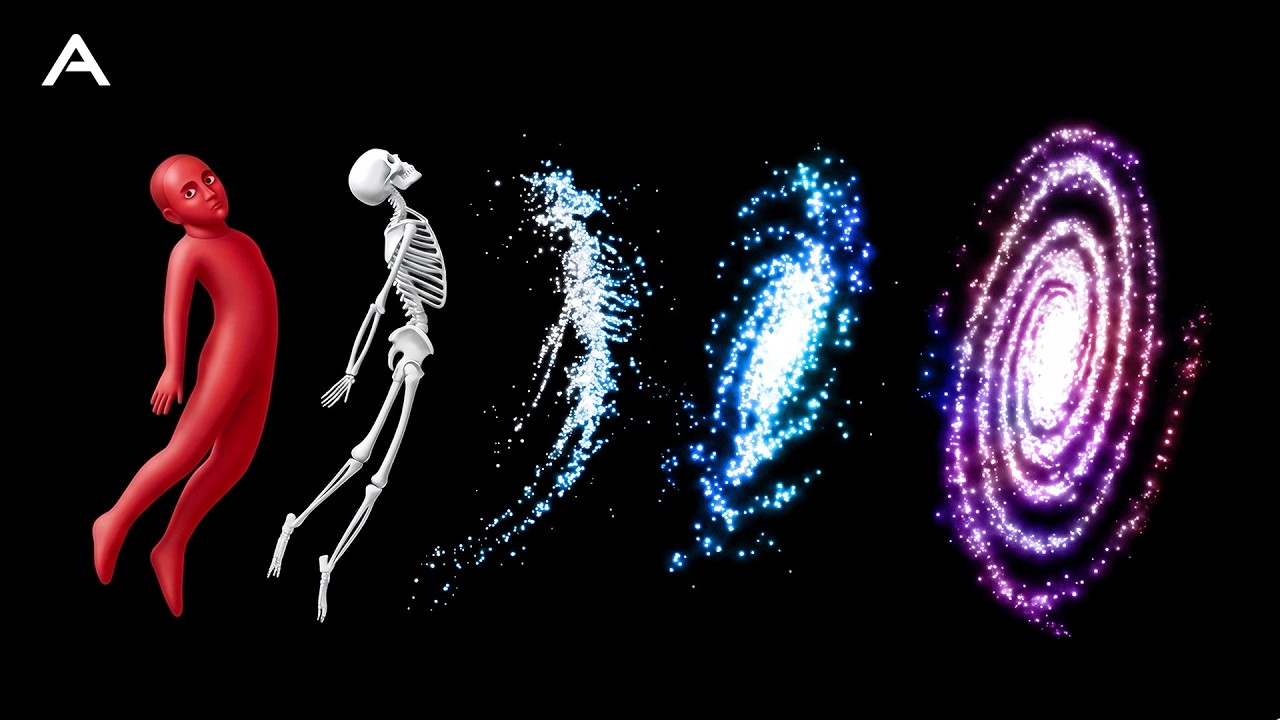
The film opens on the shape of a human life. One day we are born, one day we die, and everything in between we know and understand. Everything before and after we know nothing about. That gap is the problem. If we cannot say how we got here or where we came from, we cannot say why we are here. And if we do not know where we are going or what we will become, we cannot tell whether anything we do right now matters at all.
This uncertainty about both our collective past and our collective future is what has let the question "what is the meaning of life?" haunt us ever since we became sentient. We have never answered it objectively as a species. What we have done instead is find comfort in ideologies that at least quiet the anxiety. Religions offer a deity who built the universe, placed us in it, and will weigh what we do here to decide how we spend eternity. Others locate the meaning in the love shared with friends, family, and the people they hold dear. Others say the mere fact of being alive is what makes life worth living.
And then there are nihilists, for whom life is meaningless. Every action, all the suffering, every emotion good and bad, senseless. This is nihilism, the belief in nothing.
The word "why" and the descent to nothing
Most of us have brushed against this. A sudden sense of purposelessness, the feeling that our lives carry no meaning and we hold no intrinsic value. It tends to arrive at a specific moment, when we have started questioning our old beliefs but have not yet found new ones to hold on to. That in between phase where you are growing out of your parents' beliefs, taking in new experiences, and assembling your own picture of the world.
The essay says these thoughts almost always begin with one small word: why. A three lettered, monosyllabic word with the power to turn anything that felt like solid foundation into something slippery, like quicksand pulling you toward the suspicion that your whole life has not been what you thought it was. Try it, the film says. Take your core values and ask why. Why do you believe those things? Where did they come from? Who did they come from? Keep asking, and eventually you reach a point where there is no longer an answer. You arrive at nothing. All the religions of the world, all our scientific discovery, and the question "why" is still one we cannot answer. For the nihilist, that dead end is the whole point. There is no why, there is no answer, there is simply nothing. As Alan Watts once put it, life is nothing more than a trip from the maternity ward to the crematorium.
It is right there in the name. "Nihilism" comes from the Latin nihil, meaning nothing, joined to "ism," meaning ideology. The ideology of nothing. Which is true, and not nearly enough to understand it, because the whole difficulty is telling this ideology apart from the ones that look like it.
What nihilism is not, part one: pessimism
People reach for pessimism first, and get it wrong. A pessimist believes in the worst outcome. They hold a down trending view of the world and fix on the negatives, because they believe that in the end evil will always overcome good. Notice the hidden commitment in that: the pessimist believes there is good in the world. They simply do not think humans are capable of pulling it off, at least not fully. Good is real. People just fall short of it.
The nihilist does not believe in anything of the kind. Not that evil rules the world, not that good does. In the nihilist's mind the world simply exists, and it was humans who invented morality, and by inventing morality invented good and evil along with it. This is where the film brings out its signature image.
What nihilism is not, part two: cynicism and apathy
Nihilism gets thrown in with cynicism and apathy too, and sorting your own thoughts into the right basket is harder than it sounds. A cynic believes people are always driven by self interest. They grant no one intrinsically good motives, have no faith in the species, and see us all as fundamentally selfish, each fighting only for our own benefit. But look closely and the cynic has smuggled in a belief: if humans are not good, then good exists somewhere out there, just not in us. The cynic still believes in good. They only despair of finding it in people.
The nihilist grants nothing out there at all. No good, no evil, anywhere. They do not see people as evil, and they do not see them as good, because they do not believe either thing is real. Good and evil are traits we have applied to things, not properties the things possess.
An apathetic person is different again. They might well believe life has meaning. They simply do not care about it. Nihilism is not indifference to meaning, it is the claim that there is no grand design or purpose in the first place, nothing to believe in, and therefore no meaning to be indifferent about.
Which leads to the trap the essay calls the paradox of nihilism. If you believe in nothing, then that nothing becomes something you believe in. And once you believe in something, you are no longer a nihilist, because nihilism was the belief that there is nothing. The doctrine eats its own tail.
| The stance | Good and evil | Where meaning lives | The core move |
|---|---|---|---|
| Nihilism | Neither is real; humans invented morality. | Nowhere. There is no grand design. | Throw the glass away. |
| Pessimism | Both are real; evil tends to win. | Real, but humans fall short of it. | Expect the worst. |
| Cynicism | Good is real, just not in people. | Out there, never in human motives. | Assume self interest. |
| Apathy | May well be real. | Perhaps it exists. Who cares. | Simply does not care. |
A word the writers invented, and the three kinds it grew into
Nihilism has an odd origin that explains its blurriness. Unlike most philosophical ideas, it was a literary invention before it was ever a philosophy. Because it started in fiction rather than in a system, it was never as cleanly defined as its neighbors. Different people described it different ways, and over time those descriptions were sorted into distinct kinds of nihilism.
There is political nihilism, whose adherents hold that for humanity to advance, all political, social, and religious order must be torn down. There is ethical nihilism, which rejects the idea of any absolute ethical or moral values. On this view good and bad are only defined by society, and if we ever want true individual freedom, those definitions should not bind us. We can more or less do whatever we want. And there is existential nihilism, the understanding that life has no value or meaning at all. It is the most popular kind, and the one the essay has been circling for most of its runtime.
Why we still obey, when nobody can answer the why
For the nihilist, the state, religious bodies, and even shared morality are a breach on our freedom as individuals. If we cannot do absolutely anything we want, are we truly free? Or have we bound ourselves with an invisible mental chain for reasons we cannot even explain?
The essay makes this concrete with a story. One night, scrolling Reddit, the narrator finds the question: if you had the chance to save your pet or a stranger, who would you save? An overwhelming number of people say their pet. Then one commenter turns the question around: why do you think a human life is worth more than that of an animal? And no one has an answer. People try to talk around it, but the "why" is never actually answered. That, the film says, is precisely the nihilist's point. If we cannot say why we bind ourselves with these rules, then why do we choose to keep obeying them?
The answer it offers is the existential horror and emotional anguish that come with admitting life is meaningless. Sit with it for a minute. If life is truly meaningless and everything we do carries no value, then all the feats of science, the wonders of technology, space exploration, human rights movements, look how far we have come, and then consider that it might all be a waste, a blip in time with no consequence whatsoever in the grand scheme of things. Every high and low we live through, in the end, all for nothing. The film does not linger in despair, though. It lands on a lighter register: we are not obligated to understand the chaos of reality, only to laugh at it.
Nietzsche, for and against, in the same breath
Then it turns to the philosopher who owns this subject, Friedrich Nietzsche, and the essay calls him strange because he argued both for and against nihilism at once.
Arguing for it, Nietzsche held that there is no objective structure or order in the world except the one we make for ourselves. As he put it, every belief, every considering of something as true, is necessarily false, because there is simply no true world. He believed nihilism would expose all of humanity's beliefs and truths as nothing more than symptoms of a defective Western mythology. This is the context of his most quoted line, God is dead. He was not announcing the death of an actual deity. He was speaking metaphorically about the collapsing power of the religious orders of his time, and how people were beginning to chart their own paths and find their own meaning, denying the status quo.
But in the same breath Nietzsche argued against nihilism. He warned that in the centuries to come its advent would drive civilization toward catastrophe, a disaster waiting to implode, a river that has reached its end. Look at the most destructive civilizations in history, the film says, and you can see it: long standing traditions, beliefs, religious institutions, even financial systems break down, and nothingness starts creeping in. Here the essay names the sharpest edge of the problem. If nothing matters and we are just a random combination of transient atoms, how can we ever truly say that slavery, apartheid, or nuclear warfare are bad? How can we call Adolf Hitler objectively one of the worst humans who ever lived for trying to wipe out an entire culture? Most of us understand at a fundamental level that these things are terrible. The danger is that because we cannot explain why we feel that way in strict logic, we can never convince anyone else to feel it too. That, exactly, is what Nietzsche feared.
It is also why some still blame him for the Nazi era: he saw the dangers clearly and went on preaching nihilism anyway. But his reason was constructive. He believed that if we could work through the breakdown that nihilism would cause, we could then set a new course for mankind. To move forward as a species, he argued, we must build a new morality, one free of the prejudice baked into the old. In his image, tearing down your old house should not leave you homeless. It should give you the chance to build a bigger, better home on the same ground.
- nihilThe Latin word for nothing. Bolt "ism" onto it and you get nihilism, the ideology of nothing. The whole doctrine is folded into its own name.
- 1862Ivan Turgenev's novel Fathers and Sons pushes the word "nihilist" into wide use. As the essay notes, nihilism was a literary invention before it was ever a philosophy, which is why it was never as tidily defined as its neighbors.
- 1882Nietzsche writes "God is dead" in The Gay Science. He means the fall of religious authority, not a literal deity, and he both warns against nihilism and tries to push through it.
- 20th c.Alan Watts distills the mood into a single line: life is a trip from the maternity ward to the crematorium.
- TodayReligion no longer settles what is moral, long standing beliefs are being torn down in public on social media, and the essay warns of another nihilism outbreak already underway.
A new outbreak, in real time
Nietzsche wrote about coming centuries. The essay says we may be inside one of his predicted outbreaks right now. Pause and look around, particularly on social media, and the signs are there. Religion no longer holds much say over what is morally acceptable. People are dismantling long standing beliefs and cultural practices and charting new courses for themselves. Anything, no matter how despicable someone else finds it, now has a loyal base defending its right to exist, and, in reality, why not? That is the question no one can answer. So the needle keeps shifting forward, ever so slightly, until one day none of us will be able to tell another person they are wrong, because we will have no way to say why they are wrong.
What to do with a meaningless life
The essay closes not with a proof but with a posture. It borrows from William Shakespeare, from Macbeth: life is but a walking shadow, a poor player that struts and frets his hour upon the stage and then is heard no more, a tale told by an idiot, full of sound and fury, signifying nothing. If life really is meaningless and we have no purpose for being here, then the response the film settles on is simply to make the best of a bad situation. Instead of seeing the glass half full or half empty, we can throw it out entirely and drink straight from the faucet until we are satisfied. The nihilist's rejection of the frame, turned from a shrug into a way to live.
Key takeaways
- Nihilism is the belief that life is meaningless: all action, suffering, and emotion, good and bad, are senseless. The word is the Latin nihil, nothing, plus "ism," ideology.
- It is not pessimism, cynicism, or apathy. Each of those still leaves good, meaning, or caring standing somewhere. Only the nihilist denies all of it, holding that humans invented morality and with it good and evil.
- The glass cup is the shorthand. The optimist sees it half full, the pessimist half empty, and the nihilist throws the cup away, because full or empty is irrelevant when we all die anyway.
- The paradox of nihilism: if you believe in nothing, that nothing becomes something you believe in, and you are no longer a nihilist.
- Nihilism was a literary invention before a philosophy, which left it loosely defined and split into kinds: political, ethical, and existential, the last being the most popular.
- The engine of the whole idea is the word "why." Ask it of any core value long enough and you reach a point with no answer, which the nihilist reads as proof there was never a why to begin with.
- Nietzsche argued both sides. God is dead marked the fall of religious authority, yet he warned nihilism would drive civilization toward catastrophe, while still insisting the collapse was the ground on which a new morality could be built.
- The film's practical close: if there is no given meaning, make the best of it, throw out the glass, and drink from the faucet.
Chapters
0:00 Nihilism: The Belief in Nothing 0:27 Human Uncertainty About Past and Future 1:27 What is Nihilism: The Belief in Nothing 2:44 Understanding Nihilism vs Other Philosophies 4:30 Comparing Nihilism to Cynicism and Apathy 5:57 Types of Nihilism (Political, Ethical, Existential) 6:59 Why Nihilism: Confronting the "Why" Question 8:15 Friedrich Nietzsche's Perspective on Nihilism 10:36 Contemporary Nihilism in Modern Society 11:39 Finding Meaning in a Meaningless Life
Notable quotes
- 1:18 "But for nihilists, life is meaningless. All action, suffering, emotions both good and bad, are entirely senseless and meaningless. This is Nihilism, the belief in nothing."
- 2:10 "As Alan Watts once wrote, life is nothing more than a trip from the maternity ward to the crematorium."
- 3:38 "They say throw the entire cup away, because what does it matter if it's full or empty? Full, empty, good, bad, it's all irrelevant, we're all going to die anyway."
- 5:35 "If you believe in nothing, then that nothing becomes something that you believe in. But since you now believe in something, then there is no nihilism."
- 8:05 "We aren't obligated to understand the chaos of reality, just to laugh at it."
- 8:42 "Every belief, every considering something true is necessarily false, because there is simply no true world."
- 8:55 "God is dead."
- 10:18 "Tearing down your old house shouldn't make you homeless, rather, it should present you with an opportunity to build a bigger and better home."
- 11:48 "Life's but a walking shadow, a poor player that struts and frets his hour upon the stage and then is heard no more; it is a tale told by an idiot, full of sound and fury, but signifying nothing."
- 12:00 "Instead of seeing the glass half full or half empty, we can simply throw it out and drink directly from the faucet until we're satisfied."
Resources mentioned
- Nihilism, the belief in nothing, and its root, the Latin nihil.
- Alan Watts, whose line on the maternity ward and the crematorium sets the tone.
- Pessimism, cynicism, and apathy, the three philosophies nihilism is most often confused with.
- The three kinds of nihilism: political, ethical or moral, and existential.
- Ivan Turgenev and his novel Fathers and Sons, which put the word "nihilist" into wide circulation.
- Friedrich Nietzsche, his declaration that God is dead, and The Gay Science where it first appears.
- Adolf Hitler and the Nazi era, invoked as the case morality struggles to condemn on nihilist terms.
- William Shakespeare and the Macbeth soliloquy that supplies the closing image.
- Reddit, source of the pet versus stranger thought experiment.
- Aperture, the channel, and the original video, Nihilism: The Belief in Nothing.
Where it stands
Taken on its own terms the essay is a clean, careful piece of teaching, and its best work is negative: the patient sorting of nihilism from pessimism, cynicism, and apathy is genuinely clarifying, and the paradox of nihilism is a real logical knot, not a rhetorical flourish. Where it is thinner is in treating existential nihilism as a settled destination rather than a doorway. The claim that we cannot answer "why" any given value holds is true, but the same is true of any first principle in any system, including logic and mathematics, and most philosophers do not conclude from a chain that bottoms out in axioms that the axioms are worthless. The essay also leans on the reading of Nietzsche as a nihilist, when Nietzsche is more accurately the philosopher who diagnosed nihilism as a crisis to be overcome, his new morality and the revaluation of all values meant as the cure, not the disease.
That gap matters because nihilism is only one of three classic responses to a universe with no built in meaning, and the two the film does not name are the ones most people actually reach for. The comparison is worth drawing plainly.
| The stance | On meaning | What it tells you to do |
|---|---|---|
| Nihilism | There is none, and that is the end of the matter. | Stop pretending. Nothing is owed, so throw out the glass. |
| Existentialism | None is given, so you must create your own. | Choose, commit, and own the values you build. The line runs through Sartre. |
| Absurdism | None exists, and the honest response is to revolt and live anyway. | Embrace the absurd. Camus asks us to imagine Sisyphus happy. |
The honest verdict is that the essay is a superb map of the territory up to the edge of the cliff, and stops right where the interesting disagreements begin. Its own last image gives it away. A person who has truly concluded that nothing matters does not walk to the faucet and drink until satisfied. Wanting the water back, and bothering to satisfy the thirst, is already a small act of meaning, the very thing the doctrine says is not there.