At a glance
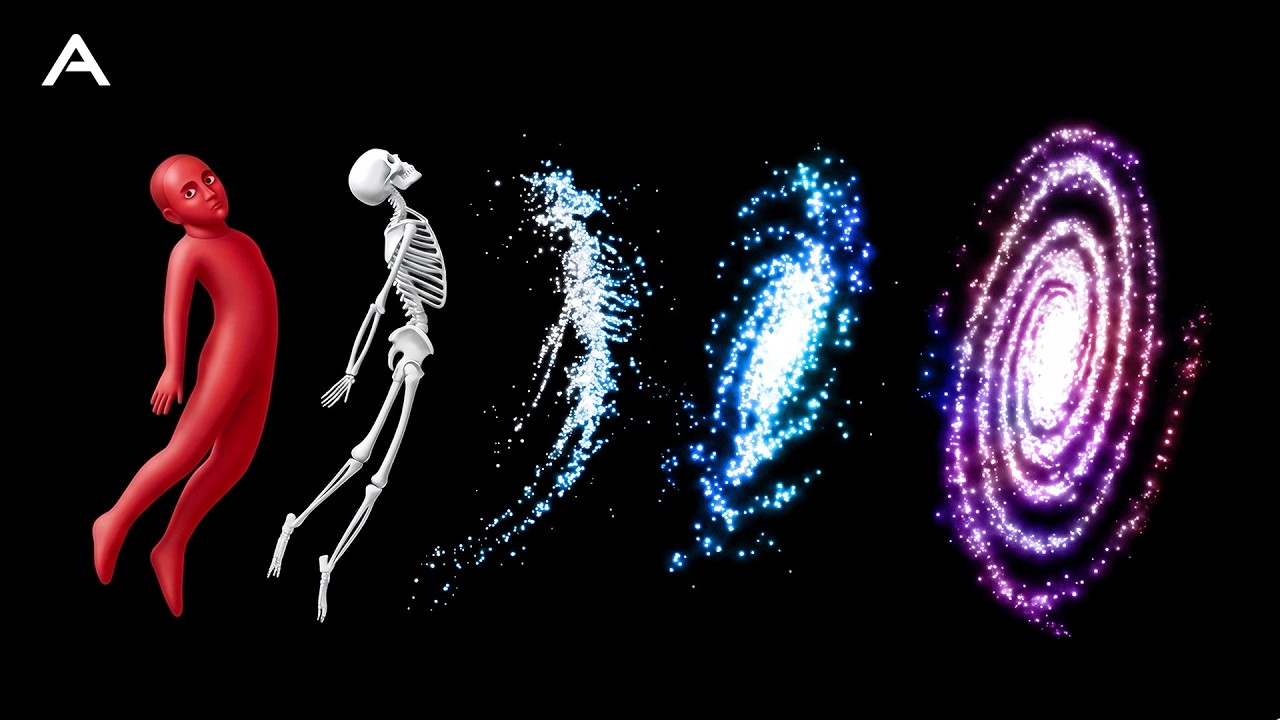
List 25, hosted here by Mike, counts down 25 facts about mirrors, and the list quietly braids four different subjects together: the optics of how reflection actually works, the neuroscience of how your brain builds the face you think you see, the frontier physics that treats mirrors as precision instruments, and the centuries of folklore that treated them as haunted objects. The through line is that a mirror shows you far less of an objective world than you assume. Much of what feels like "the reflection" is your own visual system filling in blanks, flipping axes, and smoothing over change. Along the way the video corrects a few things everyone gets wrong, most notably that mirrors do not swap left and right, and it debunks the paranormal set, Bloody Mary and the "one-way mirror" among them, by naming the ordinary mechanism underneath. The countdown climbs from small perceptual tricks to lasers, the James Webb Space Telescope, and a genuinely speculative idea about mirrors and wormholes, then lands on a humbling closer: you have never actually seen what you look like.
| Theme | Facts in this group | The through line |
|---|---|---|
| Your brain, not the glass | 25, 24, 20, 9, 1 | The image you trust is flipped, delayed, and half invented by perception |
| Mirrors that mess with your mind | 22, 19, 14, 13, 8, 7, 4, 3 | Reflections trigger real, repeatable effects in the nervous system |
| Serious physics and technology | 21, 17, 16, 15, 12, 11, 10, 6, 5 | A smooth surface that sends light back is a scientific instrument |
| Ancient dread and mystery | 23, 18, 2 | For thousands of years a reflection felt like a doorway to the soul |
The 25 facts, rebuilt in order
25. You've never actually seen your real face
Every time you look in a mirror you see a flipped version of your face, with left and right reversed. That is the version your brain has grown attached to, the one you have practiced smiles with, fixed your hair in front of, and quietly accepted as normal. So a photo can feel strange, not because you suddenly look bad, but because the camera shows the unflipped version, the one everyone else has always seen. Tiny asymmetries jump out simply because they are unfamiliar. This is partly the mere-exposure effect: we prefer the version we have seen most, and for your own face that is the mirror version. You are not discovering a different face, the video stresses. You are just seeing yourself from the outside for once, and to everyone else that outside view has always looked completely natural.
24. Mirrors don't actually reverse left and right
Here is the correction almost nobody hears growing up. A mirror does not swap left and right. It swaps front and back. It reflects light straight back along the same path it came from, so if you stand about one meter in front of the glass, your reflection appears about three feet behind it. That depth flip is the only reversal happening. The famous left and right confusion is something you add: you instinctively imagine the reflection as another person facing you, and when you mentally rotate that imagined person around to face you, their left and right land on the opposite sides. The mirror never rotated anything. The swap lives in your interpretation, not in the glass. This is a matter of specular reflection reversing the axis perpendicular to the mirror while leaving the other two axes untouched.
23. Ancient mirrors were made of polished volcanic glass
The first mirrors appeared around 8,000 years ago, long before glass or writing existed. They were polished obsidian, a naturally occurring volcanic glass smooth and dark enough to catch a reflection. The earliest known examples come from Anatolia, and later Ancient Egyptians and the peoples of Mesopotamia crafted mirrors to see themselves in a way that had never been possible before. Some scientists think that glimpsing your own reflection may have been a key moment in the development of human self-awareness, giving early humans a chance to recognize themselves as distinct individuals. In that framing, those ancient shards of volcanic glass became the first windows into the concept of "me." Mike riffs on this, joking that "the concept of me started 8,000 years ago. Who knew?"
22. Staring at your reflection too long causes hallucinations
Stare at your own face in a dimly lit room for about ten minutes and something strange happens. A documented effect called the strange-face illusion sets in, where your features begin to warp, stretch, and twist. People report their faces turning into monsters, into relatives, or into complete strangers. It is not paranormal. It is a consequence of Troxler's fading, the tendency of your visual system to fade out any stimulus that stays unchanging while you hold your gaze steady. Your face is constant, so the brain lets it dissolve and then fills the gaps with bizarre, sometimes unsettling shapes. The reflection you trust seems to become someone or something else in front of your eyes. As the video puts it, for a little while the reflection you trust could be lying to you.
21. Two mirrors facing each other create infinite parallel universes (sort of)
Place two mirrors directly across from one another and you are suddenly looking down a tunnel that seems to stretch forever. This is the infinity mirror: each reflection bounces into the next, repeating smaller and smaller and fading toward a vanishing point you can never reach. Physicists use the effect to study how light, reflection, and perception behave. The video adds the "sort of" honestly: some interpretations of quantum theory, such as the many-worlds interpretation, get informally visualized as these nested corridors, where layers of reality might reflect and overlap in ways our eyes cannot fully capture. Standing between two mirrors you get more than an optics trick, the video says. You get a glimpse of infinity.
20. Your mirror image ages slower than you do (technically)
This one is deliberately deceiving. When you look in a mirror you are actually seeing the past. Light has to travel from your face to the mirror and back to your eyes, and even at the speed of light that journey takes a tiny fraction of a second. The reflection hitting your retinas is already nanoseconds old. It is still you, but a slightly younger you, the one that existed a heartbeat ago. A mirror is therefore a snapshot in time as much as an appearance, capturing a version of you that has already passed no matter how small the fraction. Every glance, the video says, is a fleeting encounter with a self that technically no longer exists.
19. There's a medical condition where mirrors become terrifying
Spectrophobia is the intense fear of mirrors and reflections. For some sufferers the dread comes from a feeling that the reflection is a separate entity, silently watching or judging them. For others it is the fear of seeing something that should not be there, a shadow, a face that is not theirs, or a flicker of movement that vanishes the moment they blink. To someone with spectrophobia, mirrors become portals of uncertainty that blur the line between reality and imagination, and even the simplest glance can trigger panic. It turns the ordinary act of looking at yourself into a moment of real unease.
18. Mirrors were once believed to trap souls
Across many cultures and centuries mirrors were treated as more than glass. When someone died, numerous traditions covered the mirrors in the house to keep the soul of the departed from becoming trapped in a reflection. The fear was not symbolic but literal: the mirror might hold a fragment of the dead and stop it from moving on. Breaking a mirror carried the same weight, and the superstition that it brings seven years of bad luck rests on the idea that shattering the glass damages a piece of your soul. For generations mirrors were handled with reverence and caution, a simple reflective surface treated as a bridge between the living and the dead and a keeper of fortune and fate.
17. NASA uses mirrors to measure the moon's distance
During the Apollo program, astronauts left retroreflector mirrors on the surface of the Moon. These are not souvenirs but precise scientific instruments. Scientists on Earth fire lasers at them and time how long the light takes to bounce back, an experiment called Lunar Laser Ranging. That round trip lets researchers calculate the Earth to Moon distance to millimeter precision and track shifts caused by tides, plate tectonics, and the Moon's slow drift away from us at roughly 3.8 centimeters per year. Mirrors, in this use, became cosmic measuring tools that link us to the Moon with beams of light.
16. One-way mirrors are actually just regular mirrors with different lighting
The one-way mirror is a bit of a hoax, the video says. It is just partially reflective glass with no magic involved. It only behaves like a one-way mirror when one side is brightly lit and the other is kept dark. The bright side sees mostly its own reflection while the dark side looks through and appears invisible. Turn the lighting even on both sides and the illusion collapses: people on both sides become fully visible, exposing what the glass was hiding. It is a subtle trick of light and perception, not a special material.
15. You can make a mirror from almost any material
Technically any smooth surface that reflects light can act as a mirror. Calm water, polished metal, glass, and even your smartphone screen all show a reflection. The clarity of the image comes not from what the surface is made of but from how smooth it is. A perfectly still pond can produce a near perfect mirror image, while a rippling stream blurs and scatters what it reflects. The lesson is that mirrors are everywhere, hiding in plain sight, turning ordinary surfaces into portals for light.
14. The Bloody Mary phenomenon has a scientific explanation
The Bloody Mary mirror game is famous, but it is psychological rather than paranormal. Staring into a dimly lit mirror while chanting the name taps into the same Troxler's fading from fact 22: your visual system fades out the stable details of your reflection. At the same time your brain's pattern recognition circuitry goes into overdrive, hunting for faces and movement in the shadows, an effect known as pareidolia. The result is a distorted, shifting, sometimes horrifying version of yourself, essentially a controlled hallucination produced by sensory deprivation. It is a spooky trick and a completely natural one, your mind filling in the blanks and turning a plain reflection into a ghostly apparition.
13. Curved mirrors can make it disappear
Curved mirrors, especially parabolic ones, can manipulate light in surprising ways. By shaping the surface precisely, they can bend light around an object so it appears to have vanished. Science museums use this to build the "invisible man" illusion: the mirrors redirect the light from behind the hidden object straight to your eyes, and your brain, which expects visual continuity, fills in the background. The object is physically there, but you see empty space where it stands. It is a clean example of how mirrors reshape perception and can trick the brain into seeing emptiness.
12. Mirrors are essential to every laser in existence
Every laser, from a keychain pointer to massive scientific rigs, relies on mirrors. Inside the device, light bounces back and forth between mirrors in an optical cavity, amplifying photons until they form a single coherent, powerful beam. Without that reflective feedback there would be no barcode scanners at the grocery store, no fiber optic internet carrying data across continents, and no LASIK surgery correcting vision. Mirrors are the quiet backbone of a huge amount of modern technology, not just tools for reflection but engines of everyday innovation.
11. There's a "black mirror" that absorbs 99.9% of light
Vantablack is one of the blackest substances ever made, absorbing nearly all the light that hits it. Painted onto a surface it looks like a void, a patch of nothingness where shape and depth vanish. Stare at it and your brain struggles to interpret what it is seeing, because shadows, contours, and edges all disappear, leaving the surface looking flat, featureless, and almost unreal. It is about as close as you can get to seeing pure absence, a visual black hole that swallows light and defies perception. It is the anti mirror: where a mirror returns light, Vantablack keeps it.
10. Mirrors play a role in quantum mechanics that nobody fully understands
In quantum mechanics, mirrors stop behaving like ordinary objects. In certain experiments a single photon can strike a partially reflecting mirror, or beam splitter, and both reflect off it and pass through it at the same time, existing in a superposition of states until it is measured. These are not glitches but fundamental features of reality, a demonstration of wave-particle duality in which observation itself helps determine the outcome. In that sense a mirror becomes a probe of the strangest layers of existence, and the plain mirror in your room hints at a universe far weirder than your senses suggest.
9. Your brain actually "fills in" parts of your reflection
When you glance in a mirror your brain is not recording a perfect snapshot. It fills the gaps using memory, expectation, and familiarity. It smooths wrinkles, downplays blemishes, and overlooks slow change, which is why gradual shifts in your appearance often go unnoticed. You see what you expect to see rather than exactly what is there, a tendency related to change blindness. Your reflection becomes a mental shortcut, a version of yourself that feels stable and consistent even as your hairline moves, your skin ages, and your face slowly transforms.
8. Mirrored rooms can cause panic attacks and disorientation
Extended time in a fully mirrored environment does more than dazzle, it can disorient the mind. The artist Yayoi Kusama is famous for her Infinity Mirror Rooms, lined floor to ceiling with mirrors so that reflections stretch perception into apparent infinity. The effect is mesmerizing and also intense. Visitors have reported vertigo, panic, and even depersonalization, a feeling of losing the boundaries of their own body, and some installations enforce strict time limits to prevent psychological stress. In these spaces wonder can flip quickly into a confrontation with infinity, showing how fragile the sense of self becomes when familiar spatial cues vanish.
7. Animals that recognize themselves in mirrors are considered self-aware
The mirror test, devised by psychologist Gordon Gallup, is one of the most striking ways scientists probe consciousness. It checks whether an animal can recognize itself in a reflection instead of treating the reflection as another creature. So far only humans, great apes, dolphins, elephants, and magpies have clearly passed. Most animals meeting a mirror act as if they are facing a stranger and respond with aggression, curiosity, or social behavior. Passing suggests a sense of self-awareness, the ability to grasp that the reflection is you and not someone else, a rare window into minds capable of introspection.
6. Telescope mirrors are ground to nanometer precision
The James Webb Space Telescope relies on mirrors so precisely engineered they verge on the unbelievable. Each segment is polished to nanometer accuracy, so fine that if one mirror were stretched to the size of the continental United States, its largest imperfection would stand only about 5 centimeters tall. That near atomic perfection, on lightweight beryllium coated in gold, lets the telescope capture faint light from galaxies billions of light years away. In the hands of engineers, mirrors become tools for reading the deepest secrets of the universe, reflecting the first light of the cosmos as easily as they reflect your face.
5. Mirrors can theoretically create wormholes
Here the video reaches openly into speculation. Some physicists suggest mirrors could one day do more than reflect light, they might help manipulate spacetime itself. By arranging mirrors very precisely, it is theorized that regions of negative energy could be created through the Casimir effect, and negative energy is the key ingredient physicists believe a traversable wormhole would require. This is purely theoretical, the video is clear about that, but the math leaves the door open for mirrors to play a role in engineering shortcuts through the fabric of the universe. It is a wild thought, that a reflective surface might one day help humans reach realms once confined to science fiction.
4. The Bloody Mary illusion works even when you know it's fake
This is the deeper twist on fact 14. Understanding the science does not switch the effect off. You can know all about Troxler's fading, you can understand how your brain's pattern recognition system fills shadows with invented faces, you can grasp every mechanism behind mirror hallucinations, and you can still experience them. The reason is that these processes run below conscious control. Your visual system fades details automatically, your brain hunts for patterns automatically, and logic does not get a vote. Even when you fully understand the illusion, your mind keeps distorting the reflection. As the video puts it, knowledge does not override instinct.
3. Mirror neurons are why you feel other people's emotions
Deep in the brain sits a network of cells called mirror neurons, first described by Giacomo Rizzolatti and his team. These are tiny biological mirrors that fire both when you perform an action and when you watch someone else perform it. They are widely linked to empathy, the reason you wince when someone stubs a toe, smile when friends laugh, or feel your body tense during a tense movie scene. In a real sense you mirror other people inside your own head, experiencing a shadow of their movements and feelings. Reflecting, the video notes, is wired deep into our biology, not just something glass does.
2. Ancient philosophers believed mirrors could show the future
In Ancient Greek and Roman cultures, mirrors were treated as tools of prophecy through a practice called catoptromancy, a form of divination. Practitioners believed that under the right conditions of light, angle, or ritual, a mirror could reveal events yet to come or the will of the gods. It shows that humans have long seen mirrors as more than reflective surfaces, as portals of possibility blurring the line between the everyday and the supernatural. Mike compares it to the Mirror of Galadriel from The Lord of the Rings, the basin that shows things that were, that are, and that may yet be.
1. You don't actually know what you look like
The countdown lands on its thesis. Given the mirror reversal, camera distortion, tricky lighting, and your brain's habit of showing you what it expects, you have never actually seen yourself as you truly are. Every reflection and every photo is filtered through perception, expectation, and context, so there is no single objective "you" to behold. Your appearance is a shifting construction your mind stitches together from fragments and guesses, familiar one moment and slightly off the next. That, the video insists, is not vanity, it is neuroscience. Your face is less a fixed reality than a living illusion your brain rebuilds every time you try to see it. Mirrors and cameras do not betray you, they just reveal how malleable perception really is.
Where it stands
The list mixes rock solid science, honest debunking, and open speculation, and it is worth sorting which is which. The perceptual facts (25, 24, 9, 1) and the debunks (16, 14, 22, 4) are mainstream and well supported. The technology facts (17, 12, 6) are straightforwardly true. The wormhole item (5) is the one clearly flagged as theoretical, and the video is honest about it. The quantum framing (10) is real physics stated loosely, and the "parallel universes" gloss on facing mirrors (21) is a metaphor, not established science. The table below sorts the spooky sounding claims from their ordinary mechanisms.
| The spooky claim | What is really going on | Verdict |
|---|---|---|
| One-way mirrors hide watchers by magic | Partially reflective glass plus a bright side and a dark side | Debunked, solid optics |
| Bloody Mary summons a spirit | Troxler fading plus face pareidolia in low light | Debunked, psychology |
| Your reflection warps into a monster | The strange-face illusion, same fading mechanism | Documented effect |
| Mirrors trap souls, breakage is 7 years bad luck | Folklore, no physical basis | Superstition |
| Mirrors reveal the future (catoptromancy) | Ancient divination ritual, no evidence | Superstition |
| Facing mirrors show parallel universes | Real infinite reflections, the "dimensions" reading is a metaphor | Half true |
| Mirrors can build wormholes | Negative energy via the Casimir effect is real, wormhole engineering is not | Speculative |
A quick sweep through mirrors as they show up across history and technology, from the oldest known reflection to the sharpest one ever built:
- ~6000 BC The first known mirrors, polished obsidian, are crafted in Neolithic Anatolia, long before glass or writing.
- Antiquity Greek and Roman practitioners use mirrors for catoptromancy, reading the future in reflected light.
- Pre modern Cultures worldwide cover mirrors at a death and fear that breaking one costs seven years of luck.
- 1960s The laser is built around mirrored optical cavities, seeding barcode scanners, fiber optics, and LASIK.
- 1969 to 1971 Apollo astronauts place retroreflectors on the Moon, enabling millimeter Lunar Laser Ranging.
- 1970s onward Psychologist Gordon Gallup develops the mirror test for animal self-awareness.
- 2010s Vantablack debuts as one of the darkest materials ever made, a near total anti mirror.
- 2021 The James Webb Space Telescope launches with mirrors polished to nanometer precision.
Key takeaways
- A mirror reverses front and back, not left and right. The left and right swap is a mental rotation you add, and it explains why you look off in photos.
- Much of "your reflection" is manufactured by your brain. It flips the image, delays it by nanoseconds, smooths change, and fills gaps with expectation.
- The scary mirror phenomena are real but ordinary. The strange-face illusion and Bloody Mary both run on Troxler's fading plus pattern hungry perception, and knowing the mechanism does not switch it off.
- Mirrors are precision instruments. They range the Moon to the millimeter, sit inside every laser, and form the sharpest optics humans have ever ground for the James Webb Space Telescope.
- The mirror test ties reflection to consciousness. Only a short list of species recognizes itself, which makes a reflective surface a probe for self-awareness.
- The speculative items are labeled as such. Wormholes from negative energy and "parallel universes" in facing mirrors are ideas and metaphors, not settled science.
Chapters
- 0:00 Intro
- 0:45 25. You've Never Actually Seen Your Real Face
- 1:33 24. Mirrors Don't Actually Reverse Left and Right
- 2:21 23. Ancient Mirrors Were Made of Polished Volcanic Glass
- 3:16 22. Staring at Your Reflection Too Long Causes Hallucinations
- 4:18 21. Two Mirrors Facing Each Other Create Infinite Parallel Universes (Sort Of)
- 5:09 20. Your Mirror Image Ages Slower Than You Do (Technically)
- 6:00 19. There's a Medical Condition Where Mirrors Become Terrifying
- 6:41 18. Mirrors Were Once Believed to Trap Souls
- 7:32 17. NASA Uses Mirrors to Measure the Moon's Distance
- 8:14 16. One-Way Mirrors Are Actually Just Regular Mirrors with Different Lighting
- 8:53 15. You Can Make a Mirror from Almost Any Material
- 9:28 14. The "Bloody Mary" Phenomenon Has a Scientific Explanation
- 10:23 13. Curved Mirrors Can Make You Disappear
- 11:05 12. Mirrors Are Essential to Every Laser in Existence
- 11:48 11. There's a "Black Mirror" That Absorbs 99.9% of Light
- 12:30 10. Mirrors Play a Role in Quantum Mechanics That Nobody Fully Understands
- 13:21 9. Your Brain Actually "Fills In" Parts of Your Reflection
- 14:00 8. Mirrored Rooms Can Cause Panic Attacks and Disorientation
- 14:53 7. Animals That Recognize Themselves in Mirrors Are Considered Self-Aware
- 15:41 6. Telescope Mirrors Are Ground to Nanometer Precision
- 16:36 5. Mirrors Can Theoretically Create Wormholes
- 17:40 4. The "Bloody Mary" Illusion Works Even When You Know It's Fake
- 18:47 3. Mirror Neurons Are Why You Feel Other People's Emotions
- 19:36 2. Ancient Philosophers Believed Mirrors Could Show the Future
- 20:24 1. You Don't Actually Know What You Look Like
Notable quotes
- 0:22 "Everything you think you know about reflections is about to shatter."
- 1:20 "You're not discovering a different face. You're just seeing yourself from the outside for once."
- 2:10 "The mirror never rotated anything. The illusion simply lives in your brain, not in the glass."
- 3:05 "Those ancient shards of volcanic glass became the first windows into the concept of me."
- 4:05 "For a little while, the reflection you trust could be lying to you."
- 5:55 "Every glance is a fleeting encounter with a self that technically no longer exists."
- 18:40 "Knowledge doesn't override instinct. That's just how it works."
- 21:05 "Your face is less a fixed reality and more like a straight-up living illusion that's endlessly being reconstructed by your brain every time you try to see it."
Resources mentioned
- List 25, the channel behind the countdown, hosted here by Mike.
- Specular reflection and reflection in physics, the mechanism behind the front and back flip.
- Mere-exposure effect, why the mirror version of your face feels more right than a photo.
- Obsidian and the Neolithic mirrors of Anatolia, used by Ancient Egypt and Mesopotamia.
- The strange-face illusion and Troxler's fading, the science under mirror hallucinations, Bloody Mary, and pareidolia.
- Infinity mirror and the many-worlds interpretation it gets compared to.
- Speed of light, why your reflection is always nanoseconds old.
- Spectrophobia, the fear of mirrors, and the broken mirror superstition.
- Apollo program retroreflectors and Lunar Laser Ranging, tracking the Moon's tidal drift and plate tectonics.
- One-way mirror, just partially reflective glass and uneven lighting.
- Laser, optical cavity, and photon, plus the barcode scanner, optical fiber, and LASIK it enables.
- Vantablack, one of the darkest materials ever made.
- Quantum mechanics, the beam splitter, superposition, wave-particle duality, and the observer effect.
- Change blindness, why slow changes in your reflection go unnoticed.
- Yayoi Kusama and her Infinity Mirror Rooms, linked to vertigo and depersonalization.
- The mirror test by Gordon Gallup, passed by great apes, dolphins, elephants, and magpies.
- James Webb Space Telescope, with beryllium mirrors polished to nanometer precision.
- Wormholes, negative energy, the Casimir effect, and spacetime.
- Mirror neurons, discovered by Giacomo Rizzolatti, and their link to empathy.
- Catoptromancy, a form of divination, compared to the Mirror of Galadriel in The Lord of the Rings.