At a glance
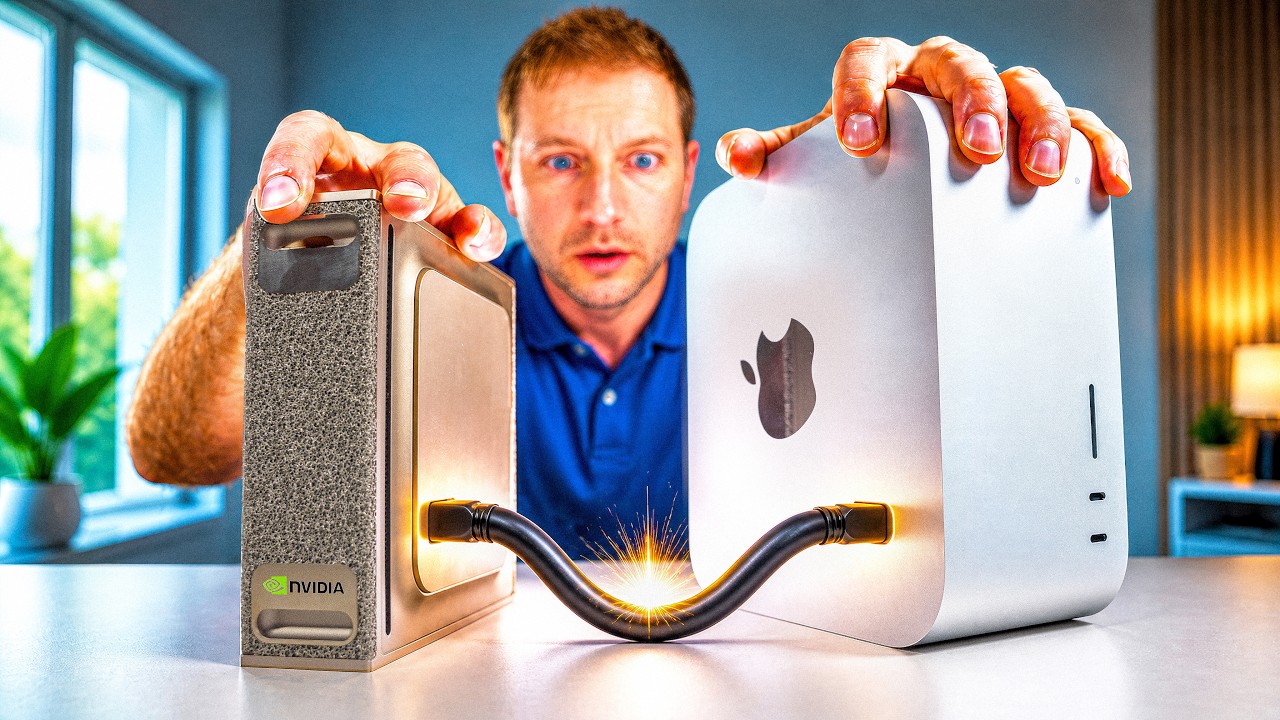
Jack Roberts runs a three round bake off between Claude Fable 5, which he calls the world's number one design agent, and Kimi K3, the model from Moonshot AI that landed at roughly 30% of Fable 5's price. Both contenders run inside the same harness, Claude Code, with Kimi K3 piped in through an OpenRouter API key, so the only variable is the model. Three levels: a self running narrated HTML slide deck, a one shot travel dashboard, and a full client grade website built from a design skill he gives away free. Every round is scored on output, cost, and speed, and every round has real numbers attached, from $35 versus $10.70 on the deck to 8.9 minutes versus 25 minutes on the dashboard to 67.8 minutes and $19.32 on the website. Along the way he wires Fish Audio into both models so the decks narrate themselves, clones his own voice from a 15 second sample, and runs into the one place Fable 5 says no. His conclusion is not the one the pricing implies.
The premise: the design throne, and the first real challenger
The opening claim is blunt. Claude is the world's number one design agent, its biggest threat just dropped, and if you have not noticed you could be wasting hundreds of dollars. Claude is an incredible model, he says, which is exactly why it is almost impossible to defeat. It sits atop the design throne, and he reaches for a Game of Thrones analogy and immediately disowns it: "It sits atop the design throne. Kind of like King Joffrey, some may say. It's a bad analogy, but you get the idea."
The credentials do not need reciting. Sites, decks, graphics, a million things. Plenty have tried to take the design crown and nobody has come close, and Fable 5 in particular is a cut above everybody else.
Then Kimi K3 arrived, and his first reaction was skepticism about the genre rather than the model: "is this legit, or is this just another 'yeah, this model's now the best'?" So he decided to put it through its paces, because the goal is not loyalty to a vendor, it is always using the best model available.
The number that makes the test worth running is the price. Kimi K3 costs roughly 30% the price of Fable 5. That is the whole reason this is interesting, and it is also the trap he names immediately: "we don't want a benchmark queen. We want someone that actually delivers, that is quick, that is high quality, and is going to save us money."
What he means by "the moat for design"
Before any test runs he defines what he is actually measuring, and it is not raw model quality. He calls it the moat for design, and it has three parts:
- A great model with fantastic taste. The raw aesthetic judgment of the thing generating the output.
- Your design systems and your skills. The reusable assets you bring, which in this video means a literal Claude skill he built and gives away.
- The right harness. The agent runtime that turns a model into something that can research a brand, write files, fetch images, and iterate.
That framing matters for reading the results, because it is why the test is structured the way it is. He is not asking "which model is smarter." He is asking which model, dropped into an identical harness with an identical skill, produces better work per dollar and per minute.
The three levels are slides, dashboards, and websites, judged on output, cost, and speed. And he telegraphs the ending honestly: "we'll be fair, the results are surprising."
The rig: run Kimi K3 inside Claude Code
The setup is the part most viewers will actually reuse, and it takes about ninety seconds of the video.
To run Kimi K3, you get an API key from openrouter.ai. Then he provides a downloadable skill you upload to Claude. With the skill loaded, the instruction is conversational:
Hey, open up Claude Code powered by Kimi K3
That opens a new terminal. The terminal is Claude Code, but the status line reads OpenRouter · Moonshot AI · Kimi K3. His words: "which means we're using the full Claude Code harness with this cool model." He notes you can do the same thing in the app rather than the terminal.
This is the single most important design decision in the whole video. Both contenders get the same agent loop, the same tool access, the same file system, the same skill format. Fable 5 is running natively and Kimi K3 is running through OpenRouter, but the scaffolding around them is identical. Whatever the outputs differ by, they do not differ because one model got a better runtime.
Level 1: a deck that talks
"We're going to come out the gates swinging. We're not going to play softball today."
The first task is deliberately hard, and the hard part is not the slides. He wants a deck that researches a brand on its own and then narrates itself. Not an HTML presentation with speaker notes. A self running presentation with audio over the top.
The brand is Glaido, a voice first AI assistant. The brief, as he reads it:
This is a blind design test.

Build me a beautiful self-running HTML slide presentation that introduces
my company, Glaido.

[explanation of what Glaido is]

Use six slides. Self-contained HTML, rich visual design.
Use a text-to-speech system to create the audio over it.
Six slides. Self contained HTML. Rich visual design. And a text to speech system wired in, which is the requirement that turns this from a design test into a systems test, because the model has to go find a voice API, call it, and stitch the audio to the slide timeline without being told how.
The narration layer: Fish Audio, and why he picked it
Before showing results he explains the voice stack, because without it the test is not reproducible. Both models use Fish Audio with a brand new model. His reasons, in order:
- About 80% cheaper than ElevenLabs. That is the headline.
- Voice cloning from 10 to 30 seconds of audio.
- Emotion control. You can direct how a line is delivered, which matters when you are generating decks at volume and want them to not sound like a kiosk.
- Over 83 languages.
- Cheap to get started.
The emotion point is the one he demonstrates rather than asserts. Fish Audio lets you temper how a voice sounds by adding delivery commands alongside the text, "how I want you to say the thing." He plays an eagle voice as an example of the range, then plays a second sample to make the point about delivery: "Hey, why are you sitting here all alone in the corner?" His verdict on it, deadpan: "It's quite sultry. You get the idea, right?"
What Fable 5 produced
The Fable 5 deck was built on High. He plays slide one:
"Welcome to Glaido. We're a voice first AI assistant built on one simple promise. Speak and it's done. Our mission is one sentence. You just say it out loud. Move the meeting, draft the update, book the flight, and Glaido carries it out end to end. Three moves."
His read, in real time:
- The animation lands. Specifically the animated command examples: "move my meeting 3 p.m.", "draft investor update". The deck is not showing bullet points about a voice assistant, it is showing the voice assistant working.
- The audio genuinely enhances it, rather than sitting on top as narration for its own sake.
- The copy has brand identity. He calls out one line in particular: "People whose ideas move faster than their fingers."
- The closing slide returns to the promise, "Speak and it's done."
And the summary judgment on the whole artifact: "Very good. One shot."
What Kimi K3 produced
Kimi's version is titled Glaido onboarding. Slide one:
"This is the world's fastest dictation. The voice layer for every app you already use. From today you don't have to type to do your best work. Keyboards were never the bottleneck. Typing is. Here's what that sounds like. You speak naturally, a half formed thought."
What he liked:
- The narration is good. Same bar as Fable 5 on delivery.
- A clear use case shown on the page, which he says makes the value obvious rather than abstract.
- It branched into three sections, a structural choice he calls out approvingly.
- It drove the design, look, and feel from Glaido's actual website. This is the sharpest observation in the round. The brief said research the brand. Kimi did not just extract facts, it extracted the visual language and applied it.
"It's good. I think it's really good."
Notice the copy line Kimi wrote: "Keyboards were never the bottleneck. Typing is." That is a positioning line, not a feature line, and it came out of a one shot prompt against a brand the model had to go look up.
Where Fable 5 says no
Then the aside that turns out to be one of the most useful things in the video. As a joke he was tempted to have the deck narrated by a Morgan Freeman voice, and plays the sample: "Life isn't about the destinations we reach." He thinks it would have had gravitas.
Fable 5 refused. Flatly.
"Funnily enough though, Claude Fable 5, and this is a really important point I have to drill down into here, would not do that. It has a set of ethical guard rails and just would outright refuse it. But other models may have a slightly different point of view."
He is careful not to turn it into a complaint, and careful not to advocate for the impersonation either: "Not saying we want to go ahead and use Morgan Freeman for everything, but I just want to say that, you know, if you cross Fable 5's ethics and it doesn't like what you ask it to do, it will say no to you."
It is worth sitting with what that is, in a bake off scored on output, cost, and speed. A refusal is a product difference that none of those three axes capture. It is also the one axis where the models were not equivalent, and it went against the expensive one.
Cloning your own voice, in about fifteen seconds
The Fish Audio segment then goes deep, because the real unlock is not picking a voice from a library, it is putting your voice on every deck you generate.
The paths available on the platform:
- Professional voice clone. Upload 10 to 20 short clips and you get a full clone. He notes Claude can help you with the process, and that more clips is straightforwardly better. If you have films and footage sitting around, that is your training set.
- Instant voice clone. The fast path.
- Voice design. Build a voice from a description rather than a recording.
He does one live to prove the floor is low: a 15 second sample, uploaded, and "you're ready to rock and roll." Once enough tags are captured you can hit ready to analyze. He sets his own clone to private rather than publicly available, confirms permission, and clicks create.
Then he demonstrates driving it two ways. Directly in the app, where you write the line and click generate speech, testing "hey, go ahead and do me a favor and create 15 different ideas." Or through the agent, which is the part that matters for the design workflow:
Hey, do me a favor and redo the voice on that presentation with Jack Roberts
Claude, or Kimi, goes back and regenerates the presentation audio in his cloned voice. He unmutes the result and you hear the deck read back in it: "calendar, inbox, tools, and quietly confirms when it's done." Thirty seconds of audio, regenerated on a sentence of instruction.
Two adjacent uses he flags:
- Loom style updates. If you send Loom videos or narrated presentations, this collapses the recording step.
- Sound effects. Fish Audio also carries effects, laser beams, engine starts, whatever, which he notes for anyone doing video editing.
"This is such a hack for building anything, whether it's on your website or presentations, any design systems."
Round one, by the numbers
| Level 1: narrated deck | Fable 5 | Kimi K3 |
|---|---|---|
| Build time | 21 minutes | 23.3 minutes |
| Token volume | about 3x larger | baseline |
| Cost | $35.00 | $10.70 |
The design verdict: Kimi K3 edged it. The price verdict: about a third. Put together, he does not hedge.
"So round one, I have to decisively give that to Kimi K3."
The token detail is the interesting one and it goes the opposite way from the story the rest of the video will tell. On the deck, Fable 5 burned roughly three times the tokens of Kimi K3 and still cost three and a bit times as much. Kimi won this round on both halves of the efficiency equation at once.
Level 2: a dashboard you'd use
Round two is a real errand rather than a hypothetical. He is in Budapest and flying to Montenegro for an AI conference in a week, so he wants a flight dashboard. His aside on the format is honest: "we don't use dashboards too much these days."
The prompt is deliberately thinner than round one:
Build a beautiful information-rich HTML travel dashboard.

[here are some facts]

Go and build this. If imagery elevates it, use an image CLI.
That last clause is the interesting one. He does not tell it to add images. He tells it that if imagery elevates the result, it has permission to go get some through an image CLI. Whether the model takes that door is part of what gets judged.
Both dashboards are one shot. No follow ups, no "make it better."
Fable 5's dashboard
Built on Fable 5 High. His running commentary is measured rather than glowing:
- The Hungary to Montenegro routing is there. "Fairly basic. Nothing crazy. Nothing out of the norm."
- Fare trend, one way. He likes it. "Basic. It's cool."
- Pricing is shown, which he calls fantastic.
- Temperature guidance, which he singles out as actually useful for the trip.
- Scrolling down, "a fairly decent, I'd say, dashboard. I think that's fairly fine."
"Fairly fine" is a real verdict, not a dodge. It is competent, complete, and unsurprising.
Kimi K3's dashboard
- It took the initiative to fetch an image. He calls this out first and calls it cool. That permission clause in the prompt, the one that said use an image CLI if imagery elevates it, is a door Kimi walked through.
- Both models added a tab component, which he judges "more symbolic than anything."
- More imagery overall, and as a result "a little bit easier to understand."
- Price captured, same as Fable 5.
- A fare forecast and trend, which he narrates while working out what he is looking at.
- A dynamic packing checklist, which he initially believed Kimi had and Fable 5 had not.
Then the most honest ten seconds in the video. He starts to award Kimi a differentiator, catches himself mid sentence, and corrects on camera: "We didn't get that actually from Fable 5, if I'm super duper honest. We didn't get a checklist. Oh, we did. My bad. We got the checklist down here. I just didn't quite see it on the first attempt."
That correction is itself a finding. The feature was in both. Kimi's version was easier to find, which in a dashboard is not a small thing, but it was not a capability gap.
His verdict on the design: "I would say that Kimi edges it, but honestly I would say that this is really, really well balanced. It's tough to tell them apart." He also throws it to the audience, asking viewers to say in the comments who they think won, which is a fair signal that he does not consider the gap decisive.
Round two, by the numbers
| Level 2: travel dashboard | Fable 5 | Kimi K3 |
|---|---|---|
| Build time | 8.9 minutes | 25 minutes |
| Cost | $14.80 | $9.40 |
| Notes | fast, unremarkable | hit its 1 million token context window cap |
This is where the story turns, and it is the first time speed shows up as a real cost. Fable 5 finished in 8.9 minutes. Kimi K3 took 25 minutes, roughly three times as long, and along the way hit its 1 million context window cap, which he calls quite wild.
The joke lands because it is a specific unit of time: "I had a number two haircut when I started this video and by the time Kimi K3 finished, it was actually done."
On price, Kimi was about 50% cheaper, $9.40 against $14.80. So the round reads: Kimi marginally better looking, half the price, three times the wall clock. His guidance is to weigh that yourself: "make your own decisions based on what you think is worth it in terms of time and speed."
And the diagnosis he keeps for the rest of the video: "It is a little slow. That's the one thing about Kimi K3, is the time. We didn't get that on challenge one, but challenge two we did."
Level 3: the $10k website
The third round is the biggest, and it introduces the third leg of the moat: the skill.
He built a Fable 5 website skill in his previous video and gives it away free. This is a real asset, not a prompt he pasted once. "That prompt, I spent so many hours on that and so many dollars. So please, please do use that. It is completely for free."
The loading procedure, for each side:
For Claude Code with Fable 5:
- Download the skill. It arrives as a zip.
- Open Claude Code.
- Select the Fable 5 website skill and click open.
For Kimi K3: you do not have a native skill loader in the same place, so he routes around it in two moves.
# in the same chat window where you loaded the skill
Hey, write me a prompt for this.

# then, in the Kimi K3 terminal
Hey, use my downloaded skills to go ahead and build them.
The skill also interviews you before it builds. When you run it, it asks what the site should be about, what it should look like, and whether you want video.
Fable 5 built Pulp
The Fable 5 site is called Pulp, done in one shot. He scrolls it and reacts: "Look at this. This is crazy decent."
The named sections, which read like a lineup of pulp titles: Midnight Crush, Grim Blind, Berry Rising, Manga Mayhem.
His verdict on it as a target: "This is a tall order to beat." And a note on the skill's throughput that is easy to miss: "this skill, by the way, spits them out one at a pop. That's how good this is." The skill is not a one time artifact generator, it produces these repeatedly.
Cost figure he states for Pulp: about $10 in credits.
Kimi K3 built a chocolate brand
Kimi's brief, chosen through the skill's interview, is a chocolate brand. He walks the finished page top to bottom, and the walkthrough is worth reproducing because it is the whole argument for the round:
- The hero lands. "We've got a beautiful thing there."
- Scroll, and the chocolate bar appears, then the detail sections.
- "It's actually very fresh. You can see if you were selling chocolate, you got this thing. You zoom in. Beautiful."
- One criticism, stated twice so it clearly bothered him a little: "I think the animation could be a little smoother. A tiny little bit smoother."
- Then the narrative scroll, which is where he stops critiquing and starts reading. "It begins under the canopy." Then "The pod splits on its own time." His reaction: "All right, I'm getting bought. This is where we get chocolate from."
- "Seeds fall into the fire." Then "Ember becomes river."
- And the payoff at the bottom: the chocolate pours down and resolves into the product. "Very, very, very cool."
The site is not a landing page with sections. It is the cacao pod to chocolate bar journey told as a scroll, and the copy is doing as much work as the layout.
His verdict on round three
He gives a preference and then immediately walks the ranking back to a tie:
"They're both fantastic websites. If I had to give you my personal preference, I would have to go with the Pulp, but I think they're very similar."
The one gap he names is the animation smoothness, and he explicitly discounts it as a model capability difference: "I would say that Claude had the ability to keep this a little bit smoother, but I think if I followed back up with a prompt like 'hey, make this smoother,' it would have been just as good a job."
That is a one shot artifact of the test design, not a limitation of Kimi K3. In a real build you would send the follow up.
His final position on the pair: "I think these are on the same level. I think ultimately they are the same level. Look at the design expertise. Look at the journey." And the commercial framing, which is why the section is titled the way it is: "if you were selling chocolate and you turned up to a client with this website, this wasn't built with Fable 5. That's how good it is."
Round three, by the numbers
| Level 3: full website | Fable 5 | Kimi K3 |
|---|---|---|
| Build time | around 20 minutes | 67.8 minutes |
| Cost of the build shown | about $10 in credits (Pulp) | $19.32 in Kimi credits (chocolate) |
| His estimate for the same job on the other model | $80+ if the chocolate site had been built on Fable 5 | not stated |
67.8 minutes. He does not treat that as fatal, because of where the time goes: "which is pretty timely, since you let it rock and roll in the background." An hour of background agent time is not an hour of your time.
The $80 figure is the one carrying the argument: "whilst this was only $19 on Kimi K3, if that would have been done on Claude Fable 5, that would have been around $80 plus for that exact system, which is why you most likely would have delegated to sub models. But at the Kimi prices, if you're building these at scale, you could let that run a little further."
That last clause is the practical insight of the round. Cheap tokens do not just save money, they change what you allow the agent to do. At $80 a site you interrupt, delegate to smaller models, and cap the run. At $19 you let it keep working.
The scoreboard
| Round | Claude Fable 5 | Kimi K3 | His verdict |
|---|---|---|---|
| Level 1 Narrated HTML deck |
21 min · $35.00 · ~3x the tokens. Animated command examples, strong brand copy, "People whose ideas move faster than their fingers." Refused the Morgan Freeman voice | 23.3 min · $10.70. Branched into three sections, clear use case on the page, pulled look and feel from the real Glaido site | Kimi K3, decisively Edged the design at about a third of the price |
| Level 2 Travel dashboard |
8.9 min · $14.80. Fare trend, pricing, temperature, packing checklist. "Fairly fine" | 25 min · $9.40. Fetched its own imagery, easier to read, checklist easier to find. Hit its 1M context cap | Kimi K3 edges it but "really, really well balanced," and he throws it to the comments |
| Level 3 Full website |
~20 min · ~$10 in credits. Pulp: Midnight Crush, Grim Blind, Berry Rising, Manga Mayhem. "A tall order to beat" | 67.8 min · $19.32. Chocolate brand: canopy to pod to fire to river to bar, told as a scroll. Animation slightly less smooth | Personal preference: Pulp but "ultimately they are the same level" |
| What the round cost you in wall clock | Faster in 2 of 3 rounds, by 3x in the dashboard and 3.4x in the website | Slower in 2 of 3 rounds; level 1 was effectively a tie | Speed is Fable 5's remaining edge |
| What it cost you in money | $35.00 · $14.80 · ~$10 shown, $80+ estimated for the Kimi job | $10.70 · $9.40 · $19.32 | Kimi K3 cheaper in every measured round |
What he concludes
The headline finding, stated plainly: "We now have a model that is on par with the best design agent on the planet."
He offers a theory for how, and labels it as speculation rather than fact: "Some say, and I think honestly, that they distilled Fable 5 and kind of hacked it that way."
Then the caveat that keeps the whole video honest, and the one that most price comparisons skip:
"The reality is it is cheaper. However, it often takes more tokens to get there. The upshot of that basically means that it's still cheaper, but not quite as cheap as you thought it was."
That is the correct way to read a 30% list price. Per token, Kimi K3 is roughly a third of Fable 5. Per job, once you account for the extra tokens it spends getting there, the discount compresses. It is still a discount. Level 1 was 3.3x cheaper, level 2 was 1.6x cheaper. The list price says 3.3x every time. The measured jobs say otherwise, and the dashboard is the honest data point.
The play he actually recommends
The recommendation is a routing rule, not a winner:
- Use Fable 5 as part of your Claude subscription. While you have subscription capacity, spend it. It is the fastest and it is already paid for.
- When the subscription limit ends, tag in Kimi K3 for your high leverage work, unless it is something Opus 4.8 can accomplish.
- If you are running on API rather than subscription, use Kimi K3. That is where the price difference actually hits your card.
He clearly finds his own conclusion surprising: "I can't believe we're saying it. Fable 5 only dropped recently, but that's how quick these things are currently evolving."
- 0:27 The setup: Claude sits atop the design throne, Fable 5 is a cut above, and plenty have tried to take the crown.
- 1:12 Kimi K3 costs about 30% the price of Fable 5. "We don't want a benchmark queen."
- 1:28 Defines the moat for design: a model with taste, your design systems and skills, and the right harness.
- 1:39 The rules: three levels, slides, dashboards, websites, judged on output, cost, and speed.
- 2:35 The level 1 prompt: a blind design test, six slides, self contained HTML, and a text to speech layer.
- 2:55 The rig: an OpenRouter API key plus a skill opens Claude Code running Kimi K3.
- 3:29 Fish Audio: about 80% cheaper than ElevenLabs, voice clone from 10 to 30 seconds, emotion control, 83+ languages.
- 3:56 Fable 5's deck. Animated command examples, brand copy that lands, "one shot."
- 4:36 Kimi K3's deck. Three branched sections and design pulled from the real Glaido site.
- 5:28 The Morgan Freeman voice. Fable 5 refuses on ethical guard rails.
- 6:44 Cloning his own voice: 10 to 20 clips for a professional clone, or a 15 second instant clone, set to private.
- 7:47 One sentence to the agent regenerates the whole deck's narration in his voice.
- 8:36 Round 1 numbers: 21 min / $35 versus 23.3 min / $10.70, and Fable 5 used ~3x the tokens. Kimi K3 wins decisively.
- 9:05 Level 2 begins: a Budapest to Montenegro flight dashboard, one shot, with permission to fetch imagery.
- 9:54 Fable 5's dashboard: fare trend, pricing, temperature. "Fairly fine."
- 10:30 Kimi's dashboard fetches its own imagery. The packing checklist correction: both had one.
- 11:23 Round 2 numbers: 8.9 min / $14.80 versus 25 min / $9.40, and Kimi hits its 1M context cap.
- 12:14 Level 3: the website, built from the free Fable 5 website skill he published in his previous video.
- 12:54 Pulp, Fable 5, one shot, about $10. Midnight Crush, Grim Blind, Berry Rising, Manga Mayhem.
- 13:24 The chocolate site, Kimi K3. Canopy, pod, fire, river, bar, told as a scroll.
- 14:58 Round 3 numbers: ~20 min versus 67.8 min, $19.32 on Kimi, estimated $80+ if built on Fable 5.
- 15:35 The finding: on par with the best design agent on the planet, possibly distilled, cheaper but token hungry.
- 15:59 The play: Fable 5 inside the subscription, Kimi K3 once it runs out or if you are on API, unless Opus 4.8 can do it.
Where the bake off is thin
The video is honest about its own numbers, so this section is about the shape of the test rather than the good faith behind it. Four things a reader should hold alongside the verdict:
The sample is one run per model per level. Every build is one shot, no retries, no reruns. That is a deliberate and defensible choice, because one shot output is what you actually experience, but it means the timing spread is a single draw. A 25 minute dashboard run and an 8.9 minute one could partly be queue variance on a hosted API rather than model behavior, and nothing in the video separates those.
Level 3 is not the same brief. Fable 5 built Pulp and Kimi K3 built a chocolate brand site. Two different sites, two different content loads, chosen through the skill's interview questions. That makes the level 3 cost pairing, about $10 against $19.32, a comparison across different jobs rather than a head to head, which is exactly why the honest number in that round is his $80 plus estimate for what the chocolate site would have cost on Fable 5. He states the estimate as an estimate. It is also the number doing the most work in the conclusion, and it is the only one in the video with no meter behind it.
The two level 3 dollar figures sit awkwardly together. Pulp is stated at about $10 on Fable 5. The chocolate site is stated at $80 plus if it had been built on Fable 5. Both can be true, since they are different builds and the chocolate site plainly ran longer, but the video does not reconcile the eightfold gap between the site Fable 5 actually built and the site it was projected to build.
The design judging is one person's eye, live. The prompt says "blind design test," but the scoring is not blind and not rubric based. It is him narrating as he scrolls. He is upfront about this and even hands the dashboard round to the comments rather than calling it. The corrections on camera, catching himself about the packing checklist, are the best evidence that the judging is honest rather than staged.
Two disclosures worth naming, in the same spirit. The brand used in level 1, Glaido, is linked in the video description with a promo code, and the Claude Code masterclass he pitches midway through level 2 is his paid product. Neither touches the numbers, and the website skill that carries level 3 is genuinely free, but a viewer should know which links are commercial.
None of this moves the headline. A model at roughly a third of the price produced work he judged equal to or better than the reigning design agent in two of three rounds, and equal in the third. The correction the video makes to its own thesis, that more tokens eat into the discount, is the sort of thing an unserious comparison would have left out.
Key takeaways
- Hold the harness constant. Piping Kimi K3 through an OpenRouter key into Claude Code means both models get the same agent loop, tools, and skills. Without that, a model comparison is really a product comparison.
- Kimi K3 costs about 30% of Fable 5 per token, but not per job. Measured: 3.3x cheaper on the deck, 1.6x cheaper on the dashboard. It spends more tokens getting to the same place, so the real world discount is smaller than the list price.
- Speed is where Fable 5 still wins. 8.9 minutes against 25 on the dashboard, around 20 against 67.8 on the website. Kimi even hit its 1 million token context cap on a single dashboard build.
- Slow agents are cheaper than they feel. His counter to the 67.8 minute run is that it runs in the background. Wall clock only costs you if you are watching it.
- Cheap tokens change what you let the agent attempt. At $80 a site you interrupt and delegate to sub models. At $19 you let it keep going. Price is a permission setting, not just a bill.
- The skill is a third of the moat. The free Fable 5 website skill is what made level 3 client grade on both sides, and it works when pointed at Kimi K3 too. Portable design assets outlast any one model's lead.
- Kimi read the brand's real site. Its deck pulled look and feel from Glaido's actual website and its dashboard fetched its own imagery from a conditional permission. Initiative showed up as a real differentiator.
- Fable 5 will refuse you. It would not narrate the deck in a Morgan Freeman voice. In a bake off scored on output, cost, and speed, guard rails are a fourth axis nobody scores.
- One shot judging exaggerates small gaps. The one flaw he found in Kimi's website, slightly rough animation, is something he says a single follow up prompt would have fixed.
- The recommendation is routing, not loyalty. Burn your Claude subscription on Fable 5 first, reach for Opus 4.8 where it suffices, and switch to Kimi K3 when you are paying per token.
Chapters
0:00 What You'll Unlock 0:27 Why Claude Owns Design 0:57 Meet the Challenger Kimi K3 1:12 Same Taste, 30% the Price 1:39 The 3-Level Showdown Rules 2:04 Level 1 A Deck That Talks 2:35 One Prompt, Full Presentation 2:55 Run Kimi Inside Claude Code 3:29 Voiceovers 80% Cheaper 3:56 Fable 5 Nails the Brand 4:36 Kimi Matches It 5:28 Where Fable Says No 5:54 Any Voice, Any Emotion 6:44 Clone Your Voice in 15 Seconds 7:47 Your Voice on Every Deck 8:36 Same Deck, a Third the Cost 9:05 Level 2 A Dashboard You'd Use 9:54 Fable's One-Shot Dashboard 10:30 Kimi Adds Free Imagery 11:23 Half the Price, Triple the Wait 12:14 Level 3 The $10k Website 12:32 Grab the Free Website Skill 12:54 Pulp: One Shot, $10 13:24 A Chocolate Site That Sells 14:58 $19 vs $80+ on Fable 15:35 The Play: Best of Both 16:26 Build Yours Right Now
Notable quotes
"Claude is the world's number one design agent, but its biggest threat just dropped and you could be now wasting hundreds of dollars." (0:00)
"It sits atop the design throne. Kind of like King Joffrey, some may say. It's a bad analogy, but you get the idea." (0:32)
"When I saw this, my first question was, is this legit, or is this just another 'yeah, this model's now the best'?" (1:01)
"It's roughly about 30% the price of Fable 5. But we don't want a benchmark queen. We want someone that actually delivers, that is quick, that is high quality, and is going to save us money." (1:14)
"We want a great model with fantastic taste. We want to build our design systems, our skills, and use the right harness to make it into something stellar." (1:30)
"We're going to come out the gates swinging. We're not going to play softball today." (2:06)
"As you can see, OpenRouter, Moonshot AI, Kimi K3, which means we're using the full Claude Code harness with this cool model." (3:14)
"They're like 80% cheaper than ElevenLabs. They can clone your voice with like 10 to 30 seconds of audio." (3:35)
"People whose ideas move faster than their fingers. And it's really got the brand identity down." (4:27)
"You can see it's played out nicely and it's driving a lot of design and look and feel from the actual website itself." (5:17)
"Claude Fable 5, and this is a really important point I have to drill down into here, would not do that. It has a set of ethical guard rails and just would outright refuse it." (5:32)
"If you cross Fable 5's ethics and it doesn't like what you ask it to do, it will say no to you." (5:48)
"So it took Fable 5 21 minutes to build that deck, and it took Kimi K3 23.3 minutes. The tokens for Fable 5 were like three times larger." (8:36)
"For Fable 5 it would have been $35. Kimi K3, $10.70. So round one, I have to decisively give that to Kimi K3." (8:49)
"We didn't get a checklist. Oh, we did. My bad. We got the checklist down here. I just didn't quite see it on the first attempt." (11:06)
"I would say that Kimi edges it, but honestly I would say that this is really, really well balanced. It's tough to tell them apart." (11:15)
"I had a number two haircut when I started this video and by the time Kimi K3 finished, it was actually done. It actually hit its 1 million context window cap." (11:31)
"It is a little slow. That's the one thing about Kimi K3, is the time. We didn't get that on challenge one, but challenge two we did." (12:05)
"This is what Fable 5 did. This is called Pulp. This is all done in one shot. This is a tall order to beat." (12:54)
"If you were selling chocolate and you turned up to a client with this website, this wasn't built with Fable 5. That's how good it is." (14:43)
"It took it a whopping 67.8 minutes to do it. Which is pretty timely, since you let it rock and roll in the background." (15:00)
"Whilst this was only $19 on Kimi K3, if that would have been done on Claude Fable 5, that would have been around $80 plus for that exact system." (15:17)
"We now have a model that is on par with the best design agent on the planet. Some say, and I think honestly, that they distilled Fable 5 and kind of hacked it that way." (15:38)
"The reality is it is cheaper. However, it often takes more tokens to get there. The upshot of that basically means that it's still cheaper, but not quite as cheap as you thought it was." (15:47)
"The play therefore is to use Fable 5 as part of your Claude subscription. And once that ends, for your super high leverage things I would then tag in this Kimi K3 model, unless it's something that you can accomplish with Opus 4.8." (15:59)
"I can't believe we're saying it. Fable 5 only dropped recently, but that's how quick these things are currently evolving." (16:17)
Resources mentioned
- Claude and Claude Code from Anthropic. Fable 5, run on High, is contender A and the harness both models run inside. Opus 4.8 gets named in the closing routing advice as the model to reach for before paying for Kimi K3.
- Kimi K3 from Moonshot AI, contender B, at roughly 30% the price of Fable 5, with a 1 million token context window it managed to exhaust on a single dashboard build.
- OpenRouter, where the API key comes from that lets Kimi K3 run inside Claude Code.
- Fish Audio, the text to speech platform behind every narrated deck. About 80% cheaper than ElevenLabs, voice cloning from 10 to 30 seconds of audio, professional clones from 10 to 20 clips, instant voice clone, voice design, emotion and delivery control, over 83 languages, and a sound effects library.
- ElevenLabs, the incumbent he prices Fish Audio against.
- Glaido, the voice first AI assistant used as the brand for the level 1 deck test. Linked with a promo code in the video description.
- Loom, named as the workflow a cloned voice replaces for narrated updates.
- Morgan Freeman, whose voice Fable 5 refused to imitate for the deck narration.
- The free Fable 5 website skill, published in his previous video and used for level 3 on both models. Distributed as a zip, loaded into Claude Code, and pointed at Kimi K3 by asking the loaded skill to write a prompt and then telling the terminal to use the downloaded skills.
- The Kimi K3 skill that opens a Claude Code session powered by Kimi K3, also linked in his description.
- AI Automation Vault, his free resource community where the skills are published.
- AI Automations by Jack, his paid Claude Code masterclass, which also carries the Claude Code Agentic OS and Hermes OS downloads.
- Jack Roberts on YouTube, the creator's channel.