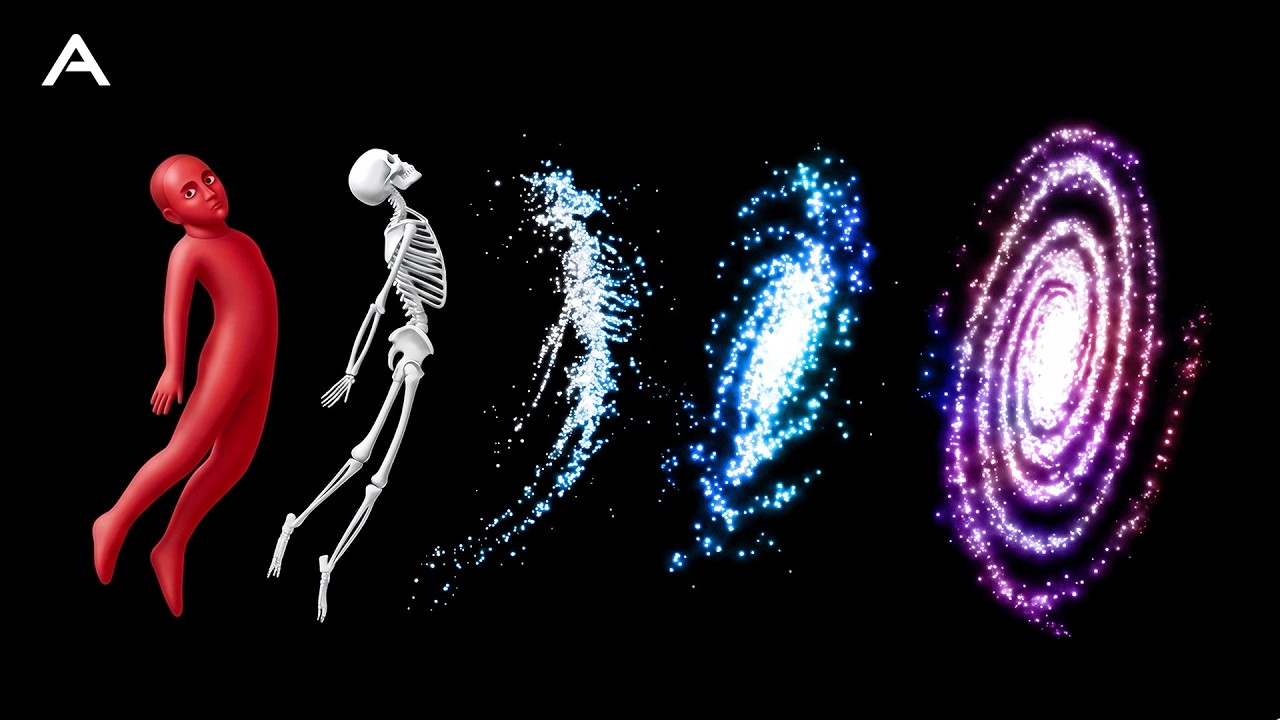
Something Is Very Wrong With Modern Life - Arthur Brooks
Arthur Brooks is a social scientist at Harvard, a happiness columnist, and a former classical musician turned think tank CEO turned professor. Chris Williamson sits him down for nearly two hours and asks the blunt question: what is actually wrong with modern life? Brooks answers with a single diagnosis that he then proves from a dozen angles. We are living in a simulation, not a science fiction one but a real one, where algorithms feed us a left brain counterfeit of a life whose deepest needs are right brain.
Published Jun 11, 20261:54:00 video53 min readAdded Jun 16, 2026Open on YouTube →
At a glance
Arthur Brooks is a social scientist at Harvard, a happiness columnist, and a former classical musician turned think tank CEO turned professor. Chris Williamson sits him down for nearly two hours and asks the blunt question: what is actually wrong with modern life? Brooks answers with a single diagnosis that he then proves from a dozen angles. We are living in a simulation, not a science fiction one but a real one, where algorithms feed us a left brain counterfeit of a life whose deepest needs are right brain. You can curve fit your way through love, friendship, achievement, and dating, and your brain will know the difference, and the bill comes due as the depression and anxiety that have tripled and doubled since 2008.
This is not a vibes conversation. Brooks is an evidence based researcher and he lays his frameworks down like a mechanic laying out tools: the three macronutrients of happiness (enjoyment, satisfaction, meaning), the three components of meaning (coherence, purpose, significance), the precise formula for enjoyment (pleasure plus people plus memory), the arrival fallacy, the four career patterns, the me self and the I self, the ladder of love. The thesis underneath all of it is that meaning is the macronutrient that has collapsed, and meaning is the one thing you cannot simulate. Below is the whole conversation rebuilt in order, every study, number, and story kept.
We are living in the Matrix
Brooks opens by taking the question literally. The Matrix came out 27 years ago, and its plot was that an artificial intelligence kept the human race placid in a pleasant simulation so it could feed off their energy while they lay in pods. His claim is that this is now non fictional. We are subjugated, he says, not by people but by algorithms that build a simulated version of a real life, pleasant enough, just stimulating enough to never bore you, and engineered to feed off your attention, your energy, and your money. That is why dating does not feel like real dating, friends do not feel like real friends, and the achievement of a game score does not feel like real achievement. Scroll, scroll, scroll. You can feel the counterfeit even when you cannot name it.
The neurological mechanism is the work of Ian McGilchrist, the Oxford neuroscientist who revived the idea of hemispheric lateralization, the notion that the two halves of the brain have different core competencies. Brooks is careful to kill the old 1970s pop version (right brain creative people, left brain analytical people, his artist mother versus his mathematician father). That theory did not survive. What McGilchrist restored is subtler and, Brooks argues, correct: the two hemispheres ask and answer different kinds of questions. The right hemisphere handles the complex why, the mystery and meaning of life, the things that send us out into the hunt. The left hemisphere handles the how to and the what, the linear execution, the analysis, the engineering, the apps. The trap of modern life is that we run a left brain simulation to answer right brain questions of love and mystery and meaning. And you cannot simulate the meaning of life.
Figure 1. Brooks's organizing diagram, after Ian McGilchrist. The crisis is not that the left hemisphere is bad. It is that we apply it to problems that only the right hemisphere can hold. A car is a left brain problem and is therefore knowable. A marriage is a right brain problem and is therefore unsolvable, which for Brooks is precisely why it is worth having.
Williamson pushes back: weren't we, only a couple of decades ago, trying to make people more rational, analytical, objective? Brooks concedes the point and refuses the trade. We need both. If you only know the why, you are incompetent at execution. If you only know the how to and what, the why goes elusive and you end up with no purpose. He knows how to do his job because his left brain works. He knows why he does it (do something good for the world, support the people he loves, glorify God) because that originates on the right. The things we truly care about are not physical but metaphysical, and that is the part the simulation cannot reach.
His sharpest illustration is his own marriage. How does my car work? He has no idea, but he could know, because it is a complicated left brain question with a YouTube answer. My marriage, he says, is a right brain problem, completely unsolvable. Married 35 years, and an hour before recording his wife texted "I love you, good luck on the podcast," and yet tonight she might be furious with him and he genuinely cannot predict it. The reason he loves his marriage is that it is unsolvable. The reason people want a real cat instead of a mechanical one is that it is alive. Things that are alive are right brain problems. We have, in his phrase, solved life, run a Silicon Valley curve fit through the messy business of being human, and it will leave us lonelier, more depressed, more anxious.
The first piece of evidence is pornography. More than 85 percent of it is consumed by men, and the more a man looks at it the lonelier he gets. In the moment he feels less lonely and more satisfied; over time he becomes more unsatisfied and more lonely, because it is a simulation of the experience he is actually seeking, human connection, and it cannot deliver. He is settling for a two dimensional simulacrum of the thing he wants.
The counterfeits: achievement, virtual friends, the imprint of a real person
Williamson asks for the other counterfeit sources of meaning. Achievement, Brooks says, is the classic one: a score in a game gives a real short term sense of accomplishment, which is a source of purpose, which is a component of meaning, except it is fake. It builds nothing of real consequence, which is exactly why you have to do more and more and more to keep the hit going. The old prescription for a good life (have a son, plant a tree, write a book) is mocked gently (Brooks admits he never did plant the tree) but its logic is that all three are real, in real life. Nobody says plant a tree online.
Virtual friends are the same counterfeit. The more virtual friends you have, the less you illuminate the right hemisphere in the act of interacting with them. The proof, Brooks says, is in the room: he and Williamson are friends who text between shows precisely because they have looked each other in the eyes and had real conversations. Williamson confirms the mechanism from his own life. In his late 20s, working the door of a nightclub in the northeast of England, he could not find people locally who were into Sam Harris or meditation or Robert Greene, so he made his real friendships online. But anyone he later met in person, even for a 30 minute coffee while passing through a city on a train, jumped instantly into a different bracket: a real person, in three dimensions.
The reason is evolutionary. Our brains are essentially the same size and shape as they were 250,000 years ago in the middle Pleistocene, when every human lived in kin based, hierarchically related bands of 30 to 50 individuals where relationships were paramount. We are wired for in person relationships, which is why oxytocin flows when you look someone in the eyes and does not flow through a Zoom screen. This grounds the single most practical prescription of the section: Brooks and his wife, in their marriage retreats, tell couples to lie on their sides before sleep and stare into each other's eyes for five minutes, because it reestablishes a neurochemical bond most of them have not had in a long time, the bond that makes the brain register "that is my person."
Why can't meaning be simulated? Because meaning is a fundamentally complex right hemispheric experience, and the simulation is always running in the wrong side of the brain. It will look meaningful, feel like love, feel like friendship, and be none of them. Williamson notes the cohort online who insist the simulation is good enough, who say they will wait for the sex robots or take the AI partner (there is even a company making AI versions of your exes so you never have to leave). Brooks reads this as the voice of someone hurt or scared, settling for what can be gotten compliantly and permissionlessly online with low or zero risk of rejection. As Williamson frames it, the modern world is full of people getting what they want but not what they need.
The meaning crisis is the real story behind the 2008 inflection
Here Brooks plants his central empirical claim. The biggest single predictor of depression and anxiety is agreeing with the statement "I do not know the meaning of my life" or "my life feels meaningless." That is the number one predictor. People ask why depression has tripled and anxiety has doubled, clinically, since about 2008, and they reach for exogenous economic explanations: boomers wrecked the economy, income inequality, expensive houses. Brooks says these are all wrong. The thing that changed around 2008 is that life went online, and the average American now checks their phone 205 times a day. We shoved ourselves into the wrong hemisphere of the brain, and in doing so lost the natural ability to experience meaning. That, empirically, is what produces the emptiness, the depression, the anxiety, the loneliness. We have a meaning crisis.
How to design a meaningless life
Williamson runs a clean thought experiment: design a life for someone to have as little meaning as possible. Brooks builds it gleefully, and the list doubles as the negative image of every recommendation that comes later. Wake up only when the sun is warm, never before dawn. Make your phone your alarm clock and look at it before you roll out of bed. Eat highly processed, high sugar food, get your caffeine in the first five minutes, and scroll while you eat so the entire first hour is neurocognitively programmed onto the screen. Take a remote job so your colleagues are squares on a Zoom grid, you do not know where anyone lives, and you have a relationship with no one (better still, see nobody all day). Date by swiping, so you get a two dimensional read on a potential partner, no multisensory understanding, no smell (and the olfactory bulb does serious meaning related work in the brain), and lie on your profile. Spend the evening on nothing of importance, scrolling shorts, and if you want competition make it gaming, "writing your life in disappearing ink." Skip exercise. Then repeat, n times.
The punchline is the paradox at the center of the whole episode: if you want your life to have no meaning, make sure there is no boredom moment to moment, so that day to day, week to week, month to month, life is grindingly boring. The opposite is also true: tolerate plenty of boredom moment to moment and your life as a whole will not be boring at all. His great grandfather Leroy Brooks, born in Topeka, who married the sheriff's daughter Mary Ellen (the sheriff, John James, was strung up by Quantrill's raiders in the Civil War), spent his days staring at a mule's backside. Boring moment to moment, but he never came home and said "honey, I had a panic attack behind the mule today." His brain worked the way it was supposed to, because he was living a real life. The hustle and grind engineered out of Silicon Valley gives people who are never bored the most boring lives possible.
Ambition as anesthesia, and the arrival fallacy
Are ambitious people especially vulnerable to meaninglessness? Williamson asks it "for a friend." Yes and no. The danger is that ambition, striving, and busyness become a way to anesthetize yourself, because you are uncomfortable being alone with your own head. Brooks tells the story of a friend who traveled constantly for work while his wife pleaded for him to be home. The realization, on getting to know the man, was that the job did not force the travel; he did not want to be home, because his life stressed him so much that he needed perpetual distraction. That is the striver's condition: a chaotic interior that must be drowned out, sometimes by ambition, sometimes by success, sometimes by the need to be applauded, and when a down moment hits, by the screen, or by alcohol and drugs. The OECD data make the point that the alcohol abuser is not the down and out bum of cliche; above average busy, busier than average people carry above average risk of alcohol abuse. The likely abuser is an investment banker or a wealthy podcaster. The plea underneath is "do not leave me alone in here."
This sets up the arrival fallacy. Humans get satisfaction only from making progress, and satisfaction, Brooks says, is one of the macronutrients of happiness. So goals, struggle, and even pain are essential, and the two things to teach your kids are: have goals and accomplish things, and do not be afraid of struggle and pain. The trap for the highly intelligent and energetic is to slide from loving the progress itself to believing that arriving at the thing will finally deliver the feeling. He has worked with Olympic athletes and routinely asks whether they were depressed after winning gold; the answer is always "how did you know?" It is literally called gold medalist syndrome, and in behavioral science the arrival fallacy. The unspoken thing you expect to feel on arrival is "I am worthy, I am something, I am special," and you do not feel it.
Williamson observes that the arrival fallacy is impossible to make popular. He texted Mark Manson about building a live show partly around it, and Manson's reply was that every time he tried to talk about it publicly it fell flat. It is not memetically neutral, it is actively anti memetic: people do not want to hear it and will not pass it on. Telling people still climbing that the view from the top is worse than they imagine feels like sucking the gas out of their tank, like a fat person telling someone starving that the food is not that good anyway. It is an unteachable lesson, learnable only by arriving. Brooks gives the mechanism: it is anti memetic because it goes against mother nature, who needs you fooled. The ancestors who passed on their genes were the ones fooled into chasing the arrival fallacy again and again, because the species needs you in the hunt, and the only way to keep you hunting is the promise that you will finally get there.
He folds in a metaphysical aside he will return to: there is a philosophical argument that the desire for a thing is evidence of the existence of its object. Thirst is evidence water exists; hunger is evidence food exists. The desire for unremitting happiness, which you cannot actually attain in this life, is, on this argument, evidence that it exists somewhere else, a classic proof in both Abrahamic and karmic traditions for heaven or nirvana. Back on the ground, he cites his old friend David Brooks (no relation, shared common surname) saying years ago that being number one on the New York Times bestseller list "is really not that great," and Ryan Holiday discovering the same thing the week after his own number one was displaced by "some yo-yo with a stupid book." Worse than never making it, both men agree, is having made it and fallen off. Brooks once pitched a show called "I Used to Be Famous," about behaviorally interviewing formerly famous people now living ordinary lives. Fascinating, he says, and wildly unpopular, because audiences want zero to hero, not hero to zero.
The three components of meaning
Williamson asks how a person can actually work out the meaning in their life. Brooks gives the cleanest framework of the episode, drawn from social psychologist Michael Steger at the University of Colorado: meaning has three components, coherence, purpose, and significance, each phrased as a why question.
Figure 2. Steger's three components, as Brooks teaches them. Coherence is having an answer to why things happen (God's mind, the laws of physics, even, badly, a conspiracy). Purpose is direction, the goals that let you make progress. Significance is mattering to someone. In modern culture, Brooks argues, all three are quietly missing for huge numbers of people.
Coherence is having an answer to "why are things happening the way they are in my life." The answer can be religious (the mind of God), scientific (the laws of the universe), or, badly, conspiratorial (powerful people are doing these things). This last point is one of the episode's most quoted: conspiracy theories are nothing more than a cry for an answer to the coherence question, which is a meaning problem. So when a relative is going down a conspiracy rabbit hole, throwing data in their face is the wrong move; they are having a meaning crisis, a happiness crisis, and that is why they are doing it.
Purpose answers "why am I doing what I'm doing." Brooks insists purpose and meaning are not the same; purpose is goals and direction that let you make progress. Without it you go in circles, like a Carnival cruise ship sailing round and round to nowhere (which is exactly why he finds cruises depressing, they do not go someplace). He cites Sonja Lyubomirsky's work at UC Riverside: give students even arbitrary goals (you are getting a B minus in physics, let's get a B plus this semester) and they get happier, more directed, life seems better, because they have more meaning. Even arbitrary goals beat no goals.
Significance answers "does my life matter," to a dog, a spouse, to God, to kids. It is the love question. In modern culture, all three go missing at once: why do things happen, I don't know, it's random; why am I doing this, no idea, I get up and scroll and join a Zoom for a company I don't care about; does my life matter, I don't think it does.
Randomness, fragility, and the diet trap
When life feels random, anything can happen at any time, there are no levers to pull, and you stop being an active player in your own life. No coherence means no sense of agency. Brooks compares it to learning to drive (17 in the UK, Williamson notes he learned in a Mini, terrifyingly low to the ground) and facing what looks like pure traffic chaos. Believe things happen by God's will and you will pray and build that relationship; believe in the laws of science and you will study them; believe in conspiracies and you will share them. Coherence is what lets you act.
Directionless people are fragile because, not knowing where they are going, they cannot make progress, and happiness comes from making progress toward a goal. The weight loss literature is his proof: diets are simultaneously effective and catastrophic failures. Almost any diet makes you lose weight, but the failure rate is between 80 and 95 percent after a year, meaning the weight comes back and then some. The United States weight loss industry is roughly 40 billion dollars and fails nine times in ten, an ouroboros of nutritional advice. Diets work temporarily because they let you make progress, then fail because the reward for reaching your goal weight is never eating what you like again, plus the arrival fallacy. The fix is to want goals you cannot finish: be a better dad, husband, friend, citizen, do more important work, reach more people. As Brooks puts it, "I need goals I can't meet."
Specialness versus happiness, and love as a free gift
Why do modern people confuse being valuable to others with being famous? Brooks calls himself a "striver whisperer" who studies people who do incredible things and still lack happy lives, and he has found they share a childhood. Super strivers typically got attention and affection from their parents only when they did something (good grades, made pitcher, first chair in the orchestra, a lemonade stand that out earned expectations). Often the parents were immigrants or came from poverty, and in rewarding achievement they believed they were wiring in success. What they actually taught, into a synaptically plastic brain, is that love is earned. The adult then spends life trying to earn love: men seek women who make them earn it, marriages become engines for bringing in more money, people surround themselves with sycophants and yes men who make them earn affection with gifts and fanciness. The truth, Brooks says flatly, is that real love is not earned, it is a free gift, freely given, a grace, and anyone who makes you earn their love does not love you. But strivers do not learn this; they become success addicts and winning addicts hunting specialness, and in the modern economy that hunt metastasizes from family to community to the whole internet, chasing the adoration of strangers as the best available dopamine hit. The more talented you are, the more danger you are in.
Williamson connects it to a cultural mood he calls "grind slop," the fuck your feelings, optimize at any cost ethic, and notes his own pivot over the last 18 months toward feeling more, having more fun, and not optimizing for outcomes at the expense of experience. He fingers AI as an accelerant: an oracle in your pocket that gives you a curated, idiosyncratic version of exactly what you want, like talking to a best friend who happens to be God, and contrasts the SparkNotes / Blinkist instinct to "get to the outcome" with the better instinct of "I took something away from that and I had a good time."
Brooks's distillation of specialness versus happiness is brutal. People will say any loser can have a family and an ordinary job, but not everyone can be CEO or have a famous podcast, which means they are knowingly forgoing happiness for what they imagine is a higher state, specialness, and that always leads to ruin. His evidence is a finance icon, 25 years his senior, who knew at 32 he was going to be rich. Asked what he thought being rich would change, he eventually said, "I thought that when I got rich, my wife would love me. Really love me." And asked what happened, he said, "She didn't," then stared, in a moment of pathos, understanding it for the first time only as he said it. Of course, Brooks notes, a man who believes love is earned selects a wife whose love must be won. Cause and effect, every single time.
Strengths are weaknesses, weaknesses are strengths
Williamson offers a line from a recent essay: what you are praised for in public, you will pay for in private. His example is psychological resilience, called strength, decisiveness, anti fragility in the boardroom, but at the kitchen table it makes you stay in a relationship you should have left and renders you impenetrable to your spouse's emotional needs. The Navy SEAL Andy Stump told him that his entire career was built on being a person who does not quit, and that this kept him in a toxic marriage ten years too long. Brooks completes the inversion: your strengths are your weaknesses, and your weaknesses are your strengths. He interviews Williamson live on it. Greatest weakness: uncertainty, turned into galactically unreasonable attention to detail and hypervigilance. Next weakness: overthinking. He diagnoses a fear of shame greater than the fear of failure, the "shamefaced boy" who works hard enough that no one could think anything about him is shameful, which then makes opening up about weakness nearly impossible, because the love the world gave you came for your competence and you must not show the hole in the armor.
The image both men land on is Batman and Bruce Wayne, the double life where you must not feel privately what you perform publicly, nor deploy publicly the tactics you use privately. It is why the newly famous are more at ease in front of a thousand people than one, a theater skill versus the dicey reality of talking to mom or a real partner. The pro move, Brooks says, is not merely being thankful for the public applause but being on your knees thankful for the weaknesses too, because what you pay for in private is the source of the strength in public. Williamson's version: most of the things you are most ashamed of are the dark side of something light you are proud of. Brooks adds the sword image, most swords are double edged and nick you on the back swing, which does not mean throw the sword away, it means learn to hold it properly. And the ace move, drawn from Eastern philosophy, is not merely to accept the wound stoically but to love it, to accept it as the divine will, "what I want is what is happening."
Stop blaming your parents
Williamson proposes the "parental attribution error," a cousin of the fundamental attribution error. Blaming parents is a rite of passage in modern therapy culture, but if you will not lay your strengths at their feet, you should not be so quick to call them villains for your wounds. The drive to work hard that came from love not freely given is the same drive that made you ambitious; the hypervigilance that came from needs not observed is the same reason you now put everyone else's welfare first. These are not two sides of a coin, they are a single piece of metal woven through everything. Brooks calls this subverting the culture of grievance, and warns that the unhappiest people are those whose identity revolves around grievance and victimization. He makes the uncomfortable point that this is a tool of cultural power: a baby boomer (he is technically in the last year of the boom) can conscript Gen Z culture warriors by convincing them they are victims who should be aggrieved, channeling their energy into complaining rather than building.
Technology, scientism, and the problems that cannot be solved
Asked whether technology is the prime mover, Brooks calls it the tip of the spear, a manifestation of a deeper culture of engineering and scientism, the conceit that every problem is a complicated problem that can be solved. The most important problems cannot be solved; they can only be lived with and understood. We need balance between the complicated problems of the left hemisphere and the complex problems of the right, and some things should be left as permanent mysteries that give life flavor. The singularity dream (live forever, upload our brains, solve every problem with an app or supplement) is axiomatically wrong, and the proof is that we keep solving more problems and getting less happy. His parallel: if therapists were the answer, depression would not have tripled alongside a tripling in the number of therapists.
Williamson reads this as personal development fatigue: permanently asking the why question and optimizing everything is exhausting, the cost of optimizing exceeds the cost of being under optimized, and trying to be perfect will kill you faster than the imperfections. Brooks rescues the why question while indicting the method. Every serious philosophical school has a place for aporia, the ancient Greek state of sitting in puzzlement over questions that cannot be answered. Zen koans (what is the sound of one hand clapping) exist to be pondered, and in the pondering you gain the complex knowledge the right hemisphere is built for. The generational loss is the late night, post party, "do you think God exists, dude" conversation, replaced by questions we either hand to Google and ChatGPT or assume enough science will eventually crack. Both are a wrong turn, philosophically and neurobiologically.
Williamson tells the cautionary tale of Ignaz Semmelweis (the conversation says Semmelweis, attaching to germ theory), who discovered that childbed fever was carried from corpses to mothers on doctors' unwashed hands, begged his colleagues to wash, was laughed out of every institution, drove himself to apparent madness, was committed to an asylum by his own wife, and died of an infection from a cut treated by a doctor who had not washed his hands, the most tragically ironic death imaginable. The modern promise, Brooks says, is that we now have the oracle, the first time humanity has believed it could answer everything rather than some things, that if we just dig a little deeper we will find it. Some categories are simply unsolvable. He cites an architect of the American war on poverty, which did real good (lowered hunger, expanded education) but past a point wired in pathologies of dependence, who when asked what would have truly won the war answered "just a little more money," the same instinct as the Valley today. He points to the failed UBI experiments: the money did not flow to healthcare, education, or human capital, because the program assumed everyone shares the same values and priorities. Worse, giving things for nothing strips away earned success, which is part of satisfaction and progress, and denies the primacy of human evolutionary biology. Every utopian attempt to reorder how humans were wired 50,000 years ago will fail; you have to swim with the current.
The doom loop and how to clip it
How do you interrupt the doom loop? The loop is self reinforcing: I dislike boredom, so I distract myself, which makes me less tolerant of boredom and less able to feel meaning, so I am more at loose ends, so I scroll more, which makes it worse, exactly the escalation pattern of drugs and alcohol (the two biggest predictors of alcoholism are anxiety and boredom; anxious and bored, I drink, which worsens both the next day, so I drink more). Any addictive process is a doom loop, and technology is one of them.
The danger of the phone is that it is socially invisible. Nobody intervenes when you are on your phone too much the way they would if you were drunk five nights running; gambling and porn are more obviously destructive, and even the user internally rolls their eyes at the cliche that too much phone is too much. Worse, some dopamine dependencies are applauded: nobody congratulates the alcoholic, but the workaholic who works 16 hours and neglects his family gets a promotion and a raise. So the responsibility is private, to ask whether a behavior is making your life better or worse regardless of the world's reaction.
Fixing it means clipping the loop at a precise point, and Brooks gives the three behavioral steps common to escaping any addiction (medical interventions aside).
Figure 3. Brooks's three steps out of an addiction, including the addiction to the phone. Step one is rebellion: you have to get angry at being a wholly owned subsidiary of a company or a culture. Step two is method: there is science for stopping anything you can get addicted to. Step three is the hard one, learning to be alone with yourself again, because addiction means you did not like being home in your head.
Brooks makes step one and step three personal. He has not had a drink since age 38. In his 30s he did not like being home in his own head, so he took "a little vacation in the bottle," which was going nowhere good, until his father died and people he trusted told him "that's your future, you just saw your future," and he stopped. The hard part was not the stopping; it was step three, being alone, awake, and alive with himself. For the very online, step three is even harder, because the technology breaking your brain is also making you angry, depressed, anxious, and lonely, which is why you keep returning to it. After the anger and the quitting, you need new friends, a real society, and the capacity to sit at a red light with nothing but your thoughts, to stand in a supermarket line without your phone, and to walk before dawn without a device and hear the crunch of gravel and say, that is the sound of my feet on the path. That takes work.
Recovery is possible, and the protocols are small
Brooks is emphatic that recovery is achievable; he has seen it again and again. This is not heroin. You do not even have to surrender the phone, only put it inside proper boundaries. If you already have a functional life with good habits (you get up at a set time, you exercise, you do not eat like an 11 year old), you simply add protocols, a word he credits Andrew Huberman with spreading through the culture. His phone protocols are concrete:
The first hour. Do not look at the phone at all for the first hour after waking, for neurocognitive programming. If your job demands it, glance to make sure nothing is on fire, then put it down for the rest of the hour.
Meals. Never eat with your device, and it is best not to eat alone. The neuropeptides, most notably oxytocin, flow liberally when you eat with someone, the way homo sapiens bonded around a campfire passing yak meat and looking into each other's eyes. A phone on the table kills the neurochemistry. Eating alone, read a book or listen to music, but do not look at the phone.
The last hour. Beyond the familiar blue light and melatonin story, the last hour matters because it is how you understand your day and ready yourself to rest, and if you live with a partner, staying off the device keeps you present as you drift to sleep together.
Phone free zones. The phone should never be in the bedroom; getting up to pee at 3 a.m. and checking it shuts off the pineal gland and spikes cortisol. Park it on a different floor, in a closet, from an hour before bed to an hour after waking.
Schools. As basic public policy, no phone in any classroom from kindergarten to PhD; it is "child abuse" to allow it because it interrupts everything, and the most important phone free hour is lunch, in the cafeteria, where children build the friendships they otherwise lack.
Phone fasts. A technology fast of about 96 hours a year, which the small research base suggests can reset the relationship and prove to you that you do not need it. Brooks runs a four day no phone spiritual retreat annually: day one is "children screaming in my head," day two calmer, day three he likes it, day four he wishes it lasted all year.
He is careful that these protocols deliver only step two. They do not supply step one (rebellion) or step three (getting comfortable with yourself again), which are different processes.
Romantic love, and the ladder of love
How important is romantic love to meaning? It is one of the best ways to turn on the right hemisphere, because it is something you will never solve, and Brooks's proof is that app developers are still trying to build the ultimate dating app. Dating apps are a left brain solution to a right brain problem. Where they are improving, they improve by adding human friction back in rather than removing it: early experiments suggest a good way to find matches is to route some of them through your best friend and let your friend choose who you go out with, importing a second right brain into the process, or to meet a whole group in a mixer and pair up or make friends. The human brain is tuned to the incredibly complex, indescribable experience of falling in love, which is why country songs and the greatest poetry are about romantic love; it is described artistically because it is a right hemispheric experience. So to turn on the meaning in your life, "go get your heart broken." Take the risk. Heartbreak is horrible and hard and meaning rich; it is when you ask all the big questions and learn the most about yourself, unless you stay drunk.
The ladder of love comes from Diotima of Mantinea, the prophetess Socrates sought out, who told him the path to the meaning of life is a ladder whose every rung climbs closer, and whose first rung is falling in love, attraction toward the beautiful other. Brooks insists this is romantic, not the warm regard of friendship, the spark you cannot quite understand. We do understand the neurochemistry: sex hormones start it, catecholamines join, serotonin drops dramatically, neuropeptides follow in sequence, and when the sequence is off between two people you can see why the relationship fails. Yet it remains a mystery; the neuroscientists studying it fall just as hard as anyone. Brooks teaches the neuroscience of love at Harvard Business School and still cannot explain his own marriage, because it is a deep metaphysical experience. Most religions hold, as Diotima suggested, that romantic love is the beginning of an antenna to the divine, and that to deny your spouse love in a serious marriage is to deny them God's love. That is how right brained and complex it is. Williamson adds that understanding a thing does not exempt you from it: knowing how gravity works will not stop you hitting the ground from a skyscraper. He invokes Sam Harris's interview with Daniel Kahneman, "Mr. Thinking Fast and Slow," Nobel laureate, asked whether decades of studying the mind's fallacies made him more rational. "Not really." Brooks calls Harris the most soulful atheist he has met, a man whose soulfulness coexists with his rationality precisely because, like everyone, he has two hemispheres.
Transcendence, the me self and the I self
Do people think enough about transcendence? No, and transcendence matters because it defies mother nature's tyranny. Mother nature wants you as the star of the stultifying psychodrama running in your head all day (late flights, an unprepared podcast, a rumbling stomach, a missing payment). That, after William James, is the me self, looking at and thinking about yourself, necessary for self reference and not getting in a traffic accident. But there is also the I self, looking outward at a world in which you are only one player. Transcendent experiences are those where the me self disappears and the I self dominates. When the two get confused you get a fugue state, and Brooks tells the story of one: stressed as a CEO, putting gas in his car at 8 p.m. with his young daughter in the back, he drove off with the pump hose still in his tank, heard a clanking behind him, and asked his daughter what the sound was, convinced someone was following him, until he realized he was dragging the gas station's hose. He had confused the me self and the I self. (It got real fast when he returned to four angry Iranian men around the wrecked pump, and he learned how expensive gas pumps are to fix.) The point is the opposite of a fugue: we want the deliberate I self, standing in awe, getting outside ourselves through religious, spiritual, and philosophical experience, and through service and love given unbidden by self interest. In a true transcendent state you are in the right hemisphere, and "you don't find meaning, meaning finds you," which is why his advice to the lost is to go volunteer, or go pray, religious or not, because it induces the state and you will want more of it.
Why is transcendence so rare now? Because the modern world is a giant mirror, a giant me self, especially online. Brooks frames it as the Zoom problem: in a Zoom meeting you are always watching yourself, which is why turning off your self view helps you focus on others. Social media is the same one big virtual mirror of likes and mentions, and it has induced narcissism that would not otherwise exist, which is profoundly misery provoking because it kills meaning in the crib; you can never get out of yourself. The vivid counterexample is his physical therapist, a man full of love and skill who turned out to be a former fitness influencer. That life was the worst: ten years of not eating what he wanted, no functional relationships, jealousy over showing his body to strangers, obsessing over photographers and shadows. He deleted his accounts, enrolled in acupuncture school, and, crucially, removed every mirror from his apartment and showered in the dark for a year so he could not see his abs. Then he was finally free, and happy.
Calling, status, and the four career patterns
Most people look to work for transcendence, which they call calling. Brooks rejects both graduation speech versions. Speech one ("find a job you love and you'll never work a day") is delivered by a workaholic cardboard box magnate with three heart attacks and two divorces by 40. Speech two ("go save the world, no pressure") loads an impossible burden. Real calling finds you as the thing you cannot stop thinking about, the most interesting thing, which is often not the most fun thing. Second, calling is creating real value with your hard work, being genuinely recognized for it (not kissing up, not someone being nice to you), and being needed by someone. Are you earning your success, and does somebody actually need you? That is calling.
You know you are chasing status instead of calling because, deep down, most people can tell when there is true value behind what they do. Brooks interviewed a man with an MIT master's in biochemistry, headed for a PhD his parents desperately wanted, who realized he felt truly alive only when building things and became a home builder. Status is a bad barometer; people cling to fame, power, and money because they do not want to look at the truth, like looking into the sun, and burn out doing work that pays well and earns followers but makes them unhappy. His test is clean: if you are doing something highly rewarding but you are unhappy, it is not your calling. A lot of people are in this bucket; he meets MBAs who reason that a thing paying them well must be their calling. Brooks walked away from classical music at 31, an instrument he had played since age eight, made a living and made records and was deeply unhappy, because it was not his calling, and there was no choice but to leave.
The fear of leaving (inertia, momentum, the sunk cost fallacy) is no joke and requires real personal entrepreneurship, which Brooks defines as building your life, not a business. Bad entrepreneurs chase one bad idea until broke; good ones change, sell at the right time, and start again. You cannot afford the sunk cost fallacy with your career, relationships, or interests. He then lays out the four career patterns.
Figure 4. The four psychological career patterns Brooks names. Linears climb and change only for something better. Transitories skip around and work to live. Experts hold one secure, low stress role (his father kept the same job 42 years; the post office is the archetype). Spirals, who Brooks says disproportionately watch this show, take their career down to the studs every seven to twelve years, funneling everything learned into a new adventure. Each spiral turn gets easier; Brooks is on his fourth.
Linears go up and up, changing only when something is better. Transitories skip around and work to live (barista, then moving van driver, then off to a girl in San Diego). Experts hold one secure, low stress role for stability; his father held the same job for 42 years, and the post office is the archetype. Spirals, disproportionately represented among this show's viewers, need every seven to twelve years to take their career down to the studs and rebuild, funneling everything learned into a meaningful new venture. The first turn is hardest (for Brooks, leaving the French horn to get a PhD he was unqualified for was brutal); each subsequent turn is easier, and he is on his fourth, joking he might end up a circus clown or firefighter.
Beauty is a right hemispheric experience
Beauty, any kind, is a transcendent experience, and the reason modern technocratic life feels bereft of beauty is that the left hemisphere never prioritizes it. Beauty lives on the right. People weep at a sunset or at Bach's B Minor Mass and cannot say why, and Brooks offers a diagnostic: any time you become emotional and cannot quite explain it, you are having a right hemispheric experience. A society that is entirely left hemispheric, technocratic, complicated rather than complex, will not be beautiful, and that is what we find on three fronts. Artistic beauty: there is, he says, compelling evidence that newer music is less objectively beautiful than older music (he cannot judge it himself; that is what musicologists are for). Moral beauty, kindness toward others for no apparent reason, is hard to find on X or online. Natural beauty is hard to find when you are never in nature; the screensaver of El Capitan in Yosemite is not the real thing, which is an entirely different neurobiological experience. The simulation is not beautiful. His test: ask whether there is enough beauty in your life, and if the answer is no, you are probably too far left.
Suffering is the ultimate meaning making experience
What if there is not enough suffering? Brooks calls this the hard one and admits he put it in the last chapter of his book because he was avoiding it. Suffering is the ultimate meaning making experience. The dorsal anterior cingulate cortex, a small part of the limbic system, fires during social exclusion and loss; it evolved to make sadness aversively painful so you would avoid it. The result is that people suffer less from sadness itself than from the fear of sadness, and most of what we do is motivated by avoiding negative emotion. Yet most people, asked about the most meaningful periods of their lives, name the times of greatest negative emotion. Negative emotion brings meaning unless we try to eliminate it, and the singularity dream of eliminating pain, sadness, and negative experience is not only impossible but suboptimal, "death for what it means to be fully alive." We do not want to suffer, but we must suffer. Mother nature is a wicked tyrant who kept us alive across generations, but animal impulses are not the same as moral aspirations.
The macronutrients of happiness, and Frankl's inverse law
This is where Brooks names his master framework explicitly. Happiness is a combination of three macronutrients: enjoyment, satisfaction, and meaning. When he looks at the depression and anxiety explosion, he reads it diagnostically: one channel is blocked. Enjoyment, he stresses, is not pleasure; it is pleasure plus people plus memory, a conscious phenomenon of the prefrontal cortex rather than the limbic system, and it is fairly high for most young people. Satisfaction is the achievement of worthwhile goals with struggle, and it is high, especially for strivers like his Harvard MBAs who accomplish and struggle constantly. It is meaning that has collapsed, and that collapse is the cause of the unhappiness crisis.
The three are easy to blur, so it is worth holding their precise definitions side by side, because the whole diagnosis depends on telling them apart.
Enjoyment
Satisfaction
Meaning
What it is
pleasure + people + memory
worthwhile goals reached with struggle
coherence + purpose + significance
Where in the brain
conscious, prefrontal cortex
the reward of progress
complex, right hemispheric
Mistaken for
raw pleasure (which dead ends in detox)
arrival, "if I finally get there"
achievement, fame, specialness
Can it be simulated?
partly, but hollow alone
a game score fakes it short term
no, never
State in 2026
fairly high (young people)
high (strivers)
collapsed since 2008
Figure 5. The three macronutrients held apart. Brooks's key move is that enjoyment is not pleasure and satisfaction is not meaning; conflating them is exactly how a striver ends up rich in points on the board and starved of the one nutrient that has actually crashed.
Figure 6. Brooks's diagnostic model. Of the three macronutrients, enjoyment (note the precise formula, pleasure plus people plus memory) and satisfaction are roughly intact. Meaning, itself built from coherence, purpose, and significance, is the channel that has collapsed, which is why he reads the depression and anxiety data as a meaning crisis rather than an economic one.
Williamson offers his own contribution, "Frankl's inverse law." Viktor Frankl's famous line is that when a man cannot find a deep sense of meaning, he distracts himself with pleasure, written before scrolling existed. Williamson proposes the mirror image for a second group: when a man cannot find a deep sense of pleasure, he distracts himself with meaning. If ease, grace, joy, and playfulness do not come easily, you ignore moment to moment happiness and pursue only hard things, becoming a world champion at the marshmallow test and convincing yourself perpetual delayed gratification is noble, because you struggle to feel grateful. You prioritize meaning over happiness because happiness does not come easily. Brooks calls it the encapsulation of the striver's lament: the club promoter or the French horn player watching everyone else dance while saying "no, this is my business, I'm going to suffer over here." Strivers are addicts for satisfaction from achievement and pile up points on the board because they never learned to feel enjoyment. And pure pleasure is a terrible goal, because the end of the road for pleasure is not happiness but detox; "if it feels good, do it" was the hippie motto and it did not end well. That is why enjoyment must include people and memory, making it conscious.
Leisure, properly defined, and atelic activity
Brooks admits enjoyment is the macronutrient he is personally worst at and wants to write his next book about, before he dies. His wife, who is Spanish ("a whole country of people who enjoy life"), is naturally good at it; he, raised hearing his parents yell "practice" through the door while he played five hours a day in fifth grade, feels guilty stopping to smell the roses, so he is bad at enjoyment and therefore avoids it. The protocol is a structured, disciplined approach to leisure, taken seriously: you have to work hard at not working so hard.
His authority is the German philosopher Josef Pieper, "one of the greatest 20th century German philosophers untainted by Nazism," whose book Leisure: The Basis of Culture defines leisure not as chilling on a beach (that is acedia, laziness or torpor, which Brooks can tolerate for about an hour before wanting to run away screaming) but as an activity for which the outside world does not compensate you yet which creates value. Pieper frames it as deepening your spiritual or philosophical life, deepening relationships, and learning things you do not need to learn. By that definition the podcast itself is leisure: deepening relationships and talking about things you do not need to talk about, for enjoyment.
The companion idea is doing things atelically, without a telos, without a goal of improvement. Williamson tells of a friend whose coach prescribed a hobby with the rule that he was not allowed to try to get better; the friend took up watercolor and immediately went to YouTube to find the best paintbrush and the best class in Austin and the optimal three times a week cadence, turning leisure back into a job, until the coach forbade improvement. Aristotle, Brooks notes, says real friendship is atelic: friends kept because they are useful (a telos) are merely "deal friends," while real friends are atelic, "actually useless," and the same applies to your activities. A strong telos ("I bet I could sell that") strips the love out. His own brother, three years older, was a string bass player who, unlike telic French horn Arthur, stayed amateur, plays in community orchestras, is extremely skilled, and loves music so much he does not earn a dime from it, which is exactly why he loves it.
How to build a more meaningful life
Asked where someone who feels completely empty should start, Brooks gives a closing program. First, understand that your emptiness is not a psychological weakness; there is nothing wrong with you. Your brain is working the way it works, and the malfunction is not your fault, it is the slipstream of a culture driven by technology that makes you operate against your ancestral habitat, like eating meal after meal of Twinkies and wondering why your digestion is off. The fix is to rebalance the hemispheres, which means changing behavior, and the first move is getting right with technology, because almost everyone is addicted to some degree (Brooks less so, because he remembers the before times; the younger you are, the more prone you are, because you do not).
Second, go get bored, and get good at it. Not the performative "raw dogging" of staring at a seatback for a nine hour flight to Greece, but living moment to moment, putting your hands in your lap on the train, looking out the window, noticing "huh, it's a tree," saying "I'm fully alive right now." Repetitive prayer or meditative practice helps, and it ignites the brain's default mode network, the structures that let you mind wander, and "mind wandering leads to meaning just as predictably as night turns to day."
Third, seek the experiences that open the right hemisphere: fall in love, make friends, do things in real life with other people, take risks in relationships, and entertain the metaphysical, the idea that there is something more than the physical. You do not have to do it Brooks's way (he is Catholic and goes to mass daily); you can do it like Sam Harris, soulful, believing in things unseen, without calling it God. Pursue calling by serving others and being needed, and by allowing yourself to be served and loved. Seek real beauty, which is not behind the screen, by going into nature, listening to music that sends you, reading a poem, visiting a museum, or witnessing someone help others for no reason. And last, lean into your suffering: "bring it on." Brooks makes his students say "my suffering is sacred." He invokes Norman Vincent Peale, the New York minister whose 1960s bestseller The Power of Positive Thinking pioneered the gratitude list, who began each day with the psalm "this is the day that the Lord has made, I will rejoice and be glad in it," listing the good things and then the bad and saying "I'm grateful for that too." Wake up grateful for the beautiful things coming and equally for the call, text, or email you will not like, because leaning into it is the moment you become fully alive. That attitude of nonresistance to pain paradoxically lowers the suffering even as it raises the meaning.
Key takeaways
Modern life is a left brain simulation answering right brain questions. Love, friendship, meaning, and beauty are right hemispheric and cannot be curve fit by an algorithm, which is why the simulation feels off even when it is pleasant.
The biggest single predictor of depression and anxiety is feeling that life is meaningless. The tripling of depression and doubling of anxiety since 2008 is a meaning crisis, not an economic one, and tracks the phone (205 checks a day).
Happiness has three macronutrients: enjoyment, satisfaction, and meaning. Enjoyment and satisfaction are roughly intact; meaning has collapsed.
Enjoyment is not pleasure. It is pleasure plus people plus memory, a conscious experience. Pure pleasure dead ends in detox.
Meaning has three components (Michael Steger): coherence (why things happen), purpose (why I act), significance (whether I matter to others). Conspiracy theories are a failed bid for coherence.
The arrival fallacy (gold medalist syndrome) is real and anti memetic, because mother nature needs you fooled and in the hunt. Love is a free gift, not earned; anyone who makes you earn it does not love you.
Your strengths and weaknesses are one piece of metal. Be grateful for the weakness, because what you pay for in private is the source of your strength in public.
The way out of any addiction, including the phone, has three steps: get angry, learn to stop, learn to be alone with yourself again. The third is hardest.
Suffering is the ultimate meaning making experience. The goal is not to accept pain stoically but to lean into it with gratitude, which lowers suffering while raising meaning.
Boredom is the counterintuitive key: tolerate it moment to moment and life as a whole stops being boring.
Chapters
Timestamps are clickable. Click one and the player jumps there and keeps playing while you read.
0:00 Are We Living in a Simulation?
6:42 What Are We Mistaking For Real Meaning?
11:00 Why Can't Meaning Be Simulated?
15:30 The Most Meaningless Day Imaginable
19:29 Are Ambitious People Susceptible to Meaninglessness?
22:00 Are We Just Pursuing Approval?
30:24 The Big Questions Everyone Should Be Asking
34:33 Why Life Feels So Random
36:07 Why Are Directionless People So Fragile?
37:50 Why We Confuse Fame With Significance
41:12 How Your Weaknesses Become Strengths
52:59 Stop Blaming Your Parents
54:51 How Technology is Rewiring Our Brains
1:03:47 How to Escape the Doom Loop
1:10:19 Can You Recover From Meaninglessness?
1:14:51 How Important is Love to Meaning?
1:16:50 The Ladder of Love Explained
1:21:04 Should We Be Thinking About Transcendence More?
1:24:38 Why is Transcendence So Rare?
1:27:27 The Truth About Finding Your Calling
1:32:02 Why Changing Direction Feels So Scary
1:34:35 The Surprising Role of Beauty in Meaning
1:37:08 Is Suffering the Ultimate Meaning?
1:39:01 The Modern Unhappiness Crisis
1:47:09 How to Build a More Meaningful Life
1:53:02 Where to Find Arthur
Notable quotes
We are subjugated not by people necessarily, but by algorithms that fundamentally are creating a simulated version of real life.
Arthur Brooks, 0:30
You can't simulate the meaning of life.
Arthur Brooks, 4:30
Things that are alive are right brain problems and things that are mechanical are left brain problems.
Arthur Brooks, 5:50
If you want your life to have no meaning, make sure there's no boredom moment to moment.
Arthur Brooks, 18:00
He never came home to Mary Ellen and said, "Honey, I had a panic attack behind the mule today."
Arthur Brooks, 18:40
Real love isn't earned. It's a free gift, freely given. It's a grace. Anybody who makes you earn their love doesn't love you.
Arthur Brooks, 49:30
What you are praised for in public, you will pay for in private.
Chris Williamson, 41:30
Most of the things that you're most ashamed of are just the dark side of something light that you're really proud of.
Chris Williamson, 51:30
The most important problems can't be solved. They can only be lived with and understood.
Arthur Brooks, 56:30
You don't find meaning, meaning finds you.
Arthur Brooks, 1:23:00
Suffering is the ultimate meaning making experience.
Arthur Brooks, 1:37:30
Mind wandering leads to meaning just as predictably as night turns to day.
Arthur Brooks, 1:50:30
An attitude of nonresistance to pain will actually lower the suffering paradoxically as it raises the meaning in life.
Arthur Brooks, 1:52:40
Arthur Brooks, social scientist and Harvard professor; his site hosts the Meaning Experience monthly community and tools to survey and measure your meaning. He writes the How to Build a Life column at The Atlantic.
The Matrix, the 1999 film used as the governing metaphor.
The one idea to walk away with
Something is wrong with modern life, and it is not the economy. It is that we have built a left brain machine to answer right brain questions, and the brain knows. Meaning, the macronutrient made of coherence, purpose, and significance, is the one that collapsed, and you cannot download it, optimize it, or simulate it. You rebuild it the unglamorous way: get bored on purpose, look people in the eyes, put the phone on another floor, do useless things you love, fall in love and risk the heartbreak, and when the suffering comes, say bring it on. Meaning does not arrive when you finally get there. It finds you the moment you stop looking in the mirror.
Full transcript
Chris Williamson: Why do so many people feel like modern life is simulated rather than real?
Arthur Brooks: Because it is. We're living in the Matrix. That movie, The Matrix, came out 27 years ago. I hate to shock and sadden you. It'll make anybody who was alive then feel old. But the plot of that movie was that a great artificial intelligence was dominating the human race and kept the human race placid in a pleasant simulation so that it could feed off human kinetic energy. It kept them in pods and ran a simulation. And the truth of the matter is that we are subjugated not by people necessarily, but by algorithms that fundamentally are creating a simulated version of a real life that's pleasant enough, keeps us from being bored, and that feeds off our attention and energy and money. We're living in the Matrix. And that's why people say, "I don't know, it doesn't feel like real dating. It doesn't feel like real friends." Scroll, scroll, scroll. It doesn't feel like real achievement. Game, game. Because we're living in a simulation.
Chris Williamson: What's happening neurologically though?
Arthur Brooks: What's happening neurobiologically is that we're literally in the wrong half of our brains. This is the work of Ian McGilchrist, the great. Have you had him on the show?
Chris Williamson: Friend of the show.
Arthur Brooks: He's fantastic. He's an Oxford neuroscientist, a great genius. And he brought back the whole idea of hemispheric lateralization. That's the concept that the two halves of your brain do different things. I mean, they do a lot of things the same too. But the fact is that they have different core competencies. Now, when I was a kid in the 70s, this is long before you youngsters were born, there was this belief that there were right and left brain people. Right brain people were creative, left brain people were analytical. My mom, who was an artist, was a right-brain person. My father, who was a mathematician, was a left-brain person. Growing up, I was a right-brain person like my mom because I was a musician, a classical musician, and I painted and I wrote poetry. And then I got my PhD and I became apparently a left-brain person because I became a scientist. Well, the truth is that that theory didn't work. What does work, however, is what Ian McGilchrist brought back to show that we ask and answer different questions with the different hemispheres of our brain. The right hemisphere is the complex why, the mystery and meaning of life, the things that set us out in the hunt for the things that matter in life. The left brain is the how-to and what. It's how we execute. It's the linear side. It's the analysis. It's the engineering. It's the apps of life on the left-brain side. And what's happening is when we're running a simulation of life, we're running a left-brain simulation to meet our right-brain questions of love and mystery and meaning. And you can't simulate the meaning of life.
Chris Williamson: Is it not a good thing for people to be more rational and analytical and objective? Is this not something that only a couple of decades ago we were trying to push more on people?
Arthur Brooks: Yeah, I suppose. Except that we need both. The truth is that we need both because life is full of both kinds of problems. Look, if you don't know the why of the things in your life, the how-to and what mean nothing. But if you only know the how-to and what, then the why is elusive. You can either be incompetent in executing anything in your life, or you'll have no purpose in the life that you lead. You actually need both. I go to work every day, traveling around doing my job. It's great. I know how to do it. I'm competent at it because my left brain is working properly. I know how to get where I'm trying to go and do what I'm trying to do. I can write my speeches and my columns and books. But I've got to know why, which is that I want to do something good for the world. I want to support the people that I love. I want to glorify God. That's the why side. And that originates on the right side of our brains. And furthermore, all the things we really care about are not the analytical things. The things that we care about are not the physical, they're the metaphysical. So I'll give you an example. A big left-brain question is how does my car work? I actually don't know. I haven't the slightest idea. It's just a car. But I could know, because I could get a book or get a guy to come teach me or watch a bunch of YouTube videos, and that's knowable because those are complicated left-brain questions. My marriage is a right-brain problem. It's completely unsolvable. I have to live with it. I can't figure it out. I will never figure out my marriage. I've been married 35 years. An hour ago she texts me, "I love you. Good luck on the podcast." I'm sure it's true, she loves me. Tonight, I could call and she might be completely pissed off at me. I don't know.
Chris Williamson: Oh yeah, but you did decide to date somebody with Latina blood.
Arthur Brooks: That adds a level of complexity, I grant you.
Chris Williamson: It's a multiplier. She's a big pulsing right hemisphere, right?
Arthur Brooks: Sure enough. But this is the thing. The reason I love my marriage is because it's unsolvable. The reason people want to get a real cat, not a mechanical cat, is because it's alive. And things that are alive are right-brain problems and things that are mechanical are left-brain problems. So what we've done is we've solved life. We've solved life. Everything we're trying to do, the engineering, the Silicon Valley set of solutions for everything we're trying to do that pops through the screen at us, that dominates our culture, that increasingly can be simulated and understood through artificial intelligence, all that's doing is it's a curve fit through the messy business of life using these left-brain algorithms. And that's not going to get done what we need to get done. It is going to leave us lonelier and more depressed and more anxious. Here's the thing. Your brain knows. So, for example, this is one of the reasons that the more pornography people look at, largely young men, because more than 85% of pornography is being consumed by men. Now, you're thinking to yourself, I know what you're thinking, who are the 15%?
Chris Williamson: Old men. No.
Arthur Brooks: So, the more pornography that men look at, the lonelier they get. In the moment they feel less lonely and more satisfied, but the more unsatisfied and the lonelier they actually get, because it's a simulation for the experience they're actually seeking, and it's unsatisfactory as a result. You want actual human connection with another person. That's what you actually want. And you're settling for a two-dimensional simulacrum for it.
Chris Williamson: What are some of the other counterfeit sources of meaning that people mistake for the real thing?
Arthur Brooks: Achievement is a counterfeit source, something that you actually get that doesn't build anything real of any real consequence in life. So the idea is like the score in a game gives you a real short-term sense of achievement, which is a source of purpose, which is a component of meaning, but it isn't real. It's fake. It's counterfeit. It's simulated. And that's one of the reasons that you'll find you've got to do more and more and more and more to keep up with it. They used to say if you really want to live a good life, you need to have a son, plant a tree, and write a book. I don't know, I've done all those things. I don't know if I planted a tree. I don't have a green thumb. But the whole point is that what those things have in common is that they're real. They're in real life. They're real achievements in real life. They don't say plant a tree online, pretend you're planting a tree, get really good at doing it, have a son online. The whole idea of simulating these experiences is unsatisfactory. It simulates the experience in the moment. Having friends is another example. Virtual friends, they simply don't meet your needs. And one of the ways that we know this is that the more virtual friends that you have, the less you're actually illuminating, in the experience of interacting with them, the right hemisphere of your brain. One of the reasons that you don't like to do your show virtually is because you don't have the same experience. You and I are connecting with our right brains right now. You and I are friends. We text and talk to each other even when we're not doing a show, which is great, because we're friends, and we have that texting relationship because we've actually looked at each other in the eyes and had real, no fooling conversations with each other. And that's how you have to link with other human beings. Otherwise, it's a simulated friendship.
Chris Williamson: It's one of the biggest realizations I had when I was trying to work out what I wanted to do with my life toward the end of my 20s. I had all of these friends, because shock horror, in the nightlife industry in the northeast of the UK, there weren't many people that were into the things I was getting into. There weren't many people that maybe they'd heard about Sam Harris and they were thinking about doing meditation, or they'd read a bit of Robert Greene and then got stuck after a couple of pages and then felt real bad because they couldn't sit still. All of these things that I was going through, I was finding it difficult on the front door of a nightclub to find people to resonate with. So I made friends online that were into the same sort of things that I was. And I found that these friends distilled out into two strata of people. Even if all that I'd done was, as I was going through a city on a train, stopped off for a 30-minute coffee with someone, that person immediately went into a different bracket of, I've actually met this person, they're real, in three dimensions they're real.
Arthur Brooks: And because your brain actually apprehended that person in a different way. What you did was you had an imprint of that person in flesh and blood in real life, which is, by the way, how the brain was evolved. Our brains are more or less the same size and shape, slight physiological differences but trivial for what we're talking about here, as they were 250,000 years ago in the middle Pleistocene. And during that period, all human beings lived in bands of 30 to 50 individuals who were kin-based and hierarchically related. And that meant that the relationship they had with each other was absolutely paramount. And our brains are wired for in-person relationships. That's one of the reasons that you get oxytocin when you look at somebody in the eyes. You and I have a better conversation when we have this bonding hormone that's actually going through our brains when we're looking at each other in real life. You don't get it through Zoom screens. There's a lot of research on this at this point. So one of the things that I do when I'm talking to couples, my wife and I do marriage retreats, one of the things that we'll do with couples, we'll say, "Okay, before you go to sleep, you need to stare into each other's eyes." You're lying in the bed, on your sides, looking at each other. Stare each other in the eyes for 5 minutes. That's the prescription, because you want to establish this thing that probably they haven't had for a really long time and that your brain actually needs, so that your brain registers, that's my person. You can't get it any other way.
Chris Williamson: Why is it that meaning can't be simulated?
Arthur Brooks: Meaning can't be simulated because meaning is this fundamentally complex right hemispheric experience. And so the simulation is always in the wrong side of the brain. And so it'll look like it's meaningful, but it isn't. It'll feel in the moment like love, but it isn't. It'll feel like friendship, but it isn't.
Chris Williamson: So interesting with this conversation, because a lot of people, when I think about how this lands on the internet, there is a kind of cohort of people that will say something like, this is good enough, this is actually as good. There's a disbelief that you actually do need to go into three dimensions. There's an, I'm happy to wait for the sex robots to come, I'm happy to have the AI partner. There's even a company that makes AI versions of your exes, so if you don't ever want to leave the relationship with them, you can just keep on texting. And when I read those comments, it makes me sad, because I think it sounds like somebody who's got hurt or is scared that the world isn't going to be able to give them something that they know that they can get compliantly online, permissionlessly, with lower risk of rejection or zero risk of rejection. It makes me sad. So much of what we're seeing in the modern world is people getting what they want but not what they need.
Arthur Brooks: And this is something that people need but don't realize that they want.
Chris Williamson: Well, they do know that they want it. They just don't know how to get it.
Arthur Brooks: I rarely meet somebody who would say I actually would prefer not to meet anybody in real life. There are people who are agoraphobic, there are people that have particular pathologies along these lines. But the truth is they feel like it's the best that they can get under the circumstances. When 62% of couples are forming online, then it's increasingly hard to form a couple offline. And if you're an exceptionally online person or you're living in a remote location or you came of age during COVID, which means you don't have social skills that were wired into you at a tender age, then you're going to struggle. But here's the thing to keep in mind. The biggest predictor of depression and anxiety is to say "I don't know the meaning of my life" or "my life feels meaningless." That's the number one predictor.
Chris Williamson: Why?
Arthur Brooks: It all gets down to the fact that these pathologies follow from this sense of emptiness. People often say, "So why has depression tripled? Why has anxiety doubled?" Which they literally have, clinically, since about 2008. And they'll say, "Well, because of generational difficulties, because boomers wrecked the economy and created income inequality and made houses expensive." They have all of these exogenous economic explanations for this stuff. These are all wrong. Since 2008, when life has become increasingly online and the average American is now checking his or her phone 205 times a day, what you've done is you've shoved yourself into the wrong hemisphere of your brain. And in so doing, you haven't been able to naturally experience this meaning. And that's what empirically leads people to feel empty, to feel depressed, to feel anxious, to feel lonely. That's the big predictor. We have a meaning crisis.
[Sponsor read: Function Health.]
Chris Williamson: Let's say that you're going to design a life for someone to have as little meaning in it as possible. What would that consist of?
Arthur Brooks: It would start by waking up when the sun is warm. Make sure you don't start your day before dawn. Make sure you start your day when you get up. Make sure that if you have an alarm clock, it is your phone. Look at your phone before you roll out of bed. Then make sure that the first thing you do is eat a bunch of highly processed foods high in sugar. Make sure you get your coffee in the first five minutes, so you get a big dose of caffeine, and make sure you're looking and scrolling on your phone while you're eating your first meal. That's a really important thing to do. Make sure that your whole first hour is neurocognitively programmed to be on the screen. Then make sure that you have a remote job. It's very important that you go to work back in your bedroom and you look at a screen all day long, so that your colleagues are squares on the Zoom screen, and you don't actually know where anybody lives and you don't have a relationship with anybody. It's actually better if you don't see anybody the whole day, as a matter of fact. Now, if you're going to date, make sure that it's swipe right, swipe left, so that you're only getting a two-dimensional understanding of the person you might want to fall in love with. No multi-dimensional, multi-sensory understanding of who the person is. Make sure you can't smell that person, because the olfactory bulb does all kinds of meaning-related things in the brain. And make sure that on your own dating profile you're lying a lot. That's important too. Then for fun, make sure you're spending the evening not doing anything of real importance. You're not working on a big project, you're not going out and seeing people, you're staying in and scrolling and watching YouTube shorts. And if you're doing something competitive and achievement oriented, make sure it's gaming. It's kind of writing your life in disappearing ink. And then go to bed. Make sure you didn't do any exercise. And then repeat, n times, where n equals any number you can conceive of, so that you're never bored. You're never bored, but your life is grindingly boring. See, here's the key. If you want your life to have no meaning, make sure that there's no boredom moment to moment, but that day to day and week to week and month to month, life is boring. That's what you're actually going for. As opposed, if you want your life to be really meaningful, make sure you've got plenty of boredom moment to moment, and then your life won't be boring at all.
Chris Williamson: Isn't that a strange paradox?
Arthur Brooks: It is. My great-grandfather, Leroy Brooks, was born in Topeka, Kansas. He married the sheriff's daughter. John James was the sheriff, who was strung up by Quantrill's raiders during the Civil War. Kid you not. This is Americana in my family, Chris. He married Mary Ellen in Topeka, Kansas. And that's pretty much what I know about him. But I'm going to make a prediction about good old Leroy. He never came home to Mary Ellen and said, "Honey, I had a panic attack behind the mule today." His brain was working the way it was supposed to. I promise you his life behind the mule looking at a mule's butt was pretty boring moment to moment. But he was not bored. His life wasn't boring because he was living a real life. But a lot of people today who have figured out a way, by checking the screen and living online and living the hustle and grind culture that's been engineered out of Silicon Valley and various other places around the world, that not being bored from moment to moment gives them the most boring lives possible.
Chris Williamson: Is it the case that ambitious people are particularly susceptible, vulnerable to meaninglessness? Asking for a friend.
Arthur Brooks: Of course. Me too. I'm like a senior version of you, man. Except you're not going to be bald.
Chris Williamson: That's right. I'm going to have to lose a lot of hair.
Arthur Brooks: If I had your hair, I'd be president of the United States right now. Yes and no. One of the problems that really ambitious people have is that they don't know how to live with themselves. Ambition, striving, busyness is really a way that people anesthetize themselves because they're very uncomfortable. One time I was talking to a great friend of mine who traveled constantly for work, constantly. And his wife was just in his grill. He had kids, and she says, "I miss you, and every year you tell me that this year is going to be different." And I realized, getting to know this guy really well, the problem wasn't that his job made him travel too much. The problem was he didn't want to be home. He wanted to be distracted because his life stressed him out so much. This is what it's like to be a striver: having this unbelievably chaotic life, and you need to distract yourself all the time. Sometimes your ambition will be distracting you. Sometimes your success will be distracting you. Sometimes your overriding need to be special or to be applauded by others is your way to distract yourself from all the storms inside your head. And when you have a down moment, then you panic, and that's when the screen comes out, or for that matter, that's when alcohol and drugs come out. There's very interesting data from the OECD that show that above-average busier than average people are above average risk in alcohol abuse. So you don't think of somebody who's an alcohol abuser as somebody who's down and out, a bum. No, it's more likely to be an investment banker. It's more likely to be a wealthy, successful podcaster. And the reason is because successful strivers anesthetize themselves with drugs and alcohol, with pornography, with screens, with anything that will actually make you say, "Don't leave me alone in here, man. I don't want to be alone in there."
Chris Williamson: Which is why they're strivers in the first place. How often do you think people are pursuing goals because they genuinely want them versus because they want approval?
Arthur Brooks: Everybody pursues goals because human beings, homo sapiens, only get satisfaction in their life when they're making progress. Satisfaction is the joy of an accomplishment, of making progress toward an accomplishment with struggle. That's why goals are incredibly important, and struggle and pain are incredibly important. These are the two things to teach your kids: have goals, accomplish stuff, and struggle, and don't be afraid of pain. They'll get a lot of satisfaction. Satisfaction is one of the macronutrients of happiness, to be sure. The trouble with that is that if it's somebody like you, highly intelligent, super hardworking, unbelievably energetic, then you can start fooling yourself into thinking it's actually not about making the progress and the struggle and the hustle and grind of life itself, it's actually about, if I finally get that thing, then it's going to be okay. I've worked with Olympic athletes, and it's funny, they think they're alone in their struggles, and you'll say, "When you won that gold, were you depressed afterwards?" They'll be like, "How'd you know?" Because it's always true.
Chris Williamson: It's literally called gold medalist syndrome.
Arthur Brooks: It's called gold medalist syndrome. And in my field, in behavioral science, it's called the arrival fallacy. The arrival fallacy is, I've got to get there, and when I get there, I'm going to feel that thing. Now, what is the thing I'm going to feel? And this gets back to your question. I'm going to feel like I'm worthy. I'm going to feel like I'm something. I'm going to feel like I'm special. I'm finally going to feel like I'm special. And you don't. And that's the problem. That's a big part of the striver's curse.
Chris Williamson: You know what's fascinating about the arrival fallacy? No one's ever been able to make it popular, the concept. Tell me the most well-known book on the arrival fallacy that points it out exactly.
Arthur Brooks: Yeah, I know.
Chris Williamson: I was on my way out to Australia, texting Mark Manson about this, and I was explaining one of the problems I was trying to navigate with the show, this live show I was putting together, and one of them is that a good bit of it is about the arrival fallacy. It's a PG version, because I'm aware that it's chronically the most unsexy topic to ever talk about. And his response was, "Good luck. I've tried to talk about this publicly and every single time it's fallen flat." It's not just not memetic, that people don't want to talk about it. It's not just memetic neutral, that people will accept it and maybe bring it up. It's actively anti-memetic. People don't want to hear it and won't tell their friends about it. It feels, saying to people who are still climbing, which everybody is, the view from the top of the mountain is not as good as you think it's going to be, feels like you're sucking the gas out of their fuel tank while they're still on the way up. It's like you, as a fat person, saying to someone who's starving, well, food's not that nice in any case. And it's an unteachable lesson. The only way that you can learn it is by getting there. Because the alternative to the arrival fallacy is that every successful person ever in history has been inducted into some kind of cult that pulls the ladder up after them, where everybody gets the same memo: I know that all the problems you had, all the internal voids, your feeling of insufficiency, the chip on your shoulder from when you were a child, your desperate desire for validation from random humans on the internet, I know that all of that was fixed when you got the 30,000 foot house, but we need to tell the poor that that's not the case. So you now are a part of this elite group of people trying to psyche up everybody else into not striving for it. That's the alternative. Or is it more likely that that's just the sense the gold medalists got? And that's not to say it's everyone, but it does seem to be a pretty big cohort, way more than the people that are striving would think.
Arthur Brooks: Yeah. There's a reason it's anti-memetic, and that's because it goes against mother nature. Mother nature wants you to be fooled. The reason that the ancient Williamsons, from some Anglo-Saxon tribe of something in Scotland, passed on their genes is because they were fooled by mother nature. They chased the arrival fallacy again and again and again. The reason you're not going to be satisfied, the reason it can't be satisfied, is because mother nature needs you in the hunt. But the only way you're going to stay in the hunt is with a promise that you're finally going to get there. Now, there's a side note to this, a metaphysical side note, that takes us in the transcendent dimension. We'll come back to the arrival fallacy in a second. There is a philosophical set of arguments for the existence of something, which is that the desire for something is actually proof of the existence of its object. So, for example, proof that water exists is that I feel thirst. Evidence that food exists is that I feel hungry. Now, I want unremitting happiness. I want it, and I feel like I can actually get it somehow, but I can't. But that philosophically is a proof that it does exist. Not here. That's actually evidence of a divine afterlife, that you have this hunger for unremitting happiness, which suggests that it actually does exist, but you can't get it in this life. Maybe you can get it someplace else. And this is one of the great proofs in both the Abrahamic and karmic religions for the existence of nirvana, heaven, whatever it happens to be. Anyway, back to the question at hand. Why would mother nature play this trick on us? Because we've got to stay hungry. She wants us to stay hungry. So she's wired in a mistake. She's wired in something that is such a deep mistake that we make it again and again, that even when people speak a manifest truth that people deeply believe, they still will reject it. I remember when David Brooks, the author, he and I are super old friends, we're not related, share a surname, common surname, my Brookses snuck out of Lancaster in 1630 to Massachusetts one step ahead of the county sheriff, but his came later. Anyway, David Brooks said, years and years ago, "Being number one on the New York Times bestseller list, it's really not that great." We were having lunch and I said, "Let me try. Let me see how it feels." And that was exactly the point that you made. Now, Ryan Holiday talks about that too. The first time he had a book that was number one on the New York Times bestseller list, he's like, "This is great." And the next week it was some yo-yo who had a stupid book as number one. And he realized how little it actually meant, but he wanted the next one to be number one too. Actually it's more tyrannical than that, because if your next one doesn't make number one, now you used to be great. And there's almost nothing worse than that.
Chris Williamson: The only thing worse than never having made it is having fallen off.
Arthur Brooks: Yeah. I wanted to do a show at one point, I talked to a producer about a TV show called "I Used to Be Famous," where I, as a behavioral scientist, will go talk to people who are living relatively ordinary lives and they used to be famous. Some are happy, some are not. Some are addicts, some are crazy, some are normally married. Fascinating show. Wildly unpopular.
Chris Williamson: But if you want that, it's the underdog story.
Arthur Brooks: Right. It's from zero to hero, not from hero to zero. Although it's pretty interesting when you hear about people who are living much happier than they were in the limelight. When people are living ordinary lives and they used to be really famous and people go, "Oh, I remember he was so-and-so in the Partridge Family, now he's got a happy marriage and four kids and works for a cardboard box company."
Chris Williamson: How can people work out the meaning that they've got in their life? What are the big questions they should ask?
Arthur Brooks: There are three big why questions that constitute meaning. This comes from the work of Michael Steger, who's a really good social psychologist at the University of Colorado, and he has the three parts, the three elements of meaning, which are called coherence, purpose, and significance, and there are three why questions. Number one, you have to have an answer to the question, why are things happening the way they are in my life? Things are happening all around me all the time. Why? Part of meaning is having an answer to that. Maybe that's your religious answer, because of the mind of God. Maybe that's your scientific answer, because these are the laws of the universe. Maybe you're a conspiracy theorist and say, because powerful people are doing these things. Conspiracy theories are nothing more than crying out for an answer to the coherence question, which is a meaning problem. When you have a relative who's going down the rabbit hole on the craziest conspiracy theories, don't throw data in their face. That's the wrong way to approach it. They're having a meaning crisis. They're having a happiness crisis. That's the reason they're doing this in the first place. So coherence, number one, why things happen the way they do. Second, why am I doing what I'm doing? That's purpose. Purpose and meaning are not the same. Purpose is goals and direction so you can make progress. And if the answer is "I don't know," then you can't make progress because you're just going in circles. You're a Carnival cruise ship just randomly going round and round and round. It's the reason I find cruises unbelievably depressing. They don't go someplace. I'm a teleological individual like you. I want a goal. That's purpose. In the research, Sonja Lyubomirsky's stuff, have you had her on the show?
Chris Williamson: She's coming on next week or the week after.
Arthur Brooks: Super good. She's at UC Riverside, and she does work on goals, and you'll give students these random goals, like you're getting a B minus in physics, let's get a B+ this semester. Just that goal, they get happier, they get more directed, life seems better because they have more meaning in their life. Even arbitrary goals work better to have meaningful goals. And last but not least is significance. That's, my life matters. My life matters to someone, to my dog, to my wife, to God, to my kids. That's the love question. And all these things are completely missing in modern culture for so many people. Why do things happen the way they do? It's just random, I don't know. Why am I doing what I'm doing? I have no idea, I get up and I scroll, I get up and I surf, I get up and I go on a Zoom meeting for a company I don't really care about. And what is the significance of my life? Why does my life matter? I don't think it does. Those are the three things to keep in mind.
[Sponsor read: Timeline / Mitopure.]
Chris Williamson: What happens psychologically when life feels random?
Arthur Brooks: When life feels random, then it feels like anything could happen at any time and there is no control. There are no levers that you can pull. So you're not an active player in your own life when there is no coherence. When you don't see a pattern, it's a big problem. You remember when you learned to drive. How old do you have to be in the UK?
Chris Williamson: 17.
Arthur Brooks: And when you first learned, you had a lot of confidence, but when you're looking at the traffic, it's like chaos.
Chris Williamson: Wildly intimidating. I learned to drive in a Mini, which is a very British way to do it, but it's terrifying. You're like half the height of everybody else.
Arthur Brooks: Any system you're in that doesn't seem to make sense tends to feel really meaningless because you don't know what you can do to have some sense of agency. There's no sense of agency when there is no coherence. So if you believe that things happen the way they do because that's what God wills, then you're going to try to work that lever, you're going to pray, you're going to have a relationship with God. If you believe it's because of the laws of science, you're going to learn more about science. I'm a behavioral scientist, I really believe in science, it gives you incredible amounts of power. My job is to explain the science and how people can interact with it. It's a pure coherence play. And if it's all about conspiracy theories, then I'm going to get online and share them with my friends. That's why coherence really matters, so that you can have agency over your life.
Chris Williamson: And why are directionless people so psychologically fragile?
Arthur Brooks: They're fragile because they don't know in which direction they're going, which means they can't make progress. Remember, this whole idea of happiness comes from making progress toward a goal. There are tons of interesting examples. The weight loss literature is super interesting. Diets are all effective and they're all catastrophic failures. Effective insofar as almost any diet will make you lose weight, but they have between an 80 and 95% failure rate after a year, meaning you gain all the weight back and then some. It's a weird industry. It's like a $40 billion industry in the United States that fails. An ouroboros of nutritional advice. Nine out of 10 times they fail. Why are they successful? Economically, it's because temporarily they make you make progress, but they ultimately fail because once you get to your goal weight, the reward is never getting to eat what you like ever again for the rest of your life. Congratulations. And then you get the arrival fallacy. So what you want in life is something where you can just make constant progress. I want to be a better dad, a better person, create more value with my work. There's no end to that. I can't be like, "Yeah, I got to the best dad I can possibly be, so that's all good." No, I can always work to be a better husband, a better friend, a better citizen, to love my country more, to do something more important in my work and reach more people with the moral objectives I have. That's what I need. I need goals I can't meet.
Chris Williamson: I think the confusing thing is, if significance is about being valuable to others and not famous, why is it the case that modern people confuse the two?
Arthur Brooks: Part of the reason is because of a pathology that's in the middle of this. Let me back up a little bit. I'm sort of a striver whisperer. In my work, I specialize in people who do incredible things. Not just because that's fun, although it is, but because that's the kind of books I write. People who do amazing things and still don't have perfect lives. As a matter of fact, they have a common childhood. It looks like this. Super strivers who are never satisfied and struggle, they generally found that they only got attention and affection from their parents when they did something, when they got good grades, when they made pitcher on the baseball team, when they made first chair in the orchestra, when they set up a lemonade stand and made more money than anybody thought possible. And often their parents are immigrants or came from poverty, and they'll reward their kids when they do a thing, thinking that they're wiring in success and happiness for their kids. What they're telling their kids is that love is earned. And when your brain is synaptically plastic, boy, will you ever learn that lesson. And then you will go through life trying to earn love over and over and over again. If you're a man, you'll look for women who make you earn their love. You'll spend your marriage trying to bring in more and more money. Women will try to stay young forever by trying to earn their husband's love. You'll surround yourself with sycophants and yes-men who are fake friends who make these people earn their love with gifts and favors and fanciness, because you believe that love is actually earned. Well, the truth is that's wrong. Real love isn't earned. It's a free gift, freely given. It's a grace. Anybody who makes you earn their love doesn't love you. But they don't learn that, because that's what they've evolved over the course of their lives. They become success addicts, winning addicts, looking for the specialness. And in the modern economy, when you can metastasize that from your family to your community to your church to your city to the whole world on the internet, then you're going to be searching for the adoration of strangers, because it's the best possible dopamine hit you can get, and life is going to feel gray if you don't get it. So this is a pathology that people have, and the more talented you are, the more danger you're in.
Chris Williamson: One of my favorite ideas of yours is this difference between specialness and happiness. It's so good when you see it. It's something you kind of can't unsee.
Arthur Brooks: A lot of people watch and listen to Modern Wisdom because they want an edge. It's good entertainment, I'm a fan, long before I met you. But it's actionable material for people.
Chris Williamson: Well, I'm actively making less actionable material, which is an interesting pivot at the moment. There's a new term floating around which you might not have seen yet. It's called grind slop. And grind slop is this "fuck your feelings, just work harder," achievement and progress and optimization at any cost. I think people are feeling a lot of fatigue. I've felt that for a while. If I go back and look at what I was talking about two years ago, 18 months ago, a lot of that was, I'm going to try and feel my feelings a little bit more, I'm going to try and see if there's something a little bit deeper, I'm going to have a little bit more fun, I'm not going to optimize for outcomes at the expense of experience. And that has really come to a head. I think it's worsened by AI. If you can have an oracle in your pocket, an oracle that speaks to you personally and knows exactly everything you need and gives you this very curated, idiosyncratic, customized version of what it is you want in a chat format, it's almost as if you're speaking to your best friend that happens to be God. People have got information overload, and what I don't think they necessarily need more of is getting, like, how foie gras is made, force feeding that high velocity, high density stuff. What I'm finding myself enjoying lots of is, I took something away from that, and I had a good time, as opposed to optimizing for, you think about short form or Blinkist or SparkNotes or whatever your favorite book summary service of choice was, what is it you're doing? You're trying to get to the outcome.
Arthur Brooks: You're trying to get points on the board.
Chris Williamson: Me saying, if significance is about being valuable to others and not about being famous, how can people confuse those two?
Arthur Brooks: Specialness and happiness is really interesting, because I will literally hear people say, look, any loser can have a family. Any loser can have an ordinary job and provide for his wife and kids, but not everybody can start a company. Not everybody can be CEO. Not everybody can have a famous podcast. In other words, they're saying, I know what would make me happy, and I'm going to forgo that happiness for what I think is a happiness beyond it, which is specialness. And that will always lead to ruin. It always does. I talk to people my age, I've talked about people older than me. A friend who is 25 years older than I am, an icon in finance, an absolute icon of finance. I said, "How old were you when you figured out you were going to be rich?" He said, "32." He knew when it was. "It was like I left this bank and went and opened my own firm and it was starting to make money, and we weren't rich yet, but I realized I was going to be rich." And I said, "You must have thought, what's it going to be like to be rich? What's going to happen?" He's not a very materialistic guy, he doesn't have a boat, he doesn't have 15 houses, he's a really wealthy man.
Chris Williamson: Scott Galloway.
Arthur Brooks: My doppelganger. I said to Scott the other day, we were doing a thing together, I said, "We should go on tour together with Stanley Tucci. You three should be under a big red cup, it's like three card Monty, which one do you get?" Three card Baldy. So I said, "What did you think when you got rich, how life was going to be better? How did you really think life was going to be better?" Because this is interesting for me as a behavioral scientist. This is deep. And he thought about it for a while and said, "I thought that when I got rich, that my wife would love me. Really love me." And I said, "So what happened?" And he said, "She didn't." And he just stared at me. And it was this moment of pathos. It's almost as if he'd never said it before, and when he articulated it, he understood it for the very first time.
Chris Williamson: Do you think he'd selected a wife that was the sort of person whose love needed to be won?
Arthur Brooks: Of course. Because if you believe that love is earned, then you're going to surround yourself with people who make you earn their love. Every single time.
Chris Williamson: You've got cause and effect going on here. I've got this line from an essay I wrote recently. What you are praised for in public, you will pay for in private.
Arthur Brooks: Nice. Give me an example.
Chris Williamson: Your psychological resilience. In the boardroom, people call it strength, decisiveness, assertiveness, anti-fragility. But around your kitchen table it makes you put up with a relationship that you should have left long ago. It makes you impenetrable to the actual psychological and emotional needs that your spouse needs. I had a Navy SEAL sat here, Andy Stump, and he said, "My entire career was made out of being a person who doesn't quit. That caused me to stay in a marriage that was toxic for 10 years longer than I should have done." Your strengths are your weaknesses, but your weaknesses are your strengths.
Arthur Brooks: What's that mean?
Chris Williamson: You tell me. I'm... you've Uno reverse carded me on a limerick that I don't understand.
Arthur Brooks: The Riddler sat opposite me here. I'm a Batman villain. What is your greatest weakness?
Chris Williamson: Uncertainty.
Arthur Brooks: How have you turned that into one of your greatest strengths in what you do?
Chris Williamson: Paying attention to every different permutation of how things could go to ensure that the plan is in place. Hypervigilance.
Arthur Brooks: Galactically unreasonable attention to detail. What's your next biggest weakness?
Chris Williamson: In a similar sort of circuit, overthinking.
Arthur Brooks: You fear failure, right? You fear shame. Fear shame more than failure. How does your fear of shame, and I'm not divulging anything to our friends here.
Chris Williamson: No one's surprised here. It's nothing that I haven't said on stage in front of thousands of people with tears in my eyes.
Arthur Brooks: The shamefaced boy part of the program. How does shame feel? Which, by the way, is very common for success. Working hard enough so that you don't have to feel it. Overachieving, outstripping what anybody thought, to the point where nobody could ever think that it would be something shameful. But it does cause you, again, what you are praised for in public, you pay for in private. It means that opening up about how you feel, especially about weaknesses and vulnerabilities, that's hard to do, because you go, well, I'm supposed to have it all together. The reason the world gave me the love it gave me is because of my competence, and here it is on display, and then you go, there's a hole in this armor and I need to show it to somebody. And the map I have of reality from the real world gets ported across into the relational world.
Chris Williamson: It feels like being Batman and Bruce Wayne for a lot of people. You have one life out there, and then when you come home you can either choose to keep the mask on, but taking it off means you have to start living this double life where you need to not feel the things you do privately when you're in public and not use the tactics you have publicly when you're in private.
Arthur Brooks: That can be really disconcerting and highly damaging for personal relationships. And this is one of the reasons that when people start to get really famous, they're much more at ease in front of a thousand people than they are in front of one person, because they have to use a different set of social skills. They've got the theater ability in front of a thousand people. But when they're actually talking to mom, or an actual no-fooling girlfriend, life gets real dicey real fast. But what you put your finger on is that you will pay in private for what you're applauded for in public, but you will also, what you're paying for in private is the source of your strength in public. And what that means is that you shouldn't just be thankful for what they're applauding you for in public. On the contrary, you should be down on your knees thankful for the weaknesses that you have as well. That's the pro move. That's how we ultimately learn to manage ourselves, by recognizing that we have these frailties, these feet of clay, and we say, "Thank you for that weakness," because indeed that is a source of my strength.
Chris Williamson: Most of the things that you're most ashamed of are just the dark side of something light that you're really proud of.
Arthur Brooks: And if you've got a sword, most swords are double-edged. Sometimes it nicks you on the back swing. That doesn't mean that you throw the sword away. It just means you learn how to hold it properly. And then the ace move is being grateful for the wound itself. What you find in a lot of Eastern philosophy is, we have a tendency to be very stoic about the way we talk about problems and suffering and weakness, to say, I will bear up under it, I do accept it. But it's not enough to accept it. You need to love it. That ultimately is what makes you fully human, to actually love it and to accept it as the divine will. This is the way it's going to be, and because it's happening, that's what I want. What I want is what is happening. It's philosophical in its way, but ultimately I think this is what we need to get where we need to get in our lives, recognizing that there are both strengths and weaknesses that we have, and we should be as grateful for our weaknesses as we are for our strengths.
[Sponsor read: Eight Sleep.]
Chris Williamson: I had this idea, the parental attribution error, like the fundamental attribution error. We are often prepared, especially in the modern world, blaming our parents for stuff is basically a rite of passage in modern psychology, modern therapy culture. But if we're not prepared to lay our strengths at the feet of our parents, then maybe we shouldn't be so quick to call them the villains for what's wrong with us. So you say that your desire to work hard is because you were never freely given love at home, but isn't that also the same thing that's made you so driven and ambitious? You say that your hypervigilance was brought out because people didn't observe your needs ahead of their own. Isn't that also the same reason that you're so concerned to ensure that everybody else's welfare is put before yours? All of these things, they're not even two sides of the same coin, it's just a single piece of metal. This thing exists. It's woven throughout it all.
Arthur Brooks: Right now you're being very subversive, because what you're doing is subverting the culture of grievance. And actually you're pretty good at that at this point.
Chris Williamson: People got really angry when I talked about that. Maybe didn't like it.
Arthur Brooks: The unhappiest people are people whose identity revolves around grievance and victimization. And this is one of the ways that people in positions of relative cultural authority and power keep you subjugated. The way that a baby boomer like me, technically in the last year of the baby boom, can conscript culture warriors who are Gen Z into my movement is by convincing them they're victims and they should be aggrieved about how the world treats them, about how older people treat them, about how the culture treats them.
Chris Williamson: It was easier before you, so there's no point in trying now.
Arthur Brooks: Or you should be really mad about it, you should be angry, you should be carrying a sign in the streets. Apply your efforts to complaining about the problem, as opposed to go to Starbucks.
Chris Williamson: So it seems like a lot of what you're laying at the feet here, the issue is largely technology, that's one of the biggest movers. Is that fair?
Arthur Brooks: That's the tip of the spear. The technology is a manifestation of the way that the culture of engineering has given us this scientism, this conceit that every problem is a complicated problem that can be solved, as opposed to the most important problems, which can't be solved. They can only be lived with and understood. A more human approach is that there are plenty of complicated problems that we can solve, but the most important ones are the ones we can't solve. That's what most of the Buddhist teachers will say, that the wrong turn of the West was the scientism that said everything is a solvable complicated problem, whereas what we need is balance between complex and complicated, the complex problems of the right hemisphere and the complicated problems of the left hemisphere. They exist in a system, and there are many things that we shouldn't try to solve, because we can't, we should live with them, we should understand them, we should leave them as permanent mysteries that actually give our life flavor. But the truth is that, especially over the past 25 years, in the era of hyperdevelopment of technology, that is an expression of the idea that, no, we're going to hit the singularity, man, we're going to live forever, we're going to be able to figure out how to upload our brains, we're going to be able to solve any problem with whatever app or supplement, that we will have the scientific acumen to solve everything that is a problem in our lives. And that's just axiomatically wrong. How do I know that? Because we're solving more and more of these problems and we're getting less and less happy. It's the same kind of thing to say, if we had enough therapists, we wouldn't have any more depression. Well, depression has tripled and the number of therapists has tripled. So what's going on here? Obviously there's a cause and effect problem and a glitch in our logic.
Chris Williamson: I wonder if this is part of the reason why people are feeling exhausted. They've got personal development fatigue. That permanently asking the why question, permanently trying to optimize everything, becomes exhausting. The kind of cost you pay of trying to optimize everything is worse than being under-optimized. The process of trying to be perfect will kill you more quickly than the imperfections would. And all of this together is like, dude, I got enough on my plate. Do I need more homework? As opposed to, I'm trying, I'm trying hard, and that's pretty good.
Arthur Brooks: There's nothing wrong with these big why questions. The problem is having these big why questions and believing that if you watch enough internet videos and take enough supplements that you'll be able to answer these things. This is a big generational difference. Every philosophical school of note and of merit has something that the ancient Greeks called aporia, which is to sit in a state of puzzlement over questions that can't be answered. Zen Buddhism is based on koans. Koans are riddles. What is the sound of one hand clapping? A strange unanswerable question. You're supposed to ponder that. And in the pondering, you gain a certain kind of complex knowledge, which we know is dominantly processed in the right hemisphere of the brain. A big generational difference is that what's missing for a lot of people's lives today is that at night with their friends, they're not having these BS philosophical conversations about big questions that can't be answered. That was what you did right at 11:30 after you came home from a party with your friends in college in 1985. "I don't know, dude, do you think God exists?" "Wow, dude." And now we've stopped doing that one thing. There's nothing wrong with big why questions. The problem is that we only ask questions that can be addressed by Google or ChatGPT, or we believe that if we have enough scientific knowledge that these questions can be answered. Both of those are a big wrong turn philosophically, but they're also a wrong turn neurobiologically.
Chris Williamson: Weird, isn't it? Because the promise of modern technology, culture, science, being able to answer a lot of questions and fix a lot of the problems that previously were huge, infant mortality and stuff. You know how Semmelweis died?
Arthur Brooks: No.
Chris Williamson: So, the guy that discovered the germ theory of disease, he finds that childbed fever is being transmitted from corpses to newborn babies because the doctors weren't washing their hands in between. He begs his colleagues to adopt handwashing. He gets laughed out of every single institution he's trying to do it to. He keeps on talking about it for so long that he drives himself insane. Everybody thinks that he's insane. And his wife helps to commit him to an asylum. While he's being removed from his own home by the nurses taking him away to the asylum, he gets a cut on his leg. The cut on his leg is treated by a doctor who doesn't wash his hands after touching a corpse, and he dies due to the infection. The most tragically ironic way to die.
Arthur Brooks: We've got all of these promises made by the modern world. And the problem is, it's the first time that we've had the oracle. It's the first time that humanity's gone through the "wow, maybe we could answer everything, maybe all of the problems," as opposed to some of the problems. And the whole idea is that if we dig a little deeper, we'll find it. We dig a little deeper, we'll find it.
Chris Williamson: But you're saying that there's a particular category of challenge which is simply unsolvable. You're digging like when you're in a final stop or something.
Arthur Brooks: This is important, because this is a classic mistake that people make. There's a conceit that people have. I talked to a guy one time who was a big part of the war on poverty in America, which was this idea that we're going to be able to wipe out poverty with social programs, with social welfare services. And it did a lot. Social welfare programs did a lot to lower caloric needs and make sure there's more public access to education and all kinds of good stuff. But the truth of the matter is that after a certain point it starts to wire in pathologies. It makes it harder for people to actually become independent.
Chris Williamson: Because they become reliant on the money.
Arthur Brooks: That's the idea. It's certainly not true for everybody, but it's certainly true for other people. And I asked him, one of the architects in this war on poverty, what would truly have won, you really wiped out poverty once and for all, and he said, "Just a little more money." But that's what a lot of people in the Valley think today, that we're going to get an out for that, we just need to go deeper, we need to go deeper.
Chris Williamson: I mean, you saw the experiments with UBI from a couple of years ago. They failed. Both of them failed. Failed massively.
Arthur Brooks: Why? Don't say "let's say why." What did they do, you remember?
Chris Williamson: Not fully. I know that they looked at the discretionary spend, they looked at where people were putting money away, they looked at how much of it was being spent on things people said they needed to prioritize. Stuff like healthcare wasn't going on healthcare. The quality of the food wasn't increasing.
Arthur Brooks: It wasn't going to education. The whole point is that if it went toward human capital development, if it went toward what my parents would have put it into, it would have been great, it would have been this fabulous thing. The whole thing is based on this idea that everybody has the same values, that everybody has the same priorities, which they don't. And it wasn't a question of money. Furthermore, when you give people things for nothing, you strip away their sense of earned success. And earned success is part of this idea of satisfaction. It gets into this idea of progress. It gets into the wiring of homo sapiens. It denies the primacy and respect due to human evolutionary biology, which I know is something you love. Me too. Because it explains so much of the odd behavior that people have. And so every time that we try to reorder the way that human beings are wired evolutionarily with some utopian idea, that we've got this technology, this economic policy, I've got this new idea for how the genders are going to behave toward each other, no, from now on we're no longer going to be like people were 50,000 years ago, it's going to fail. You need to swim with the current, or you're ultimately going to fail.
Chris Williamson: Getting back to the technology thing, how do you interrupt this doom loop that everyone's on?
Arthur Brooks: The doom loop is that I don't want to be bored, because I don't like boredom because it's boring. And so I distract myself. And when I distract myself, what I do is I become less tolerant of boredom. My life feels less meaningful because I'm illuminating the parts of the brain that are necessary for that. And so I'm more at loose ends. And so I spend more time online, more time scrolling, more time doing what people do when they're really bored. And that makes the problem worse. Much the same way with drugs and alcohol, and that's how escalation and dependence actually work. The two biggest predictors of alcoholism are anxiety and boredom. And so when I'm anxious and bored, I drink. Well, that makes boredom and anxiety worse the next day. And so I drink some more. And then down and down and down it goes. You're in a doom loop. Any addictive process is a doom loop. The same thing is true with the way that we use technology.
Chris Williamson: Which is totally hidden under the radar, by the way. Completely. Despite the fact that alcohol is having a resurgence only after it was recently sort of stripped away. Most people understand, I'm doing this and I didn't used to do this, and when I do this it seems to be ratcheting up, I'm drinking more than I used to, that's probably not good.
Arthur Brooks: Well, it depends on how much you drink. It might be good.
Chris Williamson: If you're getting to five, six, seven drinks a night, I don't think that's a big problem. But how many times does that entropy start to build, because your tolerance, you're chasing the sensation of the drink, and your tolerance. That's a doom loop.
Arthur Brooks: Exactly.
Chris Williamson: I'll drink 10, 20 times a year maybe at most now. And that means half a Corona in, I'm like, that's nice. It's like being 14 again. But the problem with using your phone in this way is it's a completely socially acceptable, under the radar. Nobody is ever going to say, no one's ever going to come over. Someone will make a joke about, "Dude, you're on your phone a lot tonight." It's very different to, "Dude, you're pissed again, and it's five nights in a row." Like, that's different. It's much more obvious. The gambling thing, the porn thing, these kinds of compulsions, these kinds of habits are significantly more obviously destructive than using your phone is. And then while I'm doing it, I can feel myself internally rolling my own eyes. Yes, okay, too much time on the phone is too much. You know what I mean?
Arthur Brooks: There's a whole spectrum of these dependencies that are all involving the dopamine cycle in your brain. Some of which are not just neutral and hidden like the phone. Some of which are applauded. If you're a workaholic, nobody will say. If you're a pathetic alcoholic, somebody will say, "Chris, you drank 750 milliliters of gin last night, you got some problems, I think you got to get that looked at." But if you work 16 hours a day and neglect your family, you're going to get a promotion and a raise. You're going to get rewarded for that. So there's some addictions that people actually love because it works in their favor, it enriches them, and it leads to the world's rewards which people admire. So the point is that we have a responsibility to look after ourselves, look after the pathologies inherent in our behavior, and to see, is it actually making my life better or is it making my life worse, notwithstanding the reaction of the rest of the world.
Chris Williamson: What does fixing the doom loop look like?
Arthur Brooks: It means clipping. It means cutting it at a particular place. All addictions, getting out of addictions, they have three steps in common. Now I'm not talking medically, I'm not talking about the medical interventions, because that's different for different things, with gambling and drinking and methamphetamine. But the three behavioral steps in getting out of an addiction are: number one, you've got to get pissed. It's like, this is subjugating me, I'm in a cage and I'm tired of it. I'm tired of being a wholly owned subsidiary of that company or this behavior or this culture. I'm tired of it. I'm not going to put up with it. You need to fight back by rebelling. That's number one. You need the spirit of rebellion. If you're not ready to rebel, you're not going to get out. Number two is you need to figure out how to stop. You need to actually have an algorithm. And that's dependent on what the substance or behavior actually is. There are different ways to do it, but there's tons of science in every area. If you can get addicted to it, there's science that tells you how to stop. And then the third is you have to learn how to live with yourself again, because you've been distracting yourself from yourself. If you're addicted to something, it means you didn't like being home in your head. It's like, I haven't had a drink since I was 38 years old. I remember in my 30s, I didn't like being home in my head. Didn't want to be there. And so I left. I got a little relief, a little vacation in the bottle, and it was going nowhere good, and then my dad died, and a couple of people I cared about said, "That's your future. You just saw your future." And so I stopped. But the hard part was step three. The hard part was actually being alone with myself, being awake with myself, being alive with myself. And that's probably even more extreme for people who are very online, because you're trying to break the doom loop of a technology that's breaking your brain, not letting you find the meaning of your life, making you angry and depressed and anxious and lonely. You're addicted, which is why you keep doing these self-destructive things to yourself. First you get pissed, second you've got to quit, and I've got the algorithms to help you do that, but then, man, you need new friends. You need to live in a society, you need to live with people who are alive in real life. And you have to be able to sit behind the wheel of your car at a red light with nothing to do in your thoughts, and be in a supermarket checkout line without your phone, and walk before dawn without a device and hear the crunch of the gravel under your feet and say, that's the sound of my feet on the path. And that takes work.
Chris Williamson: How easy is it to recover from this? I think a lot of people feel like they're lost and totally unrecoverable.
Arthur Brooks: It's absolutely possible. I've seen it again and again. This is not heroin that we're talking about here. The process of detox isn't, you don't even have to give up your phone. You just have to put it in proper boundaries and have some rules in your life, have some proper habits. If you have a fairly functional life, you've got good habits already. You get up at a certain time, you work out every day, you eat something, you don't eat like an 11-year-old. You have good habits, and then you just put protocols around it. Huberman talks about protocols, which has kind of infected the culture, it's a culture of protocols. And I'm an absolute believer in that when it comes to your phone. You wake up in the morning, if you can, don't look at it at all for the first hour, for neurocognitive programming. If you're a journalist, or you have your job, you've got to look at it, make sure nothing's on fire. That's it. Put it down. That's it for the hour. First hour of the day. While you eat, neurocognitive programming while you eat is critically important. It's best not to eat alone and never eat with your device.
Chris Williamson: Why?
Arthur Brooks: The neuropeptides in your brain, most notably oxytocin, they flow very liberally when you're eating with somebody. This is how homo sapiens would establish and foster kin bonds, by sitting around a campfire, putting pieces of yak meat into their mouths, discussing their day, and looking into each other's eyes. That's how we're wired. If you have a phone on the table while you eat, or god forbid, if you're looking at it, none of this neurochemistry happens.
Chris Williamson: What if you're on your own?
Arthur Brooks: Then you might read a book, you might listen to music, but don't look at your phone.
Chris Williamson: There's a meme online of a guy who starves to death even though he had food because he couldn't watch YouTube, because his phone had run out of battery. Or it's like, died of sepsis because he didn't go to the bathroom, he couldn't take his phone in there.
Arthur Brooks: And last but not least is the last hour of the day. Part of that is sleep architecture and blue light, the pineal gland, melatonin, we all know the physiology of that. But part of it is just the way that you actually understand yourself at the end of your day and get ready to rest. If you're living with your partner, that's critically important to your relationship, not to be looking at your device in the last hour, so you can be fully present as you drift off to sleep together. That's super important for your relationship. But just those three things. Then there's phone-free zones. You shouldn't have your phone in the bedroom ever, ever, because god forbid you get up to pee at 3:00 in the morning and look at your phone. That's a big mistake. Your pineal gland shuts off, no more melatonin for you, and you spike your cortisol. Bad stuff happens to you. So the phone should be on a different floor, in a closet, plugged in someplace, from the hour before you go to bed until an hour after you get up. That's number one, it's a phone-free zone. Second is, this is just basic public policy, there shouldn't be a phone in any classroom in any school in the world between kindergarten and PhD. It is complete insanity, because it interrupts everything that we're trying to do. And it's child abuse, that there's phones in classrooms. And the most important hour they shouldn't have phones is during lunch, because they need to have friends. So you should be phone-free in the classroom, and you definitely shouldn't have one in the cafeteria. Most of what's going on in the classroom is not that interesting to begin with. I don't think I ever learned anything in public school, I think it was mostly babysitting, but at least I had friends, and they don't have friends. And then people need phone fasts. They need technology fasts. I recommend 96 hours a year. There's a little bit of research on this that shows this actually can break the relationship that you have. So you prove to yourself that you don't need it, and you're kind of in a state of bliss by the fourth day. I go on a spiritual retreat every year for 4 days. No phone. It's great. First day it's like children screaming in my head. Second day I'm calming down. Third day I like it. The fourth day I wish it were the whole year. But just those things, phone-free times, phone-free zones, phone fasts, can do this part two. This does not give you part one, which is rebellion, or part three, which is you've got to get comfortable back with yourself. Different processes.
Chris Williamson: How important is romantic love to meaning?
Arthur Brooks: That's one of the best ways you can turn on the right hemisphere of your brain, because that's something you will never solve. How do I know that? Because if we could have solved algorithmically romantic love, we wouldn't still have app developers that were trying to make the ultimate dating app. The dating apps are fundamentally a left-brain solution to a right-brain problem. They're getting better, but the way they're getting better is by figuring out ways to add more human friction into the algorithm, as opposed to taking human friction out of the algorithm. For example, early experiments would suggest that a good way for you to find your matches on an app is to have some of your app matches go to your best friend and have your friend decide which ones you're going to go out with, because you're adding a right brain into the mix. You're adding your friend's right brain to the mix. Or having a whole bunch of potential people in a group that I will actually meet in a mixer, that's a good way to do it too, and then pair up if it's meant to be or make friends if it's not. The point is that the human brain is highly attuned to this incredibly complex, indescribable experience of falling in love. That's one of the reasons that all country and western songs are about romantic love. That's the reason that the greatest poetry is about romantic love, because it's not described scientifically, it's described artistically, because it's a right hemispheric experience. So you want to turn on the meaning in your life? Go get your heart broken. Go take a risk. That's when you find the meaning of your life. When you've had your heart broken, that's horrible and that's hard, but that's meaning rich. That's when you ask all those big questions.
Chris Williamson: You're definitely alive.
Arthur Brooks: You learn a lot about yourself. Unless you stay drunk.
Chris Williamson: What's the ladder of love?
Arthur Brooks: So, Diotima of Mantinea was this prophetess that Socrates sought out. And she described to him that the way to find the meaning of life starts with this ladder, and each rung of the ladder gets you closer to the meaning of life. And the first rung of the ladder is falling in love. The first rung of the ladder is attraction toward the beautiful other. Romantic attraction, not just like, Chris is awesome, he's so smart, he's got such a great show, such a great conversation, such a good friend. But it's that spark that you can't quite understand. No, actually, we do understand neurochemically what's happening when you're falling in love. We know how the sex hormones start, and then we get the catecholamines involved along the way, and then we get a really dramatic drop in serotonin, and then we get the neuropeptides, and the sequence. We know when the sequence is off between two people, why they don't actually succeed in a relationship. There's all kinds of really fascinating neuroscience of falling in love, but it's still a mystery. The neuroscientists who are doing this cutting edge research, they can fall hard in love just like anybody else. "I don't know what happened." Yes you do, you wrote that paper. But still, I teach this stuff to my students at the Harvard Business School about the neuroscience of falling in love, but I don't understand this relationship with my wife. I just love her. It's like, okay, yeah, a lot of oxytocin and vasopressin, and there's some amount of dopamine and norepinephrine involved, and there are drops in serotonin when you're fighting. That's not it. It's because it's this deep metaphysical experience. Most religions believe, as Diotima, Socrates's prophetess, suggested, that romantic love is the beginning of an antenna to the divine. And most religions believe that if you're in a serious marriage and you deny your spouse love, you're denying your spouse God's love. That's how right-brained and complex this actually is.
Chris Williamson: Well, just because you can explain how gravity works doesn't mean that you're not going to hit the ground if you jump out of a skyscraper. You can understand it plenty well, still at the mercy of these things. There's that interview that Sam did with Daniel Kahneman, Mr. Thinking Fast and Slow, Nobel Prize winner. After many decades of studying the fallacies of the human mind and mental models and all the different ways that our rationality goes awry, has it made you any more rational? Not really.
Arthur Brooks: Not really. It's interesting too. Sam and I have had one conversation more or less along these lines. He's the most soulful atheist I've ever met. He really is. He'd be a great believer apart from the lack of belief. But that's the point, because his soulfulness might seem on the outside to contradict his uber-rationality as an atheist. But it doesn't, because these things coexist. These things can reside next to each other, because Sam's brain has two hemispheres to it. So does mine, so do all of ours.
[Sponsor read: LMNT / Element.]
Chris Williamson: Do you think people think enough about transcendence?
Arthur Brooks: No, I don't. And transcendence is important because it once again contradicts mother nature's tyranny. Mother nature wants you in the psychodrama of your utter stultifying crisis from moment to moment. My flights are late, my podcast guest, it might be good, I've got to prepare for that thing, my stomach is rumbling, I forgot to eat lunch, oh yeah, the payment didn't come in for that thing. It's so boring. But mother nature wants you to be the star of that psychodrama all day long in your head. That's what William James called the me-self. The me-self. It's looking at yourself and thinking about yourself all day long. And you need that for self-reference to make your way in the world. If you don't understand what you're doing, you're going to be a pretty bad driver, you're going to be in a traffic accident pretty quickly. But there's also the I-self, which is looking out at the world, which is transcending yourself by looking out at the world in which you're one player, but only one player in it. And transcendent experiences are those where the me-self disappears and the I-self becomes dominant. There are times when they become confused, and that's kind of what a fugue state is psychologically, where you become disassociated with yourself in this weird way. All of us have experienced this. I remember one time, I had a lot on my mind and I was putting gas in my car and I was really worried about something. This was back when I was a CEO and my life was like a living dystopian hellhole, everything was a problem every single day. I was putting gas in my car, it was 8:00 at night, and I finished and got back in my car and I was driving. My daughter was with me in the car, she was a little girl then, and there was this weird clanking sound behind me, like somebody had a muffler down right behind me, and like they were following me. And I said, "Honey, what is that sound?" She said, "I don't know." Clankity clankity clank. They're following me, what's going on? Until people started pointing at my car, and I realized that I had driven away with the hose in my gas tank, and I pulled it out of the gas pump and I was dragging it behind me, the whole mechanism behind me. Clankity clankity clank. So I thought somebody else was doing a thing that I had actually done. I'd confused the me-self and the I-self. I was in this weird fugue state. It got real, real fast when I took it back to the gas station and these four Iranian dudes were standing around the gas pump really mad, like, who destroyed our pump? I also found out how much it costs to fix a gas pump. It's expensive. But the whole point is that what we want is not to get into a fugue state. We want to have these experiences where we can be in the I-self, where we can stand in awe, where we can get outside ourselves, which is religious experiences, spiritual experiences, philosophical experiences, and experiences of service and love toward other people unbidden by any self-interest. That's where life gets really interesting and beautiful. And when you do that, when you truly are in a transcendent state, that's when you're in the right hemisphere of your brain. And you don't find meaning, meaning finds you. Which is why I'll often recommend to people, how do I find the meaning of my life? Go volunteer. Go pray. I'm not religious. I don't care, that's not what I said. Go pray. Why? Because when you do that, you will induce a state in your brain, and you'll want to do it more.
Chris Williamson: What is it that people are missing? Why is transcendence so rare without engineering it in that way, at least in the modern world?
Arthur Brooks: It's especially true in the modern world that it's rare, because the modern world is a big mirror. It's a big me-self. That's especially true online. Online, you're looking in the mirror constantly, because you're looking not at the dialogue you're having with other people, looking at them. What you're doing is, think about it as the Zoom problem. The problem with Zoom when you're in a Zoom meeting is you're always looking at yourself in the Zoom meeting. It's a really good idea to turn off your own camera, or at least your own view of your own camera, so you can focus on the other people. But one of the ways that Zoom has made communication a lot harder for people is because you're always in the me-self even when you're trying to be in the I-self. And this is true certainly with social media as well. You're looking at your likes and your mentions and how did people interact with what I was doing, and it's this one big virtual mirror of everything we're doing. It's induced narcissism where it wouldn't have existed otherwise, which is incredibly misery provoking, because it kills meaning in the crib from the very beginning. You can't get out of yourself. And that is increasingly true. People who have experimented with trying to stay in the I-self, in literature but also in real life, have had these incredible results. I had this PT, this guy worked on my back. My back hurts. You get to my age, your back hurts. And he worked on my back every week. Great guy, unbelievable, talented, full of love. And I said, "How did you get these skills? Were you always a physical therapist?" He said, "No, no, no. I used to be a fitness influencer." I'm like, "Dude, tell me more. I got to know." He said, "Yeah, basically I took off my shirt on Instagram and I sold supplements and it was all about the abs." I said, "How was that?" He said, "It was the worst. I didn't eat what I wanted for 10 years. I was so miserable. I didn't have any normal relationships at all. I couldn't have any functional relationships with women, because I'd be so jealous about the fact that I'm showing my body off for other people. I'd be looking at my, I got to get a photographer because this guy doesn't understand the shadows." And he said it was horrible and miserable and I was sad and I didn't know what to do. So I gave up. I deleted all my accounts. I enrolled in acupuncture school, but here's the most important part. I got rid of all of the mirrors in my apartment, every single one of them, and I showered in the dark for a year, so I couldn't see my abs. And then I finally was free. And he's happy.
Chris Williamson: Most people, I think, look to their work for something that's supposed to be transcendent. Calling. What do you think people think they're talking about when they talk about finding their calling?
Arthur Brooks: There's kind of two versions of it. The two graduation speeches. Graduation speech number one is, go find a job that you love and that's fun, and you'll never work a day in your life. Now, that speech is being given by a cardboard box magnate who's so severely workaholic that he's had three heart attacks and two divorces by the age of 40. So don't believe it. Or the second speech is, go save the world. No pressure. My generation wrecked the world, go save the world. Both of those are wrong. Fundamentally, your calling, generally speaking, finds you as the thing that you can't stop thinking about. It's the most interesting thing. It's not the thing that you think, I'm going to be the savior, I'm going to be the great Messiah. And it's not the most fun thing necessarily. The thing that's most interesting to you is often not that fun. A lot of the time, it's actually not that fun. It's just something you can't get out of your head. It's something you feel you really need to do. Second, the goal is creating value with your life, is earning your success, is being rewarded for something that you do well, where you create real value with your hard work and personal motivation. And more importantly, where you're serving somebody, where somebody needs you. Are you earning your success? Not only are you really earning, are you recognized and acknowledged for real value that you're creating? Not kissing up to the boss and not because somebody's trying to be nice to you. No, you're really creating value, and does somebody actually need you? That's your calling.
Chris Williamson: How does somebody know when they're chasing status instead of their calling, instead of meaning?
Arthur Brooks: Mostly people deep down know. Because when you're creating true value and people need you, you can imperfectly measure that with respect to status, but you actually know when there's true value behind it. Most people have a strong innate sense of that. I talked to a guy who builds homes, a home builder. He got his master's degree in biochemistry from MIT and was going on to get his PhD, and his parents really wanted him to be a scientist. But he recognized that he only felt truly alive, he was only truly interested, when he was building stuff. And he became a home builder as a result. So it's really important to listen to what your heart is telling you about this. Status is a very bad barometer. A lot of people are using status or fame or power or money because they don't want to look at the truth. They don't want to, it's like looking into the sun. And a lot of people make big mistakes for a long time as a result of that. They're doing something that's not their calling, and that burns them out, they don't like it, but they should like it, it's paying so much. They should like it, they've got so many followers, for Pete's sake, but they're unhappy. That's what people need to be paying attention to. If you're doing something that's highly rewarding, but you're unhappy, it's not your calling.
Chris Williamson: I wonder what proportion of people sit in that bucket.
Arthur Brooks: A lot. I meet a lot. I teach at a big business school. I meet a lot of people who honestly think that they go into business school thinking, I will find my calling because it's going to be something that's going to pay me so well, which means I'm so good at this thing that it's got to be my calling. No, no. On the contrary, I walked away from a career in classical music when I was 31 years old. I could have done it for the rest of my life. It wasn't my calling. I'd done it since I was eight, since I was a little boy. But it wasn't my calling. And I made a living and I made some records and I was so unhappy. It wasn't my calling. I'd spent decades on it, as a matter of fact, but there was no choice but to walk away, because it wasn't my calling.
Chris Williamson: What about the fear that comes up when someone is faced with that realization? They've got the inertia, the momentum, the sunk cost fallacy.
Arthur Brooks: It's no joke. It requires an unbelievable amount of personal entrepreneurship. Entrepreneurship is not about building a business, it's about building your life. Great entrepreneurs, they change all the time. They make all kinds of changes. You know what crummy entrepreneurs have in common? They have a bad business idea and they chase it until they're broke. That's what bad entrepreneurs have in common. Good entrepreneurs, they try this and it's not quite right and they change and they go from this thing to that thing and they sell when it's time and start a new venture. That's what great entrepreneurs have in common. If you want to be an entrepreneur in the business of your life, you cannot afford the sunk cost fallacy with your own career or your own relationships or your own interests. You have to change. Now, there's a very interesting theory about people who need to change the most. These are called spirals. This is the spiral career pattern. There are four career patterns psychologically. There are linears who just kind of go up and up and up in their careers and they only change when something is better. There are transitories who skip around all over the place. They don't live to work, they work to live. I'm going to be a barista, then I'm going to drive a moving van, and I fell in love with a girl in San Diego, so I'm moving. There are what's called experts, which is slow and steady, it's lifestyle. My dad had the same job for 42 years, because it was secure and low stress, and that's what he wanted. The post office is an expert career path. But a lot of people, probably disproportionately a lot of the people watching this show, are spirals, where every seven to 12 years what they need is to take their career down to the studs and start again, and take everything they learned in the last one and funnel it into something that's meaningful in the next one, but to have a new adventure. The first turn is hardest. For me, leaving the French horn and becoming a scientist, that was brutal. Going back and getting a PhD when I didn't know what I was doing, it was really, really hard. Second turn, easier. Third turn, easier. I'm on my fourth turn right now. Who knows? Maybe in 10 years I'll be a circus clown or firefighter. But the whole point is that's what it means to live an entrepreneurial life where you're pursuing your calling, because you have the agility and the courage to be an entrepreneur in the business of life.
Chris Williamson: What about the role of beauty?
Arthur Brooks: Physical beauty, any kind of beauty. Beauty is a transcendent experience. One of the things that a lot of people have observed about the modern technocratic life is it's not beautiful. It's bereft of beauty. Why is that? Because stuff that goes on in the left hemisphere of the brain never prioritizes beauty. Beauty is a right hemispheric experience. When people see a beautiful sunset, sometimes they'll cry. When people hear a work of music, people listen to Bach's B Minor Mass and they weep. Why? And they can't explain it. As a matter of fact, anytime that you become emotional and you can't quite explain it, it means you're having a right hemispheric experience, something that moves you weirdly. When some people talk about religion, they get really choked up. Some people when they listen to music, they get really choked up. Those are right hemispheric experiences, and disproportionately that's when it comes to beauty. So if we have a society that's entirely left hemispheric, that's technocratic, that's complicated and not complex, it's not going to be beautiful. And that's exactly what we find. There's compelling evidence that newer music is less objectively beautiful than it was in the past. I can't really judge that, this is what we pay musicologists to do. That moral beauty is harder and harder to find. Moral beauty is just kindness toward others for no apparent reason. You find very little of that on X. You find very little of that online. That natural beauty is harder to find when you're never in nature, which is sort of axiomatic, but a lot of people will say, I've got this incredible screen saver of El Capitan in Yosemite. There's the real thing. It's going to blow your mind. Because it is an entirely different neurobiological experience for people when they're actually out in nature. If you're behind a screen, you're not getting beauty. And so artistic beauty is absent, moral beauty is absent, natural beauty is absent. And the reason is because we're trying to filter everything through the left hemisphere. The simulation isn't beautiful. If you want to know if you're too much in the left hemisphere of your brain, ask yourself, is there enough beauty in my life? And if the answer is no, it probably means that you're too far left.
Chris Williamson: What about if there's not enough suffering?
Arthur Brooks: That's the hard one. I wrote about that in this book, and I left that to the last chapter because I was putting it off. Suffering is the ultimate meaning making experience, and we've talked about that. We've talked about heartbreak, talked about loss, talked about grief. There's a little part of the limbic system called the dorsal anterior cingulate cortex that is really active when you experience social exclusion, when you experience loss. It was evolved so that you would be averse to sadness. Sadness is supposed to be really painful and you don't want it. So people actually don't suffer so much from sadness. They suffer a lot from fear of sadness. You're trying to avoid sadness, which is what motivates a lot of our behaviors. Most of the reasons we do what we do is because we're afraid of negative emotions. But at the same time, most people will talk about the most meaningful periods of their lives being at times of the greatest negative emotion in their lives. Negative emotion brings meaning unless we try to eliminate it. And this is another wrong turn that we've taken, because once again, in our left hemispheric conceit of the complicated world, the singularity is one in which we will have eliminated pain, eliminated sadness, eliminated negative emotionality, eliminated negative experiences. That's not only impossible, it's actually suboptimal. It's death for what it means to be fully alive. We don't want to suffer, but we must suffer.
Chris Williamson: Strange, the things that people want, and the fact that those two don't cross over all that much.
Arthur Brooks: And mother nature is a wicked tyrant. She's kept us alive for generation after generation. But animal impulses are not the same thing as moral aspirations.
Chris Williamson: Seems like you're saying that enjoyment and satisfaction haven't collapsed in the same way that meaning has.
Arthur Brooks: That's right. It's really interesting. When I see a big happiness problem, and when I look at the depression explosion, the anxiety explosion, I know that one of the channels of happiness is blocked. As a diagnostic matter. Happiness is a combination of enjoyment, satisfaction, and meaning. We've talked about it on the show a couple of times. These are the three macronutrients of happiness. You want to be a happy person, you need to enjoy your life, which back to an early part of the conversation, one of the reasons that you're moving from a pure achievement orientation in the show toward having more fun is because you want to increase enjoyment, which many strivers struggle with. They don't enjoy their lives very much and they want to enjoy their lives more and they don't know how, because they're always trying to put points on the board. So that's a different subject. I'm going to write a book about how to enjoy your life, because I want to figure it out, because I need to figure it out before I die. So enjoyment, which is not pleasure, it's pleasure plus people plus memory. It's a conscious phenomenon. It's actually pretty high for most young people. Satisfaction, which is the achievement of worthwhile goals with struggle, that's pretty high, especially for strivers. My MBA students at Harvard, they're real high in satisfaction, because they're accomplishing a lot and they're struggling a lot. It's meaning that's collapsed. And that's the reason that we have this unbelievable unhappiness crisis in our society today.
Chris Williamson: Have I ever told you my idea about Frankl's inverse law?
Arthur Brooks: No. Tell me. Viktor Frankl.
Chris Williamson: There's that famous quote, when a man can't find a deep sense of meaning, they distract themselves with pleasure.
Arthur Brooks: Right. He's arguing lack of meaning causes people to seek temporary relief in superficial pursuits, before scrolling even existed.
Chris Williamson: Perhaps for many, maybe even most people, this is a big issue. But there is another group who suffer with the opposite problem. Frankl's inverse law. When a man can't find a deep sense of pleasure, they distract themselves with meaning. If ease, grace, joy, and playfulness don't come easily to you, one solution is to just ignore moment-to-moment happiness entirely and always pursue hard things. You become a world champion at winning the marshmallow test. You convince yourself that delayed gratification in perpetuity is noble because you struggle to ever feel grateful. The TLDR is you prioritize meaning over happiness because happiness doesn't come easily to you.
Arthur Brooks: Yeah, dude. It's absolutely the encapsulation of the striver's lament. It's like, I can't, everybody else is having a great time and I can't feel it. They're out dancing, they're at a club. So you're a club promoter in your heart, I'm a French horn player in my heart. You're a club promoter in your heart, and everybody's having a great old time and you're like, "No, no, this is my business. Go and enjoy yourself. I'm going to suffer over here." I think in a real way, and the meaning part is quite right, but I think ordinarily strivers are addicts for satisfaction from achievement. And so they will put points on the board, and when they can't feel enjoyment, they put points on the board, and part of the reason is because they've never learned how to do it appropriately. Enjoyment, once again, has at its root things that actually make you feel good. But just pleasure is a terrible goal. The end of the road for pleasure is not happiness, it's detox. Because that's just addiction. If it feels good, do it, was the hippie motto, and it didn't end well. So that's important, that you add people and memory to it. So it's a conscious experience. It's in the prefrontal cortex, not just in the limbic system. But it's not apparent for everybody how to do that, especially if you're brought up in this way where I've got to do more, I've got to do more. Because what happens is that this idea that you're stopping and smelling the roses feels like a waste of time. Maybe you have parents who say that, "Are you practicing?" I remember they would yell through the door, "Practice." I was practicing five hours a day when I was in fifth grade. And so then the whole idea of stopping and going and having fun feels like you feel kind of guilty about it. And so you're frankly just bad at it. And you don't like to do things you're bad at, so you don't learn how to. My wife is really good at enjoyment. She just really enjoys life. She's Spanish. It's a whole country of people who enjoy life. And in the States, we're a little bit less good at it. And I'm especially bad at it. So part of that, one of the protocols for helping people like you and me, is understanding leisure and actually having a structured, disciplined approach to leisure, and actually taking it, if you don't know how to do it, take it seriously.
Chris Williamson: You need to work hard at not working so hard.
Arthur Brooks: It turns out there's a philosopher who specializes in understanding leisure, and that's Josef Pieper, who wrote Leisure: The Basis of Culture. Have you read it? It's great. A little thin book that he wrote. He's one of the greatest 20th century German philosophers untainted by Nazism, thank god. He wrote about the four cardinal virtues, he wrote these really beautiful books. But probably his most influential book was Leisure: The Basis of Culture, where he defines culture as a serious business. It's not chilling on a beach, which is called acedia, also known as laziness or torpor. It's like, I can do that for like an hour, and then you want to run away screaming, it's the worst. He says that leisure is something that you're not being compensated for by the outside world, but that's creating value. That's leisure, and that's what will bring you enjoyment. He talks about it in terms of deepening your spiritual or philosophical life, deepening your relationships, and learning things you don't need to learn. Just learning things you don't need to learn. So when you think about what you're doing with the podcast, you're deepening relationships, you're talking about things you don't need to talk about. People would say, "I'm not sure I can fit this into this table," but that's leisure, because you want enjoyment.
Chris Williamson: I have a friend who was given an exercise by a coach. He was told that he needed to start doing a hobby, but that he wasn't allowed to try and get better. And he decided to take up watercolor painting, did the first few sessions, and immediately found himself going to YouTube to find out what exactly the best kind of paintbrush was to do the thing, and what's the best class in Austin, because I can get better. If I can do this, and what's the cadence, do I need to be doing it three times a week in order to maximize it, it's going to be struggling, it's going to be difficult, but three times a week because I got the knee.
Arthur Brooks: Turn it into a job.
Chris Williamson: The coach came in and said, "No, you're not allowed to try and become better at this thing."
Arthur Brooks: Doing it atelically, not telically. It should be atelically. Aristotle talks about that with people, that real friendship is atelic. It's the same idea. If you have your friends because the relationship has a telos, if they're useful, it's kind of deal friends. But real friends are atelic, they're actually useless. It's the same thing with the activities in your life. If it has a really strong telos, I'm going to get better at it, because I don't know, I bet I could sell that. You'll strip the love out of it. My brother and I were both very talented classical musicians. He's three years older than me, he's a string bass player, classical string bass. I was French horn. I was super telic, he wasn't. And he still plays. He plays in community orchestras. He's an extremely skilled amateur. He loves playing the bass. He loves music so much he doesn't earn a dime from it. That's why he loves it.
Chris Williamson: Let's say that someone feels completely empty right now. Where should they start? What are the most important habits in order to increase the meaning in your life?
Arthur Brooks: The things to be thinking about are the sustaining activities that will actually use your brain the way it's supposed to be used. Number one is understanding that your emptiness is not some sort of psychological weakness. Notwithstanding what anybody's going to tell you, there's not something wrong with you. On the contrary, your brain is working the way your brain works and you're living in the world, and the malfunctions are not your fault. The malfunctions are, you're going with the slipstream of the culture. The culture is being driven by the technology. It's making you work in a way that's completely contrary to your ancestral habitat. And that's what's making you feel like garbage. It's kind of like you're eating meal after meal of Twinkies and wondering why your digestion is wonky and weird. What we need to understand then is, you need to become aligned. You need to have a brain that's properly hemispheric, that's properly balanced between the hemispheres of what you're doing, which means you need to change your behavior. So number one is getting right with technology. That's the number one thing that almost everybody today needs to do. Almost everybody's addicted. Almost everybody has a dysfunctional relationship with it. Some more, some less. Me less, because I'm older. I remember the before times. You could throw Instagram up in front of me, I'm like, okay, this is really good for my business, this is good for sharing my ideas with other people, clips of you and me talking, people really like them, and that's great, makes me feel great. But I'm not going to scroll for an hour. And the younger you are, the more prone you are, because you don't remember the before times. So actually changing your behavior with respect to it, and there's ways to do it, that's what I write about. Then you've got to live in a new way. The first thing I recommend to almost everybody is, go get bored. Go get bored, get good at it. I don't mean this whole thing where you stare at the front of the seat in front of you for a 9-hour flight on the way to Greece.
Chris Williamson: Raw dogging.
Arthur Brooks: Raw dogging a flight. It's a great expression, isn't it? It's disturbing. But I'm not talking about that. I'm talking about actually living moment to moment. Putting your hands in your lap when you're on the train, looking out the window and saying, "Huh, it's a tree." Being fully alive and saying, "I'm fully alive right now." One of the ways to do that is to become more comfortable with repetitive prayer or meditative ideas that you would actually bring into your life, so you can be more mindful. Just bring in some of those ideas so you can become more comfortable with your brain working the way it's supposed to, which, by the way, ignites the default mode network in your brain, that set of structures that allow you to mind wander. Mind wandering leads to meaning just as predictably as night turns to day. That's the second thing. And then is actually having the experiences that naturally open up the right hemisphere of your brain. That means allowing yourself to actually fall in love and make friends and doing things in real life with other people in relation to other people and taking risks in your relationship. It means entertaining the idea of something metaphysical beyond yourself. The left hemisphere is profoundly physical. The right hemisphere is metaphysical. It says there is something more. And again, you don't have to do it my way. I'm a Catholic, I go to mass every day. You don't have to do it that way. You can do it like Sam Harris. He's a super right hemispheric guy, because he has a sense of soulfulness. He has a sense of things beyond what we can actually see and touch. He believes there are things that we can't see and touch that exist. He doesn't think it's God. So you do transcendence your own way. Looking for calling, how? By serving other people and being needed, by doing something, by allowing yourself to be served and loved. This is how you can find these things. Looking for beauty, actually experiencing more beauty, real beauty. You're not behind the screen. It's not there. It ain't there, man. I don't care how long you look at it. It's not going to be there. That means going someplace in nature, listening to music that really sends you, read a poem, go to a museum, witness somebody helping other people just for no reason. And last but not least is, lean into your suffering. Bring it on. I make my students say, "My suffering is sacred." Do you remember Norman Vincent Peale? He had a very famous self-help book in the 60s called The Power of Positive Thinking. He was a minister at a Protestant church in New York City. And he would say every single day when he started the day the psalm, "This is the day that the Lord has made. I will rejoice and be glad in it." He was like the gratitude list originator. List all the good things that are happening in your life. List the bad things and say, "I'm grateful for that too. Bring it on." Say as you wake up in the morning, "I'm really grateful for the beautiful things that are going to happen this day. I woke up today, I get to see Chris, it's going to be great, I'm really grateful for that. But something's going to happen today, I'm going to get a phone call or a text or an email that I'm not going to like. Bring it on. I'm grateful for that too, because when I lean into that, then I'm going to be fully alive. That's the moment that I'm going to be fully alive." And that attitude of nonresistance to pain will actually lower the suffering paradoxically as it raises the meaning in life.
Chris Williamson: Heck yeah. Arthur Brooks, ladies and gentlemen. Arthur, you're awesome. I appreciate the heck out of you, man. Where should people go? New book, what else is going on?
Arthur Brooks: I'm all about looking for the sources of meaning in life. And so my website, arthurbrooks.com, has all kinds of ways people can interact. We have the Meaning Experience, which is a collaboration of people from all over the world on the internet that meet once a month and talk about different ways to find the meaning in life. And I give an academic lecture and then we have this great discussion. So we have all kinds of stuff and many ways to survey and measure where we are in our meaning journey, and many ways to interact with each other. It's all at arthurbrooks.com.
Chris Williamson: Heck yeah. All righty. See you next time, everyone.
Arthur Brooks: Dude, thank you. You're great. You're the best.
Chris Williamson: Thank you for having me. Thank you very much for tuning in. If you enjoyed that episode, another one that I know you'll love is just here.