At a glance
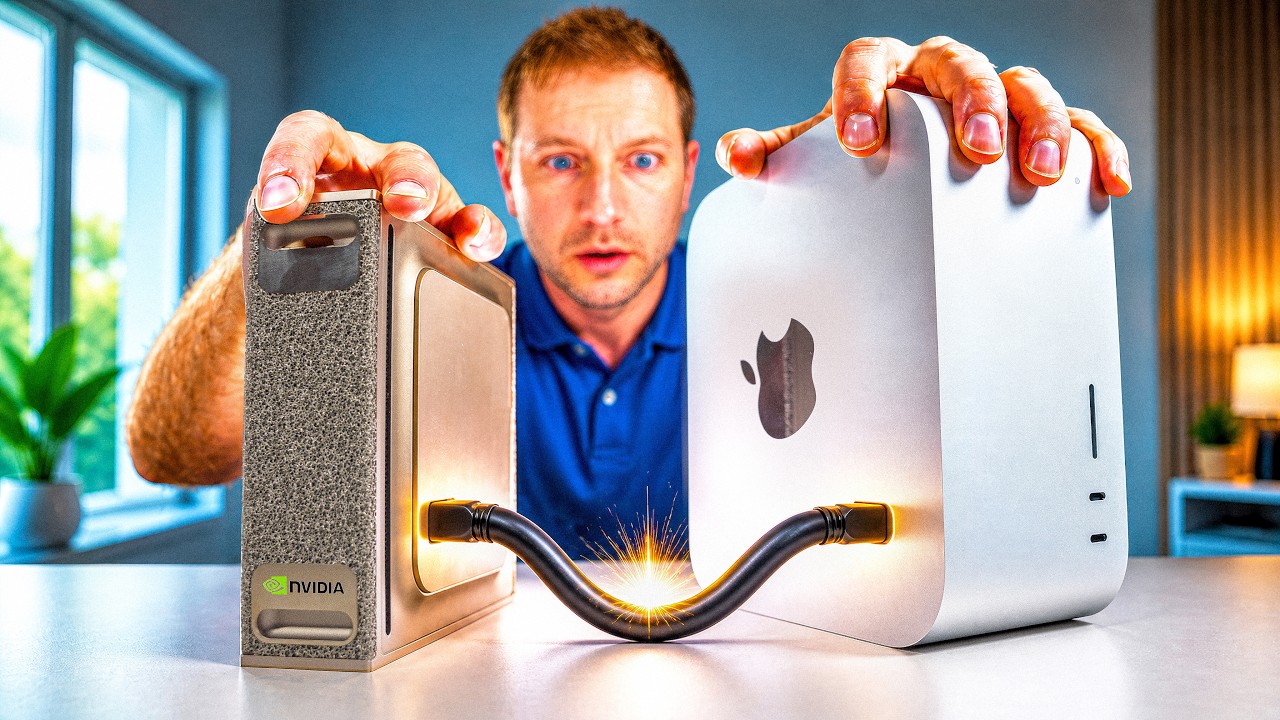
Andru Edwards spends eighteen minutes arguing something that is not what the title makes it sound like. He is not saying Apple built the best model. He says the opposite out loud in the first fifteen seconds: ChatGPT is more powerful, Claude is better at complex reasoning, and Apple used the tech behind Google's Gemini to help train its own models. He also concedes Apple had every reason to be the company nobody trusted in AI, because it promised a revolutionary Siri in 2024 and then did not deliver it. The claim is that none of that decides consumer AI. What decides it is access, and at WWDC 2026 Apple handed Siri the keys to your screen, your messages, your email, your photos and your calendar, put an orchestrator and five custom models inside the operating system, and made the whole thing reachable from one side button. Edwards walks the history of the fifteen year Siri failure, defines intelligence and access as two separate advantages, tests the argument against every rival that could realistically challenge Apple (OpenAI, Anthropic, Google, Microsoft, Meta, Amazon), then spends the last four minutes attacking his own thesis with Apple's 2024 broken promise, the $250 million false advertising settlement, and the fact that Siri AI is beta software limited to English. This page rebuilds all of it in order.
Chapters
0:00 Apple Just Won AI (and It's Not Even Close!) 1:29 Siri Was Trapped 5:00 Siri's Unfair Advantage 6:52 iPhone Side Button as the New AI Interface 9:03 Siri AI's Competition Analysis 12:35 Siri AI Visual Intelligence 13:44 Can Apple Keep Up with Siri AI Competition? 16:09 Siri Is the Best AI Tool for the Average Person
The claim: Apple may have won by finishing last (0:00)
The cold open is a list of concessions, delivered fast, before any argument is made.
Apple may have just won consumer AI by being last, with an AI model that is not even close to the smartest. ChatGPT is more powerful. Claude is better at complex reasoning. Apple used the tech behind Google's Gemini to help train its own models. And after promising a revolutionary Siri in 2024 and then failing to deliver it, Apple had every reason to be the company nobody trusted in AI.
That is the whole bear case, stated by the person about to argue the bull case. Then the pivot: while everyone was down on Apple, the company went to work on completely rebuilding the Siri that had been broken for fifteen years.
The reframe is the heart of the video. Siri's real problem was never that it was dumb. Edwards will not let Apple off that hook, and interrupts himself to say so.
"Now, because Siri's real problem was never that it was dumb, and don't get me wrong, it was dumb, but I also think that Siri was trapped." (0:36)
Trapped means something specific. It did not see what you were doing. It did not understand what was happening across your apps. It could not connect a question to the messages, emails, photos and calendar events that make up your actual life. At WWDC 2026, Apple finally handed Siri those keys, and that creates a possibility Edwards thinks the rest of the AI industry should find kind of terrifying.
"The AI war may not be won by the company with the smartest model. Instead, I think it may be won by the company whose model already lives in your pocket, controls the operating system, and knows enough about your life to be useful before you explain anything." (1:07)
Siri Was Trapped: the fifteen year curse (1:29)
Siri launched with the iPhone 4S in 2011, four years before Amazon's Alexa. Apple was so early that, as Edwards puts it, the industry barely had language for what Siri even was. You could ask your phone a question and hear an answer. For a moment it felt like the future had arrived.
Then Siri spent the next decade and a half pretty much standing still. Every year brought new voices, new languages and a few new commands, but the basic experience barely changed. Ask for the weather and Siri usually worked. Ask a question that required context or memory or more than one step, and you were pretty much rolling the dice.
Here is the diagnosis the video turns on:
"That made Siri look like an intelligence problem. Underneath, it was a terrible architecture problem." (2:14)
The original Siri was essentially a voice controlled command system bolted onto an operating system that had never been designed for an agent. Individual requests were routed into narrow domains: set a timer, call mom, play a song. Siri could trigger a supported action, but it could not freely reason across the phone or any other device.
The specific failures Edwards lists are worth keeping in full, because each one is a category of thing a real assistant has to do:
- It could not see the app in front of you.
- It could not understand that "send him the address" referred to the person in your current conversation.
- It could not search an email, connect it to a calendar event, find a related text message, and give you one useful answer.
And the punchline is not that the data was missing.
"Information was all right there. Siri simply wasn't allowed to reach it. And that was the 15-year curse." (3:00)
Apple had placed an assistant inside the most personal computer people owned, then trapped it behind walls that prevented it from understanding anything personal.
- 2011Siri ships with the iPhone 4S. Apple is so early the industry has no language for what it is. Ask your phone a question, hear an answer, feel the future arrive.
- 2014Amazon's Alexa arrives. Edwards frames Siri as launching four years ahead of it, which is the point: Apple had the head start and gave it away.
- 2011 to 2024Fifteen years of standing still. New voices, new languages, a few new commands. Weather works. Anything needing context, memory or more than one step is a dice roll. Underneath: a voice command system bolted onto an OS never designed for an agent.
- June 2024At WWDC, Apple demos a more personal Siri that understands context, sees what is on screen, and takes action across apps. It is a convincing keynote.
- 2024 to 2025Many of those capabilities never ship. What arrives is modest. The gap between the advertising and the product becomes the story.
- 2026Apple pays $250 million to settle false advertising claims over the Siri features it advertised and did not deliver.
- June 2026At WWDC 2026, Apple ships the architecture instead of the promise: five custom Apple models plus an orchestrator inside the operating system, on screen awareness, and personal context across your apps.
- NowSiri AI is beta software, English only. Edwards has been testing it and calls the experience superb, while insisting nobody should hand Apple credit on a keynote again.
What WWDC 2026 actually changed
Edwards does not re-explain the architecture here, because he made a full video on how the new Siri works and points you at it. The compressed version he gives:
The new system uses five custom Apple models and an orchestrator embedded into the operating system. That orchestrator decides which model should handle your request, what information it needs, and whether the work can happen on your device or requires more computing power in the cloud. Siri also gains on screen awareness, so it can understand what you are looking at and combine that information with personal context from across your apps.
Then the line that separates this from every other AI upgrade video:
"The important change has nothing to do with the fact that Siri can produce a more eloquent answer now. It can finally understand what the question is about. That's the big change." (3:54)
Siri's Unfair Advantage: intelligence and access are two different things (5:00)
This is the load bearing distinction of the entire video, and Edwards flags it as such.
"Intelligence and access are two different advantages." (4:10)
His example is a neighborhood potluck. Ask Siri what everyone is bringing to the neighborhood potluck this weekend. It can search your messages, your email and your calendar, then assemble the answer: Gloria is bringing watermelon feta skewers and Greg is bringing summer pasta.
Now go into ChatGPT and ask the exact same question. It has no idea what you are talking about. It does not know Gloria. It cannot see the group chat. It does not know which Saturday you mean or where the potluck is happening. It knows none of this.
Edwards is careful not to let that slide into a claim it does not support. That does not mean ChatGPT is not capable of solving more difficult problems. It is. Siri simply has the information required to solve your typical everyday user problem.
That distinction is the foundation of Apple's entire strategy, and it leads directly to the advantage every AI lab wishes it had. The consumer AI market has spent three years behaving as though the best model automatically becomes the winning product. That makes sense when you are comparing models inside a browser window or using them to code. It makes a lot less sense when AI becomes part of the operating system.
The homework tax
Right now, using ChatGPT or Claude for something personal on your phone requires work. You find the app. You open it. You describe what you are doing. You manually supply whatever context the model is missing. If the answer depends on an email, a photo, a message or an event, you may have to leave the app, find that information, copy it or screenshot it, return it to the app, and explain why that matters.
"And again, the model is brilliant, but the experience there still begins with homework." (5:37)
A third party assistant could ask for deeper access, but every additional permission creates friction and risk. Edwards makes the reader feel it rather than asserting it: do you want one company reading all your emails and your messages and indexing all your photos, and another one watching your screen? Those permission walls obviously exist for good reason.
Apple starts from a different position. It built the operating system, the chip, the Secure Enclave, and the privacy framework surrounding the data. When Siri needs information from your screen, your messages or your calendar, Apple can process much of that right on your device. When a larger model is required, Private Cloud Compute is designed to extend that security into the cloud. That gives Apple an advantage no standalone chatbot can recreate on your iPhone, even if it has a better benchmark score, because anything you ask those stronger models has to be processed in the cloud.
Then the thesis in one sentence:
"For consumer AI, the complete product is the model, your personal context, permission to use it, an interface that's always available, and enough trust for you to say yes. Apple controls that entire stack. It can rent raw model capability when necessary." (6:34)
That last clause is doing quiet work. Apple does not have to win the model race. It can buy in.
The side button becomes the interface (6:52)
Most people do not want to choose among six different models. They do not want to think about context windows, tokens, or which requests should run locally versus which ones should run in the cloud. They want to hold down one button, or just say the Siri command, ask a question in normal language, and get an answer that understands the situation.
"The best model in the abstract may be less valuable than a good model that already knows what my flight, that restaurant and the photo she sent me refer to." (7:15)
Which is why, Edwards says, the WWDC demo felt so ordinary. Mike Rockwell, the executive Apple moved onto Siri after he led Vision Pro, held the side button and talked to Siri. The whole exchange is four lines:
"How can I get tickets?" "Okay, you have to enter a lottery to get the tickets." "Remind me to sign up when the lottery opens." "Okay, I've got a reminder." (7:35)
No elaborate prompts. No permission mazes. No explanation of the backstory.
"But that ordinariness is the breakthrough. The winning consumer technology usually disappears into behavior." (8:02)
People do not think about which system indexes Spotlight or how iMessages get routed. They perform an action and expect the device to understand. Apple is trying to make AI feel the same way. ChatGPT brought generative AI to the public and it was, and still is, impressive. Apple's opportunity is turning it into a reflex.
Then Edwards stops and asks the audience a question that is the actual measure of the whole thesis: has AI changed something you do every day? Not a demo you tried, not an image you generated once just to see how it worked. Something that has become part of how you work, communicate, plan or make decisions. He asks for a yes or no in the comments, because he thinks the gap between knowing about AI and instinctively using it is still enormous.
And that gap is where Apple plans to live.
The competition, company by company (9:03)
Distribution alone does not guarantee victory, so Edwards runs the field. On paper, consumer AI is one of the most crowded markets in technology. In practice, very few companies have all the pieces required to compete with Apple at the operating system level.
OpenAI. ChatGPT reached 100 million users in roughly two months and became the product that defined the current AI era. But OpenAI's most valuable growth is increasingly tied to coding, developers and enterprise Customers. Edwards points at the recent GPT 5.6 launch and its Sol, Terra and Luna tiers along with the new ChatGPT desktop app, and his verdict on the app is blunt: it is not good. They literally tucked the chat portion of ChatGPT into a corner and optimized the rest of the app for coding. Those are areas where users will pay for greater intelligence, which is a perfectly rational place to point a company. But even if OpenAI wants to own personal AI, it still faces the same structural problem: it does not control the iPhone or Android.
Anthropic. Even more focused. Claude is exceptional at reasoning, writing, research and coding, but Anthropic's center of gravity has always been safety, frontier research and, again, enterprise. Edwards draws the distinction precisely: Claude can be a powerful tool on your phone. Becoming the invisible intelligence layer of that phone is a different challenge altogether.
Google. The one competitor with nearly every required asset. Frontier models that even Apple relies on. Android. Cloud infrastructure. Apps containing enormous amounts of personal data. And its own hardware in the Pixel. The problem is the shape of Android itself: it is distributed across hundreds of manufacturers, each with different hardware, software, update schedules and business incentives. Google can build its purest version of Gemini on Pixel, but Pixel represents a small share of the global smartphone market. Apple can design one architecture and push it across a massive installed base of tightly integrated devices.
Microsoft. Frontier AI partnerships and control of the dominant desktop operating system, but its strength is work. Copilot fits naturally into Microsoft 365, GitHub and enterprise software. Windows also lacks the always with you personal context that is concentrated inside a smartphone.
Meta. The most credible head start in AI wearables. Its smart glasses are genuinely impressive and they show why a camera plus a conversational model can become a powerful new interface. But Meta still depends on a smartphone platform it does not control. The glasses may sit on your face while the operating system permissions and much of the personal data remain somewhere else.
Amazon. The opposite problem. Alexa achieved enormous household distribution but never gained the smartphone in your pocket. Without that personal device, Alexa remained tied to rooms rather than to your life. Amazon tried to solve exactly that with the Fire Phone, and we know how that ended. Edwards points viewers at his own video on that spectacular failure rather than retelling it.
Run through the field and the pattern becomes pretty clear:
"The smartest AI companies lack the operating system. The operating system companies lack Apple's combination of mobile scale, vertical integration, personal context, and privacy credibility." (12:18)
He is careful with the conclusion. That does not make Apple unbeatable. It just means competitors have to fight from structurally weaker positions.
| Contender | What it already has | The missing piece | Where its gravity actually pulls it |
|---|---|---|---|
| OpenAI | The product that defined the era. 100M users in about two months. A frontier model line (GPT 5.6 in Sol, Terra and Luna tiers). | Controls neither iPhone nor Android | Coding, developers, enterprise Customers. The new desktop app tucks chat into a corner and optimizes the rest for code. |
| Anthropic | Claude, exceptional at reasoning, writing, research and coding. | No operating system at all | Safety, frontier research, enterprise. A powerful app on your phone, not the layer underneath it. |
| Nearly every required asset. Frontier models Apple itself leans on, Android, cloud, data rich apps, and Pixel hardware. | Android is split across hundreds of manufacturers with different hardware, software, update schedules and incentives | The pure Gemini experience lands on Pixel, and Pixel is a small share of the global smartphone market. | |
| Microsoft | Frontier AI partnerships and the dominant desktop OS. | No always with you device holding concentrated personal context | Work. Copilot fits Microsoft 365, GitHub and enterprise software. |
| Meta | The most credible head start in AI wearables. Genuinely impressive glasses that prove camera plus conversation is a real interface. | Depends on a phone platform it does not control | The glasses sit on your face while the permissions and the personal data live somewhere else. |
| Amazon | Enormous household distribution through Alexa. | Never got the phone. The Fire Phone was the attempt | Alexa stayed tied to rooms rather than to your life. |
| Apple | The OS, the chip, the Secure Enclave, the privacy framework, mobile scale, and the personal context already sitting on the device. | Not the smartest model, and it leaned on Gemini tech to train its own | The everyday request. It can rent raw model capability when it needs more. |
Visual intelligence, and the glasses Apple has not announced (12:35)
Then the argument extends past the phone. At WWDC, Apple showed Siri understanding the world through the camera app. Point the phone at a restaurant, a product or a document and Siri can identify what you are seeing, connect it to relevant information, and help you act on it.
"On the phone, that can look like another useful camera feature. On a pair of glasses, it becomes the interface." (12:57)
Apple has not announced glasses. Edwards says the path is difficult to miss anyway, and notes that it already works on the Vision Pro, where visual intelligence runs on both real world objects and digital ones, which he calls wild to try.
The combination is the point. Siri's new architecture gives Apple an assistant that can understand your personal context, and visual intelligence gives it eyes. Move those capabilities from the iPhone in your hand to something you wear, and Apple has the foundation for the next computing platform.
"Meta may arrive earlier, but Apple would arrive with the iPhone, the apps, the accounts, the permissions, and the history already attached." (13:31)
Can Apple keep up? The reason nobody should declare victory (13:44)
This is where Edwards turns the video on itself, and it is the strongest section.
Everything he has described sounds convincing in a keynote. We know that, he says, because Apple gave us a convincing keynote two years ago. In 2024, Apple demonstrated a more personal Siri that could understand context, see what was happening on screen, and take action across apps. Many of those capabilities never shipped. The features that did arrive were modest.
"The gap between the advertising and the product became so severe that Apple ultimately paid $250 million to settle false advertising claims." (14:04)
And then the fact he says matters more than every architecture diagram and controlled demo: Siri AI is currently beta software, and it is limited to English.
The bigger structural worry is cadence. Frontier models from everyone else improve every few months. How quickly can Apple distill those advances into its own models? Can it keep the system current without rebuilding the training pipeline every time Gemini takes another leap?
Then the counterargument, which is really the economic case for the whole strategy:
- Finding a flight confirmation does not require the world's best reasoning model.
- Summarizing a family group chat does not require a PhD level research agent.
- Locating the photo your friend sent you last month requires access, speed and contextual understanding far more than frontier intelligence.
- Using the largest, most expensive model for every routine request would also be economically absurd.
Consumer AI, he argues, needs smaller models that can handle enormous volume quickly and cheaply, preferably on your device, already consuming the power.
"Apple's bet is that good enough intelligence combined with exceptional context will beat exceptional intelligence starved of context for most daily tasks. And I think that bet is accurate." (15:11)
Siri is the best AI tool for the average person: the 90/10 split (16:09)
The most realistic future is not Siri replacing ChatGPT or Claude. It is Siri absorbing the everyday 90 percent: messages, schedules, reminders, photos, travel details, and questions about whatever is currently on your screen. Specialized models handle the other 10 percent: coding, deep research, long form creation and difficult reasoning.
"Siri handles the frequency, Frontier models handle the complexity." (15:49)
If that happens, Apple does not need to dominate every category of AI. It captures the layer people touch most often, and in technology, the layer that becomes habitual can be much more valuable than the tool that occasionally performs miracles.
Does Apple actually win AI?
Edwards answers his own title honestly. If winning means building the most intelligent model in the world, then no. ChatGPT, Claude and Gemini will continue doing things Siri cannot, and he flags that as his guess rather than a fact.
But that may be the wrong definition of winning. Apple does not need Siri to write your code, conduct deep research or replace every other AI tool. It needs Siri to become the assistant you use without thinking. The one that knows which flight you are asking about, who mom is, what restaurant your friend texted you, and whether that appointment conflicts with something already on your calendar. That is the behavior Apple is positioned to own: the everyday questions repeated billions of times where personal context matters more than raw intelligence.
And that is how the fifteen year Siri curse finally gets broken. Siri spent a decade and a half waiting for the right answer while locked outside of your digital life. Apple has now given it access to the screen, the apps and the personal context that make those answers useful.
He refuses to end on a victory lap. The models do still have to perform. Apple still has to ship what it promised. After 2024, nobody should give the company credit based on a keynote alone. But if this architecture works, and in his own testing of the beta it has been superb, then:
"The most important AI assistant won't be the one that scores highest on a benchmark. It'll be the one you can ask about your life without explaining your life first. That is the race that Apple's running, and I don't think anyone else is catching up to them anytime soon." (17:33)
Best quotes
"Now, because Siri's real problem was never that it was dumb, and don't get me wrong, it was dumb, but I also think that Siri was trapped." (0:36)
"The AI war may not be won by the company with the smartest model. Instead, I think it may be won by the company whose model already lives in your pocket, controls the operating system, and knows enough about your life to be useful before you explain anything." (1:07)
"That made Siri look like an intelligence problem. Underneath, it was a terrible architecture problem." (2:14)
"Information was all right there. Siri simply wasn't allowed to reach it. And that was the 15-year curse." (3:00)
"The important change has nothing to do with the fact that Siri can produce a more eloquent answer now. It can finally understand what the question is about." (3:54)
"Intelligence and access are two different advantages." (4:10)
"And again, the model is brilliant, but the experience there still begins with homework." (5:37)
"For consumer AI, the complete product is the model, your personal context, permission to use it, an interface that's always available, and enough trust for you to say yes. Apple controls that entire stack. It can rent raw model capability when necessary." (6:34)
"The best model in the abstract may be less valuable than a good model that already knows what my flight, that restaurant and the photo she sent me refer to." (7:15)
"But that ordinariness is the breakthrough. The winning consumer technology usually disappears into behavior." (8:02)
"The smartest AI companies lack the operating system. The operating system companies lack Apple's combination of mobile scale, vertical integration, personal context, and privacy credibility." (12:18)
"On the phone, that can look like another useful camera feature. On a pair of glasses, it becomes the interface." (12:57)
"Apple's bet is that good enough intelligence combined with exceptional context will beat exceptional intelligence starved of context for most daily tasks. And I think that bet is accurate." (15:11)
"Siri handles the frequency, Frontier models handle the complexity." (15:49)
"It captures the layer people touch most often, and in technology, the layer that becomes habitual can be much more valuable than the tool that occasionally performs miracles." (15:58)
"It'll be the one you can ask about your life without explaining your life first." (17:33)
Where it stands
An honest footnote, because the video is a prediction dressed as a headline and Edwards mostly says so himself.
The headline is a forecast, not a result. Nothing in the video shows Apple winning anything. It shows an architecture, a demo, and a beta that Edwards has personally been running. He is explicit about this in the last four minutes and even builds the strongest counterargument himself, which is more than most takes on this topic bother to do.
The 2024 record is the correct prior. Apple demonstrated a personal Siri at WWDC 2024, pitched it alongside the iPhone 16 launch, delayed it, and then agreed to a $250 million settlement over how those features were advertised. The settlement covers the iPhone 16 line plus the iPhone 15 Pro and Pro Max bought between June 10, 2024 and March 29, 2025, at up to $25 per device and potentially up to $95 if claim volume is low, with Apple admitting no wrongdoing. That is not a footnote to the thesis. It is the reason the thesis needs proving.
Beta and English only is a big asterisk. Edwards flags it, and it deserves repeating: an assistant whose entire pitch is "it knows your life" is not shipped until it works in the language your life happens in.
One small date wobble. The video says Siri launched four years before Alexa. Siri arrived with the iPhone 4S in October 2011 and Alexa shipped with the Echo in November 2014, so the real gap is closer to three years. The point survives intact: Apple had a large head start and spent it.
Distribution cuts both ways. The argument leans on Apple's "massive installed base of tightly integrated devices," which is real, and it is also true that Android, not iOS, is the majority platform worldwide. Apple's advantage is coherence rather than raw reach, which is a genuinely different claim than the one the phrasing implies.
The Gemini dependency is not resolved. Edwards says in the first fifteen seconds that Apple used the tech behind Google's Gemini to help train its own models, and later asks whether Apple can keep pace without rebuilding its training pipeline every time Gemini jumps. Those two facts sit uncomfortably next to "Apple controls that entire stack." Apple controls the distribution stack. The model stack it is renting, and the landlord is the one competitor with nearly every required asset.
Resources
- The video: Apple Just Won AI (and It's Not Even Close) by Andru Edwards.
- His companion deep dive on the architecture: You Won't Look At Apple's Siri AI The Same Way After Watching This.
- The Fire Phone video he references: Amazon Fire Phone FAILURE: $170 Million DISASTER!.
- His other channels and newsletter: Circuit Breaker and the Geared Up podcast.
- Apple: Siri, Apple Intelligence, Private Cloud Compute, the Secure Enclave, Apple Foundation Models, Apple Vision Pro, and WWDC 2026.
- WWDC 2026 coverage: CNBC's live blog of the keynote and The Neuron's rundown of everything AI Apple announced.
- Mike Rockwell, the Vision Pro lead now running Siri: Gizmodo on the reorg and who is getting credit.
- The 2024 promise and the settlement: TechCrunch on the WWDC 2024 Siri makeover and 9to5Mac on the $250 million settlement and who gets paid.
- The competition: OpenAI and ChatGPT, the GPT 5.6 Sol, Terra and Luna launch, Anthropic and Claude, Google Gemini and the Gemini model family, Android, Google Pixel, Microsoft Copilot, Microsoft 365, Windows, GitHub, Meta AI glasses, and Amazon Alexa.
- Historical: the iPhone 4S that launched Siri in 2011, and the Fire Phone, Amazon's attempt to get into your pocket.