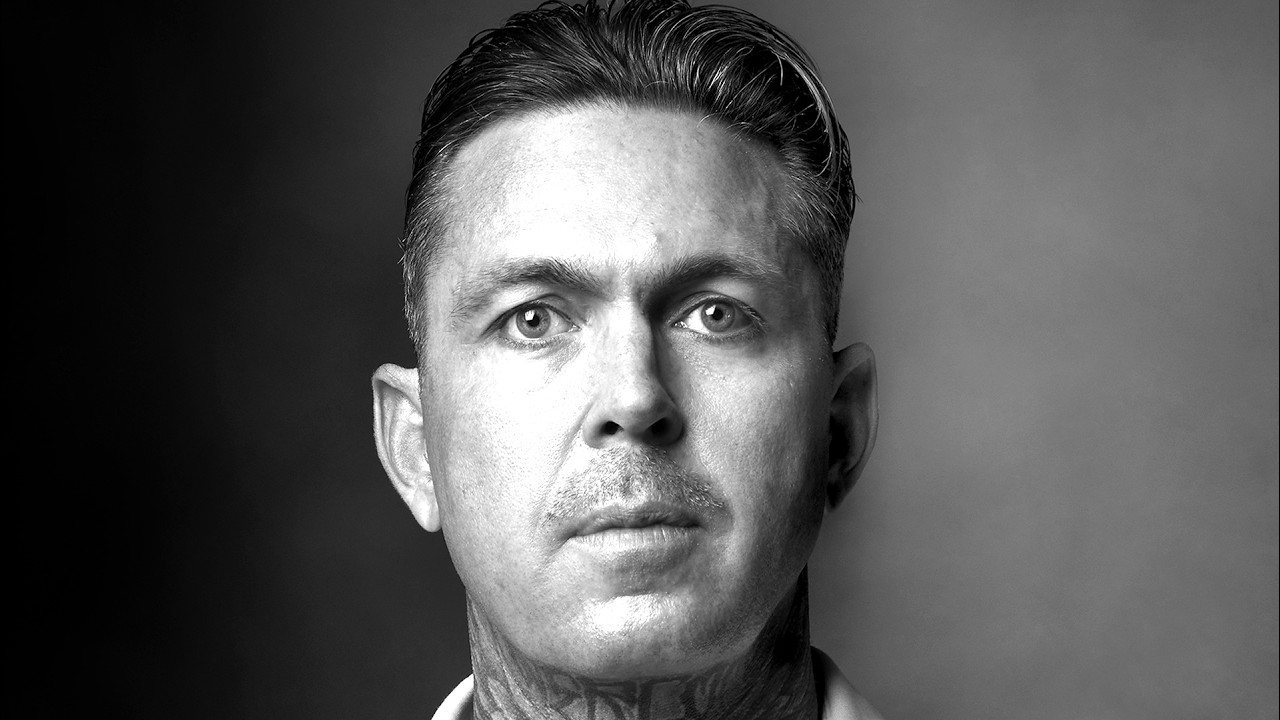
At a glance
Mark Laita of Soft White Underbelly sits down with Mark Sewell, a Marine intelligence officer turned FBI agent, who was handed the case of his career the moment he arrived in Atlanta in 1997: the Gold Club, which he calls the number one strip club in America, which he says was owned by a big earner for the Gambino crime family. He walks through the whole machine as he saw it from the inside: why the 1996 Olympics turned Atlanta into the strip club capital of the country, how he flipped dozens of dancers into informants by way of their probation officers, how credit cards were padded in the upstairs VIP rooms, how cash left the building in a suitcase on a Delta flight to New York, and how celebrity athletes were used as bait for everyone else. Then the 4 a.m. raid, a grand jury that almost everyone talked to, a defense strategy built on accusing him personally, four months of trial, and a secret plea deal that he says closed the club and took roughly ten million dollars off the mob. The last half hour leaves the mob behind for a decade of gangs in rural North Georgia, an undercover case against the Outlaws Motorcycle Club and its support clubs, a false brutality complaint that a body camera would have killed in a second, and two informants whose deaths stayed with him. It ends on a question neither man can answer: what actually separates the people on either side of the law. His answer is "not much."
- 1994Steve Kaplan buys the Gold Club in Buckhead, getting ahead of the Olympic crowds. The New York FBI, tracking the wiseguys he knows, calls FBI Atlanta to warn them.
- 1996The Olympics swallow the Bureau. Every agent is pulled onto security, the Centennial Olympic Park bombing eats years of manpower, and long term cases, the Gold Club included, go on hold.
- 1997Sewell arrives from the Marine Corps and is assigned the case because he is simply the next new agent through the door. Four agents work it quietly.
- 1997 to 1999Building the picture. Dozens of dancers become informants, defrauded customers start calling the FBI, an IRS agent joins, and surveillance follows a weekly suitcase of cash onto a Delta flight to New York.
- 1999The raid. Agents hit the club at closing, around 4 a.m., and a corporate records warehouse in New York. A U-Haul full of records. Nobody is arrested.
- +3 monthsThe grand jury. Employees and customers are subpoenaed and offered immunity. By his account 99 percent talk.
- 1999 to 2001A declared complex case. Almost two years of pretrial fights, suppression hearings, and a defense campaign suggesting the lead agent was romancing his witnesses.
- April 2001The trial opens, months before 9/11. Four months of government evidence, fifty witnesses, two more months still waiting.
- Month 4The plea. Secret talks after court each day. Most of the 17 defendants plead. Kaplan goes to prison, the club is forfeited, and the money totals about $10 million by his count.
- 2007North Georgia. Sewell transfers to a small rural office and a Safe Streets Task Force: drugs, guns and gangs, with two tours in Afghanistan along the way.
- 3 yearsThe Outlaws case. An informant for three years, an undercover for eighteen months, then 31 arrests across Georgia and 27 convictions.
- 2017Retirement at twenty years in the FBI, thirty years of service counting the Marines. He still teaches new agents part time.
"The Forrest Gump of the FBI"
He opens by calling himself the Forrest Gump of the FBI. He kept ending up in the best cases, one after another, to the point that other agents would ask him how on earth he got that one. Laita offers the obvious answer, that he was just lucky, and Sewell half agrees. There was luck involved, for sure.
But there is a saying inside the Bureau that he thinks explains the rest: the agents with the best cases have the best informants. He had great informants. Whether that was dumb luck, bumping into the right person and developing a friendship, or whether it was actual people skills and the ability to relate to someone, he is not sure. What he has learned over a career is that his own personality was a big part of how a person opened up to him. He suspects the same is true for Laita, who has spent years getting strangers to tell him everything on camera.
The first case, straight out of the academy
Laita asks what his very first case was. It was the world famous Gold Club, which he describes as the number one strip club in America at the time. "We own it now, we being the FBI," he says. It is closed, and the government owns the building, so to speak. It was, in his words, a Gambino LCN mob run club, and that is the only reason the FBI was involved at all.
He fell into the case right out of the FBI Academy. As a brand new agent he was paired with two experienced organized crime agents who walked him through the ropes: here is how a complicated investigation works, and here is how the mob works.
His two teachers were not ordinary agents. One had worked on the Donnie Brasco case, the long undercover penetration of the Mafia that ran from the mid 1970s into the 1980s, and had worked wiseguys in Miami. The other had worked John Gotti Sr. in New York in the late 1980s and early 1990s and helped put him in prison. Both of those men were now in Atlanta, assigned to the Gold Club, and then Sewell showed up as the new guy. He describes it as learning from the proverbial fire hose, with two people who knew exactly how to teach him.
The case became sensational. CNN reported from the courthouse steps every day, back when, as he puts it, CNN ruled the world in the late 1990s. Every sports magazine in the world covered it, along with all the major outlets, the Washington Post, the New York Times and the rest. The mob angle, the sports angle and the sheer sensationalism of it made it irresistible.
"What was illegal about that case?" "Everything."
That is the whole of his first answer. "How's that for an answer?"
The owner of the club was a man named Steve Kaplan, whom Sewell describes as a notorious earner for the Gambinos. He explains the yardstick he uses. During that era, you could judge how valuable someone was to the wiseguys by which crew they were placed in. A captain wants the big earners in his crew. By Sewell's account, the last two crews Kaplan was in belonged to John Gotti Jr. and then to Mikey Scars, Michael DiLeonardo. Those two, he says, are considered by a lot of people to be the last two wiseguys who were really out there on the Gambino side, before the whole thing got watered down. The FBI punched the New York LCN so hard that it simply is not what it was anymore, and he says everybody accepts that. Kaplan was in their crews, in his telling, because he was such an earner.
Kaplan's résumé before Atlanta, as Sewell lays it out: he owned traditional disco nightclubs in New York in the 1980s, then went to Miami and owned nightclubs there that were very successful. And being, in Sewell's words, a fabulously successful businessman, he saw the writing on the wall. The writing said: the Olympics are coming to Atlanta in 1996.
Why Atlanta: a storm of people and a storm of money
Sewell pauses to make a point he thinks gets lost. They are recording in Los Angeles, a city about to host the Olympics for the third time in the last hundred years (1932, 1984 and 2028). The only other American city to host the Summer Olympics in the last hundred years is Atlanta. So in 1996 the world was about to descend on Atlanta, and he stresses that it was a primarily male driven world: sports.
Atlanta could handle it. It had the world's biggest airport, Hartsfield Jackson. It had warm weather. It had three interstates running through the city, I-75, I-85 and I-20. A businessman sees that coming and wants to get in front of what Sewell calls "this storm of people and this storm of money."
And the city saw it too. What Atlanta did, by his account, was make it easy for adult businesses to open: easy to get your business license, easy for the dancers to get permitted, easy for owners to get a liquor license. Atlanta was not obstructionist the way a lot of cities are. The reason was simple. It is a money maker.
The city was also thinking about life after the Olympics. It was building infrastructure to hold millions of people: housing, hotels, convention centers, stadiums. When the athletes and the crowds went home, what would fill those buildings? The plan, as he describes it, was to become the convention center of the South, if not the whole country. He says he recently looked at the rankings of top convention cities: Las Vegas is number one, and then it is basically a tie between Orlando and Atlanta.
Organizers choose a convention city on the city itself, the weather and so on. But the attendees also ask what they are going to do afterwards. "Are we going to go to Disney World or we going to go to a strip club?" That, he says, is the lure of Orlando and Atlanta respectively. So Atlanta made it easy to open strip clubs, and this started before the Olympics, in 1994. When Kaplan saw that, he came up to Atlanta and bought the number one strip club in the city. He bought the Gold Club.
Full nudity, full alcohol, and the best neighborhood in town
The Gold Club sat in Buckhead, the district where all of Atlanta's nightlife and parties were. Sewell explains why that location mattered so much.
What a lot of cities do with adult businesses is make you choose. They will allow full nudity and full alcohol, but then they zone you to the other side of the tracks where nobody will go. So to make money you give something up. An owner might say: fine, I will give up full nudity and make the dancers wear pasties, so that I can move my club back into the prime part of town and get people through the front door.
Atlanta did not require that trade. Atlanta said you can have full nudity, you can have full alcohol, and you can be in the best neighborhood in town. That is where the Gold Club was, right off the interstate and easy to reach.
To show how far the city was in bed with the adult clubs, he offers a detail Laita clearly finds hard to believe. For years, he says, the official Atlanta visitors bureau website, today's Discover Atlanta, carried a link to the Cheetah strip club. Here are the restaurants to eat at, here are the hotels to stay at, and oh, by the way, here is a strip club you can visit after hours.
"On their website?" Laita asks.
It was a link on their website for years, Sewell says, certainly through the late 1990s and into the 2000s.
Penn Station money, and a club that was already winning
Kaplan did not buy a project. He bought a club that was already fabulously successful. It was already the number one club in Atlanta. It was not yet the number one club in America, but it was heading that way.
And Kaplan, by Sewell's account, was already very wealthy before any of this. He had inherited his father's businesses in Penn Station in New York. Those were blue collar businesses: shoeshine, newspapers, coffee, smoothies, the things mass commuters want quickly before they drop twenty dollars and get back on the train. But if a million people roll through Penn Station and you get a small percentage of them, you make a lot of money. He had already made that money, and the nightclubs had been successful too.
One of them was Club Boca in Boca Raton, which Sewell says was very successful, and he says John Gotti Jr. and Mikey Scars would both come down there to visit. But the real money was going to be in the strip club. Kaplan saw that, and he bought it in 1994.
A phone call from New York, and then the Olympics take everything
FBI Atlanta did not know Kaplan had bought the club. The New York FBI did, because New York was tracking all of those wiseguys. So someone in New York picked up the phone and called John Simmons, the agent from the Donnie Brasco era who would later train Sewell. The message, as Sewell recounts it: "Hey John, just so you know, you've got a wise guy down there, an associate, that just bought a strip club, and you might want to be aware of it and see what's going on with that." That was how the Atlanta office officially learned that Steve Kaplan owned the Gold Club.
Then the Olympics happened. In 1996, he says, essentially all long term investigations in the FBI were put on hold, because every agent had to support the Games for security. And even with all of that concerted effort, a domestic terrorist attack still happened: Eric Rudolph's bombing in Centennial Olympic Park. The investigation afterwards took years. It took a lot of manpower to run the Olympics, and then it took a lot of manpower to chase the bomber after the Olympics. So the Gold Club case went nowhere for a couple of years, primarily for manpower reasons.
The new guy walks in
The Olympics end. Sewell is leaving the Marine Corps and coming to the FBI. He arrives in Atlanta in 1997, gets assigned to the organized crime squad, specifically to the LCN, and specifically to the Gold Club.
For years he told himself a flattering story about that assignment: that the bosses had looked at his skill set and decided he was the right man for the case. He found out later it was dumb luck. The next agent to walk into the office was going to get the Gold Club, and that happened to be him. "So it's good to be lucky, right? Because I learned so much."
His background shaped how he started. He had been an intelligence officer in the Marines, and to him the logical progression before you do anything is the one the Marines teach: if you are going to attack a building or an enemy, you first learn as much as you can about the enemy. That is common sense, he says, but as an intelligence officer he did not just know the common sense part, he knew how to actually do it. So he made a deliberate effort to learn everything he could about what was going on inside the club before the FBI did anything proactive there.
There were four of them working the case, he and three others, all on the down low, hoping not to alert anyone that there was an FBI investigation. But he is realistic about what they were up against. Kaplan, in his description, was a well seasoned Gambino associate, and he knew by the way the world works that somebody was probably looking at him. "You can't hang out with John Gotti Jr. and somebody not look at you. You can't go down to the airport and pick him up when he flies in and people not look at you." So the goal was simply not to tip their hand.
150 employees, and the probation play
The first thing Sewell decided to do was develop informants inside the club, in as large a quantity as he possibly could.
He lays out the arithmetic of the building. The club had about 150 employees on the books. They did not all work at once, but there were about 150. Of those, 110 to 120 were dancers. The other 30 or so were management, bartenders, dishwashers, bouncers, car valets, that kind of thing.
So when the FBI started developing sources, guess who they developed? The dancers. And he argues they were the best possible sources, because the dancers knew what was going on in the club as much as or more than anybody. Partly for the obvious reason, "the sex, drugs, and rock and roll," but also because they were dating managers, they were hearing things, and they were, in his words, smart, with skills men tend not to have: they picked up on conversations and simply knew what was happening in the club, whether they were actively involved or just seeing and hearing it.
It worked. "We were fabulously successful doing that." They developed dozens of female informants who told them what was going on in the club. He says he spearheaded it but had other agents working alongside him.
Technique one: run the tag
His first technique was to leverage a person's prior criminal history. He compares it to a traffic stop. When a police officer pulls a car over, the first thing he does is run the tag to see who owns the car, say Joe Smith. Then he runs Joe Smith to see whether he has a criminal history or a warrant.
The FBI had an informant who worked in the club's front office and handed over a list of all the club's employees. So Sewell went down that list one name at a time. The first thing he noticed was that a good percentage of the dancers, maybe 10 or 20 percent, were already on probation for state offenses: bouncing checks, shoplifting, whatever it might be that young twenty one year old women do, as he puts it, when they do not have money. And now they were on probation with the State of Georgia.
He jumps ahead to the payoff. When he sat down with these women, they were not scared of him. They were scared of their probation officer. They did not want to be revoked and sent back inside, and they understood that probation was a good thing for them.
And probation came with conditions. When a judge issues a probated sentence, two of the standard conditions are that if you know of any crimes you have to report them, and that you have to cooperate with law enforcement if they ask you about crimes. So it is hard, he says, for a dancer to tell him she does not know what is going on in the club when he comes knocking.
The meeting in the probation office
In the beginning he arranged these interviews in the probation officer's office. The probation officer would speak to the woman first, and the message was short: the FBI wants to talk to you about your place of employment, and you know it is your responsibility to tell the truth. That was really all they had to say. Then the probation officer would leave the room and Sewell would sit down.
He always came in prepared. He already knew her stage name. Her real name might be Alice Smith, but she dances as Madison. He knew a little about her from other people, which meant he could hold a conversation and build rapport.
And he made one thing clear to every one of them: he was not there about her. "I don't care if you've slept with a guy, if you sold drugs, if you worked a credit card."
"Management was in on it"
The point of those conversations was the management. Sewell explains a rule of the business that he learned over roughly ten years of working strip clubs in Atlanta. A dancer cannot do any of those things in a club without management's permission, because management will fire her. It cannot stay secret for long. It gets back to management, and clubs will fire you in a heartbeat for breaking those rules.
Unless management is in on it. Then it is a whole different story. And that, he says, is what they found at the Gold Club: management was in on it.
His reading of Kaplan is that he walked into a club and made it fabulously successful. By Sewell's account the club reported $9 million a year in 1999 dollars. But that was not enough. The greed for the extra money took over: let's work the credit cards, let's get these NBA players in, let's have the women sleep with them, let's sell overinflated champagne, and on and on. "Just the crazy imagination that he had, because $9 million wasn't enough, apparently."
And that greed, he says, is what got him. It became so obvious and extravagant, and there were real victims of it, that the information started coming back to the FBI on its own.
The watch and the shoes
While the dancers were telling the FBI what was going on inside, other people were picking up the phone and calling the FBI directly. These were the male customers who had come in from out of town, the conventioneers he described earlier. Whatever convention was in town, blue collar or white collar, those men went to a variety of clubs, and they definitely went to the Gold Club.
He describes how the high rollers were handled. When a man walked in the front door, the bouncers knew how to tell who had money. The first things they looked at were the watch and the shoes. They could profile you from those two things alone. If you passed, they ran you upstairs and got you a VIP room.
Up there you would sit in a room with sofas and have a chat with a dancer, as opposed to what the other 99 percent of the marks were doing, which was standing downstairs on the floor putting dollar bills in someone's garter.
The men who went upstairs, he says, did not have sex with the dancers nine times out of ten. What they did was spend thousands, sometimes tens of thousands of dollars, because they were fabulously wealthy. And the women upstairs realized they had a mark. If he has 10, I bet he has 20, and Sewell clarifies that he means $10,000 and $20,000 on that credit card. So they worked the card fraudulently.
How a card got worked
He describes a couple of techniques.
The first is the old fashioned one everyone has seen in the movies. Get the man drunk. He does not know what he is doing, and he signs, or someone signs for him. Because he is inebriated, that is one way of getting an inflated charge onto the card.
The second is subtler. The man signs a $5,000 charge and believes that is the whole bill. He walks out with a $5,000 receipt in his pocket, and he is fine with that. The next morning, in his hotel room, American Express calls: "Courtesy call. You just got hit for 20,000 last night on your American Express. Are you okay with that?" And he says, wait a minute, my receipt says 5,000, why is it 20? That gap is where the scam lived.
And again, the dancers could only do that with management's permission. They were working the cards fraudulently with a variety of techniques, Sewell says, but management was in on it, and by his account Kaplan was in on it.
The victims pick up the phone
So the customers started calling the FBI. He paraphrases the typical call: "Look, for what it's worth to you, we hear this club is perhaps owned by a wise guy or somebody mob affiliated. Don't know if it's true, but that's the rumor on the streets. But I do know that I got defrauded out of $15,000 last night and I want to report it to somebody, and I'm starting with the FBI."
Whoever took the call, a receptionist or similar, would ask the name of the club. Gold Club. And they knew exactly which squad to route the complaint to.
The complaints piled up, and the agents went out and interviewed the men. Sewell loved them as witnesses. They had no criminal histories. They were not on probation with the State of Georgia. They were very successful, sometimes millionaire businessmen, "that a jury would believe, quite frankly." They told their stories, and the stories accumulated to the tune of dozens of men.
The most egregious, if his memory is right, was a $28,000 tab in 1999. He does a rough inflation adjustment on the spot and guesses that would be in the $40,000 range in 2026. That customer thought he had spent $10,000. They hit him for $28,000.
Other variations: sometimes extra zeros were added to a tip, so a $300 tip became a $3,000 tip. Sometimes the man would leave, and then when management punched the charges in and sent them on to the credit card company, they had a way to manipulate the numbers.
Bring in the IRS, and follow the cash
The agents knew all of this would be complicated to prove at trial. One of the best things they did, he says, was bring in an IRS agent.
He tells a story to explain why. A bad guy once told him, "I'm perfectly comfortable talking to the FBI, but I am not talking to the IRS." People know, Sewell says, that the IRS can wreck you very quickly, and that IRS agents are very good at following the money. The IRS agent turned out to be very helpful by the end of the case, including in working through the credit card evidence.
Then there was the cash. Remember, he says, this is 1999, and the world was not digital yet. Of that $9 million the club reported, half was in cash, not credit cards. And the great thing about cash, if you are a criminal, is the skim. How much of it are you going to report?
One of the things Kaplan did, by Sewell's account, was pay all of his employees in cash, and pay them out of the cash he had made the night before, before it had ever been counted. That way it could not be counted, could not be used against him, and could not become a tax liability. Sewell learned from the IRS agent that when a business pays its employees in cash at that kind of volume, it is obviously trying to hide how much it makes.
The suitcase on Delta, and the Gambinos' cash cow
The FBI also knew, from informants and from surveillance, where a lot of that uncounted cash was going. It went into a suitcase once a week, the suitcase went onto a Delta Air Lines flight to New York, and in New York, Sewell says, it went to the Gambinos.
Then he jumps forward to 2004 or 2005 to show what that money meant to the family. He starts to say Mikey Scars was on trial, corrects himself: it was John Gotti Jr. on trial, and DiLeonardo, the Gambino captain, was testifying against him. DiLeonardo had flipped and was cooperating with the government because of murder charges he had pleaded guilty to in New York.
According to Sewell, DiLeonardo told that New York jury that the money the family got from Steve Kaplan in Atlanta was its number one source of income from any one individual. Sewell adds the context. The family made more money overall from shaking down the unions, but that was thousands of people paying a little at a time, the classic union shakedown. If you were talking about shaking down one business, Kaplan was the man paying the most to the mob. "He was a cash cow," Sewell says, which is how he recalls DiLeonardo putting it on the stand.
Drugs for the high rollers, and why the search warrant came last
By now the FBI knew credit card fraud was going on. It also knew about drugs: dancers were using inside the club, and customers were using inside the club too. And again, he says, it depended on who the customer was. If it was a high roller, the club turned a blind eye: "do your eight ball or whatever it is you want to do," an eight ball being an eighth of an ounce, typically of cocaine. If you were not a high roller, the club took the moral high ground and threw you out. It all depended on how much money you were willing to spend.
On top of that there was the tax fraud, the skimming of cash. The agents were sure they could prove it eventually, but proving a cash skim has one unavoidable requirement: you have to get inside the business and seize its records. To do that you need a search warrant. And the moment you execute a search warrant, everybody knows the gig is up and the FBI is looking at them. So they saved it for last, and kept gathering as much other criminal information as they could first.
For two years, from his arrival in 1997 to 1999, that is what they did: collected information from informants on everything going on inside the club, the tax scheme, the credit card fraud.
The prostitution nobody set out to prove
The part of the case that ended up getting the most publicity, Sewell says, was the least of all the offenses: the prostitution. They never intended to make it a prostitution case. Every strip club in America, in his view, has some sort of prostitution angle to it. That is inevitable. Management tries to squash it, but you cannot control everybody.
In this case, though, he says the club was pretty much allowing it, especially with the high rollers and especially with celebrity athletes. And that was not an accident. It was the business model.
The celebrity business model
Sewell describes Kaplan's model this way: if I can get the celebrity athletes to come into the club, then I can get the common Joe to come in, so that he can be in the club with the celebrity athlete. And it did not have to be athletes, as the agents learned. It could be actors, politicians, singers, anybody with name recognition. Get them in, and another hundred blue collar men come in and drop three or four hundred dollars apiece.
He puts it in Kaplan's voice to make the math plain. I can bring the center for the New York Knicks into the club, give him a VIP room, assign four dancers to his room who I have given the green light to have sex with him, and he is not going to have to pay for anything. I, Steve Kaplan, will tip the dancers afterwards, maybe drop a thousand dollars or so on tips. It is worth it, because of the other 50 to 100 men who come in to be near the center of the New York Knicks. To illustrate the kind of name that fills a room he rattles off Madonna, Dennis Rodman and George Clooney, "whoever it is you want to name." People want to hang out with names like that in a strip club. That was the model, he says, and it was fabulously successful.
Upstairs and downstairs
He sketches the floor plan. Upstairs, on the second floor, there were rooms, he thinks 12 or 13 of them. Even with two male customers per room, that is only 24 customers upstairs. Downstairs, on a busy night, there would be 500 men.
And Kaplan, he says, had a philosophy about those 500. Take the chairs away. Take the tables away. Take the sofas away. Pack them in like sardines, shoulder to shoulder, as close to the stage as they want to be. I do not want anything taking up floor space that is not paying me to take up floor space. The FBI captured that on tape, Sewell says: Kaplan explaining exactly that to another strip club owner. Get the men in and let them spend their money. And it worked.
"We're all going to the Gold Club"
Atlanta had all three big professional sports, basketball, baseball and football. When a visiting team rolled into town, Sewell says, the athletes told him personally, when he interviewed them, that it was common knowledge: when the game is over, we call the club, the limo comes to pick us up, and we all go to the Gold Club. It was routine. So the model was working.
1999: why it had to end
Eventually, in 1999, the agents reached the point where the club had to be taken down. They could not let it continue.
Part of the reason was police corruption. Sewell says they had corrupt police officers protecting the club. One officer, he says, grossly obstructed a rape investigation into an assault that happened in the back of a limousine. Another officer was calling the club to tip it off that inspections were coming from the local police department.
And there were true victims. Dancers were overdosing on drugs inside the club. Customers were getting their credit cards rung up. "We just can't let it go on indefinitely because we have victims. We have some responsibility."
4 a.m.: the raid
So in 1999 the FBI executed its search warrant and raided the club.
Atlanta strip clubs, he explains, closed at 4:00 a.m. The plan was to hit the club right before closing, around 3:30, for a simple reason: they wanted the till. They did not want the club to close up and put the money in the safe. They wanted to catch the cash registers as fat and full as possible, along with the records, the credit card receipts, everything that showed what the income was.
Why one night mattered so much: investigators are allowed to take one night's proceeds and extrapolate. What would seven nights look like? What would a week look like, then 52 weeks, then a year? It gives you a ballpark to work with on the skim. And they got the records. It was successful.
Then he corrects himself mid story. He thinks now it was not 3:30. It was closer to right at 4:00 a.m., and there was a reason for that too: they wanted all the customers out first, because customers could be a safety risk. Some "gang banger type guys," as he puts it, ran through the club on occasion. Why deal with them? Let them go home. Just deal with the dancers, the employees and the cash registers.
The man who was still there
But there was an exception to closing time. If you were a high roller, you could stay in the club after hours while the staff cleaned up, swept and mopped the floors. The agents did not know there was one particular high roller who did this.
They went through the club clearing it, making sure it was safe, that nobody was hiding behind any rooms or walls. And they came across a man in a room with three or four dancers. "Whoa, what are you doing here?"
He turned out to be someone who, through an inheritance and a lawsuit, had come into tens of millions of dollars and had, in Sewell's words, "just gone crazy," spending it at the club on a regular basis. The club would bend every rule to accommodate him, which is why he was there at 4 a.m. when he should have been in his car driving home. He became a valuable witness at trial on the prostitution counts.
The New York warehouse and the comp log
The Atlanta raid was not the only one. The FBI also raided Kaplan's corporate warehouse in New York, and Sewell says that was equally successful.
Here is what was in it. At the end of each night the receipts and records were bundled up. All of January would be packaged and shipped to the corporate warehouse, then February, then March. So there were months and years of records in that warehouse, and the FBI knew about it. They wrote a search warrant for it and seized everything.
Those records turned out to be extremely valuable at trial, because a lot of them carried names: not only celebrity athletes, but police officers. When those people came into the club, they got comped for food, services, drinks, whatever the expense was. And to comp someone, a manager could not just write "comped Gold Room seven." He had to write why. "Comped Gold Room seven," followed by the name of an Atlanta police officer, and Sewell gives one, or "comped Gold Room seven, Patrick Ewing from the New York Knicks." The club's own bookkeeping recorded who was being given what.
The grand jury, and immunity for Madison
After the raid, he says, "it was carte blanche." Everybody now knew the gig was up and the FBI was looking at them, so there was no longer any reason for secrecy. The agents went out to talk to every employee they had not already talked to.
The team decided the best way to talk to people was a grand jury investigation: put them under oath, bring them into the grand jury, and give them immunity. Sewell sums up the pitch. We are not interested in the woman who dances under the stage name Madison. Whatever crime she committed, I bet it is nowhere near as severe as what Steve Kaplan, the Gambino associate, committed. So we are not interested. Just tell us what you saw and what you did, take the immunity, and move on with your life.
And 99 percent of them did it, he says: the dancers, the customers, the male employees. After three months the agents had an overwhelming picture of what was happening in the club, "the sex, drugs, the rock and roll, the police corruption."
Leg breakers, RICO, and keeping it in Atlanta
The grand jury also surfaced crimes Kaplan had allegedly committed in Miami and New York through his earlier businesses. Primarily, Sewell says, putting money out on the street, loan sharking, and having wiseguys collect it for him. At trial, he says, the prosecution brought in those leg breakers to tell the jury: yes, when Steve was down in Miami he put money on the street, and I collected for him, at a high vig.
But that was not the meat and potatoes of the case. The Gold Club itself was. The government charged a RICO case, which lets prosecutors reach into New York, Miami and Las Vegas and pull all of those crimes into one conspiracy, one criminal organization. Even so, the focus stayed on Atlanta, because that is where most of the evidence was, and because that evidence would relate to an Atlanta jury. A defense attorney could stand up in front of Atlanta jurors and say, "Who cares what happened in Miami?" and probably get at least one juror nodding along. So they kept the case in Atlanta.
Two years to trial: a declared complex case
From the raid in 1999 to the start of trial in 2001 took almost two years. The reason, he explains, is that the case was declared a complex case, which he points out is a real legal term. Both sides agree to take their time getting the case to trial because there is so much evidence to review, and because there have to be suppression hearings over what will actually be admitted.
A defendant has a right to a speedy trial under the Speedy Trial Act, but in a complex case he waives it and effectively says: I get it, this case is complicated, and I am willing to take the time it needs. Here that was two years.
The sensational mob trial of its era
In April 2001, months before 9/11, they finally went to trial. And Sewell describes it as the sensational mob trial of its era, for a specific reason. John Gotti, the old man, had been in prison for about ten years by then. Junior had just taken a plea and was in prison as well: he never went to trial, and he pleaded guilty in a case that included shaking down a New York strip club called Scores. Everyone in the mob world had been pleading guilty. The Gold Club was the only one going to trial. "So, we're going to have an old-fashioned mob trial that's going to be sensational, and the news ate it up."
Sewell was, at this point, three or four years into the FBI. Still a relative rookie. It was his first trial, and not only his first trial but an enormous one. Greta Van Susteren was set up on the front steps every day with a microphone. CNN and news reporters from all over the country were there. Sports Illustrated, back when magazines still ruled the world, was writing its articles.
The defense playbook, expected and unexpected
In the two years between 1999 and 2001, the agents started to see the shape of the defense strategy. Some of it was what they expected.
A Black police officer who was a defendant was going to claim racism: that the FBI had picked on him because of his color. Some of the Black athletes, or the defense attorneys on their behalf, were going to claim something similar: where are the white athletes? Why are you not bringing them in front of the grand jury? Why is it only the Black athletes?
Sewell recalls a line from that period that he still finds funny: "Well, if the center for the New York Knicks was a seven foot white guy, we would have brought him in, but he's not. He's a seven foot Black guy. So, I'm sorry. That's just the way it works out."
They expected that line of defense, he says, because it is boilerplate, textbook, and because it works.
What they did not expect was that the defense was going to attack him.
"It might as well be Miss Sewell"
He goes back to the beginning. The FBI had been extraordinarily successful at recruiting dancers as informants, and had kept those relationships confidential until just months before trial. Then, eventually, the government had to disclose that a particular person was going to testify. And the defense reaction, as he describes it, was: whoa, we had no idea that person was an informant all this time. Worse for them, they understood how valuable those witnesses were, because they had close personal relationships with Kaplan or with management. Some had dated them. Some were among the women who were in the upstairs rooms a lot. The defense knew these witnesses would be damning, and they were taken aback that the FBI had been able to flip them, which, he notes, is the law enforcement word for it.
So a strategy developed. The only way the FBI could have flipped these women, the theory went, was that Mark Sewell was having romantic relationships with them. That became the new leak to the press, the new innuendo.
It even surfaced in court. At a suppression hearing, which Sewell attended, one of the defense attorneys called a witness, an attractive woman, by Sewell's last name. He called her "Miss Sewell" instead of her real name. (The automatic captions spell his surname "Soul" here and "Sowers" in the sign off; it is Sewell throughout.) The judge quickly corrected him and suggested he fix it for the record, since her name was something else. And the defense attorney said: "Well, it might as well be Miss Sewell."
Laita asks whether he was married at the time.
"Very married, with kids," Sewell says, and still married to the same woman today, forty years later. But he stresses that adultery was not the real danger. The real danger was that it corrupts the entire case. If a law enforcement officer is in a relationship with a potential witness, you can see how full of problems that is. The defense knew that, which is why they wanted to plant the seed and create drama.
And he believes they genuinely believed it. From their side, the women had loved the bad guys. At one time they were so close to Kaplan and the managers. How could they possibly have made that turn? There must be some reason.
How the turn really happened
The turn, Sewell says, was easy. He went and found the women who had been cast aside, and there were a lot of them. The ex-girlfriends. The women who had said: I can't work here anymore, it's too uncomfortable, I have a combative relationship with the manager and the owner, so I'm leaving. I'm packing up and moving to Las Vegas. To Houston. To Miami. To New Jersey.
He traveled around the country, following information his informants gave him, and knocked on those women's doors. And what they said, in his telling, was: "Yeah, I'll tell you anything you want to know. I hate those bastards. You know, I wasn't going to come forward. I wasn't going to raise my hand, but now that you're here knocking on my door, I'll tell you anything you want to know."
You cannot beat evidence like that at trial, he says, when a witness sits in the chair and says: I saw it, I participated in it, I heard the managers give permission. Because they had those close relationships with the men running the club, their testimony was worth a great deal.
The judge shuts it down
Ultimately the court dealt with the innuendo. After the defense attorneys made repeated efforts to get the romantic relationship theory in front of the jury, the judge told them no: they could not present that evidence, and more than that, they had better not even make an insinuation like that in front of the jury without the judge's permission. "So, luckily the judge cut them off at the knees." The defense could still use its other strategies, but not that one.
Four months, fifty witnesses, and a phone call
The government was on what lawyers call direct for four months. That is the phase where the prosecution puts up its evidence, witness after witness after witness. Fifty witnesses rolled through in those four months, and there were still two months' worth of witnesses waiting in the bullpen. So the government alone was looking at six months of trial, and after that the defense would put on its case. It was going to be a very long trial.
At the four month mark, something was happening that the agents in the courtroom did not know about. Secret negotiations were going on behind their backs.
As Sewell later learned, the defendants had seen the handwriting on the wall. Their thinking went: we are going to lose this case. So every day when court let out at 5:00, one of the defense attorneys was assigned to negotiate with the government and see whether a plea agreement was possible. But not with the prosecutor actually trying the case, because he was too invested and would be too difficult. They wanted to negotiate with someone removed from the case, someone who might be more open minded.
Sewell got a phone call one day: "Don't show up for trial tomorrow, because we think we have a plea."
It was the first he had heard of it. Four months at the government's table every day, listening to testimony, getting witnesses ready, and that was news to him. At the four month mark, of the 17 defendants in the case, the vast majority decided to take a plea agreement.
The one thing they could not beat
The agents found out later what had actually driven the defendants to deal. The defense believed they could beat most of the evidence. They thought they could beat the prosecution in general. They thought they could beat the mob witnesses who testified about extortion, because those witnesses were all shady characters and the jury would not believe them anyway. They had an answer for everything.
Except the credit card fraud.
Because what do you do, Sewell asks, with a man who is the president of a company, with a clean record, "Mr. America," who says: I was in the club and my card got hit for $15,000 in fraud? How does a defense attorney impeach that? How do you make that man look bad? You cannot. Especially when the government rolls them in one after another after another.
And there was a further fear: the snowball. In cases like this, he explains, jurors can reason in hindsight that if a defendant is guilty of the credit card fraud, he is probably guilty of the other things too, and then maybe he is found guilty on everything. The defense did not think it could beat the credit card fraud, worried about that snowball effect, and started to work a deal.
The deal: half a win, and ten million dollars
They cut the deal, and Sewell calls it a 50/50.
The bad half, from his point of view: only one man was going to prison, and that was Steve Kaplan. By Sewell's account Kaplan ended up with a three year sentence. The other 16 defendants would get probated sentences. They would plead to a felony, the government would recommend probation, and the judge would probably allow it. "So, not a lot of real sexy prison time."
The good half was the money and the club. The club would close. Kaplan would forfeit it to the government. And he would pay enormous sums, which Sewell itemizes.
- Back taxes. He thinks it was $5 million for taxes alone. And to show how wealthy Kaplan was, he says, Kaplan covered it with two checks over a six month period.
- Delta Air Lines. Delta had been defrauded through a ticket scam. By Sewell's account Kaplan had corrupted two Delta employees so that he could fly back and forth between New York and Atlanta on the cheap. A fabulously wealthy businessman defrauding an airline out of a couple of hundred dollars a ticket. "Greed, right?" But there was a second purpose: moving the cash. This was before 9/11, and airport inspections were not as tight as they are now, but even then, if you put a suitcase with $50,000 in it through checked luggage, someone might see it and ask a question. With a couple of Delta employees covering for you, getting the money to New York is a lot easier than driving it there. Sewell says Delta was out about a quarter of a million dollars in tickets, and Kaplan had to pay it back.
- The credit card victims. Kaplan, he says, had to pay for billboards around Atlanta that read, in effect: if you were a credit card victim at the Gold Club and you can prove it, come see the FBI, and we may have some money for you. He thinks the restitution fund was a quarter of a million dollars, $250,000.
- The fine. On top of the funds and the taxes, Sewell says there was another $4 million fine just for pleading guilty.
Add it all up and he puts it at about a $10 million forfeiture, which he says was at the time the largest financial forfeiture against the Mafia in history.
That part, he says, is the part that is truly good. The mob runs on money. The wiseguys have to have money because they do not have jobs. "They're not out, you know, making candles and cooking cakes." They run on the money they extort. So cutting off the flow of money, in his view, was the real success. "It was super successful."
Why nobody was arrested at the raid
Laita asks how Kaplan's arrest unfolded when it finally came.
Sewell explains that there was no dramatic arrest. When the FBI executed the search warrants in April, Kaplan was in New York. The agents did not have arrest warrants for him, and that was intentional. They wanted to do the searches first.
He says a lot of people do not realize this, because television does not make it clear: an agent can execute a search warrant, take your records, and leave you standing there. You are not under arrest. If the agent finds something during the search that ties you to a crime, say the gun they were looking for, then they may choose to arrest you. But the FBI had not examined any of those records yet. They took a U-Haul full of records away from those locations and left Kaplan in his house in New York.
Nobody was arrested that day. Nobody obstructed the search warrants either, other than, he says, the drunk dancers who were still in the club. For Kaplan personally, it was a non event.
Three years, and the mentor's rule about sentencing
"How much time did he get?"
"Three years."
"Three years?"
That, Sewell says, was the unsexy half of the equation. The government got all the money and got the club, a huge win, but Kaplan got three years.
And he explains how he made his peace with it. One of the two mentors he described at the start told him early in his career: as an agent, you cannot get wrapped up in the sentencing part of an investigation, because it is not your responsibility. That belongs to the prosecutor and the judge, who negotiate with the defense attorney. Maybe they ask your opinion, but probably they will not, and even then it is just an opinion. You have no role in it.
He brings it down to the level of a street cop. I catch a drug dealer, or I catch a bank robber in the act. I cuff him and turn him in. I have no say in how much time he gets. I would love for him to get what I think is a fair sentence. Sewell does not think three years was a fair sentence for the crimes committed, but he is okay with it, because he has no control over it.
"And the sooner you realize that, the better. If you get wrapped up around it, it'll ruin you." There are judges who give soft sentences to some bad guys, and there is nothing you can do about it.
Is the mob still functional?
"Yes, at all, the answer is yes," Sewell says. You will still see the occasional headline. But he gives an example of how insignificant they are today, and he is clear that by the mob he means the Italian mob, the LCN.
In its heyday, and he says this is well known and no secret, the FBI had a squad of agents, normally in the 12 to 15 range, assigned to each of the Five Families of New York. Five families, five squads. A Gambino squad, a Bonanno squad, and so on. Today there is one squad of 12 to 15 agents handling all five families, because that is how far their influence over crime in New York City has shrunk. One squad can handle it now.
The violence is certainly not there anymore either, he says. They figured it out: shoot people and you get attention, and they do not want attention. The movies make it look sexy, a mob boss shot and left in the street, but all it does is bring heat.
"They had a good run," Laita says.
"They had a good run," Sewell agrees. They dominated what he calls the greatest city in the world for 80 years, and he insists that is not an exaggeration. "They got probably 10 percent of every dollar that was made in New York City for 80 years." But it is over. And he says, while insisting he is not a homer for the FBI, that it is over because of the FBI. He counts dismantling the LCN, for the most part, as probably one of the top three or four greatest successes in the Bureau's history.
After the Gold Club: from mob clubs to Magic City
Sewell took what he learned working the Gold Club at the highest level and turned it on the other strip clubs in Atlanta, because the picture he described earlier had not changed. There were clubs everywhere, because of the environment the City of Atlanta had allowed to exist.
If you Google "strip club capital of America" today, he says, the answer is Atlanta. But what has changed in the twenty years since he worked those clubs is that Atlanta is now known for Black strip clubs, the Magic City kind of environment. That is because Atlanta is also, in his words, the Black Hollywood and the center of the Black hip-hop world, and strip clubs are part of that culture, frankly: the videos, the music, the songs.
So the agents watched a transition away from the mob infected white clubs being the dominant clubs in the city. Sewell worked two more white clubs that were tied to the mob peripherally. They convicted those men, sent some police officers to prison, and sent to prison some arsonists and other bad guys who were trying to burn each other's clubs down.
But the new angle, he says, was in the Black clubs. There was more violence there, directed violence: shootings, parking lot shootings, things of that nature.
The thread that led to the mayor
A couple of the agents he had worked with on the Gold Club got a good lead and started working one of those strip club cases. They convicted a man and flipped him, and his testimony, Sewell says, ultimately led to the mayor of Atlanta, Bill Campbell, whom he describes as a rising star in the Democratic Party at the time who had given a keynote speech at the Democratic National Convention. Campbell went to trial and was convicted. "And if you were to pull the thread on that conviction, it all started with a Black strip club."
So today, as they speak, that is the dominant theme in Atlanta: the Black strip clubs.
Video booths, cash, and the Buffalo family
Sewell transferred out of Atlanta in 2007. For those ten years, 1997 to 2007, he worked organized crime, which in Atlanta mostly meant adult businesses, primarily white strip clubs.
He adds one more from that era, and asks Laita not to laugh. There was a pornographer in town who still ran video booths, the kind where you go in and feed money into the machine. Sewell gives two reasons that business still existed then. One, technology had not caught up yet; people were still buying DVDs and VHS tapes. Two, there was a social taboo in the gay community about going to gay clubs. It was still Atlanta, still the South. A man who did not want to be outed would go to the video booth place instead.
All of it was cash, dollar bills and five dollar bills fed into machines. Sewell says that operator was tied to the Buffalo LCN family, and the FBI convicted him on a tax scheme as well. He was skimming millions of dollars off the top.
North Georgia: chicken plants, gangs, and Safe Streets
In 2007 he moved to a small FBI office in North Georgia, which his published instructor bio identifies as the Gainesville resident agency. Administratively it still belonged to the Atlanta field office, but the environment changed completely. There were no strip clubs, for one thing. It is very rural.
Most of the communities there, he says, are small working communities with an immigrant population. While mom and dad are out working in the chicken plant, the poultry plant, whatever plant they are trying to make money in, the kids are out gangbanging, mostly on the Mexican and Hispanic side, some Asian, but mostly Hispanic.
So he fell into what the FBI calls a Safe Streets Task Force, where federal agents work alongside local police officers on the number one crime problems in those small communities, which are normally drugs, guns and gangs. For the next ten years, that was his bailiwick.
Afghanistan, twice
He took what he calls a little detour and went to Afghanistan twice. The FBI had a relationship with the military in which agents were attached to military units to target specific terrorists, with the idea of possibly bringing them back to the United States for trial if a connection to 9/11 or other terrorist activity could be proved.
"Outlaw motorcycle gangs have taken over"
When he came back from his second Afghanistan tour, he asked an informant what had been going on in North Georgia while he was gone.
The answer: outlaw motorcycle gangs have taken over.
"Really?"
He wants Laita to understand how unlikely a biker investigator he was. To this day he has never ridden a motorcycle in his life. You can tell from his facial hair and his lack of tattoos, he says, that he is not a biker and knows nothing about the bike culture. But over the next three years he learned it, the same way he had known nothing about the LCN and wiseguys when he first showed up in Atlanta.
Eighteen months undercover: guns, drugs and explosives
The FBI got itself into an undercover investigation of an outlaw motorcycle club. They brought in an informant, they brought in an undercover agent, and they started buying and selling, mostly buying: guns, drugs, explosives, things of that nature.
It was, he says, super successful. The undercover ran for 18 months. The informant ran for about three years. At the end, the FBI wrapped up 31 individuals in a big takedown across the State of Georgia. Of those 31, they got 27 convictions. They lost only four.
They dismantled clubhouses and some of the support clubs to the Outlaws: the Southern Knights, the Hoodlums, the Black Pistons.
Laita asks whether their game was mostly drugs. Drugs, Sewell says, and guns, anything they could get their hands on to resell, and chopping bikes. Most of these men did not have jobs.
Black and white: the Outlaws, the Hells Angels, and the bomb
And every day they woke up, he says, there was one more thing in the back of their heads: how can I wreak havoc on the Hells Angels? That animosity is just built in.
He explains the map. There are no Hells Angels chapters in Georgia. Georgia is a "black and white" state, meaning it belongs to the Outlaws, whose colors are black and white. But a couple of support clubs up near the South Carolina and Tennessee borders wear red and white, the Hells Angels' colors, and support the Hells Angels.
So historically there had been violence between those organizations. There had been a shooting in a strip club, unrelated to the clubs he described earlier. There had been a bombing on a motorcycle in which one man lost his leg.
Part of his motivation, he says, was to get embedded in the Outlaws organization and prevent that violence, because when people start shooting each other in a strip club, there are going to be innocent victims. "If you just knew the bad guys were going to kill each other, maybe that's okay, but that's not the way it works out." And an explosion always has innocent victims. So one of the goals was to get inside, run the case, and dismantle them before they killed each other and someone else in the process.
They did take an explosive device off the street, he says. The raw materials to build it had already been bought. And all of those guns the undercover purchased, he bought on the false understanding that yes, we are going to do harm to the HA with these guns when the time is right.
One of the men in that case, Sewell says, the FBI linked to the deaths of two Hells Angels back in the 1980s in North Carolina. He says they were confident he did it but will never be able to prove it, because the witnesses have died, frankly, given how old the case is. So they knew they were dealing with some really bad men, and they wanted to get in front of them. It was extremely successful.
The ZZ Top undercover, and the cops who kept turning up
He had a great undercover. The man looked like one of the lead singers from ZZ Top, with a beard down to his belt, and did a wonderful job.
After that case, Sewell went on working traditional street gang cases and drugs. And inevitably, he says, they kept running into corrupt police officers. It just happens. Officers get in bed with these groups because they have an opportunity to make money protecting them or taking a piece of their drug dealing.
He had made cases on four police officers in Atlanta, and in North Georgia he kept making cases on police officers. One was running around with a motorcycle gang. Another was in a club that had felons in it, and sold them weapons knowing they were felons. The FBI captured that on tape. So, police officers selling firearms to known felons. They kept running up against officers who were simply making bad decisions.
Thirty years and out
In 2017, at the twenty year mark, he said: okay, I'm done, that's enough. Ten years in the Marines, twenty in the FBI, thirty years all told, and that was enough for him. He retired in 2017.
But he still works for the FBI part time as an instructor, using the skills he learned in the cases he just described to teach new agents. He says it is still very rewarding.
Do you have to be an adrenaline junkie?
"It helps," Sewell says. If you are going to do it right, it helps.
And he makes a distinction he has told other agents. Being an FBI agent, by itself, is not that difficult. Being a good FBI agent is difficult. That is where the adrenaline comes in, because you have to be willing to work the long hours: the 3 a.m. meets with your informants in back alleys, covering a drug shipment at 2 a.m. as it is driven from one point to another, where it is just you and one other agent in a car and there are ten bad guys, and if they make you, you are outnumbered and it could go bad.
Laita asks whether it has ever gone bad.
They have been made before, Sewell says, but he has never had an armed conflict. The bad guys are usually smart enough to realize the agents have probably already identified them through radio communications, reports and so on, so if they killed agents or ran them off the road, it would come back on them eventually.
He credits the Outlaws with one smart thing. Even after the case was over and they finally realized who he was, and they had heard the name Mark Sewell without being sure who he was, they had a long history of a rule: we don't touch law enforcement. Not because they are good guys, he stresses. Because it would bring the wrath of hell down on them. It is better to have one agent chasing you than the entire FBI.
"That's what will happen," Laita says.
That is what will happen, Sewell agrees. But there are no guarantees. Somebody could be a cowboy. Somebody could want to make a name for himself. So that is where the adrenaline comes in: a lot of the time you realize you are outnumbered, it is you and one partner, you do not have backup, and that is simply because of the hours. That is what he means when he says being a good agent is difficult. You are working with informants who are, frankly, shady characters, people you would never know or talk to if not for the job, at 3 in the morning, and you are missing things. "You've heard it before. You're missing the Little League baseball games."
Is it hard on a marriage?
Of course, Sewell says, simply because of the time away. Luckily it was not that way for him. But think about it generically. A man says: I need to wake up at 2 in the morning and go see somebody, and I can't tell you who it is. With the wrong spouse, that raises eyebrows. If there is trust, you are okay, but it is hard. It is a lot easier to do a 9 to 5 job and go home at 5.
But when you work 9 to 5, only so many crimes happen between 9 and 5. The majority happen between 5 p.m. and 5 the next morning. So it is the hours and it is the people, and with that comes the adrenaline rush.
Cameras are your friend: the MS-13 broken leg
Laita notes how much law enforcement has changed in the last couple of decades, with cameras everywhere. Sewell thinks it has changed for the better.
Granted, he says, if you break the rules and get caught, beating somebody with a club during an arrest, the kind of thing we see on television, the camera is going to work against you. But nine times out of ten, the camera is your friend, because people make allegations against you. And he gives an example.
The FBI ran a national MS-13 roundup. MS-13 is a very violent gang, and the operation was coordinated so that every major city in the US would go out on the same day and pick up everyone who had any outstanding warrant and any connection to MS-13. It did not have to be a federal warrant. "If he's got an unpaid speeding ticket, so to say, we're going to go roust him out of bed and arrest him, right? Cuz who knows what we might find. It's our day to screw with MS-13."
Sewell was assigned a couple of men to pick up in Atlanta. He and his partner had an address for one of them, an apartment, door 101. A car was parked at the curb. They ran the plate, and it came back to the man they were looking for, so they figured he was inside.
They knocked. They did not have a search warrant. His mother answered and said he was not there. But he was. They worked their way into the apartment, found him hiding under the covers, and made the arrest. No big deal. Everything went well. Easy.
Now for the detail he held back. While they were standing at the curb running that tag, they noticed something: were those bullet holes in the side of the car door? They were. A couple of bullet holes. Odd, but the logical assumption was that another gang had shot at him at some point.
They arrested him, took him to the U.S. Marshals, turned him over, and were done with him.
About a week later, Sewell got a call from the FBI's Inspection office. "Hey, we're going to have to open an investigation on you, Mark Sewell, because this MS-13 guy that you arrested turns out he has a broken leg, and he says you broke his leg during the course of the arrest."
Obviously, he says, his partner would tell you he did not break the man's leg. But he gets it: it is his word against the prisoner's.
Long story short, those two bullet holes explained everything. The arrest was at about 6 a.m., right at daybreak. Just a couple of hours earlier, the man had been in a drive by shooting with a rival gang. During the shooting he had gotten out, run, gotten into a fight, and broken his leg. He hobbled home and crawled into bed. Then Sewell arrived and arrested him and took him to the marshals' lockup, where he started complaining that his leg hurt. An X-ray revealed a broken leg. They asked him how he broke it, and his answer was: "The FBI broke my leg when they arrested me."
If Sewell had been wearing a body camera during that arrest, he says, it would have proved on the spot that he did not break the man's leg. That is his example of the camera working in an officer's favor. And had he broken the leg in something other than a justified struggle, the camera would work against him, as it should.
So cameras do not scare him. "If you're out doing the right thing," Laita offers. They are your friend, Sewell says, and that goes not only for the cameras officers wear but for the cameras on buildings. Those are fantastic tools. The bad guys know it too, "and that's why everybody's wearing hoodies now."
It was all about RICO
Laita asks whether RICO has been a big part of dismantling the mob.
"It's all about the RICO," Sewell says. And the mob was the Bureau's focus at the time: in the 1980s and 1990s the FBI declared that the mob was priority number one.
He reminds younger viewers what that era looked like. Before there were a hundred channels on TV, there were the big three, ABC, NBC and CBS. It was not uncommon to turn on the 6 o'clock news and have the lead story be, not "the war in Iran," as he puts it, or anything else we take for granted today, but another mob shooting in the streets of New York: a mob captain left dead, mob against mob. The mob dominated the news cycle in the 1980s and 1990s. They were very violent. They were shaking down all the construction in New York City; no building could go up in New York without them getting a piece of it. So the Bureau rightfully said it had to do something, and RICO was a super effective tool.
FBI or nothing
Does he ever wish he had tried another career? "No."
It was a good fit. He only left the Marine Corps because he got the letter of acceptance into the FBI. When he applied he was still a Marine captain with a great job, stationed in Hawaii, and he was perfectly prepared to stay in the Marines had the FBI not taken him. It was the FBI or nothing, so he has no regrets about leaving the Marines for it.
Greed
"Greed is the real problem, isn't it, in our society?" Laita asks. "So many people's lives unravel because of their greed."
It is, Sewell agrees, and not only on the mob side. It is on the drug dealer side and the gang side too. He has seen so many drug deals go bad where the men could have gotten away with it if they had just stopped before that last deal. But they wanted more, and more.
Why young men join gangs, and Shawn
Laita asks what makes gangs so attractive to young men. Sewell apologizes for sounding cliché, but nine times out of ten, there is no family there to back them up. Laita says that is really the whole purpose of his channel.
Sewell says he saw it, surprisingly, in the motorcycle world as well. When they went to trial on a lot of the motorcycle club members, there was nobody in the courtroom supporting them. No family. Maybe an "old lady," biker slang for a girlfriend. He can think of one man whose girlfriend showed up.
Laita mentions the guest who had just left the studio before Sewell arrived, whom Sewell met on the way out. That man came from a perfect family, Laita says, and still ended up ostracized.
And that prompts Sewell's story about Shawn.
On his drive over to the interview, he says, he had just gotten off the phone with a man he still stays in touch with: one of the Outlaws he took to trial, and lost. Shawn had what Sewell calls a literal come to Jesus moment and changed his life.
Sewell tries to recall the step in Alcoholics Anonymous. He guesses there are seven steps and that the last one is about making amends or forgiveness. (There are twelve steps; making amends is the eighth and ninth.) Through a third person, about five years after the Outlaws case, he got a message: Shawn is looking for you, remember Shawn? He would like to talk to you.
Sure, Sewell said, I'll talk to Shawn. On the phone Shawn asked whether they could meet, because, as Sewell recounts it, "I need to forgive you, because it's the last step in my alcohol conversion." Shawn was giving a speech at an AA meeting, so Sewell went to the meeting and met him there. They have remained pals ever since. Shawn calls him whenever he is going to be speaking nearby, and that is what the call in the car had been about.
What Sewell remembers most about Shawn is that at his trial, Shawn's father was there. He never forgot it. The father was actively involved in all the huddles during breaks, in the strategy; Sewell would see him outside on the sidewalk talking. And of those 31 men, Sewell never saw anybody else's father there, or anybody's mother. An old lady at best.
So when Shawn called out of the blue and they met, the first thing Sewell said was: "You know what I remember about you? Is it your dad was at trial."
And yet, like Laita's previous guest, Shawn went the "1 percent" lifestyle, the outlaw biker life, even with a great family. He was raised, Sewell says, in a good conservative Christian family, nothing outlandish, nothing to push him in the bad direction. He just chose to go the wrong way.
Are some people wired to go bad?
Laita asks it directly: are some people just wired to go bad?
Sewell sighs. He does not know what wired means, but he thinks there is something there. Laita tries a sharper version: predisposed, something in their brain chemistry. Sewell says he is not trying to be difficult or coy. He thinks there has got to be something there, but he does not know if it carries the decision all the way. He thinks some of it is peer pressure and social influence that has nothing to do with wiring, which people simply choose to give in to.
Laita offers another possibility: a personality defect, insecurity, a need to belong to a group that makes you feel secure. "That's a big one," Sewell agrees.
But he never got that from Shawn. Shawn was educated. Sewell reminds Laita that he said these men did not work. None of those "1 percenters" who wanted to be cool had jobs. Shawn did. He had a 9 to 5 job. The morning the FBI went to arrest him, he was not home, because he had already left for work. Sewell still remembers that about him.
"So, yeah, it's a unique phenomenon." Laita says he does not know if we will ever understand it, and if we did we could probably fix it somehow. "Good point," says Sewell.
The saddest stories: Terry
Laita asks for the saddest story of his years in law enforcement. Sewell says two come to mind, similar in nature but a little different.
The first is an informant named Terry, a white man who ran a strip club as general manager for a mob figure Sewell was starting to look at. As Sewell got into the case, Terry quit working for that owner and went to work for another strip club that was not involved in criminal activity. So Sewell went and recruited him: tell me about your previous owner.
Terry was a stand up guy, Sewell says. He told Sewell everything he knew, and Sewell kept the relationship going. Terry had his ear to the ground about what was going on in the Atlanta strip club world. They talked maybe once every couple of months, and Sewell would go see him on occasion.
Then one day Sewell got a phone call. Terry was running a Black club in Atlanta by then. He closed up at 4 a.m., had the night's money with him, and was going to drop it in the bank. He was carjacked in the parking lot and shot and killed.
Terry, Sewell says, was probably the nicest man he ever ran into in the strip club business. A perfect gentleman. Not involved with the dancers, just ran the business; it was only a business to him, no sex, drugs and rock and roll. And you hate, Sewell says, to see a nice man like that gunned down at 4 in the morning in a parking lot, and nobody find his body for the next hour, until a car rolls into the lot and its headlights hit him lying there on the pavement.
Sewell went to the funeral home when they held the reception, met Terry's wife and children, and paid his respects, because he simply had respect for the man.
The informant he arrested
The second story is about another strip club manager, a man Sewell calls "a legit badass." Nobody messed with him. He was six foot four and 350 pounds, and his reputation throughout the community was: that's a bad dude, don't mess with him. A white man who mostly ran a white club, occasionally involved with a Black club.
He became an informant for Sewell, and through him the FBI arrested a couple of police officers and a bunch of bad guys. But he was playing both sides. And eventually Sewell arrested him. "That happens. You arrest your informant. It happens." Not often, but it happens.
He went to prison on the case Sewell made against him. And there were no hard feelings. He told Sewell: "I did it. I shouldn't have done it. I still respect you, Mark. No hard feelings."
While he was in prison, he got cancer. A motion was filed, he got an early release, and he died of that cancer, but he was able to die on the outside and not on the inside, and to be with his family. He had twin daughters from a previous marriage, and he was with them when he died. Underneath the tough facade of being perhaps the baddest man in Atlanta, Sewell says, he was a genuinely nice guy, and they had a good relationship.
The two of them talked about it before he died, and Sewell knows it sounds strange: was it the lifestyle that gave him the cancer? He worked the night shift. You do not close a club until 4 in the morning. You are around smoke all the time, alcohol all the time, a stressful environment all the time. Those things cannot be good for the body.
The man raised it himself more than once. "If I'd have been a 9 to 5 ditch digger, I wonder if I'd have gotten that cancer, instead of a 5 p.m. to 9 a.m." Sewell walks through the schedule. You get home at 4 in the morning, and the kids are waking up for school, so you get them to school and do all of that before you can lie down and sleep at 10 a.m. Then you are back up at 5. Those men are not sleeping, and they live in that stressful environment year after year. It takes its toll.
No angels
Laita asks one last question: what is the most important thing Sewell has learned about life and human nature from the work he has done?
Sewell says he would be remiss, and not true to his faith, if he did not say he is a Christian, and part of the Christian faith is that we are all sinners. Somewhere, when you peel back the onion on someone who is a really good guy, there are things in his life he is not proud of.
What he has learned, he says, is that there are no angels, not walking around among us anyway. "We're all bad guys." The question is whether we can keep that from being our downfall. Can we control the sin nature we have, that bent?
Some men can take a line of cocaine and walk away from it. Others take that first line and are hooked for the rest of their lives, and it ruins them. Can you just not take the first line? Can you walk away without ever taking it? But the temptation is there because of the sin nature. We know what is wrong and we want to do it anyway. It is wrong because it will wreck our body, and also because there is a law that says you cannot do it, and we do it anyway.
He goes back to all the police officers he arrested. If you look at their careers, he says, they did good things. They probably pulled bad guys out of cars in dangerous situations after high speed chases, put the cuffs on some really bad men, got pats on the back, and had awards hanging on their walls. And at the same time, they were taking payoffs from a strip club.
"What is the difference," Laita asks, "between somebody who's on the right side of the law and somebody who's on the wrong side of the law? Is there something that's really different, or are we all kind of a mix of good and bad?"
Sewell sighs. "Not much. Maybe that's the best way I can answer it sometimes. Not much."
"Some of us have it more under control," Laita says.
Sewell will not deny that family influence has a lot to do with it. If you come from a broken family, you just look at it statistically; you cannot argue with the statistics. But at the same time there are men from those same families who are stand up people and lead very successful lives. So how do you explain that? How did that man go right, and that man go left?
"That question you just asked, we've been asking it of each other for the last 3,000 years, right?"
Key takeaways
- The best cases come from the best informants. Sewell credits almost everything that followed to people inside the club, and he treats building those relationships as the core skill of the job.
- Leverage beats pressure. The dancers he flipped were not afraid of the FBI; they were afraid of their probation officers, whose conditions already required them to report crimes and cooperate. Meeting in the probation office did most of the work.
- The cast aside make the best witnesses. Ex-girlfriends and former employees who had left on bad terms, scattered from Las Vegas to New Jersey, had the closest knowledge and the strongest motive to tell it once someone knocked.
- In a strip club, nothing happens without management. Clubs fire dancers fast for prostitution, drugs or card fraud, so when all three flourish, by his logic management has approved it.
- Juries believe businessmen with receipts. Sewell says the defense believed it could discredit mobsters, informants and dancers, but not a clean record company president who was billed $28,000 on a $10,000 night. The credit card counts, by his account, forced the plea.
- Follow the cash, and bring the IRS. Half the club's reported $9 million was cash, staff were paid out of uncounted takings, and an IRS agent turned that pattern into evidence of a skim.
- Save the search warrant for last. A skim can only be proven with seized records, and seizing them ends the secrecy, so the raid came after two years of quiet work, timed for closing when the registers were fullest.
- RICO lets you charge everything and try what the jury cares about. New York and Miami loan sharking could be folded into one enterprise, but the government kept its story in Atlanta.
- Agents do not own sentencing. His mentor's rule: care about the sentence and it will ruin you, because it belongs to the prosecutor and the judge.
- The Mafia's decline is measurable in staffing. One squad of 12 to 15 agents per family then, one squad for all five families now.
- Cameras protect officers who do the right thing. A body camera would have killed the MS-13 prisoner's broken leg complaint on the spot.
- Police corruption follows money into every setting. Protection and payoffs from strip clubs in Atlanta, and gun sales to felons in rural North Georgia.
- The line between the two sides of the law is thin. "Not much" separates them, in his view: officers with awards on the wall taking payoffs, and an outlaw from a loving family who later came to an AA meeting to forgive the agent who arrested him.
Chapters
- 0:00:00 Former FBI Agent on the Biggest Mob Case of His Career
- 0:00:51 The Gold Club: A Gambino Crime Family Front
- 0:02:35 How the Mafia Made Millions Through Atlanta's Strip Club Boom
- 0:10:50 Building an FBI Case with Informants and Undercover Intelligence
- 0:17:21 Credit Card Fraud, Celebrity Clients & Organized Crime
- 0:24:08 Drugs, Prostitution, Corrupt Police & the FBI Raid
- 0:35:06 The Historic Mob Trial and Why the Defendants Pleaded Guilty
- 0:45:25 The $10 Million Mafia Takedown and Steve Kaplan's Sentence
- 0:50:50 Is the Mafia Still Powerful Today? Inside the FBI's Victory
- 0:54:42 From Mob Investigations to Gangs, Drugs & Violent Crime
- 0:54:56 Video booths, cash skims and the Buffalo family *
- 0:55:57 North Georgia, poultry towns and the Safe Streets Task Force *
- 0:57:00 Two tours in Afghanistan, then the outlaw bikers take over *
- 0:58:01 Eighteen months undercover: guns, drugs, explosives, 31 arrests *
- 0:59:02 Outlaws versus Hells Angels, and the bomb that was never built *
- 1:01:06 The ZZ Top undercover and more corrupt cops *
- 1:02:08 Retiring in 2017 after thirty years of service *
- 1:02:38 Do you have to be an adrenaline junkie? *
- 1:05:13 What the hours do to a marriage *
- 1:05:43 Cameras and the MS-13 broken leg *
- 1:09:49 RICO, and why the mob fell *
- 1:11:23 The Marines or the FBI, and no regrets *
- 1:11:53 Greed *
- 1:12:23 Why gangs attract young men *
- 1:13:24 Shawn, the outlaw who came back to forgive him *
- 1:15:26 Are some people wired to go bad? *
- 1:16:57 The saddest story: Terry *
- 1:18:59 The informant he arrested *
- 1:21:00 The lesson: there are no angels *
- 1:23:02 Not much separates the two sides *
The first ten chapters are the creator's own. The published chapter list stops at 0:54:42 on an 83 minute video, so the chapters marked with an asterisk were added for this page, placed on the caption track's timing anchors, which fall every 30 seconds or so. They land within about half a minute of the moment each topic begins.
Notable quotes
"I think I was the Forrest Gump of the FBI. Ended up in the best cases ever." (0:00:00)
"We have a saying in the FBI that the agents with the best cases have the best informants." (0:00:15)
"What was illegal about that case?" "Everything. How's that for an answer?" (0:02:35)
"A businessman sees that it's coming and I want to get in front of it. This storm of people and this storm of money." (on the 1996 Olympics, 0:04:38)
"They weren't scared of me. They were scared of their probation officer." (0:14:40)
"Because $9 million wasn't enough, apparently." (0:16:52)
"The first thing they look at is the watch and the shoes." (how bouncers spotted a high roller, 0:17:48)
"I'm perfectly comfortable talking to the FBI, but I am not talking to the IRS." (a target, as Sewell recalls it, 0:21:30)
"I want these guys packed in like sardines, shoulder-to-shoulder." (Kaplan's floor philosophy, which Sewell says the FBI caught on tape, 0:27:40)
"Well, it might as well be Miss Sewell." (a defense attorney at a suppression hearing, 0:39:59)
"I hate those bastards. You know, I wasn't going to come forward. I wasn't going to raise my hand, but now that you're here knocking on my door, I'll tell you anything you want to know." (a former dancer, as Sewell recounts it, 0:41:31)
"Don't show up for trial tomorrow because we think we have a plea." (the phone call at the four month mark, 0:43:55)
"They're not out, you know, making candles and cooking cakes." (on why cutting off money matters, 0:48:14)
"If you get wrapped up around it, it'll ruin you." (on agents and sentencing, 0:50:40)
"They got probably 10% of every dollar that was made in New York City for 80 years." (0:52:05)
"It's better to have one guy out chasing them than have the entire FBI out chasing them." (on why the Outlaws do not touch law enforcement, 1:04:15)
"It's our day to screw with MS-13." (1:06:55)
"The FBI broke my leg when they arrested me." (the prisoner's story, 1:09:10)
"And the bad guys know them. And that's why everybody's wearing hoodies now." (on security cameras, 1:09:45)
"So, it was the FBI or nothing for me." (1:11:35)
"You know what I remember about you? Is it your dad was at trial." (to Shawn, 1:15:05)
"If I'd have been a 9:00 to 5:00 ditch digger, I wonder if I'd have gotten that cancer." (the informant Sewell arrested, as he recalls it, 1:20:30)
"There are no angels, not walking around among us anyway. We're all bad guys." (1:21:31)
"Not much. Maybe that's the best way I can answer it sometimes. Not much." (on what separates the two sides of the law, 1:22:58)
"That question you just asked, we've been asking it of each other for the last 3,000 years, right?" (1:23:32)
Resources mentioned
People
- Mark Sewell, the guest, retired FBI special agent and former Marine intelligence officer, author of Investigating America's Most Notorious Strip Club: The FBI, The Gold Club, and the Mafia.
- Mark Laita, the host, of Soft White Underbelly.
- Steve Kaplan, owner of the Gold Club.
- John A. Gotti (John Gotti Jr.), whose crew Sewell says Kaplan belonged to.
- Michael "Mikey Scars" DiLeonardo, the Gambino captain Sewell says handled Kaplan and later testified for the government.
- John Gotti, whom one of Sewell's mentors helped put in prison.
- Joseph Pistone, the agent behind the Donnie Brasco operation, the case his other mentor worked.
- John Simmons, Sewell's training agent from the Donnie Brasco era, who took the call from New York (no public profile).
- Eric Rudolph, the Centennial Olympic Park bomber.
- Greta Van Susteren, who reported from the courthouse steps for CNN.
- Patrick Ewing of the New York Knicks, named in Sewell's example of a comp record.
- Madonna, Dennis Rodman and George Clooney, used as examples of the kind of celebrity name that fills a room.
- Bill Campbell, mayor of Atlanta from 1994 to 2002.
- ZZ Top, whose beards his undercover agent resembled.
- Forrest Gump, for the career that kept landing in the best cases.
- Terry and Shawn, an informant and a former defendant, first names only.
Organizations
- The FBI, its FBI Academy and its Violent Gang Safe Streets Task Forces.
- IRS Criminal Investigation.
- The United States Marine Corps.
- The U.S. Marshals Service.
- The American Mafia (La Cosa Nostra, LCN), New York's Five Families, the Gambino and Bonanno families, and the Buffalo crime family.
- The Outlaws Motorcycle Club and its support clubs the Black Pistons, Hoodlums and Southern Knights (all three named in the 2012 Northern District of Georgia announcement).
- The Hells Angels.
- MS-13.
- Delta Air Lines and American Express.
- Alcoholics Anonymous and its twelve steps.
- The Atlanta visitors bureau, now Discover Atlanta.
- CNN, Sports Illustrated, the Washington Post, the New York Times, ABC, NBC and CBS.
- The Democratic National Convention.
Places and clubs
- The Gold Club in Buckhead, Atlanta.
- The Cheetah, the Atlanta strip club he says the visitors bureau linked to.
- Magic City, Atlanta.
- Scores, New York.
- Club Boca, the Kaplan nightclub he places in Boca Raton, Florida.
- Penn Station, New York, where Kaplan's family businesses were.
- Hartsfield Jackson Atlanta International Airport and Atlanta's I-75, I-85 and I-20.
- Convention cities: Las Vegas, Orlando's Orange County Convention Center, Atlanta's Georgia World Congress Center, and Walt Disney World.
- Afghanistan, where he deployed twice.
- Hawaii, where he was stationed as a Marine captain.
Events, laws and ideas
- The 1996 Atlanta Summer Olympics, the Centennial Olympic Park bombing, and Los Angeles's Games of 1932, 1984 and 2028.
- The Racketeer Influenced and Corrupt Organizations Act (18 U.S.C. 1962).
- The Speedy Trial Act and its complex case exclusion.
- Grand juries, witness immunity, search warrants and asset forfeiture.
- Probation conditions and confidential informants.
- Skimming and loan sharking.
- One percenter outlaw motorcycle clubs.
- Body worn cameras.
Further reading and listening (not cited in the video)
- Sewell's book, Investigating America's Most Notorious Strip Club (Rowman & Littlefield, 2024).
- Sewell on The FBI Case File Review, episode 322 and on Gangland Wire.
- CNN's contemporaneous coverage: opening statements, Patrick Ewing's testimony, and Kaplan's sentencing.
- The Associated Press on the acquittals of DiLeonardo and Reginald Burney.
- TIME's "Letter from Atlanta: The Seamy Gold Club Trial", Bill Simmons's "Idiot's Guide to the Gold Club Trial", and Creative Loafing's "After the thrill is gone".
- NPR on the 2004 indictment of Bill Campbell.
What the public record shows
The Gold Club prosecution was one of the most heavily covered federal trials of 2001, so a good deal of what Sewell describes from memory, twenty five years on, can be checked against what was reported at the time. The broad shape of his account holds: a racketeering case built around Steve Kaplan's club, 17 defendants, a long trial in federal court in Atlanta with celebrity testimony, a mid trial plea that closed the club, Kaplan as the only defendant sent to prison, and the others on probation. Several of the specifics come out differently in the record, and the Gambino link, which is the spine of his telling, did considerably worse in the courtroom than it does in the interview.
| What Sewell says in the interview | What contemporaneous reporting shows | |
|---|---|---|
| Defendants | 17 defendants in the case | Kaplan was indicted with 16 others, including one former and one active Atlanta police officer and two dancers (TIME) |
| Start of trial | April 2001 | Opening statements on 14 May 2001, with Kaplan, five other men and one dancer on trial before U.S. District Judge Willis Hunt (CNN) |
| The pleas | At the four month mark, the vast majority plead | Kaplan and four co-defendants pleaded guilty on 2 August 2001. Two managers and a former dancer pleaded to a felony count of failing to report a crime; the club's financial officer to a misdemeanor tax count (UPI) |
| Who fought and won | Not discussed | DiLeonardo and retired Atlanta police officer Reginald Burney took their cases to the jury and were acquitted on all charges on 30 August 2001 (AP) |
| Kaplan's plea | A RICO case; Kaplan pleads | Guilty to racketeering, described at sentencing as covering a pattern of racketeering, failure to report a felony he observed (prostitution), and credit card fraud (CNN) |
| Kaplan's sentence | Three years | The plea capped his prison exposure at three years. On 8 January 2002 Judge Hunt sentenced him to 16 months, plus 400 hours of community service (CNN) |
| The money | About $10 million: $5M taxes, $4M fine, about $250K to Delta, $250K victims' fund; the largest financial forfeiture against the Mafia at the time | A $5 million fine, $1.9 million of it paid in cash to the FBI in New York, about $300,000 in restitution to fraud victims, and the loss of his equity in the club. I found no contemporaneous $10 million total, and nothing beyond Sewell's own account to support the "largest" claim (CNN) |
| Everyone else | Felony pleas with probation | Kaplan was the only one of the 17 original defendants to serve prison time; 13 others were sentenced to probation (CNN) |
| The Gambino link | Kaplan's money was the family's single biggest source from one individual | At sentencing, Judge Hunt called the government's attempt to show Kaplan's activities were underwritten by New York mobsters "reasonably unsuccessful" and said the offense essentially amounted to credit card fraud (CNN) |
| DiLeonardo's later testimony | 2004 or 2005, against John Gotti Jr. | DiLeonardo was indicted in New York in 2002, became a cooperating witness, and testified in United States v. John A. Gotti in February 2006 (Wikipedia, trial transcript) |
| The athletes | Celebrity athletes comped and supplied with dancers | Patrick Ewing testified for the prosecution on 23 July 2001 that he visited about ten times and twice received sexual favors from dancers, and was told payment was "taken care of." No athlete was charged with any wrongdoing (CNN) |
| Mayor Bill Campbell | Convicted, in a thread that began with a Black strip club | Indicted in 2004 in a case alleging, among much else, $50,000 in cash from a strip club operator seeking help with a liquor license; acquitted of racketeering, bribery and wire fraud, and convicted on 10 March 2006 of three counts of tax evasion (NPR, Wikipedia). I could not confirm the convention keynote |
| The Outlaws case | 18 months undercover, 31 arrested, 27 convicted | On 16 August 2012 federal prosecutors announced charges against 23 defendants after a two year FBI undercover investigation of the Outlaws and the Black Pistons, Hoodlums and Southern Knights, including a conspiracy to make a destructive device and transfers of firearms to felons (DOJ). The 31 and 27 figures may include later defendants; I could not confirm them |
Four things are worth keeping in mind when reading the remake above.
Most of the gaps are memory, not invention. A three year cap that became a 16 month sentence, April for May, 2004 for 2006, a quarter million for a figure CNN put nearer $300,000: these are the kinds of drift you would expect from someone telling a 25 year old story without notes. The core facts he builds on, the club, the pleas, the probation terms, the lone prison sentence, the celebrity testimony, the forfeited building, are all on the record.
The mob connection is the contested part. Sewell tells the case as a Gambino investigation from first phone call to plea, and from where he sat it was. But the only alleged Gambino member on trial was acquitted, and the sentencing judge said out loud that the government had largely failed to show that New York mobsters were behind Kaplan's operation. DiLeonardo's later cooperation, which Sewell cites, came after that verdict and in a different courtroom. A reader can weigh those two things; the page does not settle them.
The guilty pleas were not all to the same thing. The five August pleas ranged from racketeering (Kaplan) through a felony of failing to report a crime to a misdemeanor tax count. "They pled to a felony" is true of most of the defendants Sewell has in mind, not all of them.
The accusation against Sewell himself. The suggestion that he had romantic relationships with witnesses came from defense attorneys during pretrial proceedings, and by his account the judge barred it from being raised before the jury. I found no finding of misconduct against him in the coverage I could reach. Where Sewell names an individual police officer as an example in the comp records, this page leaves that name out, because I could not find a reliable public record of how that officer's own case was resolved.