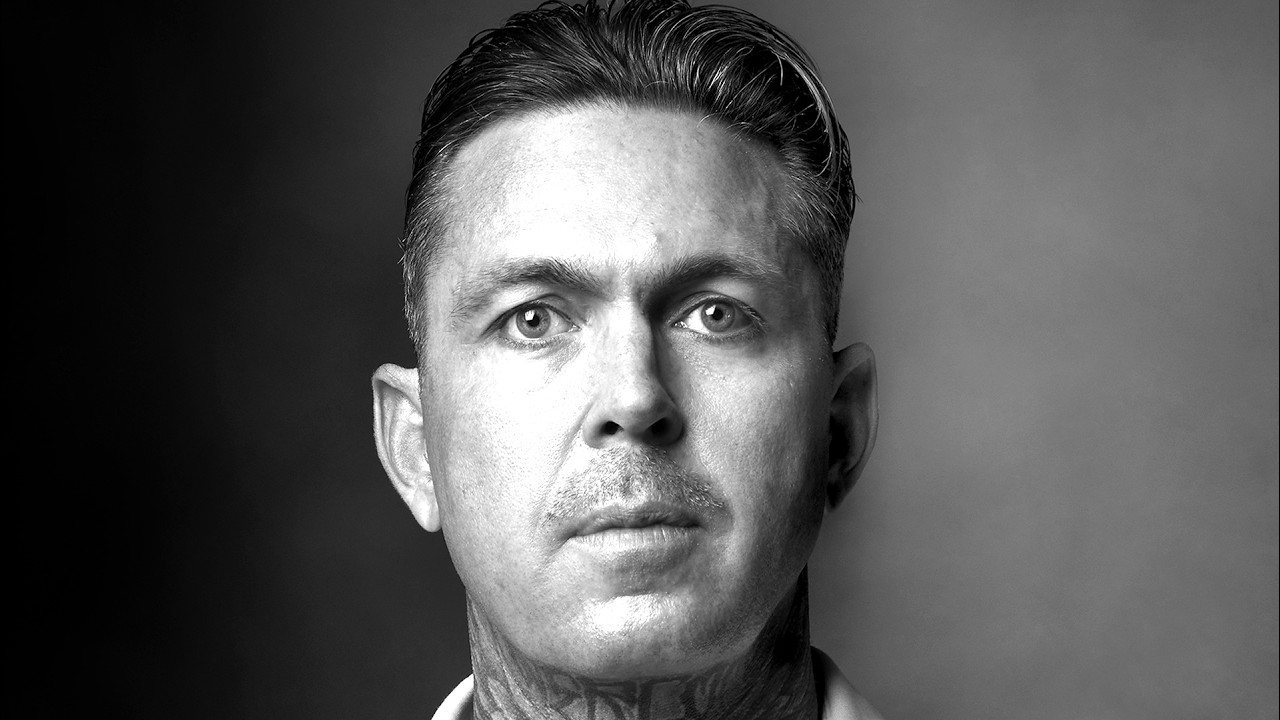
For nearly two and a half hours, Hunter Biden sits across from photographer Mark Laita and tells his own story, start to finish, in the unguarded register that Soft White Underbelly is built for. It is not a political defense first. It is a portrait of a life shaped by an early loss, a long fight with addiction, the death of a brother, and a public humiliation that he says became, against all odds, the best thing that ever happened to him.
Published May 23, 20262:20:37 video41 min readAdded Jun 14, 2026Open on YouTube →
At a glance
For nearly two and a half hours, Hunter Biden sits across from photographer Mark Laita and tells his own story, start to finish, in the unguarded register that Soft White Underbelly is built for. It is not a political defense first. It is a portrait of a life shaped by an early loss, a long fight with addiction, the death of a brother, and a public humiliation that he says became, against all odds, the best thing that ever happened to him. He recounts losing his mother and sister in a car crash at almost three, growing up loved by his father and a stepmother he calls his mom, an early relationship with alcohol that he traces back to a single hidden glass of champagne, and a career he built and then, in his own phrase, blew up.
Everything below is his account, in his words, reconstructed in the order he tells it. The interview moves from childhood through career, then descends into the years of relapse, his brother Beau's death from brain cancer, a three year stretch he describes as slow suicide, and the meeting with the woman he credits with saving his life. From there it turns outward to the laptop, the conspiracy theories, social media, faith, and the presidential pardon. The aim is the same as the video's: to let a human being be heard in full, in his own words.
Living with low expectations
He opens with a line he says he uses all the time, half joke and half thesis: he has benefited more from low expectations than almost anyone in history, because as long as he does not show up smoking crack or naked, people are relieved. It is the first sign of the posture that runs through the whole conversation. He has decided that the worst things already known about him are a kind of freedom.
Laita asks where he grew up. Wilmington, Delaware, a part of it called Greenville, his whole life.
Losing his mother at age three
Asked about his parents, Biden goes straight to the hardest fact. His birth mother was Neilia. His sister, whom the family called Caspy, was named Naomi. When he was about three, a month and a half short of his birthday, and his brother Beau was about four, the two boys and their mother and sister were in a car accident. His mother and sister were killed. The boys, a year and a day apart, were in the back seat. He spent close to a month in the hospital with a traumatic brain injury; Beau was in a full body cast.
About five years later, his father remarried. Biden corrects himself gently and says "we got remarried," the family's own phrasing, to Jill, whom he considers his mom.
The nurse who saved their lives
There was a nurse, he says, an ICU nurse who happened to be driving by and was first on the scene. He did not even know the story until after she died, when he believes her daughter reached out. He is sure of one thing: she saved him and Beau, who would most likely have died. Rescuers used the jaws of life. The car was unrecognizable. Their dog was in the car too.
Then the turn that defines how he tells everything. The beautiful part, he says, knowing it sounds strange, is that in losing his mother and sister he gained an extended family, aunts and uncles and the people who surrounded them, who remain in his life to this day.
Trauma, love, and addiction
Laita observes that some lives are quiet and others, like Biden's, are full of ups and downs hard to imagine surviving. Biden answers with the thread he will pull on for the rest of the interview. The one excuse he does not have for his addiction, he says, is a lack of love. He was extremely loved. For the longest time he rejected the idea that his addictive behavior had anything to do with the childhood trauma, because admitting it meant admitting he was not in control of his way out. He offers a line he repeats often: addiction is not an excuse, but it is an explanation. He describes the part of him that overrode everything, morality, decency, control, until he got sober in 2019.
When Laita suggests that navigating life may mean understanding we are not in control, Biden agrees and reaches for the Serenity Prayer, repeated so often in the program. He first tried to get sober in 2003, around alcohol, and stayed sober about seven years. He adds a conviction that he says upsets people: that alcohol is the most destructive drug known to man, physiologically the most damaging to the whole body, and that he hates the distinction between being sober and being clean. This time, he says, was different, because he had come face to face with a very dark place.
A father who always showed up
Asked who provided the love, he says everyone. His Aunt Val moved into the house. His Uncle Jimmy converted the garage into an apartment. In every outward way it was idyllic, and more than anything his father hugged the boys to him, literally and metaphorically, and still does.
Then a passage Biden clearly wants on the record. He says he does not care what anyone thinks of his father's politics; he has never read about or seen, in fiction or memoir or film, a better dad. It does not mean they never fought or that his father was never angry with him. It means he was never once uncertain of his father's love, no matter the consequences his father would not, and in many respects did not, save him from. The single most important quality in any relationship that deserves to be called love, he concludes, is availability, presence, being there. His father, despite having as much weight on his shoulders as anyone, never failed to prioritize family above everything.
Laita offers that you do not become president without a whole arsenal of great qualities, and Biden does not disagree.
Figure 1. The people in Hunter Biden's telling. Solid lines are family bonds he describes as load bearing; dashed lines mark the two relatives lost in the 1972 crash and his stepmother. The bottom row holds the public figures he names when he turns to the laptop. Everything in the map is drawn from his account in this interview.
Joe Biden's greatest quality
Asked to name his father's single greatest quality, Biden says compassion, the ability to put himself in another person's shoes, which is also what made him a great senator: he could break bread with people he vehemently disagreed with. He tells a story his father tells. Early in his Senate career, after being elected at 29 as the youngest person ever, his father wanted to go to the floor and tear into Jesse Helms, the ultra conservative senator from North Carolina, for speaking against the Americans with Disabilities Act. The Democratic leader Mike Mansfield stopped him and told him that Helms and his wife had quietly adopted a severely disabled boy that no one else would. (Biden notes he is filling in some details.) The lesson his father drew, and passed to his children by example, is that if you can see the humanity in another person, you might find compromise on the things that matter. He is not sure we are still there. His father's gift, he says, is seeing the person behind the mask.
Joe Biden's cancer diagnosis
How is your dad today? Biden says this is all public: stage four prostate cancer that metastasized into the bone, in roughly four parts of his vertebrae, at an early stage with no pain from the cancer itself. The treatment is hormone therapy that drops testosterone to zero, the equivalent of male menopause, wreaking havoc on sleep and mood. For a man who had more energy than anyone Biden ever met, it has been hard. What worries him most is that his father never complains; he wishes he would, just so he would know. He had just been home for Mother's Day.
Growing up with Beau
His brother, a year and a day older, was his protector and, in many ways, still is. Their friend groups were the same, but they were opposites. Beau was an outgoing, disciplined extrovert; Hunter painted, read poetry, played with army men. From grade school through high school he had plenty of friends but was never content, always uncomfortable in every situation. Laita calls it the artist in him.
Fear, the first drink, and an arrest
He describes a life run by fear, specifically a fear of other people's judgment, a kid who would never dance at a school dance while his brother got people dancing. He played sports, mainly football. His first drink, he believes, was at a big cocktail party, a Christmas party, where he took someone's glass of champagne, downed it, hid under a table to do it again, and kept going until he got sick. What he remembers is not the sickness but the feeling, which seemed to solve every problem in the world. There was no permissive atmosphere of alcohol at home: his mother had the occasional glass of wine, his father has never had a drink.
Three days after he graduated high school, in 1988, he was at the beach in a car with friends who were drinking; someone had cocaine; the police came and he was arrested. The record was expunged and he was given pre trial probation. It scared him badly, and scared him off drugs for a time.
Georgetown, the Jesuits, and a decade of service
He went to Georgetown, did well academically, and became close to the Jesuits assigned to freshman dorms, an order he admires for the long, scholarly road to ordination and for its focus on social justice in Latin America. With a Jesuit friend, Father D Zac, he helped start a summer volunteer program in Dangriga, Belize, running a free camp for children. A mentor, Bill Watson, steered him into the Jesuit Volunteer Corps, a domestic Peace Corps. He lived on eighty dollars a month in a group house off MLK in Northeast Portland and worked from the basement of a St. Vincent de Paul church, advocating through the system for people who could not pay utilities or buy groceries.
Then he met a woman, married, and had a daughter, Naomi, his oldest, born in December of his first year of law school. He started law school at Georgetown, then transferred and finished at Yale Law, the school he had always wanted.
Joining the Navy at 43, then failing a drug test
Around 2013 or 2014, at 43, he joined the Navy on a waiver, drawn by his family's belief that there is no higher calling than service. He notes his father was consistently ranked among the least wealthy members of Congress across 40 years. He chose the Navy over his brother's Army National Guard, half jokingly, because he liked the uniform better. He was in for a year, failed a drug test, and received an administrative discharge.
Building a career, then blowing it up
Laita points out that people fixate on the failures, but Biden built a substantial career. Out of Yale he had offers from major firms but ended up at a large Delaware bank, the state's biggest employer and at the time the largest independent credit card company in the world, to be near his brother. After two years he found corporate culture was not for him and went to Washington at the end of the Clinton administration, serving under Commerce Secretary William Daley on early e commerce policy. When the planned move into a Gore administration did not happen, he started his own law firm from roughly 2001 to 2008, with a client base he estimates was 85 percent Jesuit universities, the old Georgetown connections now running schools. He describes helping institutions like University of Detroit Mercy bring free mobile dental care to a city its dentists had abandoned, work he says he loved.
When Barack Obama became the nominee and chose his father, he gave that work up to avoid conflicts of interest, an effort he calls, in hindsight, a little silly. He served on many boards: vice chairman of Amtrak for about seven years, chairman of the US arm of the UN World Food Programme, where he says the budget grew from about 1.7 to 2.6 billion dollars. He taught a course called The Art of Advocacy at Georgetown's School of Foreign Service for four years. He was proud of his resume. And then, he says, he blew it all up.
The shape of the disease
Asked why, he says the answer is so obvious it is painful: what makes any addict do what they do. He returns to 2003, when Beau put him on a plane to a bare bones rehab in Antigua founded by Eric Clapton, where he learned the program. What AA gave him, he says, was less a way to stop drinking and more a way to live life on life's terms, and the relief of discovering he was not, in the program's phrase, terminally unique. Walk into a room, tell your most shameful story, and six people will tell things that make you blush.
He insists addiction is 100 percent a disease, then draws a hard line against a comparison he finds too easy. People with cancer do not steal from a mother's purse, rummage for pills, or end up in motel rooms with prostitutes, the way he did. He is careful to say he speaks only for himself and has no prescription for anyone else. He describes the cycle: appropriate guilt, then a deeper, hidden shame that you cannot get honest about, then stress, then the brain, the thing you trust most, promising relief that is exactly one drink away. The cruel part, he says, is that it works. You do get the relief. The problem is that for him, one drink became a gallon of vodka, a three day supply of crack, and a thousand dollars burning a hole in his pocket at a motel.
The relapse, then nine years of cycling
He stayed sober from 2003 to about 2010, then relapsed in the most mundane way imaginable, ordering a Bloody Mary alone on a plane, telling himself it could not hurt. He attributes it to fear during a financially strained business transition, with three kids in private school and a mortgage. He pushes back firmly on the assumption that being the vice president's son opened doors, saying it is the opposite for a Biden, and that he would sooner jump off the Empire State Building believing he could fly than ask his father to act on behalf of a paying client. That one drink, he says, began a nine year cycle: drink, get sober, rehab, stay clean for a year or three weeks, relapse, repeat.
Beau's brain cancer, and "beautiful things"
Around the end of 2013, Beau was diagnosed with stage four glioblastoma, a brain cancer he calls a death sentence with a typical survival of a year and a half to two years. Biden was with his brother constantly, at every appointment, every experimental procedure. Beau refused to hear the numbers. Looking back, Biden says he feels he put his brother through torture: chemo, radiation, awake craniotomies that removed pieces of brain, treatments he now believes were barbaric and added at most days. The radiation and the tumor cost Beau control of the right side of his body and his speech, an aphasia in which he was fully present but could not get the words out.
The title of Biden's memoir, Beautiful Things, comes from Beau. It was his brother's code, not for material things but for the moments themselves, the two of them sitting behind their parents' house looking at the pond, family, the thing in front of you. Beau's mantra was simple: we're going to get through this, and we're going to focus on this, not on becoming governor or president. A Navajo friend later gave Biden a word that he says loosely translates the same way, meaning transcendence, seeing the totality of the universe in all things. Beau passed, he notes, coming up on eleven years, on May 3rd.
Divorce, grief, and losing his anchor
After Beau died, Biden says, his whole life fell apart. His marriage, after 21 years, came to an end; he says he contributed everything to the irrational decision to divorce and that his wife had put up with a great deal. For the first time, the brother who would drag him onto the dance floor and into rehab, the source of unconditional love, was gone. And the coup de grace: his father, going through his own grief in a way Biden still does not understand how he survived, was for the first time not available.
He stayed sober about a year, including a 45 day rehab and a sober coach with a breathalyzer; everyone feared he would kill himself, not with a gun but by doing something he could not return from. He relapsed near Christmas, did an outpatient program, then was barred from returning because he admitted a relapse and refused a blood and urine test he feared would leak while his father was still vice president, citing his prior experience of having medical records released unlawfully through the Navy episode.
Buying crack in Washington, and three years of destruction
Enraged at being turned away, he walked two blocks from K Street to Lincoln Park, four blocks from the White House, and found a woman he had known for twenty years from the neighborhood, called Bicycles, a longtime crack addict. He asked to buy crack. He describes it as a conscious decision equivalent to asking her to shoot him in the head, the coward's way to suicide. It began a three year odyssey of destruction, degradation, and demoralization that he says people cannot fully grasp.
He smoked the crack and it worked, total relief that vanished in ten minutes, again and again. Bicycles, homeless for over twenty years and 68 years old, moved into his rented apartment and ran out to resupply on her bike, until he was evicted and became itinerant. Worse than the crack, he says, was the alcohol: a handle, a full gallon of vodka a day, and a physical paralysis on waking that could leave him crawling for a drink, a withdrawal he describes as torture.
He was not, in any real sense, working. He stresses a point he frames carefully as both personal and political: the period of supposed corruption that critics point to coincides with the years after Beau died, when his father held no office and he was, in his own words, a degenerate crack addict living out of motels. He says the cover has been blown off that narrative. (Allegations about his foreign business dealings remain a matter of ongoing public and political dispute; this is his characterization.)
He recounts trying ibogaine in Tijuana, a treatment he believes can genuinely help with PTSD and opiate dependence, then smoking crack the whole way there and driving north, able to find drugs in any city by a kind of sixth sense. In Nashville, a city he had never visited, he found crack within 35 minutes: park at a gas station, watch a man buy, roll down the window, ask for help.
Beau as the family's hope, and a father calling every day
His father, finished as vice president and weighing a presidential run, called every day; Biden lied to him constantly. He believes his father knew him better than he knew himself. There were interventions and rehabs he escaped; his Uncle Jimmy, his best friend, found him in motel after motel. But without Beau, the brother who could simply say "you're not doing this," none of it held. Beau, he says, radiated hope, the sense that everything would be all right no matter what, and when the family lost that central gear, the whole mechanism broke.
He names the thing plainly. He was killing himself, not a soft attempt but an attempt at suicide, of the body or at least the soul, killing any presence he would ever have in his children's lives. And yet, he says, there is a humanity in addicts that outsiders miss: the raw intelligence, the ingenuity, the resilience it takes for a penniless addict to survive each day. The depiction he wants to correct is the Dave Chappelle caricature; the real picture is Bicycles, a single woman who survived twenty years of D.C. winters and summers on the street and figured it out. The people he admires most are the ones who came back without the privilege he had, privilege that, he underlines, did not save him. Addiction, he says, is the great equalizer; it strips you down to nothing.
Meeting Melissa
He came to California, told everyone he was going to rehab, and instead planned to kill himself. He had so much shame. And then, by what he calls the grace of God, he met Melissa, a stranger. The first thing he said to her, looking her in the eye, was that he was in love with her, not romantically, he insists, but because it was almost as if his brother were looking back at him. She did not run. Within an hour he told her everything, including the crack, which he had told no one. She said, "Well, that ends now," and for some reason he believed her. He took his last drink or drug around June 1, 2019, a date he keeps even though he cannot be sure if it was May 30 or June 3.
He offers a clinical aside meant to correct a misconception: crack is just sodium bicarbonate, cocaine, water, and heat, and its detox, while uncomfortable for a few days, is not life threatening. Alcohol withdrawal at his level is. He says Melissa mercifully gave him a shot when he went into delirium tremens, the seizures that untreated alcohol withdrawal can cause. She became his jailer for a week, took his keys, clothes, phone, and computer, then erased every contact that did not have the last name Biden, threw out the phone, and got a new one, cutting off the dealers who called constantly. He notes, matter of factly, that the prostitution in his story was largely about access to drugs.
Becoming a painter
In a shed at the house, Melissa set up a desk and bought him paint because she knew he loved it. For the first three months he rose at five, painted twelve hours at a stretch on giant rolls of Yupo paper, cut the roll, rolled out another. One day he realized that the metal straw he used to blow alcohol ink and the dropper he used to apply it had unconsciously copied the oral fixation and ritual of the crack pipe, and he decided he did not care, because it gave him purpose and a modicum of joy. He has not stopped painting since. All the painting of the fifty prior years, he says, does not come close to what it means to him now: a meditative practice, but more, a way of facing the fear of judgment that had run his whole life, the feeling that people could see through him to the arrested teenager, the boy too short to dance, the child who snuck into his brother's room because the night terrified him after losing his mother and sister. Showing his art, letting it go for someone else to see, became the most liberating thing he knows.
1970 Born in Wilmington, Delaware; raised in the Greenville section.
1972 A car crash kills his mother Neilia and sister Naomi; he and brother Beau, a year and a day apart, survive serious injuries. An ICU nurse first on the scene is later credited with saving them.
~1977 His father remarries; Hunter considers Jill his mom.
1988 Arrested at the beach days after high school graduation; record expunged. He recalls a first hidden glass of champagne years earlier as the first time alcohol "solved every problem."
early 90sGeorgetown, Jesuit service in Belize and Portland, then law school, transferring to finish at Yale Law. First daughter, Naomi, born.
late 90s to 2008 Delaware bank, the Commerce Department, his own law firm serving Jesuit universities, and board seats at Amtrak and the UN World Food Programme.
2003 First gets sober after his brother flies him to a rehab in Antigua; learns the program.
~2010 A relapse on a plane begins, in his telling, nine years of cycling between drinking and recovery.
2013 to 2015 Beau is diagnosed with stage four glioblastoma and dies on May 3, 2015.
2015 to 2018 Divorce, grief, his father's unavailability, and a descent he describes as a three year crack and alcohol "slow suicide."
2019 Meets Melissa; takes his last drink or drug around June 1; begins painting daily.
2020 Two weeks before the election, the laptop story breaks via the New York Post.
2024 Convicted on a federal gun charge, pleads to tax matters; later pardoned by his father.
2026 Sits for this interview, sober six to seven years, selling paintings, planning a Substack.
A life as he narrates it. Dates follow his own account and public record; he notes he often mixes up exact years.
The laptop, in his words
Then, he says, the whole world fell on their heads. He frames the politics as a textbook tactic: to harm an opponent you attack their greatest strength, not their weakness. His father's greatest strength was being an exceptional father with a devoted family, so the move was to go after the one remaining son, the one who had been discharged from the Navy and could be photographed sitting with homeless people in Lincoln Park. He, Hunter, was the weak link.
On the laptop itself, he is unusually direct and wants the nuance on the record. Yes, there is a laptop and a hard drive; yes, it was hacked; yes, the pictures, emails, texts, and the voicemails from his father are his. All of it. But, he argues, it proved nothing about bribery, corruption, or Chinese or Ukrainian influence. He says it amounts to roughly 25 years of his digital footprint, cobbled together from at least six sources by bad actors and placed in Rudy Giuliani's hands, and he points out that Giuliani's first move was to stand on courthouse steps with Bernard Kerik and claim evidence of child exploitation, a charge Biden says was never repeated. The one thing it proved, he says, is that he was a degenerate crack addict for a two year period, which he had already disclosed himself in a New Yorker profile, because he had concluded that the only way out was radical honesty before others wrote the story for him.
He names the people he holds responsible, framing it as the "Manhattan Project" of the operation: figures including Steve Bannon, Guo Wengui, and Konstantin Kilimnik, with the New York Post as the vehicle. On bribery specifically, he points to Alexander Smirnov, an FBI informant later charged with lying, and Gal Luft, a fugitive, and cites a Mother Jones video of Bannon describing the operation. He says he was the third most mentioned person on Fox News over a three year stretch, behind only Donald Trump and his father, and that the Daily Mail and New York Post averaged about 3.5 articles a day about him for over two years.
A note for the reader: these are Hunter Biden's characterizations. The origin, handling, and significance of the laptop and the related allegations are contested across reporting, investigations, and partisan lines. The table below sets his account beside the broad shape of the public controversy without resolving it.
Topic
Hunter Biden's account
The public controversy
The laptop's contents
Concedes the pictures, emails, texts, and voicemails are genuinely his
Authenticity of much of the material has been separately reported; provenance and chain of custody remain disputed
What it proved
Proved only addiction; no evidence of bribery or influence peddling involving his father
Critics read the business dealings as evidence of influence; no charges were brought against his father
Timing of the leak
A coordinated drop two weeks before the 2020 election to make worse claims "believable"
The 2020 release and platform handling became a long running political fight over suppression versus disinformation
Bribery claims
Sourced to discredited figures (an informant charged with lying; an Interpol fugitive)
The Smirnov indictment is documented; broader allegations were pursued in congressional inquiries
The charges he faced
Tax matters from his addiction years and a gun form question he says was unconstitutional
He was convicted on the federal gun charge and resolved the tax case; both are matters of record
"What can you do to me now?"
Biden's emotional argument is that the campaign to destroy him backfired. He asks the viewer to imagine handing over their entire cloud, including deleted messages, every angry text, every nude, to a school newspaper, a Facebook group, and Fox News, on repeat. Everyone, he says, has things they would not want exposed. And the cool part, he says, is what happens after: you wake up at five in the morning from awful dreams, look over at a loving partner and a newborn son, and ask whether you are getting out of bed. He decided to get out of bed.
He weaves in the Gnostic Gospels and a line he attributes to the Acts of John: "Learn to suffer as I do in order to be able not to suffer." The only way to true gratitude, he says, is to be grateful for all of it, and he says without irony that he is grateful he was a crack addict, because losing everything stripped away any sense of being better than anyone. His gratitude list is not the Malibu morning; it is the Super 8 off I-95 in New Haven where his car was stolen and he thought he was about to be killed. Because there are people still there. He wants to break the habit of silence, to get radically honest with each other about where we have been, calling that the gift he was given.
"Nothing is wrong with us"
Laita asks what is wrong with the country, with the hate. Biden's answer is that nothing is wrong with us. He points instead to a handful of people near trillionaire wealth who introduced social media, and argues the narrative of permanent division coincides with its arrival. He cites whistleblower testimony before Congress about Facebook algorithms linked to teen harm, a roughly 300 percent rise in suicides among girls 11 to 14 over four years, a steep rise in emergency room visits for self harm, and a company response he characterizes as a hundred million dollar check, a drop in the bucket against Mark Zuckerberg's fortune. (These figures are his recollection and are debated.) Everyone, he says, has a bag of heroin in their pocket. He describes a flight beside an 11 or 12 year old girl glued to a tablet, then catching himself doing the same on his own phone, the dopamine hit, the things designed to make him angry. This is being done to us, he says, and until we wake up it will continue.
Love your neighbor
Laita brings up Biden's conversation with Sean Ryan about the singular message of Christ. Biden, who calls himself the least religious person you will meet but says he is becoming more so, lands on: love your neighbor, which requires understanding and forgiveness. He says he found more love than he knew existed in the people who supported him, and that he wants to talk to the people who said he should be executed for treason, including Marjorie Taylor Greene, not to win the argument but to get back to disagreeing like neighbors. He is a student of the perennial philosophy, he says, and every tradition lands on the same point: there is no real distinction between you and me.
He recounts being confronted in public on Halloween while carrying his young son Bowie, dressed as Chewbacca, on his shoulders, when a couple ran up calling him a pedophile who should be executed, an encounter he found genuinely violent and frightening, witnessed by his father in law, who had just lost his wife to the same stage four glioblastoma that killed Beau, six years apart to the day. He ties it to the pizzagate-style smears and to an eighth grade teacher filmed telling students he and his father were Satanist pedophiles, the propaganda logic being that if a few percent believe the worst, the rest comes easier. People are shocked, he says, to learn he has been sober six to seven years, verified by years of random drug tests under supervision.
"Go home and love your family"
He keeps returning to the same conclusion: the things that were wrong had to be fixed in himself first. He cannot fix the country by getting Rudy Giuliani; he had to fix his own life and be honest about it. He quotes Mother Teresa: if you want to change the world, go home and love your family. The question he thinks everyone should ask a hundred times a day, in personal life and politics alike, is what would Jesus do. His hope rests on a structural belief that growth comes only at the bottom, and that breaking points can wake people either to violence or to love. His deep hope is for an explosion of love.
He pairs his trademark radical honesty with what Laita proposes as its companions, radical understanding and radical forgiveness, and says they are all the same thing. He announces an idea inspired by the conversation: a Substack space where people can share their stories, about grief or shame, anonymously or not, to engender the realization that saved him, that you are not alone. The one universal human experience, he says, is not love but pain, and that is what connects us.
Falling in love with Beau's widow
Laita raises the relationship Biden had with his late brother's widow. Biden answers without deflection: it was pure desperate clinging after both of them lost the central love of their lives, his own marriage already disintegrating, both in a fog. He thought it was a way to hold on to Beau and protect his legacy, and it was desperately wrong. He distinguishes guilt from shame: guilt is the appropriate feeling when you have done something wrong; shame is the corrosive belief that you will never be worthy of love again, and he says he cannot live in shame anymore. He looks at how he treated his family and ex wife with real remorse. Asked if drugs were involved, he says no, and that grief alone can make people do terrible things while reaching to fill a void that even drugs cannot fill. He names Miranda Devine of the New York Post but shrugs it off as the nature of tabloids, like complaining about Hearst, or George Washington's wooden teeth.
Politics, contrasts, and defending himself
On the present, Biden says these are desperate times and people need to mobilize and show up for each other and the country. He describes hesitating to wear his American flag hat, feeling that pride itself had been stolen by leaders who made a mockery of public service, normalizing the idea that everyone is corrupt so their own conduct looks ordinary. He maintains he never received a single dollar from any government and challenges anyone to find, in 25 years of his exposed digital life, one instance of involving his father in his business beyond a passing "tell your dad it was nice to meet him."
He then draws a sharp contrast with the current administration, alleging that Donald Trump Jr., Eric Trump, and Jared Kushner have increased their wealth by some 3.4 billion dollars through government linked deals, citing a large loan guarantee to a Don Jr. startup and Kushner's Saudi backed private equity fund, and a members club he calls The Executive Branch near the White House charging half a million dollars to join. (These are his allegations and characterizations; they are politically contested and presented here as his claims.) His own work for four years, he says, was painting; the buyers of his paintings, six of them, three close friends, were called before Congress. He points viewers to hunterbiden.com and his memoir Beautiful Things.
The pardon, the tax case, and the gun charge
On the pardon, Biden begins by conceding he is uniquely privileged: his father was the only person in the world who could have done it. The pardon, he explains, covered roughly ten years. The investigations begun under the Trump administration on public corruption went nowhere, he says, because there was no evidence; what they found instead was a man deep in addiction. In 2016 and 2017 he had signed but never filed his taxes; he discovered the lapse only in 2019 when a passport renewal was blocked, then paid what he owed with penalties and interest. He argues that millions of Americans file late and reach civil resolutions rather than facing criminal charges, and that he does not know of anyone similarly situated who was charged that way. He pleaded guilty to the tax matters.
On the gun charge, he describes buying a firearm during the height of his addiction, almost incidentally, while waiting at an AT&T store next to a gun shop, and checking "no" on the federal form asking whether he was addicted to a controlled substance, reasoning at that moment that he was not actively using crack. He was convicted, faced up to 30 years across three felonies, and notes the Supreme Court was poised, in his view, to find the form unconstitutional. He believes he would have won on appeal had a different administration come in. But on the day his father appointed Matt Gaetz as attorney general nominee, he believes his father decided he would not leave his son to the incoming administration, which as a convicted felon would have had near total control over his life. He says he will never apologize for what his father did, with full understanding that it could only have happened for him. (The pardon was widely criticized across the political spectrum and reversed Joe Biden's earlier public statements that he would not pardon his son; this context is noted neutrally.)
He closes the topic with a fear he now states on camera: that if a police officer found drugs on him, or drugs appeared in his bag at an airport, people would believe it, which is why he photographs his luggage before flying and never packs alone. He frames that fear as the difference between ordinary politics and the present moment.
Key takeaways
This is, first and foremost, a recovery and grief story told by Hunter Biden in the first person. The political material is real but secondary to a personal narrative of trauma, addiction, and the long road back.
He traces a through line from an early, profound loss to a lifelong fear of judgment, an early bond with alcohol, and a disease he calls 100 percent real while refusing to use it as an excuse.
Beau's death is the hinge of the story. Biden frames the loss of his brother, his anchor and source of unconditional love, as the trigger for a three year collapse he describes openly as a form of suicide.
He credits getting clean since around June 1, 2019, to meeting Melissa and to painting, which he reframes from hobby to survival and to a practice for facing the fear of being seen.
On the laptop he concedes the material is his while insisting it proved only his addiction, not the corruption alleged; he names specific figures and frames it as a political operation. These claims are contested and the page does not adjudicate them.
His larger argument is humane and apolitical at its core: radical honesty, understanding, and forgiveness, "love your neighbor," and a belief that social media, not human nature, is driving division.
On the pardon he is candid about his own privilege and explains it as his father's choice not to leave him to the next administration, while acknowledging how singular and contested that act was.
Chapters
Timestamps are clickable. Click one and the player jumps there and keeps playing while you read.
0:00 Living With Low Expectations
1:01 Losing His Mother At Age Three
2:03 The Nurse Who Saved Their Lives
3:21 Trauma, Love & Addiction
5:13 Sobriety, Control & Letting Go
7:03 A Father Who Always Showed Up
9:04 Presence Over Perfection
10:01 Ground News Ad
11:25 Joe Biden's Greatest Quality
13:10 Politics, Compassion & Humanity
15:12 Joe Biden's Cancer Diagnosis
16:34 Growing Up With Beau
18:06 Fear, Anxiety & Never Feeling Comfortable
19:33 First Drink, First Escape
21:02 Arrested After Graduation
22:04 Georgetown, Jesuits & Purpose
23:10 Service Work In Belize
24:13 Helping The Poor In Portland
25:25 Marriage, Fatherhood & Yale Law
26:00 Joining The Navy At 43
27:51 Failing A Drug Test
28:15 Building A Career In Washington
30:03 Commerce Department & Early Internet Era
31:04 Creating A Successful Law Practice
32:27 Jesuit Universities & Community Work
33:45 Boards, Politics & Public Service
35:32 "I Blew It All Up"
36:10 Rehab In Antigua
37:10 Learning How To Live Sober
38:03 Shame, Secrets & Addiction
39:50 "I Smoked Crack"
41:22 Vodka, Crack & Self-Destruction
42:06 The Relapse After Seven Years Sober
43:20 Nine Years Of Relapse & Recovery
44:11 Beau's Brain Cancer Diagnosis
45:23 Watching His Brother Suffer
46:14 Radiation, Pain & Regret
47:12 "Beautiful Things"
48:48 Losing Beau
49:26 Divorce, Grief & Losing His Anchor
50:41 When His Father Couldn't Be Present
51:29 Fear He Would Kill Himself
52:25 Rejected From Rehab
53:31 Buying Crack In Washington D.C.
54:15 Three Years Of Destruction
55:25 Living With Homeless Addicts
56:05 Drinking Himself Into Paralysis
57:06 Burning Through Every Resource
58:15 Rehab Attempts & Mexico Treatments
59:08 Finding Drugs Anywhere
1:00:31 Biden Preparing To Run For President
1:01:04 Beau As The Family's Hope
1:01:55 Family Interventions & Escaping Rehab
1:03:05 Addiction As Slow Suicide
1:04:12 Humanity Inside Addiction
1:04:58 The Survival Intelligence Of Addicts
1:06:22 Public Shame & Political Targeting
1:08:43 Surviving Public Humiliation
1:10:40 Conspiracies, Lies & Media Narratives
1:12:25 Being Confronted In Public
1:14:10 Hate, Social Media & Division
1:16:09 "Nothing Is Wrong With Us"
1:17:07 Algorithms, Addiction & Dopamine
1:19:46 Love Your Neighbor
1:20:43 Finding Compassion Through Pain
1:21:50 Talking To People Who Hate Him
1:22:59 "There's No Difference Between You And Me"
1:24:09 Fixing Himself First
1:25:07 "Go Home And Love Your Family"
1:26:02 Radical Honesty & Forgiveness
1:27:17 Creating A Space For People To Share Their Stories
1:28:00 Pain As The Universal Human Experience
1:29:00 Falling In Love With Beau's Widow
1:30:03 Guilt vs Shame
1:31:19 Grief, Drugs & Desperation
1:32:33 Becoming A Public Villain
1:33:35 Politics, Corruption & Division
1:34:20 Social Media, Power & Manipulation
1:36:20 "We're Being Played"
1:37:49 "The Worst Thing Became The Best Thing"
1:39:37 Radical Transparency
1:41:03 Pedophile Smears & Conspiracy Theories
1:43:07 Harassed In Front Of His Son
1:45:27 What's Wrong With America?
1:47:16 Teen Suicide & Social Media Algorithms
1:49:46 The Singular Message Of Christ
1:52:17 "Good And Evil"
1:54:09 Healing Starts Within
1:55:44 Hope For A More Loving World
1:57:17 A Substack For Shared Pain & Honesty
1:58:46 More Scandals & Public Judgment
2:00:03 "I Can't Live In Shame Anymore"
2:01:19 Grief Makes People Do Desperate Things
2:03:35 Escaping The Algorithms
2:04:20 Losing Pride In America
2:05:27 Corruption Allegations & Defending Himself
2:08:16 Becoming A Painter
2:10:52 "Beautiful Things" & New Work
2:11:03 Discussing The Presidential Pardon
2:12:05 Investigations, Taxes & Addiction
2:15:00 The Gun Charge
2:16:32 Why Joe Biden Pardoned Him
2:18:02 Fear Of Being Set Up
2:18:50 The Future Of America
2:19:10 Final Thoughts
Notable quotes
Addiction isn't an excuse, but it's an explanation.
Hunter Biden, 3:21
I've never read about anybody, never in fiction or memoir or on film, that is a better dad than my dad in every way.
Hunter Biden, 7:03
The single most important thing about any relationship that you want to call love, which is availability, presence, being there.
Hunter Biden, 8:00
He's able to see the person behind the mask. That's his greatest quality, I think.
Hunter Biden, 13:10
People that have cancer don't steal their wallet out of their mother's purse. That's the difference, and it's still a disease.
Hunter Biden, 38:03
Here's the thing people truly don't understand. They say, why do you do that? Because it works.
Hunter Biden, 39:00
He would say "beautiful things," and it was a code word, not for material things. It was about us, sitting here.
Hunter Biden, 47:12
It was the coward's way to suicide. And that turned into a three year odyssey of destruction.
Hunter Biden, 53:31
All that privilege didn't save me. When you are an addict, it doesn't matter how much privilege you have. Talk about the great equalizer.
Hunter Biden, 1:05:30
Yes, those pictures are mine. The laptop didn't prove anything about bribery, corruption, Chinese influence. Nothing.
Hunter Biden, 1:06:30
There is no distance between you and me. Mine's worse. Or at least equal.
Hunter Biden, 1:08:43
Nothing's wrong with us. There's about ten, fifteen people close to being literal trillionaires, and they introduced this little thing called social media.
Hunter Biden, 1:16:09
Guilt is an appropriate emotion. Shame is the thing that says you'll never be worthy of love again. I can't live in shame anymore.
Hunter Biden, 1:30:03
The worst thing that ever happened to me is the best thing that ever happened to me.
Hunter Biden, 1:37:49
My dad was president of the United States. He's the only person in the world that could have done what he did for me.
Hunter Biden, 2:16:32
Strip away the politics and the headline names, and what remains is a man trying to explain how a person who was deeply loved still ended up crawling for a drink in a motel, and how he climbed back out. Hunter Biden does not ask to be excused. He asks to be seen, in his phrase, in wild Technicolor, the disgusting parts and the beautiful parts at once, and he argues that the willingness to be seen is the only thing that ever set him free. Whatever a viewer makes of his account of the laptop or the pardon, the human spine of this interview is harder to dismiss: that pain, not love, is the universal experience, and that talking about it honestly might be the one thing that brings strangers back into the same room.
Full transcript
I always say this to people, I've benefited more from low expectations of anyone in the history of the world, because as long as I don't show up smoking crack, you know, naked, like, "Oh my god."
All right, Hunter. Hunter, where'd you grow up? Where are you from originally?
I grew up in Wilmington, Delaware. And a little part of Wilmington called Greenville. My whole life.
Tell me about your mom and dad.
My birth mother, Neilia, my sister, we call her Caspy, her real name is Naomi. My brother and I were in an accident when I was just about three, my brother was just about four, and we're a year and a day apart. And my mom and sister were killed in that accident. And then I think five years later, we got remarried. We say we got remarried.
You were old when you lost your mom?
I was just about three, about a month and a half away from my third birthday.
That was an auto accident?
Yeah. Yeah. And I spent, I don't know how long, I think close to a month in the hospital with a traumatic brain injury, and my brother was in like a full body cast for that period of time. We spent a lot of time in the hospital after that.
You guys are in the backseat?
Yeah. And then we got remarried, I think I was maybe five, about five years later. To my mom, Jill, who I consider my mom.
You, I remember hearing a story about the nurse that helped you in that accident.
Yeah, you know, it's an incredible story that there was a nurse that was drove by. It's a beautiful story and I had never known it and she was the one that was first on the scene. She just happened to be there and she was an ICU nurse I think. And I didn't even know the story until after she died. I think it was her daughter that got in contact. But she saved us. She saved Bo and I. We would have most likely died and they had to come out with the jaws of life. The car was completely, I mean just unrecognizable. And our dog was in the car too, I'm pretty sure that's true.
But you know, there's really the beautiful part about that, and I know that sounds crazy, but is that I lost my mom and sister but I gained this extended family of not just my aunts and uncles but the people that surrounded us are part of my life still to this day.
It's funny how life, different people's lives, some people's lives are pretty quiet and uneventful. And others like yourself have some ups and downs that are just hard to imagine. Hard to imagine getting through.
It's the one excuse that I don't have for the troubles that I've faced in terms of addiction and substance abuse is that I was extremely loved. I mean I had a very traumatic experience as a child. And for the longest time, I rejected the idea that my addictive behavior had anything to do with that trauma. Because I didn't want to, you know, I always say that addiction isn't an excuse, but it's an explanation. And I didn't want to think that I wasn't in control of being able to find my way out of that. And if it was a response to a traumatic thing, then I wasn't in control. It was a, there's a part of me that was somehow kind of overriding everything from your morality to your decency. And just control. Control, man. And so I kind of rejected that for the longest time until this, until I got sober in 2019.
I think part of understanding how to navigate life is maybe understanding that we're not in control.
That's exactly it. You know, the, there's a reason why the Serenity Prayer is repeated so often, at least in the program. And I think for the longest time, you know, I first tried to get sober in 2003. And I did and I stayed and it was all about alcohol then. And I hate the idea of a distinction between sobriety and being clean, because I think that alcohol is the most destructive drug known to man. And I mean we could talk about that endlessly. And people kind of get upset when I say that because, you know, they're kind of protecting their own proclivities. And the idea that, now how could that be true? But it is. And also physiologically it's the most destructive and distorting for the entirety of your body. But I got sober in 2003 and stayed sober for about 7 years. And I don't ever really think I understood the wisdom of figuring out what I could control and what I could not. Because it always kind of seemed to me like admitting a weakness. This time was very different. I'd come face to face with a really, really dark place.
I want to get a lot deeper on your addiction story, but back to your childhood. You say you were loved. This was responsi-, this was your dad that was mainly in place doing that, or both moms? Or both?
Everyone. And we were surrounded. My Aunt Val moved into the house. My Uncle Jimmy converted the garage into an apartment.
Because it's not easy to recover from losing a wife and a dog.
No. And it in every outward way, it was an idyllic life and more than anything my dad just hugged us to him, literally and metaphorically, and continues to this day. He's an amazing father. I always say to people that I don't care what you think about his politics. The fact of the matter is that I've never read about anybody, I've never in fiction or memoir or on film that is a better dad than my dad in every way. And that doesn't mean that I don't fight with my dad and it doesn't mean that I haven't had times in which he was angry at me or I was angry at him, but I was never ever uncertain of his love, no matter the consequences that I was facing that he wouldn't save me from, and didn't save me from in many respects.
And what I figured out with him is the kind of the single most important thing about any relationship that you want to say is love, which is availability, presence, being there. Doesn't mean that you're going to solve anybody's problems but just showing up and being available. And I don't know of anybody that's been had more significant and important things to do beyond their family than my dad, but there's never ever been a time in which he did not prioritize us, his family, above everything.
Yeah, you don't become president without having a whole arsenal of really great qualities. You just don't. And despite how much people hate and love our politicians, you don't become president of the United States without being a great person, at least in some ways.
[Ground News ad]
Last year the Palisades fire tore through Los Angeles. Most people saw that story. What fewer people saw is that 2026 is shaping up to be the worst wildfire year on record globally. The total area burned worldwide is already more than 20% higher than any year since 2012. That story is out there. It's just being told differently depending on where you look. Left-leaning outlets are focused on the US response, what the government is doing, and who's affected locally. Right-leaning outlets are covering the global scale, the scope, the numbers, what's happening in other countries. It's the same crisis but with two completely different lenses. Neither version is lying, but if you're only reading sources on one side, you're only getting half the picture. That's something I think a lot about doing what I do. The people I sit down with, their stories get filtered the same way, shaped by who's telling it and who they're telling it to. That's why I use Ground News. It's an app that shows you how any story is being covered across the political spectrum, side by side. You can see each outlet's bias, how reliable they are, and who owns them. You can actually compare instead of just getting handed one version of the news. Check it out at ground.news/swu. You'll get 40% off their Vantage plan. And by subscribing or gifting it, you're directly supporting this channel, too. That's ground.news/swu. Now, back to the video.
What would you say is your dad's like greatest quality?
His compassion. His ability to put himself in somebody else's shoes. And that's why he was such a great senator, too, is that he was able to break bread with people that, at least in that era of politics, that he vehemently disagreed with over, you know, everything from foreign policy to domestic policy.
But he always tells this story. There's a senator from North Carolina. Nobody will remember him now, but he was kind of the arch nemesis of progressives and liberals and he was considered kind of like the most conservative, ultra-conservative senator and politician in the country, and his name was Jesse Helms. And I forget what Jesse Helms was on the floor of the Senate making a speech against, the Americans with Disabilities Act. Jesse Helms was railing against government spending and this is, you know, this is another giveaway, and you know, basically ADA is the thing that was put in place to make, you know, bathrooms accessible to people in wheelchairs and theaters accessible to the deaf.
And my dad, when he was young, because my dad got elected when he was 29, and he's the youngest person ever elected, and he went to this guy Mike Mansfield who was the leader of the Democratic Party at the time and he said, "I'm going to go on the floor and I'm going to rip him and I'm going to go, this is, he's immoral. If you ever wanted the proof that Jesse Helms doesn't care about people, here it is."
Mike Mansfield said, "Joe, let me tell you a story. Jesse and Dottie Helms, two Christmases ago, were sitting together two days before Christmas and they saw an ad in the paper for a disabled boy who no one would adopt because he was so severely disabled." And I'm making this part up, but he was 13 years old, he's in a wheelchair, he'll be in the wheelchair for the rest of his life. And he'd never found a home. "And what if I told you Jesse and Dot that day went and adopted the boy. And that you've met him. He's been here. He's with Jesse all the time."
And he realized, at least in that era, that if you could see the humanity in another person, that maybe you could come to a compromise on the things that really mattered. I don't know if we're still there. But it's a lesson he imparted on me and my brother and my sister kind of all the time by example. He's able to see the person behind the mask. That's his greatest quality, I think.
That's a great one. How's your dad doing today?
He's good. I mean, this is nothing that's not public, but there was stage four prostate cancer, which metastasized into metastatic bone cancer, which is in like four parts of his vertebrae. And it's just at the very early stages. There's no pain as it relates to the cancer itself. But what they have to do to you is they have to put you on a hormone therapy that basically puts you into the equivalent of male menopause. They take your testosterone, which his was very high, from whatever that level is to zero. And that wreaks havoc on anyone. And it's just in terms of things like sleep, mood, and it's like menopause. And, you know, my dad had more energy than anybody I've ever met. And so it's tough. That's the honest answer, is it's been really tough on him. But he never complains about it. That's the other thing that worries me more than anything. I wish he would complain a little bit more. Just so I knew. But I was just with him. I went home for Mother's Day.
In your teenage years, tell me about them.
My brother and I were, and still are, just very, very close. And what I mean still are, is in many ways he's constantly with me. But we were only a year and a day apart. And so our friend groups were the same. But he and I were very different people. He was very outgoing and very much an extrovert. And very disciplined. And I was pretty much the exact opposite. You know, I liked to paint, read poetry, play with my army men. And so he was always my protector in many ways and kind of dragged me along. And I had, by all outward accounts, a really great, but from grade school through high school, I mean I had a lot of friends, but I was never content. I was kind of always discontented, uncomfortable in every situation that I found myself in.
That's the artist in you.
Scared of things, a lot of fear, a lot of fear-based stuff. You know, it's another thing that I've kind of come to terms with, is that I didn't know where that fear was coming from and you couldn't say, well, oh it's because of the accident or because of this, it's just a lot of the things that I did or failed to do were all based on this kind of illusion that was all fear-based. That I had anything to fear at all. And then more than anything it was just a fear of other people's judgment. You know, I was a kid that would never dance at the school dance, whereas my brother would start people dancing. And that team kind of shielded me for a period of time. But I played sports, I played football and everything else, but mainly football.
I think I probably started drinking, I had my first drink I think like the first time I, I know that I took a drink, and nobody else knew. I was at like some big cocktail party. And we'd go everywhere with my dad, Bo and I. No matter where it was, we were allowed to go. And I forget where this was, it was some Christmas party or something, and I took somebody's glass of champagne not knowing what it was and downed it. And then went and got another one and hid under the table and did it again and then went and did everything until I got sick. And I remember that like it was yesterday. And the reason that I remember it is because of not getting sick. I remember the feeling that it gave me. And it seemed to solve every problem in the world. And even then. And then I didn't drink, no one in my immediate family, my mom will have a glass of wine occasionally. My dad's never had a drink. And so there wasn't a kind of permissive atmosphere of alcohol in my house at all. But when I was in high school I drank, and it got me into trouble. And eventually, like 3 days after I graduated I was at the beach. And we were in a car, we were all drinking, somebody had coke on them, cops came, got arrested, went to, the record was expunged and, you know, pre-trial probation at the time.
You were arrested?
Yeah. And that scared the hell out of me. And so it scared me about drugs. Which were around, you know, in 1988. But God, 1988. Wow.
So, you went on to college.
Yeah, so then I went to Georgetown. And I had, again, I look back on it, and I had so many things that I didn't do to fully take advantage of my college experience. But academically I did well. And also while I was there, I became really good friends with, when you go to Georgetown, every floor of every freshman dorm, there's a Jesuit, and usually young Jesuit in their early, you know, 30s, late 20s. And Jesuits are a really interesting order in terms of the Catholic Church, in that in order to become a Jesuit, you basically have to have your PhD in something, and you don't become a priest until it's like a seven to 10-year process before that happens. So, they're very mature, very educated, and educated not just in the catechism, but educated in really cool kind of esoteric areas of study, and a lot of the Jesuits that I knew then were very focused on the social justice movement within the church, particularly in Latin America.
Long story short, Father D Zac became a really good friend of mine and we started a program called the Jesuit International Volunteer Summer Program in Dangriga, Belize, where we went to kind of the most impoverished part of Belize and we had a free summer camp for kids and you teach in the morning and you do normal summer camp things, which now is like in 10 countries or something like that. But we did that first and then that led me, in college, I wanted to go to the Peace Corps after college and another Jesuit who was a friend of mine, Bill Watson, a mentor of mine, I shouldn't say friend, they were incredibly wise guys, and he suggested that I do the domestic Peace Corps, Jesuit Volunteer Corps, which is a national organization, but it's kind of like a domestic Peace Corps, and you make 80 bucks a month, you live in the community, you live in a group house with other volunteers, you pool your money for your groceries, and you work in that community.
And so we were off of MLK in Northeast Portland and I worked out of the basement of a St. Vincent de Paul Church and people that couldn't get their lights back on, or their utilities went out, or they didn't have money for groceries, they would come to me and I would advocate for them through the system and food banks and things like that. And so I had a steady clientele of people that I did that. And I did that for a year. And then I met a girl and not very long after, we got married and we had a child, whose name is Naomi. Who is my oldest. And she was born the first year, in December of the first year of law school for me.
You went to Yale for law?
Yeah, I started at Georgetown though. I didn't get into Yale and I'd always wanted to go to Yale. And I'd done really well on my LSATs but that's like, you know, they let in like 3%. They let in less for people that try to transfer, but I did really well at Georgetown so I transferred and finished at Yale Law.
At some point you joined the Navy. And you got kicked out of the Navy.
Yeah, I did.
When did the Navy fit into this?
Oh, not until much longer. When was that? 2014. So, oh really? Yeah. I think, or 2013. 13, 14, I forget when. I was 43. I got a waiver. But I really wanted to do it and the reason I did, because in my family the idea of service, there's no kind of higher calling than that. And, you know, my dad is probably the most disinterested politician in the history of the country in money, for personally. And he's done well because he wrote a book, but for 40 years was always ranked having the least assets of any person in Congress, all 535, 100 senators and 435. And for us it was always like service. You know, what can you do? And my brother had gone into the Army National Guard after 9/11. And he was a lawyer and would then become the Attorney General of the State of Delaware. And I had decided that I wanted to go into the Navy and he kept saying to me, "Come into the National Guard, the Army National Guard with me." But I think I liked the uniform of the Navy better. What an embarrassing. And so anyway, I went into the Navy and I was in the Navy for a year, but I failed a drug test. And I got an administrative discharge.
So I'm jumping you way ahead. Yeah, way ahead. So let's get back to. So I mean you've had, people love to focus on your failures. Yeah. But you built a career in Washington through law firms, international business ventures, board appointments. You played in political circles. You've accomplished a lot.
Yeah, I well, so I got out of Yale Law School and I got offers from basically every law firm, at Skadden and all the big ones, Jenner Block and a whole host of others. And at that time in the early 90s a lot of my class was going to work for, not outside the law, so they were going to go work at places like McKinsey or Goldman Sachs, and so I got an offer to go to a couple of the large banks in Manhattan and New York. And I ended up going to work for a bank in Delaware which was the largest employer in the state of Delaware and it was the largest independent credit card company in the world at that time. And the reason I did is because I wanted to be near my brother.
My family. Yeah, exactly. And so I went back to Delaware and I worked as a banker for, I think it was 2 years, and I got up one day and I was like, what the hell am I doing? Just was not me. Like a corporate culture, it wasn't me. And they were wonderful, they were incredible to their employees and they transformed the state of Delaware in a good way. And they tried to get me to stay and I decided to go. I went down to, there was the end of the Clinton administration, and I thought, okay, this way I can serve, I'll go and do that. And so I did and I worked for Secretary Daley at the Department of Commerce and I had the longest title in government, I think I was the executive director of policy coordination for the Department of Commerce, for e-commerce, when we used to call it e-commerce, early days of this, this is 99 through the end of the administration. Right before the bubble.
And anyway, I did that for 2 years until the end of the administration and the plan was to go into the Gore administration after that. And that didn't work out. So, I went out and I started my own law firm. And my law firm from, I'd say 2001-2002 to 2008 was great. I built a really great business and most of the clients, I'd say 85% of my client base was all Jesuit universities. So, a lot of those Jesuits that I knew at Georgetown had gone on to become presidents of universities and I don't know if you know anything about the Jesuit university system in the US in particular, but they're usually the oldest institution in any city. And they're all over the country, from Scranton, Pennsylvania to San Bernardino and everywhere in between. And they are incredible partners with most of the communities that they remain in.
So, for instance, in Detroit, what is now Detroit Mercy University, it's the oldest institution inside of Detroit and in the city limits. And when I was working with them, they had a dental school. There were no dentists, literally, at least at this time, in the early 2000s, not a single dentist office had stayed in Detroit. Every single dentist office had moved out. The only availability of dental care was at Detroit Mercy Dental School. And they wanted to offer free dental care through mobile dental clinics in Detroit. And so I would help them with things like that. And so I had, over the course of time, at least 15 or so different universities that I did projects like that with. Actually, I really loved it. I loved that work. I loved building that business.
But then when Senator Obama became the nominee and picked my dad and then became President Obama and Vice President Biden, I gave up that work because part of that work was going to Congress and trying to find where the money was available in different places to fund projects like that. So I gave that up and started a whole new business so there wouldn't be any conflict of interest, which seems a little silly, my thinking then, or now, in light of what's going on now, but anyway.
And I started another business because I'd also during that period of time served on a lot of boards. And was the chairman, or if I wasn't the chairman, the director or chairman of the governance committee on most boards. And so I was vice chairman of the board of Amtrak national passenger rail system, which is the largest rail system in the world. And I did that for I think 7 years. I became the chairman of the board of US/UN World Food Program, which is responsible for 70% of the budget of the UN World Food Program, which feeds I think over 75 million people in 83 countries on a daily basis. It's the largest humanitarian organization in the world. Does all the airlift for the UN, does all the telecommunications for the UN. And our organization was responsible for maintaining and growing that budget, the available capital funds for them to operate. And when I was chairman, we increased the budget from I think 1.7 to 2.6 billion. And I did that. I served on the board of a bunch of different, the Truman National Security Project, Center for National Policy. I taught at Georgetown University. I was an adjunct professor for 4 years. I taught a course called The Art of Advocacy in the master's program at the School of Foreign Service. Yeah, I had a lot of experience in very diverse, you know, things. Built businesses.
Quite a resume.
Yeah, I was proud of my resume. And then I blew it all up.
How did you blow it up? What made you blow it up?
Oh, man. You know, what makes any alcoholic or addict do what they do? And I think I'm coming into a deeper understanding of that. And it's kind of like the answer to that question is so obvious that it's painful. But I got sober in 2003, through that kind of whole run in DC. And the way that I got sober is that my brother came and picked me up and put me on a plane and sent me to a rehab. And I would never deny my brother anything. And the reason that he did is, not because there was like any insane behavior, but I'd go for a business trip that was supposed to be a day and, you know, 4 days later I'd come home, and I would go on these binges, drinking, purely drinking. And so in 2003 I went to a place that Eric Clapton started and he did amazing work, a really great place, very bare-bones, but it's in Antigua. And that's how I think my brother so easily convinced me. He said, "Yeah, just get on the plane and go down." And that's where I learned the program. I learned about a way out of not feeling this way. Less about how to stop drinking and more about how to live life on life's terms.
And AA saved my life in many ways. Gave me, it was really helpful to me. Just the principles. I mean, take away all the other criticisms that people may or may not have about the program. The truth of the matter is that it's a place to go to realize that you're not terminally unique. It's a place to go to realize that the story that you're so ashamed of, that you think only you experienced, is, the moment you walk into a room and tell your story, you have six guys tell things that make you blush. And that realization, a relief of that shame comes.
Because make no mistake about it, people make this argument about alcoholism, addiction, it's a disease, and it absolutely 100% is a disease. But some people make the leap to be like, so therefore we just should treat it like people that have cancer. Well, people that have cancer don't steal their wallet out of their mother's purse. People that have cancer aren't rummaging through your cabinets looking for pills. People that don't have cancer don't end up in motel rooms with prostitutes the way that I did. I mean they might, but. And so those things that you do creates this cycle. At least it did for me, and I don't speak for any addict except myself, and I really mean that. I don't have any prescription how you get better. I can tell you how I did.
Is you go through this cycle of shame where you appropriately feel guilty about the things that you did but it's really difficult for you to get below the surface level. And get honest with yourself. And then somebody else, about the thing that makes you cringe every time you think about it. Like I can't believe I did that. Like I can't believe I was in that room. And I can't believe I did that drug. I can't believe I smoked crack. Like, oh my god. Like, nobody, I've done cocaine before. You know, I've smoked cocaine. Like, I love when people say that. What the hell are you talking about? You did crack.
And that shame, if you're not able to get honest about it, like radically honest about it, what it does is it just hides back there. And then next time you come under enormous amount of stress, and what you think is, I'm not good enough. Like I'm an awful human being. I'm a bad person. I'm not worthy of love. And what you end up doing is the thing that your brain is telling you to do. It's saying, "I know a way out. I know the way out. Go get a drink. And I promise you, 1 minute, you're going to feel 100% better." And that's what the thing you trust most in the world, your mind, is telling you. It's literally saying over and over again. And you do. And here's the thing that people truly don't understand. They say, "Why do you do that?" Because it works. You get the relief that you were promised with that first drink.
Now, here's the problem. If you're like me, and that one drink becomes a gallon of vodka, and a 3-day supply of crack, and a thousand bucks burning a hole in your pocket at a Super 8 Motel, you're in deep, deep trouble. And that's the progression of it. And everybody has to go through the progression that I did. But I did. So, I stayed sober between 2003 and 2010 about, and I had an incredibly mundane relapse on a plane by myself. Thought to myself, "Well, what would it hurt? I'm going to have a Bloody Mary." You know, after 7 years of the big book in AA and an incredible network of friends, and I just did. I did.
And I think it was all fear. It was a period of my time where I was transitioning this new business. I didn't have any money really and three kids in private school and a mortgage and I was under enormous amount of stress. There was this expectation that your father's the vice president, all the world opens up to you. Not if you're a Biden, I promise you that. Not because of any other thing than this. Is it all of this about like this idea that, you know, I was picking up the phone and have my dad do things for me? Never. Never. The idea that I would ever ask my dad to do anything for me for somebody that I was getting paid for. I mean I would more go to the top of the Empire State Building and jump off because I thought that I could fly. I don't give a damn if anybody believes me or not. They can make up all the bullshit that they want. That was my life. I had a lot of stress and I took the drink and that just started a cycle the next nine years.
Nine years. Of, I would drink. I would get sober. My brother would come along. My wife at the time, family, I'd go back to rehab. I would stay clean and sober, or so at that time, just was all about alcohol. I would stay sober for a year, three months, three weeks, whatever the case may be, but it was a cycle of relapse and recovery that went all the way up until about 2015. End of 2013, when Bo was diagnosed, I always get my dates mixed up. Yeah, I think the end of 2013 Bo was diagnosed with stage four glioblastoma. And that's brain cancer. And it's a death sentence. It's almost not, it is a death sentence. And the average time between diagnosis and death is, you're lucky if you make it a year and a half to two years.
And anyway, I went through all of that with my brother. As did the rest of my whole family, but I was with him constantly at every doctor's appointment and, you know, every hospital visit, experimental procedure, everything. And he didn't want to listen to it. He didn't want to listen to the numbers. He didn't want to know that he only had .2% chance of this or that. But I knew it and we would go through and we'd do all of these things and he'd do these on, I look back and I feel like I put him through torture. Chemo and radiation and this experimental thing that we did, just torture.
What do you feel like you put him through then?
I think if I had it over to do it again, I wouldn't have done all of that. Because it was incredibly ineffective. It maybe added days, maybe, but the procedures themselves are barbaric, you know what I mean? Radiation is a really awful thing. It caused him to have, and part of it was from the tumor itself, but more than anything was from the radiation, that caused him to lose control of the right side of his body, his speech, you know, his head was shaved pretty much the whole time with these giant scars in which they did these resection surgeries that are really awful. There's open, awake craniotomy where they take out pieces of your brain. Just the amount of time that we could have spent together. I mean, my brother would always say, and he found it harder and harder to fully say words, but he was completely there. He just couldn't get them out. It's aphasia. And he would say, that's why I called my book Beautiful Things, because he would say "beautiful things" and it was a code word, not for beautiful things like material things. It was about, like, this, like us, sitting here, you know, we'd be sitting behind my parents' house, looking out, you know, they have a pond behind their house. It's just like, his mantra was, "We're going to get through this." And that's what we're going to focus on. Not him becoming governor, not Dad becoming president, not any material thing, but just this, like, family and the things that are right in front of us that are just absolutely beautiful.
I have a friend now, new friend, a Navajo, and I forget the word, I was telling him about it and he literally gave me this, he said there's a phrase for that in Navajo, which loosely translates into "beautiful things" and they say it all the time and what it really means is transcendence. It means everything. Seeing the totality of the universe in all things and just the beauty of it. The flow. And that's what he was trying to say. And Bo passed, it's coming up on 11 years. May 3rd, I think.
And my whole life fell apart. Just fell apart. Not his fault, my fault. Not my fault, nobody's fault. My marriage effectively came to an end after Bo died. Grief does just horrible things to people. For the first time in my life, my out, the person I told you about when I was a kid, that would drag me onto the dance floor for my own good, he wasn't there. The same person that would come and grab me and say, we're going to rehab, you're going to get better, it's going to be okay. That kind of idea of, no matter what, that unconditional love, like that true, complete unconditional love, was gone. And my marriage came to a very abrupt, it wasn't abrupt. We were married for 21 years. And she loved my brother, too. And I think that, I don't know, I do know this, that I contributed everything to making the irrational decision that we should get divorced. And she'd put up with a hell of a lot. The timing of it all, it came at one time. And the coup de grace to me, was that for the first time in my life, too, my dad was not available. The thing that I talked about. He wasn't present. Because he was going through his, in a way that I still don't know how he survived. Sorry.
Anyway, I stayed sober for about a year after Bo. I went to a rehab, stayed there for about 45 days. I worked with a sober coach that would take, I would breathe into a breathalyzer. Everybody was concerned that I was going to kill myself. Not like with a gun, but that I was going to do something so stupid that I wouldn't be able to return from. For the first time in my life, I was living alone. And I stayed sober for the good part of a year. I had a relapse. In the middle of the year around Christmas time. But then I went back, and I did an outpatient program.
But at the end of that year, about a year after Bo, the outpatient program that I was in wouldn't let me come back because I admitted that I had had a relapse and that I had used cocaine and I drank. And I said, "Okay. This is what I did. I went in." But they wanted me to take a blood/urine test. And I said, "I'm not going to do that. It's not protected by HIPAA." I'd gone through this whole thing with the Navy, and had my medical records released unlawfully. You know, my dad was still vice president of the United States. Like I just knew that it would get out, and I didn't.
What if there was an official document saying that you failed a drug test? Another drug test after, and for every other reason. I said, "But I want to be back in, and I'm telling you what I did." And they wouldn't allow me to. Unless I took the drug test, which didn't make any sense to me. And I became enraged. And I was on K Street, and down two blocks away was Lincoln Park, which is about, not that it makes a difference, but like four blocks from the White House, downtown DC. And I walked out. And I knew there was a person there that I'd known for 20 years from the neighborhood. You know, my office used to be down there. And I first met her in college. They called it Bicycles. And she was a crack addict. And I walked to the park and I found Bicycles. I said, "I want to buy some crack." It's basically a conscious decision on my part at that moment that it was the same thing as asking her to shoot me in the head. I knew that. I mean, I truly, truly knew it was the coward's way to suicide.
And that turned into a 3-year odyssey of just destruction and degradation and demoralization in a way that I've written about and I talk about, but I don't think people can fully understand how demoralizing addiction can be at that level.
So, you're doing things like what? Hanging out in motels?
I am. So, I got the crack. I smoked it. And what happened? It worked. It worked. Not a care in the world. I felt better than I'd ever felt in my life. And that went away in about 10 minutes, and I needed to smoke crack again. And I needed to smoke crack again. And that went away in 10 minutes, and I needed to smoke crack again. Bicycles, who was a homeless woman on the streets for over 20 years, moved into the apartment that I rented. And she would run out just to get crack. I mean, she's 68 years old and she's on her bike. And that became my life until I got kicked out of that apartment and just basically picked up and became like itinerant.
And the combination of grief, and worse than anything, is that I was drinking at least a handle of vodka every day. Like a full gallon of vodka. And if I couldn't get that, by the way, the physical paralysis that would occur, I remember times in which I would wake up, and if I didn't have a drink next to me after having passed out finally after like three or four days, if I couldn't put a substance in my body, I literally would have to crawl. The pain of it, the physical pain of it, was literally like torture. And I would go through the cycles, and I went through that 3 years until I finally came out here.
And needless to say, you weren't working.
No. Well, ostensibly, you know, this idea that I was working, or I would, six, I mean, like, maybe I'd tell people, like, I'll get back to you on that. You know what I mean? I wasn't answering my phone calls. I wasn't doing anything. I just was literally draining every resource that I had. I mean, that's one of the great, I like, we don't have to discuss politics at all, but, you know, from the time my brother died, which was the end of when my dad was vice president, is all the time that they're talking about in terms of this kind of corruption or things like that, where, when my dad was neither for president nor vice president, and that I was a degenerate crack addict living out of hotels and motels. All of it. I mean, who was I? I mean, it's crazy. It's crazy. But regardless, I don't give a damn about that. People can have whatever narrative they want about whatever it is, and I think the cover's been blown off of that in the past year and a half. I mean, it's just ridiculous.
But what happened is that I was living out of motels and there were times in which I would go to like a rehab. Times in which I would go to do, like I did, you know, ibogaine, which I think is an incredible thing. It's really helpful to people particularly with PTSD and heroin users and oxycodone and OxyContin and the pharmaceuticals, opiates especially. And I went to Tijuana and did ibogaine, because that was what's going to save me. But I smoked crack all the way there. And then I got out and found my way up to Arizona driving, and I was like a bloodhound. I could find crack anywhere. I knew exactly where to go.
What is it about addicts that they just know?
Oh, it's like it becomes like a sixth sense. You just know. You can look at somebody. You can look at the way that they walk into a gas station. You can look at the way that they're standing outside on a corner. I mean, I could go down to the flower district right now and I could pick out 10 from 100 yards away of who knows where to get the drugs. I mean, I lived there. I was down to the places that you're talking about, you know, usually around 4:00 or 5:00 in the morning. And it becomes truly like a sixth sense. You can see the twitch in somebody's eye, the right person to ask. Remember, I was driving thinking that I was going to drive across the country and I made it to Nashville. I decided I got to go to sleep. I'm not going to make it, because really what I needed, I didn't need sleep. I needed more drugs, and I parked and I had to go find drugs in Nashville. I'd never been in Nashville before. I found it within 25 minutes. I just drove. Found a gas station, waited there for about 15 minutes, saw a guy walk in, saw him walk out, saw what he bought, rolled down the window and said, "Hey, can you help me out?" 35 minutes later I had crack.
Where was your father's career at this point?
Well, he had finished his vice president and he was gearing up potentially to run for president. As I said, that period of time, for the first time ever there was this chasm and disconnect. We were all so devastated. Bo was, not the glue, because we were all the glue, but he radiated hope, no matter what. Bo did. And what I mean by hope is, hope in the greatest sense of the word, that everything's going to be all right, no matter what. Like that's what he radiated. And when we lost that central gear for a period of time, the mechanism was very broken in all of us.
Was your father concerned about your situation as he's approaching an election?
Oh, yeah. He called me every day. He'd try to find me and I'd always lie to him and I'd tell him, you know, I'm out of rehab, or don't worry, I'm doing good, if he got me. Otherwise, I just avoided it. I think my father knows me better than, at that point, knew me better than I knew myself. And they had interventions. I did go to rehabs during that period of time. I escaped from rehabs during that period of time. My Uncle Jimmy who was my best friend, he found me in I don't know how many different hotels and motels and brought me back in. I wasn't having any of it at this time, though. I didn't have anybody that, like, say, you're not doing this, like Bo would. And so, what they didn't really know, but they knew in the back of their minds, and so many addicts I think feel this way, and they sometimes don't even like admitting it to themselves or even talking about it, because I think a lot of people think that it's kind of the ultimate weakness. I was killing myself. It was not a soft attempt at suicide. It was an attempt at suicide, whether the physical body or just, I was killing my soul. I was killing any presence that I would ever have in my children's lives and the lives of the people that love me.
I mean, ultimately, at the end of the day, it's not like you don't have any rational thought when you're at that gas station picking up a guy that you know is carrying a gun, going to a neighborhood that you know you stick out like a sore thumb with a couple thousand bucks in your pocket. You know, you're committing suicide. I did that over and over again. There was nothing glamorous about it. No matter how many pictures people show of my digital footprint that they stole from me. Like number one, clearly I didn't take those pictures, but the people that were around me, at the same time, what people don't understand about addicts, is that they'll also, in that moment in which people do awful things, it's just, some of the addicts somehow hold on to our humanity. You know, like you can read it on them. Like they're so smart. They're so ingenious. They are so resilient. And their lives are exactly that, examples of that resilience. What a penniless crack addict is able to do on a daily basis to survive, and not say that is extraordinary? It's extraordinary. And it's not just because they're driven by the drug. At least my experience is the smartest people I know, just pure raw intelligence, people I've met, are addicts. Me, not included.
And so I've seen that as well. The contradictory part of that is that most people that haven't experienced addiction themselves or haven't been in the rooms that I've been in, they go, "What are you talking about?" Like the depiction of the crack addict, which is really funny, is the Dave Chappelle depiction of the crack addict. The depiction of the crack addict I know, of Bicycles, a single woman in Washington, D.C., through four seasons, through winters and 100° summers, with nowhere to live, has survived. And not only survived, she figures it out, man. And I could tell 100 stories like that. So that's why the truth is, the people I admire most are the people that were able to come back from that. And be human. That didn't have what I had. People say, "Well, he's just privileged." Right, I have privilege. I'm incredibly privileged. Like that was President of the United States. That's the point. All that privilege didn't save me. But when you are an addict, doesn't matter how much privilege you have. It's all out the door. Talk about the great equalizer.
What that period of time did to me, it literally stripped me down to nothing. All the constructs, all of the things that I thought that mattered, beyond the things that I know that mattered, love and my family and people that love me, it just tore them away.
So, I was out here. I'd come out and I told everybody that I was going to a rehab, but I didn't. And I truly this time planned to kill myself. I didn't know how I was going to do it exactly, but I knew I was going to kill myself. I had so much shame. So much shame. Compounded by the 2 years of just degenerate behavior. You know, like when they go, "Oh, he's a crackhead and he's a degenerate." I'm right. I was definitely a degenerate crackhead. 100%. And I was here, and out of the grace of God for some reason, and I have no idea to this day, I met Melissa. I met this person, this stranger. The way that we met doesn't really matter. It's a long story. I talk about it in my book. Strangely enough, I agreed to meet this person and I go and I sit down and the first thing I say to her, I look her in the eye, and I don't know what it was, but it was almost like my brother was looking back at me. And I said, "I don't know, and I don't mean this romantically. I said, but I'm in love with you." Literally said that. The first thing I ever said to her. And I sat down, and she didn't run. I mean, literally, you see me coming and somebody says that to you, you get up and go, "What the hell am I doing here?" She didn't run, and within an hour I told her everything. I told her everything. I was on, I think the crack, I hadn't told anybody that it was crack. Nobody knew other than the people that I did crack with or that knew it obviously. And she said, "Well, that ends now." And for some reason I believed her. And it didn't end right then. But it ended the next few days. And I took my last drink or drug on, I think, I say June 1st. I can't remember whether it was May 30th or June 3rd, but June 1st was the last time.
And dates and anniversaries didn't really matter to me anymore. For some reason, it was hard. It was really, really hard the first 3 months. And what people don't understand that haven't experienced it, is it's really easy to get off cocaine and crack cocaine. Which, by the way, I've said this many times before, and the only reason I say it is because of the misconception of what crack is. It's just sodium bicarbonate, cocaine, and water, and heat. That's all that crack is. The detox from that, number one, is not life-threatening in any way. It's uncomfortable for about 3 days. And then it's just mildly uncomfortable for the next 25 or so. Coming off a gallon of vodka will kill you. Truly, it'll kill you. And so, that's why I say I got sober on June 1st. That's when my detox began. And I don't remember if part of that was that Melissa mercifully gave me like a shot when I was going into delirium tremens, when I was going into DTs. Because it will literally kill you. It's the only drug that actually will kill you, other than benzodiazepines, which is basically like freeze-dried alcohol, because it impacts every single organ in your body. Your entire physiology is soaked in the alcohol, and your bloodstream becomes not psychologically dependent on it, it becomes physiologically dependent upon it, and you will go into seizures if it is not fed that alcohol. And it's painful. At that level, it is painful. And the idea of just that pain, you would never go back to a drink again. I can feel it right now. It is seared in my brain.
And she did the really hard work. She took my keys. She took my clothes. She took my phone. She took the computer. She became my jailer for that first week. And it's not fun to be a jailer for somebody that you love, but particularly not fun for somebody that you love and realistically just met. And she did all the hard work of helping me get clean and sober. And slowly folded the people that she knew were desperate to know how I was and where I was, back into my life. She erased every other phone number from my phone. Literally, if it didn't have the last name Biden in it, she took it out. She then got rid of the phone altogether and got a new phone. And I'd say that for people to understand, because I was getting calls constantly from drug dealers. And for people to understand, this whole kind of thing with the prostitutes, one of the reasons that there's so much as relates to the prostitution, is because those are the people that have the drugs and know where the drugs are. And they aren't per se directly dealers, but they are the access point. So, whether it was a strip club or a phone number, she wiped all of that out from my life, because when I kind of disappeared, their source of income disappeared with it. And she cleaned all of that up as I got better.
And what I would do, and I did for that first 3 months, there was a little shed at the house that we were living in and she put a desk in it and bought me paint because she knew I loved to paint. I would have this roll of Yupo paper, like a giant one. And I'd roll it out on the desk, she got me these giant rolls off of Amazon. And I would just sit and I would get up about 5:00 in the morning and I would be so out of my mind and I would go down there and I would just paint all day for 12 hours at a time and I would cut the roll and roll out another one and I would paint. And it filled my hands and my eyes and my head and all I could do. And I would do these little intricate things with alcohol ink and then I realized one day, I had a metal straw that I'd blow the alcohol ink with and a little dropper that I would put the alcohol with, and I looked at myself and I realized, literally, I had copied, because we became so ingrained, the thing that makes crack so horrible, which is that oral fixation along with ignition and the thing and the pipe. And I realized, I don't care. It gave me something to do, a purpose that I found a modicum of joy in that period of time. And I haven't stopped painting since.
And all the painting that I did in the 50 years before that, which was a lot, doesn't come close to what painting means to me now, and not just as a meditative practice, but as a source of facing my fear. The creative process to me is a beautiful thing in and of itself. But the thing that is most liberating about it is when you let it go for someone else to see. Because the thing that I was most afraid of my entire life was your judgment of what you thought of me, and this feeling that you're seeing right through me. You're seeing right through to the kid that got arrested when he was 18 years old and is not worthy to be at this school. You're seeing right through the kid that stood in the corner because he was 4 ft 11 as a freshman in high school and was embarrassed to dance with girls because he hadn't even really gone through puberty yet. You're seeing the kid that was afraid to sleep in his bed and would always sneak into his brother's room because he was scared to death of the night because he lost his mom and his sister. That's the person. And so for me the creative process and showing people my art became the most liberating things, and I found an enormous amount of strength and confidence in it. It just became a gift to me.
And then the whole world fell on our head. With the White House stuff? Yeah, with all the Trump stuff. You know, I became the central focus. I became the way in which, if you ever want to, it's the oldest trick in the book in politics, that if you want to really figure out a way to do harm to your opponent, you attack their greatest strength. You don't attack their weaknesses. Everybody knows their weaknesses by now, particularly if you've been like my dad and been 50 years in public service. You know, he's a gaffe machine and he talks too much and all that kind of stuff. Well, what was the thing that Joe Biden was most well known for? His greatest strength, that he is an incredible father and has an incredible family. And he's devoted to them. So, what do you do? Well, he's got one remaining son who, by virtue of the fact that he got kicked out of the Navy, and now all you got to do is walk down Lincoln Park in DC and see him sitting with homeless people, he is the weak link.
And they came really hard. It led to an impeachment of Trump and put me at the center of it. They stole, or hacked and cobbled together from multiple different devices, 20 years of my entire digital life, every single thing, every text message, every email, every photograph, every photograph I took, every photograph taken of me, every voicemail, voicemails from my dad at 3:00 in the morning calling, saying, "Honey, where are you? Please, you need help. Let me help you." I mean, they played that over and over again as if it was some kind of evidence of something. And they said it all came from this one source, which clearly didn't come from one source. And they, two weeks before the election, they dropped it on the American people, saying, "This is Hunter Biden. This man's son." And the thing that they showed, New York Post, was me pictured smoking crack. Every single thing that they said after that becomes believable. You're involved in bribery, Ukraine, China, and this, that, and the other thing. It's a common tactic in propaganda. If I can get you to believe the worst thing about somebody, then it becomes that much easier for at least a percentage of you to believe a bad thing about somebody. And that's what they were able to do, and they flooded the zone. They had set up literally teams. They called it the Manhattan Project. And there's a guy named Fishburne and Guo Wengui and Steve Bannon and Rudy Giuliani and Konstantin Kilimnik and these actors, and they just flooded the zone. And they used the New York Post. I was on the cover of the New York Post more times in 1 year than any person in the history of the paper. In the history of the paper.
The laptop scandal, that was gigantic news, was something they concocted?
Oh, 100%. Here's what they did. And this is where I don't give a damn what anyone thinks about the way in which I say the nuance of this. Yes, there's a laptop. Yes, there's a hard drive. Yes, it was hacked. Yes, those pictures are mine. Yes, those emails were mine. Yes, the text messages, they were mine. The voicemail from my dad, yeah, it was mine. All of it. But you know what? The laptop didn't prove anything about bribery, corruption, Chinese influence, Ukrainian, nothing. You got 20 years of my digital footprint, I think 25 years of my digital footprint, they got everything. And by the way, I've written a whole book about this, whether I'll release it, and it is completely sourced from Senate Intelligence Committee, all these different things. It came from at least six different sources, all of that digital information, at least. Some really bad actors. They cobbled it all together and they put it in Rudy Giuliani's hands, and you know what the first thing that he said? He went to New Castle County, Delaware to the state police. He stood on the courthouse steps with Bernie Kerik and he said, "This has evidence of child exploitation." Ever heard anybody ever say that again? They have it all. You can go online right now and see every single picture I ever took or that was stored on my iCloud. The only person in the world that I know of, every single thing, you can go online right now and still find it. All of it. And you know what it didn't prove? Not a single email on which I said, "Hey Dad, I need your help with this because I'm getting paid to do this for so and so." Not one. It didn't prove anything except the one thing, which is that I was a degenerate crack addict for a 2-year period of time.
Which was already news.
Yes. I had already gone into the New Yorker and I told the whole story because I knew the only way that I was ever going to come out from under this, that was the difference this time. I knew in my soul if I was ever going to get better, I had to get honest with myself, I had to get honest with my family, and by extension of that, I had to get honest with everybody, because if I wasn't going to get honest with myself, they were going to write the story about me. And so, it wasn't because I was courageous that I all of a sudden came up with this idea of radical transparency and courage. It wasn't like I woke up one morning in a heroic form and said, "I'm going to do this because I feel like I'm strong." They did it to me, but it became literally my superpower. What are you going to say? I can sit down with anybody. You can say I was with prostitutes. I was. You can go find their numbers. They're still online. Because you'll find everything. You were, you know, I have six sex tapes of you. Yep. You want to go look at them? I'm over it. Whatever it is. What's the worst thing that you could do to someone?
This is the part that I don't understand how people don't get this. I don't care who you are. You think that's right? I take your phone right now. Not your phone, give me access to your cloud. To everything you've ever done. Also all the stuff that you've deleted off your phone. Every message. Now, let me take that to your school newspaper. Let me put that on your Facebook group. All of it. Unfiltered. Over and over. We'll do that on Fox News. I was the third most spoken about person on Fox News for a three-year period of time. The only people that had their name mentioned more than mine were Donald Trump and Joe Biden.
What was interesting about this whole story with the laptop is that if your dad was a plumber, nobody would give a damn about any of this. The only people that would give a damn are the people that I called the cops to have arrested for breaking in and stealing my laptop or hacking into my phone.
This whole thing was motivated because of who your dad was. That's it. Didn't have anything to do with me.
100%. And then you come up with all of these things. Bribery. You know who accused me of bribery? A guy named Alexander Smirnov who is a confidential FBI informant who later got arrested for lying to the FBI, who is an Israeli-Russian US citizen who went to prison for lying about that, and somehow he's missing from prison now.
He's missing from prison.
The other guy, a guy named Gal Luft, who is an international arms dealer who's wanted by Interpol, made the same claim, who's an Israeli-US citizen, is a fugitive from justice both from the European Union and Interpol and the FBI. Who's supposedly living in Tel Aviv right now. There's a great video on Mother Jones, with Steve Bannon speaking about how the entire scandal was orchestrated and concocted and handed off to Rudy Giuliani.
Insane. They literally called it the project, and just made it. So here's what happened, none of this is about things I actually give a damn talking about, but here's then what happened. So dad wins the election and they said, that's the reason they suppressed it, was all about the suppression. That story about the laptop not only was not suppressed, it has been the biggest story. You cannot say Hunter Biden without somebody finishing it by saying "laptop." You can't. And by the way, they put all the contents online, which is a violation of law, they used those pictures. Let's just say those pictures are mine, okay, because I have admitted from the very beginning, yeah, that was me. And some of them actually look pretty good. That was me.
You already admitted that you had a drug problem.
Yeah, but by the way, what under what circumstance are you allowed to appropriate that image and show a picture of me naked, regardless of whether it's blurred out, on any social media or anywhere? It's called revenge porn. Marjorie just blasted an entire law. We put people in prison for doing that to people. It doesn't matter whether you're a news agency. There is no news in showing me having sex with another person where you see me, except for a little blur around my private parts. Marjorie Taylor Greene held it up in Congress at a 6-ft blowout. Can you imagine if that was Ivanka Trump? And everybody goes, "Oh, that's ridiculous." Really? Who hasn't taken nudes? Now, I took a lot. Who hasn't taken nudes? Do you want that done to your son? To your daughter? To your dad? To your mom? How about that text that you sent out of anger to your daughter or your dad or a co-worker where you said something really stupid and angry? How about all of them? Everything.
And here's the cool part, though. That happens, and you're lying in bed, and it's 5:00 in the morning, and you wake up, and you've been dreaming all night and it's all awful. And you look over, and there's this amazingly caring, loving, beautiful woman that you know will literally do anything for you, your newborn son, and you say, am I going to live or die? Am I getting out of bed today? And I said, "I'm getting the hell out of bed." And you know what? What can you do to me now? Now, they proved that they could do a lot more. But each time is exactly that.
You know, there's this thing, I literally, I sound esoteric, but I was reading the book about the Gnostic Gospels. And these are the books that weren't, the Gnostics in the beginning of the millennium, right after the death of Christ, in the first 200 years after Christ's death, there were these prophets, and four of the Gospels became part of the Bible, but these ones were all excluded, and not only excluded, but burned, and they found these ones. And there's one thing from this one called the Acts of John. And I'm not a religious person at all, but I think that there's a perennial philosophy that from Christ to Buddha to the Upanishads, in which they all say the same thing. And part of what they say is this, "Learn to suffer as I do in order to be able not to suffer." The only way that you get to true gratitude is to be grateful for all of it. I'm grateful that I was a crack addict, and I don't say that with even the slightest bit of irony. It has given me to me right here. There's no way that I would have gotten through that. Not because I don't think well of myself, but I know that I'm not moving to Rishikesh and being a monk for 7 years and coming out and thinking that I figured out how to live life. And what's really important, I know what it is, at least for now, simply because it has all been taken away from me. All that addiction took away from me, and then all of the consequences took away from me any sense of me being better than anyone or having to be better than anyone.
I get to approach you, and you get to see all of me. You get to see the nude pictures. You get to see me in grief. You get to see me at my worst. You get to see everything about me. You get to see all of the disgusting pieces of it and all of the beautiful pieces of it. And you get to see all of it in wild Technicolor. Completely nude. Literally completely nude. In the public square. And you know what? Here I am. I've just broken down every barrier that you could possibly have to find a connection with me. It's beautiful. And this is joy. What they did is they thought it would kill me. And what it did, I was completely, not in the religious sense, completely reborn. And it doesn't mean I'm a good person, like people want me to be a good person all the time. It doesn't mean I don't make mistakes. It doesn't mean that I still don't worry about how I'm going to pay the bills and pay off my god damn lawyers. Doesn't mean that I have figured out everything about how to be with family and children. It doesn't mean any of that. What it means is, I just know that if I just do the next right thing today, show up, be present, I have a chance.
And so I don't do gratitude lists anymore about like, oh, I'm grateful that I'm in Malibu or in Santa Monica and it's beautiful today. I am grateful for that. My gratitude list though is, I'm grateful for that time, New Haven, Connecticut off of 95 at the Super 8, when they stole my car. I really am. I can think of those moments of where I really thought that I was done for. That I was about to get killed. You know why? There are people still there. And I want in some way for us to break this habit that we all have to think that we can't talk about it. Everybody's going through something. Everybody. I am in no way unique. I'm in no way the first addict in the United States of America or the world. I am in no way the first person that did degenerate things while they were being a degenerate. I'm in no way the first person that's ever come back. So why don't we talk about it more? Why don't we all get a little bit radically honest with each other about where we've been and how far we had to climb to get out from under it. And what a gift to be able to be that person, even in just my little small way talking to you. I'll talk to whoever wants to talk to me. I'll talk to anybody about whatever they want to talk about. I literally have nothing to hide. What an incredible thing to have. What an incredible gift to have.
You went through the ultimate gauntlet.
Yeah. I cry a lot.
You went through the ultimate gauntlet that the media just put fertilizer on and it spread and spread and you became the most, they were writing three and a half articles a day between the Daily Mail and the New York Post for over a two-year period of time. 3.5 average articles per day. You're the biggest pariah I can recall.
Now I'm going to be your biggest nightmare. I'm going to keep talking. They've given me this incredible platform. For some reason, if you show somebody naked smoking crack in a hotel over and over and over again, and then they show up, and I always say this to people, I benefited more from low expectations, as long as I don't show up smoking crack, naked, like, "Oh my god." But it's okay.
No, but seriously, like I used to like Rudy Giuliani at one point. I thought he was a great mayor of New York. And now after seeing how he handled that laptop situation, I've lost all respect for him.
He lost all respect for himself. His legacy is now going to be that he's a con artist. Selling this lie. And he probably knew what he was doing, but he's doing it, you know, it's like the money that's behind all this kind of media witch hunting. You know, for what purpose? I guess to get one candidate to win or another one to lose. Anyway, for the most important purpose in the world, with the most powerful job in the world. The most powerful people in the world. This whole idea, like, "Well, there's some conspiracy." I'm not, like, it's all there. You see it all. You can see the people that were involved in it, because it's all in the open. And they expect us all to move on, and the truth of the matter is I don't care. And one of the reasons I don't is because I really do, like, thank you. Thank you. And I really mean it. To have gone through that gauntlet, as I call it, had to either break you and make you relapse forever, or build you into who you are today.
There was no middle ground.
There's no middle ground. In some instances with people, and the vast majority of them, there can be that middle ground, which is a dangerous place to be as an addict. But in my instance, no, look, I got clean and sober, as I said, June 1st, 2019. I've not touched a drink or a drug since, and I know at least for a day I'm going to make it. And I am literally invincible to that hate. Like I've received it all. For some reason they were able to weaponize that addiction in a way which I think is so dangerous for so many people, by the way. Because how many people got scared to hell about telling their story when they watched what happened to me. What's on their computer. What's in their digital life. Things they've said or done. Here I am saying, you know what? You can survive anything. The greatest public humiliation campaign that I know of, and I am here to tell you it is the greatest thing that ever happened to me.
The worst thing that ever happened to you is the best thing that ever happened.
Best thing that ever happened to me. I really mean it. What I love about it so much is, a lot of people that are infamous or famous or public figures, understandably, between the people that witness their rise or their fall, there's a distance between them. There is no distance between you and me. My public humiliation is all based around things that I'm fully, completely, radically transparent about. And so, all of a sudden, you can talk to me about anything. Because what are you embarrassed about? What are you afraid of? Not with me. Nothing. You're not afraid to approach me to tell me your story, because you know for certain mine's worse. Or at least equal.
And then on top of it, there were these lies. The lies about Burisma. And even saw things about you were dealing with Chinese child trafficking. Just like they're making the worst possible stories they can possibly make.
Yeah, they concocted that. That piece of it became the first piece of it. Rachel Maddow did a whole show about this. It's a propaganda tool in which they use that in particular. If they could accuse you and even get like two, three percent of the people to believe that you're a pedophile or a sex trafficker or whatever it is, then it becomes exponentially easier for them to believe that you're guilty of bribery. There was a point in which Sean Hannity reported that I was responsible for the COVID getting out of the Wuhan lab with George Soros. There was a whole report done on Fox News and went through Daily Mail and all these other organizations that are part of that Murdoch empire, and the Russians picked it up, in which I was funding a lab in Ukraine to infect migratory birds to spread disease through our adversarial relationships, particularly in Russia. It's crazy. And they would do these things over and over.
One time, let me give you the example I give all the time. I'm walking, me, Bowie, it's Halloween, he's got that really cute Chewbacca outfit on, like the real one, he looks like a little Chewbacca. And he's on my shoulders. And Melissa and I and her father, my father-in-law, her dad was visiting from South Africa. And we're still doing COVID, like the end of COVID. So we're eating outside at a place in the hills called the Old Place up in Cornell. It's a beautiful fall day. It's the coolest thing. Everybody's looking at Bowie, like, just makes them smile. And this woman and this man about my age come running up to me. They get their cameras out and they go, "You're a pedophile. You should be executed for treason." And they're reaching. And Bowie, you know, is like holding on to my hair. And Melissa comes out to push. And they stop her and we get in the car. And everybody's quiet and it was so violent. I mean, really scary kind of violent. We get home, and your father-in-law is there. My father-in-law who just lost his mom. I mean, Melissa just lost her mom. And strangely enough to glioblastoma stage four, the same day my brother died, six years apart. Wow. And he's sitting there. My father-in-law is just like, what motivates someone to be that hateful? They drank the Kool-Aid. They believe.
Next day I read a story online about a woman that was a teacher in eighth grade in like San Bernardino or something, and she's teaching her class, somebody videotaped it, that me and my father were Satanist pedophiles. Teaching a class this, an eighth grade class. And they go home and they talk to their parents and then you turn on InfoWars or something and then you watch Sean Hannity and then my name is mentioned over and over again. I don't think, I think people think that I was smoking crack all throughout the entire time my dad was president. Sure. I'm 100% sure they are. They're shocked when they learn that I've been sober for six to seven years now. And they're like, well, that's not true. Well, that's according to the Bureau of Prisons that used to give me probation. They gave me a random drug test every like three, four days over the course of the last four years.
What is wrong with all of us? What's wrong with our country that this hate and this weaponizing of something that's a failure of yours has to be just blasted all over the world, and we're going to do this to hurt your dad basically, ultimately is what they're aiming at.
Here's what I think. What's wrong with us? There's really, really smart people, like David Brooks wrote an incredible book about it. A lot of really smart people have had an enormous amount of really important commentary about the way in which our culture and our communities have been disintegrating right before us. That we don't go to restaurants together anymore. We don't go into movie theaters. We go bowling together, you know. We are more divided than we've ever been. Not just politically, but in every single way, supposedly.
And here's what I say. The next thing that happens is we just ask the question that you did, what's wrong with us? Okay? My answer is, nothing. Nothing's wrong with us. There's about 10, 15 people that are all close to being literal trillionaires right now. They introduced this little thing called social media to us. And you see the rise in this narrative that we are all divided and that we are never going to be able to come back together. MAGA versus lefties. All of this stuff. It literally coincides with the introduction of social media in our lives. And how do I know that they are the main culprit of this? It's because we've had, I don't know how many whistleblowers come before Congress and testify and say, "You know, here at Facebook, we have an algorithm that we know leads to teen suicides, a 300% increase in teen suicides over a 4-year period of time between girls between the ages 11 to 14. There's an algorithm that did that and we know that. 3,000% increase in girls being admitted to emergency rooms for self-harm. And we know what's doing it. Here's all the documentation."
Birth rate has gone to like zero. Here's all the documentation for it. And you know what happens? Nothing. Because Mark Zuckerberg picks up the phone, writes a $100 million check here or there, which is literally a drop in the bucket. I don't think people truly understand the difference between a million dollars and a billion dollars, let alone a billion dollars and $846 billion, which is, you know, how much he's worth right now. They don't understand the power, and they know, and we are being fed, every one of us. Every one of us has a bag of heroin in our pocket. Every one of us. I was riding on a plane the other day and I'm sitting in row 13, C, and in 12 C there was a 13-year-old girl and she had a tablet. And from the moment that we got in the air and she was able to connect to the Wi-Fi, for the 5-hour flight from the East Coast, she was just one after the other on social media. Just boom. Boom. Boom. And she couldn't have been more than 11, 12 years old. And I would look and I went, "Oh my god. Like, Jesus." And then I would look back at my phone and I'd go, boom. Boom. Get my dopamine hit. What am I seeing? I'm seeing things that make me really mad. Things that really trigger me. I get excited about Donald Trump did this. These people did this. This Republican got arrested for that. And I get mad. I get angry. And they're all bad. And it's all, man. We didn't do anything. This is being done to us. And until we wake up, it's going to continue to be done to us.
Yeah, but there's something we need to do to wake up and realize that we're being played.
I don't have that answer. But I agree. To me, it's something, you did a great talk with Sean Ryan on his channel recently. And you guys spoke about, I think you asked him or he asked you, "What's the singular message of Christ?" Now, I'm the least religious guy you'll ever meet, but I'm starting to become more religious because of how haywire we're all going. And so, what is that singular message that Christ taught? Love your neighbor. That's it. And what does it require in order to love your neighbor? You need understanding and forgiveness. Right? Nobody's eager to do that. Rudy Giuliani wants to take you down. And Steve Bannon wants to make you look like an, you know. It's like, where the hell is the love in all of this? There's no love in this. It's about money and greed.
You know what I found? I found more love than I knew ever existed. People came and supported me. A lot of people disappointed me, but you know what? I disappointed a lot of people. But the people that came and loved me, the people that walk up to me and say, "Thank you for telling your story today." I think it's right within our reach. That compassion, love, and empathy. And I do think that part of it has to do with people waking up. And as more of the mask is taken off of all of it, of the total complete corruption of it all, I think people are waking up. I've had discussions with people that have said the most horrible things about me. Like that I should be executed for treason, hung in the public square. I want to go talk to them. I want to talk to Marjorie Taylor Greene. I want to go talk to her. She's waking up to something. She still might think I'm a degenerate scumbag. But you know what? Let me talk to you. Let me tell you the whole story. You don't have to believe that abortion should be legal. Let's go back to arguing about the things that we used to argue about and then be able to go to dinner together without thinking one of us was treasonous, was a traitor. Not only to the country, but to our communities.
And I know I get a lot of pushback on this idea, like, oh, there's some Kumbaya, and these people have to be held accountable and Rudy Giuliani has to be. You know, I don't give a damn right now. Like literally, we just all got to come together and realize that there is good and there is bad. And we get to choose a side right now. And that good piece of it, and by the way, I was raised a Catholic, but I'm not religious. But I am a student of philosophy and a student of the great thinkers. And it's not just Christ that says this. It's the perennial philosophy. Every one of them, we are all connected. There is no distinction between you and me. And that's what I mean when that barrier comes down, the incredible gift that I've been given, every word we speak to each other, I feel, millimeter by millimeter, we realize the difference between you and me? None. There's a million things that I can see that are different. Color of your hair, you're much more handsome than I am. Taller. But you know what? Deep down, I don't want anything different than you do.
We all want the same things. Exactly. And I think what we all could use is a little guidance or help in learning how to love ourselves. Because all this hate, all this negativity that we're seeing, all this separation, you're wrong and I'm right, you're evil and I'm good, just needs to, we need to figure out a way.
So there's this beautiful thing about it, is that what I realized in all of this, in terms of my life again, not because I went and trained with the Shaolin monk, it's just because I was forced to make decisions, is that all the things that were wrong had to be fixed here first. It wasn't about transgender people. I'm not going to fix it by getting Rudy Giuliani. I mean, all of it had to start here. I had to fix all of this. And just be honest with myself about it. And what a cool thing. Wake up every day, and sometimes I wake up and I'm mad as everybody else and I look at my phone and I say, "What the hell did he do to the reflecting pool? Or what did he say now?" Like I have the same thing, and then I think, you know what? I'm going to go paint.
Mother Teresa said, and I say this in everything that I do, if you want to change the world, go home and love your family.
Yeah, I've heard that. That's great. What would Jesus do? That should be the question we're asking ourselves 100 times a day. In your personal life and everything else about anybody. Steve Bannon, Rudy. And by the way, the other part of it, all these people need to go, what would Jesus do in this situation? All of us need to do this. It doesn't mean go to church, it just means figure out what Jesus would do in these situations.
So the hope?
The hope that I have and why I'm so hopeful is, every story is the same. Every redemption story is the same. Every love story at its base is the same. Every horror story at its base is the same. And history repeats itself over and over again, and you never have the breakthrough, the moment of real growth, until you're at the bottom. Until things start to really break. And which wakes people up, and it could either wake them up to violence or it could wake them up to love. And my deep, deep hope is that we're a world about to emerge onto an explosion of love. That's my hope.
That's great. I love that. So you're big on your radical honesty, which is a wonderful thing, great tool. But I think what we could also implement is radical understanding and radical forgiveness.
That's it. That's all part of it. They're all the same thing.
But you're right. If we could be so eager to understand and forgive, then Rudy Giuliani would have acted totally differently and Steve Bannon would have acted totally differently and all these people who are acting like assholes would behave so differently, and it would transform the country. So I'm literally inspired by you. I have this idea that I'm going to do on Substack in which I'm going to create a space for people to come tell their stories. It could be about grief. It could be about something that they did that they're ashamed of. And they can do it anonymously. They can do it by their name or whatever. It's literally to share it. And whether it's done through writing or video or whatever way they want to be able to do it. This idea to engender that radical honesty but that radical understanding, that thing that saved me way back when, in terms of the program, is realizing you're not alone. It's the realization that you're not the only person that did that and survived. The realization that you're not the only person that lost a brother and they couldn't cope. I mean, it's the human condition, and somehow we all think that we're somehow unique in our pain. The one thing people will ever all experience, the one emotion, the one thing that every human, no matter what for whatever period that they have lived, will experience, it's not love, it's pain. That's the thing that connects us. That's what Christ said in Acts of John, suffering. It is suffering that says, I shall set you free. It's understanding how I suffer. Anyway.
Yeah, so your story is amazing. And there's so many things you've been involved in, with other scandals, too. People love to pick these things out and make you look like the devil. Like the, you ended up in a relationship with your brother's widow after he passed. I'd love to hear you talk about that a little bit.
That was all desperation. Just pure desperate clinging. We lost kind of the central piece of the love of both of our lives. My marriage was disintegrating. And in a fog. But purely based on love, is that we grasped for each other. And I thought like, this is the answer. Like this is how I hold on to that. This is how I protect him and his legacy. And it was desperately wrong. I mean, shame.
How do you return from that?
Well, there's guilt and there's shame. Guilt is an appropriate emotion. It's the thing that you should feel when you did something that wasn't right. And for so many reasons, that wasn't right. Shame, however, is the thing that you carry that says you'll never be worthy of love again. I can't live in shame anymore. I look at the way in which I treated my family. I look at the way in which I treated my ex-wife. I mean, not in any other way than just the amount of love that I gave her or failed to give her or was not available, that, you know, women and cheating and things, all of that. I look at that and I felt so much shame. But it was kind of the secret that I had.
Were drugs part of that scenario?
No, 100%. And grief is such a hard thing for people to see clearly through. Oh my god, I don't know if I've ever been more out of my mind just in terms of the inability to actually think straight or anything. And it changes and it goes up and down and there's the grasping, you know, for answers. The void that you just need desperately to fill, that even drugs can't fill. It is really, really hard. People do really, really stupid things in that moment. But I can tell you this in that instance, it was truly out of love. Nothing else. There was no romance or romanticism. It was just the feeling of needing to somehow fill that void.
Yeah. And people, when that became, because you're such a public figure because of your father, there are people in the media who just love to turn that into that you're the devil. Without ever going to understand or forgive. Without taking into consideration the lives of anybody involved? Thank Miranda Devine in the New York Post.
It really, there's, but here's the thing. Who's going to complain about that? It's like Kermit Roosevelt complaining about the Hearst papers, you know what I mean? It's been around forever. It's like George Washington had wooden teeth. You know, tabloids are tabloids and they're going to do what they're going to do, and complaining like that about it is like spitting into the wind.
What do you think of our political situation now?
I think we're at desperate times. I think people need to mobilize and activate. I think that if they really do care about keeping this country. Our current president seems to be Teflon. Teflon Don. Yeah, until he's not. And I think that we need to all escape from our algorithms a little bit and show up for each other. And then show up for the thing that we love, you know, the country. I have a hat. I have my American flag hat on it. I the other day went to put it on and I thought, should I wear this? Are people going to think I'm. I realized how they've stolen from us. Pride. They made us. One of the things that he's done is he's made a mockery of it all. They're all corrupt. Everybody in government is ripping each other off. That's why I'm going to steal $10 billion of taxpayer money and pay myself for the scam IRS thing, or this is why I'm going to protect my buddies that are all part of the Epstein thing. Everybody knows it. This is why I'm taking money for pardons, and this is why I'm building, turning Gaza into a golf course. Like everybody does it. Truth is, I've been around this for my whole life. Nobody does it like this. Nobody. There are two things. There's corruption. There's bad people in government. There's people that have done awful things in the name of the United States of America. Nobody like this. People need to wake up.
They complained about you getting money from.
I never received a single dollar from this government or any other government in my entire life. If you think I have, go look at my digital footprint for 25 years. Go look at every phone call I've ever made. They have every, literally, you can go online right now and see every single phone call or voicemail that ever left for me. You can go and see every single email that I've ever received from multiple accounts. Every text message I've ever received on every phone. Every picture with the timestamp and a geolocation. Find one instance in which you see me involving my dad in anything related to anything. You can see, "Tell your dad it was nice to meet him." Yeah, as we walked out of a restaurant. Out of 25 years? 25 years.
These guys are literally, Don Jr. and Eric Trump and Jared Kushner have increased their wealth that we know of by 3.4 billion dollars in a year and a half. Through direct government contracts of the United States government, contracts with the Department of Defense. The largest single ever loan guarantee to a private company was given of 600 million dollars to a startup company of Don Jr.'s. Because, you know what? I wasn't experienced. I served on, literally, 17 different boards. And I went on the board of a natural gas company in Ukraine, and they said, "What does he know about that?" Number one, I wasn't experienced. What does he know about nuclear fusion? Does he build drones when he's not selling condos for double the cost of what they're actually worth in Boca Raton? Like what the hell are we talking about here? Jared Kushner doesn't work for the government. Doesn't work for anybody except the Saudis, of which he's running a $6 billion private equity fund. And he's the one who's supposedly going to be ending the war in Iran and the redevelopment of Gaza, that they're turning, mark my words, into a golf course. All the people that protested my dad's position on a two-state solution as it relates to Palestine. These people have literally said they're turning Gaza into a golf course. Israel has just displaced over 1.2 million Lebanese.
I became a painter and I had a gallery show. And it started an impeachment proceeding. It's insane. And by the way, that's the list from the last 3 weeks. How many times has he posted a picture of himself with a crown as a king? And we think it's a joke? Don Jr. has a nightclub. What's it called? The Executive Branch. It's the second most expensive private club in the country. A half a million dollars to join. This is all public. Half a million dollars to join what's called The Executive Branch in Georgetown, about 4 minutes drive from the White House, in which the advertisement for it is a place to rub shoulders with all of the decision-makers in the administration so that you can get things done. And he charges people, I mean, what a grift. You're the dumbest one in the family when the thing that you come up with is a men's club where you smoke, you drink whiskey, Kash Patel whiskey, and cigars. And dad is proud. Writing checks. And people are literally, there's a line out the door down K Street of trying to get in. You think that you're getting anything done as a lobbyist in there if you're not a member of that club?
I literally did not do a single piece of business. Not one single piece of business. I became a painter. I sold my paintings through a gallery in New York. And every single person that bought a painting from me was called before Congress. We know all of their names. Six of them. Three of them close friends. That's it. That's what I did for 4 years. Painted in order to be able to pay the bills. Because I'm a painter.
Your art's beautiful, by the way.
Thank you. Go to hunterbiden.com. I just got it up. Literally, for the first time ever. There's a plug. I'm able to put it up. Guys, you can take the plug out. No, I'll leave it in.
Do you have a book?
The book is called Beautiful Things. I've got another book that's coming out soon. I don't know how I'm going to do it. Through Substack or something.
And lastly, let me just ask you about the pardon. So, the last scandal I can think of in your long string of scandals. There's a lot. Let's talk about your pardon.
So, start here. I'm fully aware, because people want to hate you, and so I'm trying to give them, I'm fully aware that I am literally unique in the world in terms of that privilege that I was afforded as it relates to this pardon. My dad was president of the United States. He's the only person in the world that could have done what he did for me.
And what did they pardon?
Oh, they pardoned basically everything going back 10 years. Because what people don't understand is, here's what happened. They started all of these investigations of me during the Trump administration based upon this public corruption piece of it, which went nowhere. Because there's no evidence of it. And they had everything. They had literally my entire digital footprint. Every single email, every single location I've ever been in. There was nothing there, but what they did find is they found someone deep in the throes of addiction. And during that period of time, 16 and 17, I signed but never delivered, returned my taxes. So, when I got sober, I got clean and sober June of 2019. Melissa and I drove to fly to Mexico for a weekend for our delayed honeymoon. And I realized that I didn't have my passport. And so, I got my passport renewed, they wouldn't renew my passport. And I finally figured out the reason, because I owed back taxes, which I truly didn't know. So, I went to an accountant, and they figured out that I'd never actually returned my taxes in 2016 and 17. Out of my mind. So, I figured out what I owed, and I paid it with penalties and interest. That's what I was charged with. Because even if you pay it with penalties and interest, technically, it is still, you still violated the law. It's still a felony not to pay your taxes on time. Now, take into account that 50 million Americans, I think annually, don't pay their taxes on time. 50 million? Like, yeah. Think about it. I don't know. Some inordinate number. Say it's 25 million. Don't pay their taxes on time. And there's literally like a million people that haven't paid their taxes in the United States of America for billions of dollars, for years and years, like five years, okay? They reach payment plans. The IRS, when they have the time and capacity, goes to these people. And these are people that make over a million dollars a year. Goes to them and says, "You're going to pay your god damn taxes, or we're going to seize your, and they come to a civil resolution with it." Nobody is criminally charged with it. That's what I was charged with. During that time, I literally don't know of anyone similarly situated as me that has ever been charged with that. And somebody can find the case, let me know.
The other thing that I was charged with. Oh, they said that I lied about like business expenses that I took during that period of time. Doesn't everybody? When I finally did file my taxes, I took travel deductions for business or whatever the accountants did. That's nothing intentional.
And then, when I was in the height of my addiction, I bought a gun. I was literally at an AT&T store getting a phone fixed, and there was a gun shop next door, and I was waiting for my phone, so I walked into the gun shop, and I purchased a gun. And on that form, it says, "Are you or have you ever been addicted to a controlled substance, including marijuana?" And I checked no. And the form basically says, it just says, "Are you addicted to a controlled substance?" And at the time, as you know, addicts, I wasn't smoking crack then. I wasn't an addict. And I checked it, and they charged me with that. Which is basically three violations of the law, which leads to 30 years in jail. Because you're lying on a federal form, possessing a firearm with under the influence of drugs or alcohol, and something else. So, 30 years. Three felonies. And that's what they convicted me of. I plead guilty to the taxes piece of it. They convicted me on the gun. Supreme Court's about to overturn, making that form unconstitutional.
And if my dad wasn't president, and Kamala Harris had become president, he would not have pardoned me. Because I would have won the cases, I think, on appeal. But my dad had a decision to make. And on the day that he appointed Matt Gaetz to be the next attorney general, right after that, my dad, I think, made the decision that there is no possible way that he was going to leave me to the hands of this next administration that was coming in. Which is very different than the idea of, well, you still fought them. I would have been in the grasp of not just the Department of Justice, but the Bureau of Prisons. They would have had complete control of my life. As a convicted felon, they have absolute right to all of your constitutional rights are out the door. In terms of everything from privacy to search and seizure. And, you know, I'm never going to apologize for what my dad did for me. With the full understanding that what he did was something that could have only happened for me. And by the grace of God it did. With Trump coming into office, does anybody have a doubt of what he would be doing to me right now? If he could put me in prison? He would have done that.
I actually always say this on everything that I do now. Would anyone ever believe me if I was pulled over as I left here and a police officer found drugs on me? Or if I was walking through an airport and there's drugs in my bag. I literally take pictures of my bag before I fly, and I always have somebody with me when I pack it. Has there ever been a time in the United States of America that I know of, at least, maybe during the Civil Rights Movement, in which Americans were scared, an American could actually legitimately say that in front of a camera, and everybody go, "Yeah, guess you're right. They're capable of that." That's the difference between politics and what we're experiencing now. You got to be crazy almost to put yourself up as a candidate for president.
I think so, but I sure hope somebody, and I know they will, somebody will emerge that will at least lead us back to some semblance of sanity, I hope. But it's going to be a fight.
We need it. Yeah. Thank you so much. It was such an honor. You're a delightful guy to talk to. Thanks. I wish you all the luck in the world. Thanks, brother. All right, man. Thank you.
[Closing]
Even though Soft White Underbelly consists of a lot of videos, it's really still a photography project to me. And if you appreciate the photography, sometimes it's difficult to enjoy it when it's scrolling down the screen, which is the only option I had in this horizontal format on YouTube. So, last year we came out with the first Soft White Underbelly book, which is a collection of the best portraits from the thousands of interviews I've done. Each portrait in this book is accompanied by an interesting quote from the person's interview. The book includes multi-page spreads of both Rebecca and the Whittaker family. I will not be reprinting this book when it sells out. So, once it's gone, it's gone for good. You can order yours at softwhiteunderbelly.org. $125, $150 for a signed copy. And thank you for watching.
</content>
</invoke>