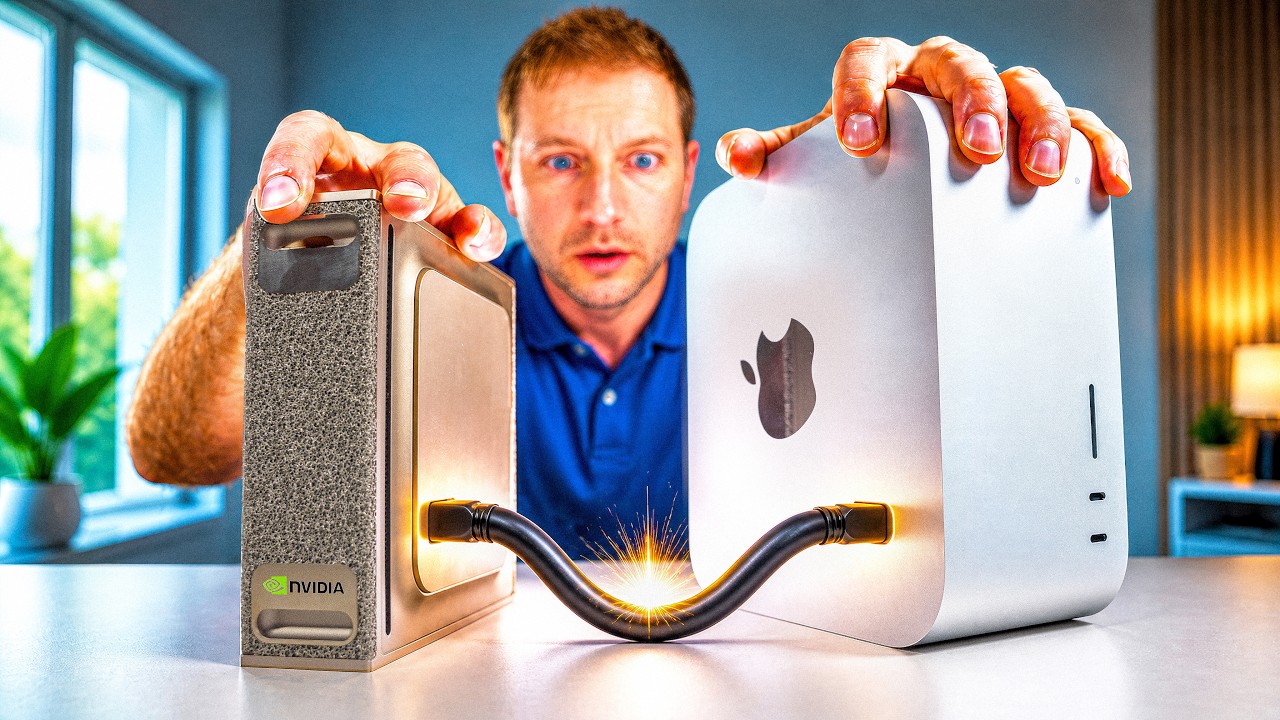
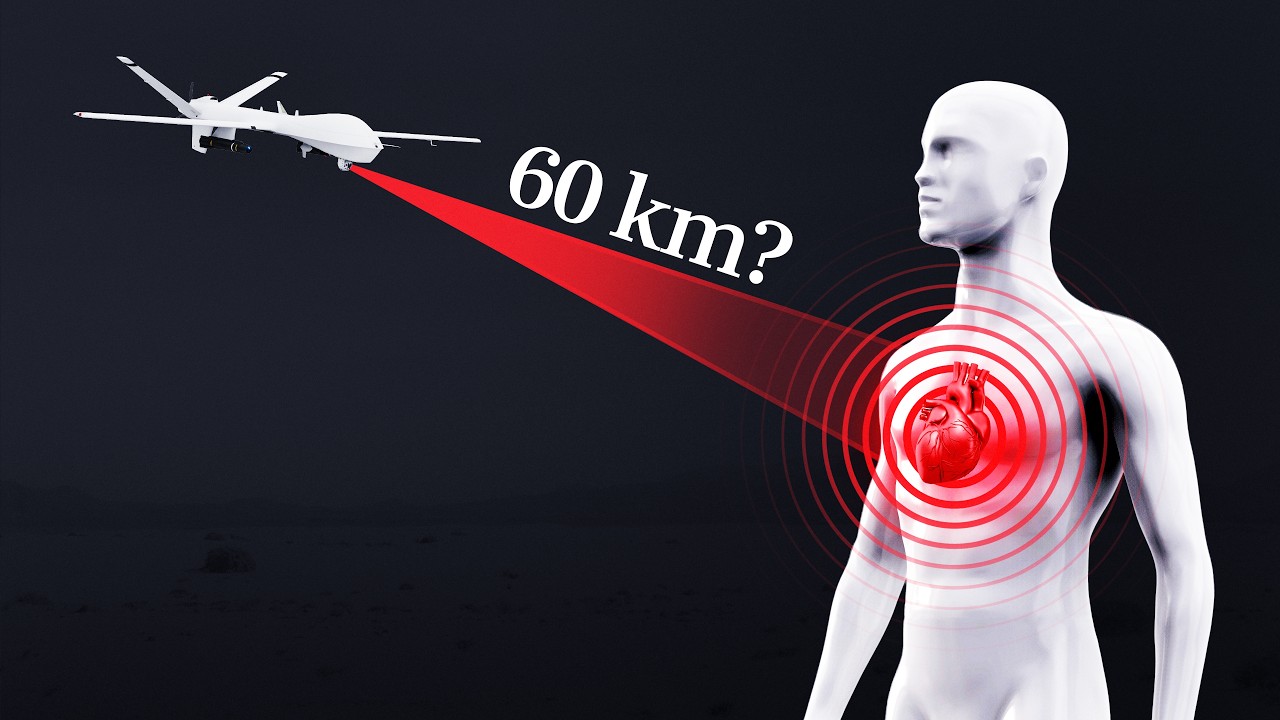
Data Slayer gives himself three weeks to bridge Reticulum onto HF amateur radio so a message can skip off the ionosphere hundreds of miles with no tower, satellite, or middleman. He assembles a Hermes Lite 2, tunes antennas with a NanoVNA, decodes FT8 from Bogota 1,600 miles away, and passes his ham license exam. Because amateur rules forbid encryption and Reticulum is built from it, he terminates encryption at a gateway and sends a plain text, call sign identified frame with a published codec, then carries a real message across his office and two miles across town. The deadline hits before the true skywave test, and he ships the honest result.
Published Sep 20, 202659:01 video36 min readAdded Sep 27, 2026Open on YouTube →
At a glance
Data Slayer gives himself three weeks and one goal: send a single real Reticulum message hundreds, maybe thousands, of miles with no cell tower, no private satellite, and no corporation in the middle, by bouncing it off the ionosphere on amateur HF radio. He needs two miracles. Miracle one is physics: can a cheap open source software defined radio, the Hermes Lite 2, reach beyond the horizon? Miracle two is law: US amateur rules forbid obscuring the meaning of a message, and Reticulum is built out of encryption. Along the way he assembles the radio, learns to tune antennas with a NanoVNA, decodes an FT8 message from Bogota 1,600 miles away, passes his ham license exam at a Miami meetup, designs a legal plain text HF frame with a published codec, and bridges a Reticulum message across his office and then two miles across town. The deadline arrives before the true skywave test, and he ships anyway: an honest build log of how close an open source, community owned long haul internet really is.
The cold open: a radio with no bill
The opening line is the premise of the whole channel. Your phone keeps you connected "as long as you keep paying the bill." The radio on his bench needs no cell tower and no monthly subscription. You can modify it, upcycle the hardware, and extend what it does. It transmits on a frequency about 100 times lower than traditional Wi-Fi, the same kind of radio people use to carry their voices across oceans. Instead of talking into an analog microphone, though, he is bridging it into Reticulum, "a fully digital, permissionless, open source network," to find out whether communities hundreds or thousands of miles apart can connect over the air for free.
The problem he names is gatekeepers. Today our communication passes through companies that "decide what we're allowed to do, keep a record of us doing it, and then charge us for the privilege." He wants a network where nobody holds that power. That might sound like wishful thinking, but cheap low power hardware, open source code, and community run networks already work. Meshtastic and MeshCore have proven the model and keep gaining adoption.
His proof is a road trip. Driving from Central Florida to New Hampshire to see family, he stuck a magnetic 915 megahertz whip antenna on the back of his car with a small Neo node listening on the public LongFast channel. The radio picked up messages all along the route. Some cities, like Concord, New Hampshire, were "absolutely teeming with activity," and by the end of the trip he had seen more than 450 nodes on that one protocol alone. That is what happens when people get curious, put up a radio, and invite someone else to try it.
The gap: three ways to go long, and all of them cost something
But what happens when the people you want to reach are hundreds of miles away? That is the gap he has been trying to bridge for over a year, and today there are three options.
Who owns it
Reach
The catch
Cell towers
Big telcos and ISPs
Wide, if you build enough towers
Needs a large number of towers, only economic for big carriers
Serious distance needs many nodes and many people in between
HF skywave into Reticulum (this project)
The people using it
Hundreds to thousands of miles per hop
The sky is the relay, but it must be legal and the physics must cooperate
Figure 1. The three long range options he lays out at 2:01, plus the fourth path the video attempts. In his last video he had already bridged an Iridium modem into Reticulum, which works from anywhere with a clear sky but still runs on someone else's satellites and a paid plan.
He thinks there is another option. If it works, privately owned networks could connect across hundreds or thousands of miles without traditional internet backhaul. For that he needs two miracles. Miracle one: cross the map on a path we own. Miracle two: do it legally.
The physics are not new, and neither is sending data over radio. What is new is Reticulum and who can build with it. Radios that once cost thousands are becoming affordable, open source networking software can stitch completely different links into one network, and AI lets "one reasonably stubborn person" work through problems that once needed an engineering team. For the first time it does not feel completely insane. Maybe there is a reason nobody has done it, he admits, but "circumventing corporate and government overreach is one of my favorite hobbies." The target: one real Reticulum message, hundreds or thousands of miles, no cell tower, private satellite, or corporate network in the middle.
Ham radio, APRS, and why Reticulum is the right glue
The technology that makes it possible is one many people have written off: ham radio, which depending on who you ask is either "one of the last long range communication systems ordinary people can actually own" or "an elaborate way for retired men to discuss the weather." These radios can do what a Wi-Fi router cannot. They can potentially cross the continent, and they can carry digital data too, small packets sent directly over the air.
He is not there to chat with operators. He wants the radio link itself, and to make software talk through it, because ham radio is not limited to voice. He plays a burst of noise: that noise is data. It is APRS, small packets carrying locations, weather reports, status updates, and short messages. Nearby stations repeat the packets, and internet gateways collect them and plot positions on maps like aprs.fi. So data over amateur radio is not new. But APRS was built for a different job, and that APRS channel lives on VHF: great for local coverage, not the long distance skywave link he wants.
He could build yet another one off HF messaging system, but it would connect only operators running the same hardware and software. That is why Reticulum. It is transport agnostic: it does not care whether data rides LoRa, Wi-Fi, Ethernet, the internet, or a custom HF link. Each is just another path. So this would not create a tiny new network for a handful of HF operators; it could bridge existing Reticulum communities together, even if nobody inside them ever touches an HF radio. Someone on LoRa in one town could reach someone on a completely different link hundreds of miles away, with HF quietly carrying the data across the gap. That means designing a custom HF packet, and if it works, the radio becomes "a long distance bridge between networks that already exist."
The three week rule
A confession: he has a bad habit of refusing to ship until a project is perfect, which is why viewers sometimes wait months between videos. So this time he set a hard limit of three weeks. When Sunday comes, testing stops, and whether it works or not, he ships what he has.
The Hermes Lite 2: a radio built around a computer
He needs one more radio, which is saying something, because his office is already full of them: boards for Bluetooth, Wi-Fi, LoRa, HaLow, even an Iridium modem. All of them either stay local or lean on someone else's infrastructure to go farther. The key to the puzzle is the Hermes Lite 2, a relatively inexpensive open source software defined radio rated from 0 to 38.4 megahertz, which includes the band called HF, high frequency.
A traditional HF radio is built around a person with a microphone. The Hermes is built around a computer. It can still carry voice, but software can generate the exact data frame he needs, put it straight on the air, and decode it on the other side. And HF has a trick none of his other radios can do alone: under the right conditions a signal travels up into the ionosphere, reflects back toward Earth, and lands hundreds or thousands of miles beyond the horizon. That is skywave propagation. No chain of community nodes, no private satellite. "The atmosphere itself becomes part of the path."
Figure 2. Why HF is the whole bet. His Bogota decode could only arrive "because it bounced off the ionosphere"; the direct path is blocked by the curvature of the Earth. The band is heavily affected by the solar environment, flares, and day versus night.
There was one minor problem. His arrived in three pieces: the enclosure, the main board, and the filter board. He assembles it on camera. The main board slides into rails in the enclosure; nothing holds it in except the front face plate with its four corner screws. The filter board is a sideboard that connects through a header pin ("I don't think there's a direction... apply pressure evenly"). The main board's connection is Ethernet, so the radio shows up as a network device. The other half of the enclosure does not slide, it just sits on top. "This thing is pretty solid."
Miracle two, part one: you may listen, but not yet speak
That was slightly optimistic. The radio could now transmit, but he was not legally allowed to press the button. Transmitting data on this part of the amateur spectrum requires a license, and he did not have one. Receiving is different: anyone can listen. So while he studied for the ham radio Technician class exam, he learned the receive side. Much of the studying came from two YouTube channels, Ham Radio Crash Course and Ham Radio 2.0, playing in the background while he tinkered. He thanks both.
Antennas scale with wavelength
The first lesson: the radio is only half the problem; to hear anything you need the right antenna. His usual 900 megahertz radios have a wavelength of about 13 inches. At 28 megahertz the wavelength is roughly 35 feet. The antenna need not be a full wavelength, but it scales with it, which is why this one is much longer.
Figure 3. The "100 times lower than Wi-Fi" claim, drawn out. Each wavelength is the speed of light divided by the frequency. Moving from his familiar 915 megahertz work down to 28 megahertz multiplies the wavelength about thirtyfold, which is why the antennas balloon and why, he notes later, the longer wave should improve penetration and refraction.
His HF antenna is a Falcon dipole, basically two lengths of wire sized for the band. Ideally it would be outside, high in the air, with open space. "You'll notice my installation took a slightly more interpretive approach."
The NanoVNA, demystified
Next comes the NanoVNA, which tells you how effective your antenna setup is. It intimidated him for a long time because so much is on screen, so he simplifies it. Under Display, Trace, remove every trace except SWR, which shows the antenna's center frequency and how well tuned it is there. Then specify a range.
His demo uses a Muzzy Works 915 megahertz whip. Screw it on and a readout appears, but the range ends at 900, so he sets stimulus start to 850 megahertz and stop to 960. The dip appears, and dragging the marker to the bottom shows it sits around 900 megahertz; it shifts a little depending on how things are set up. A dual band or tri band antenna, he shows with a special connector, produces multiple resonance dips. Calibrating each time with the three dummy loads (open, short, load) under Calibrate gives better results. "These things aren't that intimidating."
On the dipole, the center was reading 26.840 megahertz. With the arms clipped in different spots, he unclips one and tosses it down, and the dip gets much deeper just from moving it. The goal is to shift the center to 28, and repositioning the arms moves it toward 28.160, right where he will transmit. Zoomed out, the trace is "flat flat flat flat," then dips at 28 megahertz. That is the whole tuning process he used.
Miracle one: 1,600 miles from Bogota on day one
However improvised, the antenna was connected, and it started hearing things. On his first day with the Hermes he ran SparkSDR and listened on the 21 megahertz band (his antenna is tuned for 28, where he will ultimately transmit). He heard a little voice but not much. Then he turned on FT8 decoding and saw "a whole conversation going on."
FT8 is a digital mode built for weak signal communication. It makes the same basic trade as LoRa: a very low data rate in exchange for working at extremely low signal to noise ratios, sometimes recovering messages you can barely tell apart from the noise. "It's basically lightweight text messaging over HF." On the waterfall a message is a thin line that runs for several seconds, then decodes into text: a call sign, the station, an acknowledgement, a report such as received at minus 14 dB, and a timestamp.
The very first message came from Bogota, Colombia. He is in Central Florida. That is 1,600 miles. The antenna was a center fed dipole ("two wires that go left and right," horizontal, vertical, or L shaped), with one arm literally lying in his office and the other dangling out the window, inside a cement block house ("Say hi, Bruno"). Not optimized by any means, and messages kept coming. The only reason Bogota could reach him past the curvature of the Earth is that the signal bounced off the ionosphere, which also makes the band sensitive to solar flares and to night versus day.
"Well, that's miracle number one." Turning the dial further, at 4.84 megahertz he found an AM voice broadcast, most likely WWCR out of Nashville, about 727 miles away, though at 100,000 watts "they were definitely doing most of the work." Receiving clearly worked. FT8 messages are very short, probably too short for his needs, so he would need a frame with more bandwidth, and he would listen with an RTL-SDR to establish range.
The exam at The Farm
Listening was still all he could legally do, so it was time for the test. You can take it online, but he wanted the full experience and drove to Miami, to Unified Radio Group at a place they call The Farm, for a meetup with in person exams. The license would open other bands and allow higher transmit power on the bands he already uses, LoRa and HaLow, beyond the 4 watt total EIRP, with "some things to consider around encryption," and let him build community nodes with longer range.
A VARA gateway, explained by the man who built it
While waiting, one member walked him through a rig close to what he wanted: a VARA gateway. The HF antenna comes down on coax from a delta loop, and a separate antenna up high handles VARA FM, with Starlink as the uplink. The gateway needs internet because it is the gateway; stations connecting to it do not. Data goes over VARA and bridges to the internet through Starlink. It is very slow: "you don't want to send anything over a meg, and that's really pushing," which takes a couple of minutes. Audio levels must be tuned so the mode is not overdriven or underdriven, and signal strength matters.
He controls it by remote access software. The station just monitors one frequency; when someone calls its call sign, the demodulator recognizes the request, acknowledges it, and the two exchange data back and forth. Range is line of sight, super dependent on the other station: with a serious antenna on a tower, maybe 50 miles. There are not many other VARA nodes locally, which is why he set this one up, though there are some north toward Port St. Lucie. You can digipeat from node to node, he thinks limited to two hops.
Passed
He passed. The group ran UHF and VHF tests with active gear, some members had MeshCore LoRa nodes, and two had seen his videos. He grabbed contacts to loop them into future projects, and since he lives a bit outside Miami that could double as a range test. He plans to focus on digital: APRS, overdriven LoRa, overdriven HaLow, "maybe some HF bridging with Reticulum, and just stuff that's really never been done before, but I need to do it the right way." One moment stuck with him. The power went out at the gazebo, but their VHF radio on a LiFePO4 battery kept transmitting to Key Biscayne, a real grid down demonstration of why this matters for hurricanes.
A few days later the FCC sent him an official call sign. It feels good, but it also means anything he does on air is tied to him, so he must do it right or be kicked off the air.
Miracle two, part two: the law versus encryption
The physics are there; text can travel thousands of miles. The second half is legality, and it is not obvious. He wants data, not analog voice ("Audio is a waveform. Data is a package of bits."). With his license, HF data that can use skywave has to happen between 28.0 and 28.3 megahertz, far below his usual 900 megahertz ISM band work. The longer wavelength should improve penetration and refraction on top of the atmospheric skip.
Codec published as a markdown doc in the CrossTalk repo
No obscuring meaning by any means, including encryption
No, encryption is structural
Terminate encryption at the gateway, send plain text with the destination LXMF address
Exception: encrypted commands to control a satellite
Not applicable
"Either every message we send also slightly adjusts the position of a satellite, or we find another way."
Figure 4. The legal puzzle from 25:42 to 27:14, as a ledger. Two rules are easy; the third looks fatal, because in Reticulum encryption is not a feature you can switch off.
That third rule felt like being dead in the water, because Reticulum does not merely use encryption, it is built out of it. Its creator Mark Qvist put it this way: "In Reticulum, encryption is gravity." Cryptographic identities tell the network who destinations are, signed proofs validate paths, and encrypted packets let information cross multiple hops without trusting the nodes in between. Removing encryption would not produce a less private Reticulum; it would break the machinery. "This is where I think most sane people would throw in the towel."
While studying he found one exception: amateur radio allows encrypted commands to control a satellite, which makes sense, since you do not want anyone who hears your command link taking over your spacecraft. Barring that, another way: he does not need to send the encrypted Reticulum packet over HF at all. Encryption can terminate at the air gateway. Messages are addressed to the gateway, which converts them to an amateur radio frame and sends it over HF with the destination LXMF address. Anyone who hears it can bring it back into Reticulum and forward it on.
The drawbacks are obvious. He will not solve spoofing in this video, though cryptographic signatures could still prove mathematically who sent a message. More importantly, the long haul HF leg is transparent and readable by anyone, "which kind of felt like taking two steps backwards." Maybe that is an acceptable trade for now. Meshtastic has public channels whose keys are widely known, and they still have utility. APRS does something similar. Amateur radio is fundamentally open, and people use it every day. "If you're stranded on a boat or lost in the mountains, do you care if someone can hear your SOS? No."
Building the bridge: CrossTalk and bridge extensions
He fired up Cursor, launched an agent, and drafted the architecture using CrossTalk as the end user app. "That sentence compresses about 5 days of work." The codec went through multiple versions as he changed the modulation and symbol rate, added error correction, built benchmark tools, and ran test after test over the air.
To listen he uses an RTL-SDR. His cost $37. It cannot transmit, only listen, which is all this side of the bridge needs, and without a proper antenna it still hears the Hermes across the office. No license is needed to listen, so in theory anyone could run a Reticulum gateway that listens for HF traffic and acts as an ingress point, much as ADS-B Exchange aggregates volunteer receivers. Listen only nodes already have proven utility. For testing he pairs it with a prototype Haven build, really a Raspberry Pi 5 made for fieldwork.
CrossTalk is a MeshChat fork he created to experiment on. Reticulum can make an interface over anything that moves ones and zeros, but a native Hermes interface would move encrypted Reticulum frames over HF, which is illegal in the US. So he built a section called bridge extensions: a connector for the Hermes or the RTL-SDR that runs in parallel to Reticulum. When the RTL receives a message, the connector reads it, rebuilds native frames, and forwards it to its destination. In the other direction, if you send a message in CrossTalk, an HF gateway is available, there is no direct path, and the message is not sensitive, it goes to the gateway node, which reads the Reticulum packet, writes an amateur radio frame, and "throws it over HF." A receiver turns the open message back into an LXMF message and forwards it.
Most people will never own an HF radio and should not have to. "If one person on your mesh has the radio and they're licensed to transmit, then the whole mesh has a long hop." It is the same idea as a repeater or digipeater: "You don't all carry the tower. You just have to have reach to the person who does."
Before transmitting, the codec must be public. On camera he adds a markdown file to the CrossTalk repo, basically the recipe to decode a frame so anyone who records one can read it later, commits, pushes to origin, and opens the docs folder on GitHub: HF codec, "literally public now." That is part of keeping it legal.
The first end to end test: four nodes, one shout
Figure 5. The setup he walks through at 32:19. Nodes 4 and 1 are ordinary Reticulum clients with no HF anything and no path to each other. Their only bridge is a shout over HF. Encryption holds on both meshes; only the air leg is open.
Node one is an Android phone running the Reticulum client Columba, with a single interface: the public TCP internet interface rns1.buildwithparallel.com. A very vanilla client, and the final destination. Node two is a Raspberry Pi running CrossTalk, which also has the RNS1 interface (so it can reach Columba) plus the RTL-SDR bridge extension set to ingress any traffic it hears, running alongside Reticulum rather than as a native interface. Those two form one mesh.
Node three is the Hermes with another CrossTalk instance and only a local TCP interface, which links it to node four, the CrossTalk instance he sends from. Two regular Reticulum instances with none of the HF machinery, that cannot talk to each other directly. Node three's bridge extension egresses HF traffic and holds all the configuration.
Because the origin has access to an HF gateway, opening a conversation shows a toggle for public broadcast. Turn it on and you are saying: if there is an HF gateway and I address someone not on our mesh, try an HF transmission. It is optional. It tells CrossTalk to "have the gateway throw a Hail Mary over HF."
He types "crossing Tim's office" and sends. The Hermes keys up, audibly. It takes about 7 seconds to get the frame across. Keying stops, and on the phone: there is the message. "We just sent a Reticulum frame over HF legally between two nodes that do not have a path between them." Legal because the air frame is plain text: the gateway decrypts, repackages, and tosses it over the dipole; the RTL hears "an HF frame, it's a Reticulum frame" with the final LXMF address, and wraps it into a proper new Reticulum packet addressed to the phone.
"Well, that's miracle number two." He mentions that he packaged what he learned about hardware, software, and radio systems into Parallel Primer, a course for building your own infrastructure. But the message had only crossed his office.
Into the field: antennas, ground planes, and a car hood
"I'm trying to cancel the middleman. Apparently there's some assembly required." Across the office the mismatched antenna did not matter. For real distance he needed a 28 megahertz antenna on the receive side, with the Hermes staying home. He grabbed a 10 meter mobile whip for the RTL, held on the hood by magnetic mounts, and spent days with the NanoVNA: Display, Trace, kill the extra traces, stimulus start 20 megahertz, stop 40. The dip sat around 29 megahertz, not the ideal 28. Adjusting the coax deepened it but left it near 29. You could shift it by changing the whip length, but for testing he goes with it. "I don't know whether I have this ground plane set up correctly. I just know it's closer to 28 megahertz than the LoRa whip."
On the feed line, the shield and the core must stay apart. At first they were not. The center bolt is core and cannot touch the ground plane (the shell, the coax shield, maybe the car itself), so a plastic washer and an insulating ring keep them separate. Before he got that right, "the signal was all over the place," and touching the core still messes it up.
The Haven rides in the car listening for shouts from the Hermes on the second floor of his house: somewhat elevated, but caged in a concrete block home, with dozens more concrete homes in between. A GPS receiver on the hood logs exact distance for every test.
DrivewayMessages work.
First driveFailure. Dead as soon as he got down the block, and it was unclear whether signal, packet fidelity, or the decoder was to blame. The message must arrive clean enough for the Pi to decode.
Repeat runsA little more distance each time. Out of his neighborhood, but failing on entering the next one.
Power1 milliwatt worked, 10 milliwatts too, then a wall: above 300 milliwatts the radio became unstable, far below its 5 watt rating.
New supplyA $60 ham power bank still could not go past about 2 watts without current issues.
Rust portDecode times drop to a few seconds.
Remote appControl the Hermes and read decodes from the car in real time.
Up the streetrange07 at 1 milliwatt, zero RTL gain, SNR 32, instant decode.
2+ miles"hello" fails; R1 gets through at 940 milliwatts. Not line of sight, neighborhoods in between.
The power brick, and AI being wrong
The culprit behind the 300 milliwatt wall was the cheap power brick he had lying around the office: 12 volts, 3 amps, 36 watts. On paper that should be enough, since the Hermes wants 2 amps continuous, but above 300 milliwatts messages stopped getting through, which wastes most of a radio that can do 5 watts. He bought a real ham radio power bank rated 5 amps constant and 7 amps surge, then had to figure out how to attach a barrel jack. Result: still no more than about 2 watts without current issues. "Which is funny, because AI specifically told me this was the power supply to buy. Then when I started troubleshooting with it, it told me I needed another power supply. So AI isn't always right. I'm out 60 bucks." He works with what he has.
Porting the decoder to Rust
Each transmission takes several seconds to finish sending, then the Pi decodes it, and decoding was computationally heavy, slow, and often failing. The idea came from his subreddit, r/ModernRadio, where Ken, also known as Frosty, has been building PRNS, a high performance Reticulum implementation in Rust that now has a browser flasher at prns.dev. He had Cursor port the most expensive parts of the decoder from Python to Rust. It worked: decode times fell to a few seconds.
A remote control app for range testing
The office test was easy because he could stand beside both radios. In the field, early runs meant queuing a message with a delay, running to the car, driving to a test point, waiting for the transmission, then driving all the way home to see whether the Pi decoded it. Every failure was a full round trip, "not a particularly efficient way to debug a radio." So he built another app.
It runs on the Pi and, with "some mesh VPN dark magic," shows RTL-SDR decodes as they arrive and controls the Hermes: pick a transmit power (10 milliwatts, 5 watts, or 1 milliwatt for an in office test), type a message, and under Advanced set the RTL gain (zero when they share a room). It reports whether the message arrived and decoded at sufficient fidelity, with readouts like SNR and receiver gain. His "test" message keys the Hermes with an audible click, and the full frame shows as decoded. In the car the Pi joins his phone's hotspot, the phone is on Tailscale, and so is his home network, which is how he drives the Hermes remotely and gets results in real time. To be clear, Tailscale carries only remote control and telemetry; the measured packet travels entirely over HF.
The drive: range07, hello, R1
Just up the street he sends range07 at 1 milliwatt, zero gain. SNR jumps to 32, "very healthy," and the Pi decodes it at once. "In my neighborhood I'm pretty easily catching these data packets."
Over two miles out, quarter wave whip on the hood, GPS and RTL-SDR beside it, he sends hello. It transmits and the Pi waits, but it does not decode, though it had been working moments before. He bumps transmit power to 940 milliwatts and sends a shorter message, R1. It comes through. There are three knobs: RTL receiver gain, transmit power, and frame size, meaning how much data is in the message. "We're over 2 miles right now, and this is not line of sight." It was still a local test, but the bridge carried a real Reticulum message from the Hermes in his office to the receiver in his car.
The soapbox: why go to all this trouble
This is an awful lot of work to own your own communication, he concedes. If it were only about sending a text, it would be insane. But the problem with middlemen is not merely privacy or monthly fees. It is "their ability to control our action potential in the digital world," a concept Mark, Reticulum's founder, returned to often.
GameStop, 2021. During the massive short squeeze, unprecedented volatility was exactly how day traders make money, but Robinhood, a centralized middleman, restricted trades. Imagine spending a lifetime building an investment thesis, and when the window arrives, the rug is pulled. Whatever you think of that week, people discovered someone stood between them and the market "who could say no." Robinhood's hands were somewhat forced, since it could not carry infinite exposure. "I'm not critiquing a corporation. I'm critiquing the architecture." Decentralized exchanges like Uniswap flip it: the website can still be pressured, but the protocol has no broker who can turn off the buy button.
Yahoo, 2004. Middlemen also know things they can be compelled to hand over. A Chinese journalist, Shi Tao, used his Yahoo account to send an email summarizing government instructions to the media. Yahoo provided account information that helped authorities identify him, and he was sentenced to 10 years in prison. Yahoo's defense was that it had to obey local law. "That's precisely the point. The architecture put his identity in the hands of a middleman who could be forced to surrender it."
Silicon Valley answered with principles, famously Google's "don't be evil." "But greater still is can't be evil." That is the ambition behind decentralized blockchains and permissionless networks like Reticulum: use math to reduce the trust we place in anyone in the middle. "Okay, stepping off my soapbox now."
Figure 6. The argument of the 52:30 soapbox in one frame: the two historical cases are failures of architecture, not of any particular company.
Sunday comes
Every extension of the link exposed another fundamental part of the system that needed work. With Sunday two days away he could move messages around the neighborhood, but had not run the test the map represented. Proving skywave would not come from another drive around the block. A real test needed someone hundreds of miles away listening on the same frequency with his decoder while the band was open. They would not need a Hermes or a transmit license, potentially just a $37 receiver, an antenna, and a computer, but they would need to be in the right place at the right time, running software he had only just finished. The last obstacle was logistical, and hours remained. He kept testing the decoder, fixing power problems, and trying to make the gear operable by someone else.
Sunday came and went without the skywave test. Normally his perfectionism would keep him working and viewers waiting, but he had committed to "the good, the bad, and the ugly," so he shipped. A bummer, but he had come far. Weeks earlier he did not know how to use an SDR or read a waterfall, had never heard APRS or decoded FT8, did not know what it means for a band to close and reopen, could not verify an antenna's tuning, did not know why touching the coax moves the center frequency or how ground planes work. "Well, I still don't understand ground planes, but the other things I do now." He built the antennas, learned to listen, and heard others doing what he set out to do across distances he would not have believed.
And maybe the status quo exists for a reason: after a year of escaping what he half jokingly calls the communication cartels, he had subscribed to nearly everything they sell. Fiber, Verizon, Starlink, and now Iridium. "In trying to cancel the middleman, I was somehow also becoming their best customer."
What was proved, and what was not
First, the receiving setup decoded a digital transmission from Bogota, roughly 1,600 miles away: beyond the horizon is reachable. Second, the bridge works. An ordinary Reticulum node sent a message to a licensed gateway, which converted it into a public, call sign identified HF frame and transmitted it; the receiver decoded it, rebuilt the message, and delivered it to an ordinary Reticulum node on the other side.
What remains undone is the original goal: two people hundreds or thousands of miles apart reaching each other with no cell tower, private satellite, or anyone giving permission. "I haven't proved that yet, but I'm a hell of a lot closer than when I started." The channel's mission is "to build a free open source internet that we actually own, using tools built by the people for the people." If a message could originate on a Reticulum network in, say, Germany, bounce off the sky, touch down in North America, and bridge into a Reticulum network in the States, "that might change everything." Somewhere on the other side of the map, someone already has the other half of the test. "Now I just have to find them."
Key takeaways
HF skywave can carry data beyond the horizon with cheap gear: a janky indoor dipole and a Hermes Lite 2 decoded FT8 from Bogota, 1,600 miles away, on day one.
Reticulum's transport agnostic design means one licensed HF gateway could give an entire mesh a long hop, the way a repeater does for voice.
US amateur rules require a call sign, a public codec, and no obscured meaning. Because "encryption is gravity" in Reticulum, the legal path is to terminate encryption at the gateway and send the HF leg in plain text with the destination LXMF address.
Listening needs no license, so anyone with a $37 RTL-SDR could run an ingress node.
The office test worked end to end across four nodes in about 7 seconds per frame; the field test reached just over 2 miles, not line of sight.
Practical walls were power (a weak supply capped output far below 5 watts), decoder speed (fixed by porting hot paths to Rust), and test logistics (fixed with a remote control app over Tailscale).
The real argument is architecture: "don't be evil" relies on a middleman's promise; "can't be evil" relies on math.
The intercontinental skywave test is still open, and he is looking for someone far away to hold the other end.
Chapters
0:00 A radio with no bill: Reticulum over the air
1:00 Meshtastic road trip, 450 nodes Florida to New Hampshire
2:01 The gap: cell, satellite, or community mesh
3:03 Two miracles: a path we own, and legally
4:05 Ham radio, and APRS as data over the air
5:06 Why Reticulum is transport agnostic
6:07 The three week rule
6:37 The Hermes Lite 2 and skywave propagation
8:08 Assembling a radio that arrived in three pieces
9:42 Listening is legal, transmitting needs a license
10:14 Antennas scale with wavelength: the dipole
10:46 NanoVNA tutorial: SWR, ranges, calibration
13:21 Tuning the dipole toward 28 MHz
14:22 First day on SparkSDR: FT8 explained
15:23 First message from Bogota, 1,600 miles
17:28 WWCR Nashville on 4.84 MHz
18:30 Driving to The Farm in Miami for the exam
20:04 A VARA plus Starlink gateway, explained
22:07 Passed, and the grid down demo
24:41 A call sign arrives from the FCC
25:12 The legal rules: 28.0 to 28.3 MHz, call sign, public codec
26:13 "Encryption is gravity"
26:44 The satellite exception, and terminating encryption at the gateway
28:14 Five days of codec work in Cursor
28:45 The $37 RTL-SDR receiver and listen only nodes
29:45 CrossTalk bridge extensions
31:16 Publishing the HF codec on GitHub
32:19 The four node network explained
35:31 The public broadcast toggle
36:04 "crossing Tim's office" goes over HF
38:04 Miracle two, and Parallel Primer
38:36 A 10 meter whip for the car
40:39 Core, shield, and the ground plane
41:40 GPS logging and the first failed drives
43:10 The power supply wall
45:16 Porting the decoder to Rust, inspired by PRNS
45:48 A remote control app over Tailscale
48:53 range07 up the street, SNR 32
49:54 Over 2 miles: hello fails, R1 succeeds
52:30 The soapbox: GameStop and Robinhood
54:01 Yahoo and Shi Tao, don't be evil versus can't be evil
55:02 The deadline and the missing skywave test
56:04 Shipping the good, the bad, and the ugly
57:34 What was proved
58:34 The other half of the test
Best quotes
"Your phone is great at keeping you connected as long as you keep paying the bill."
"Circumventing corporate and government overreach is one of my favorite hobbies."
"Ham radio is either one of the last long range communication systems ordinary people can actually own, or an elaborate way for retired men to discuss the weather."
"The atmosphere itself becomes part of the path."
"In Reticulum, encryption is gravity." (quoting Mark Qvist)
"You don't all carry the tower. You just have to have reach to the person who does."
"AI isn't always right. I'm out 60 bucks."
"Don't be evil. But greater still is can't be evil."
"In trying to cancel the middleman, I was somehow also becoming their best customer."
"Somewhere on the other side of this map, somebody already has the other half of this test. Now I just have to find them."
The video is candid about its own scorecard, and it holds up. The two things claimed as proved are genuinely proved on camera: an FT8 decode from 1,600 miles and an end to end Reticulum message over a legal plain text HF frame. The headline goal, a skywave hop between two Reticulum networks, is not done, and he says so. The gateway design is a real trade: the HF leg is readable by anyone and, until signatures are wired in, spoofable, and the gateway operator necessarily sees plaintext, which reintroduces a trusted party of sorts on the long hop. The 2 mile result at under a watt is local ground wave work, not skywave, and a 28 megahertz whip tuned near 29 plus a power supply capping output left much of the radio's 5 watts unused. Ten meters is also a band whose openings depend on the solar cycle and time of day, so a distant test partner needs timing as much as hardware. None of that undercuts the architecture; it describes the next video.
Full transcript
[00:00:00] Your phone is great at keeping you connected as long as you keep paying the bill. But soon you might be able to stay connected across continents and do it all over a network you actually own. Something the legacy telecom model still can't give you. This radio doesn't need a cell tower and you don't need to pay a monthly subscription for the right to use it. You can modify it, upcycle the hardware, and extend what it can do. [music] It transmits on a frequency about 100 times lower than traditional Wi-Fi. The same kind of radio people use
[00:00:30] to carry their [music] voices across oceans. But instead of talking into an analog microphone, I'm bridging it into Reticulum, a fully digital, permissionless, open-source network. I want to find out if we can connect communities hundreds or even thousands of miles apart over the air for free [music] and help build an internet that belongs to the people using it. The problem is today our communication passes through [music] gatekeepers. They decide what we're allowed to do, keep a record of us doing it, and then charge us for the privilege. I want to build a network where nobody has that kind of
[00:01:00] power over the people using it. Which might sound like wishful thinking, [music] but incredibly cheap, low power technology, open- source code, and communityrun networks are already functioning today. Projects like Meshtastic and Meshcore have proven out that model and continue to gain adoption. In fact, a few weeks ago, I was driving north to see some family from Central Florida all the way to New Hampshire. And for fun, I stuck a magnetic 915 megahertz whip antenna on the back of my car with a small Neo1
[00:01:31] listening on the public Longfast channel. And over the course of the trip, the radio picked up messages and connected us with people along the route. Some cities like conquered New Hampshire were absolutely teeming with activity. And by the end of the trip, we had seen more than 450 nodes on just that one protocol. That's what this looks like when enough people get curious, put up a radio, and invite somebody else to try it. You start with something you want to understand, share it with a few friends, and little by little, a community builds around it. But what happens when the people you
[00:02:01] want to reach are hundreds of miles away? That's the gap I've been trying to bridge for over a year now. Because right now, if you want long range communication, you basically have three options. You can use cell towers, but you need a large number of them, and they're really only economically viable for big telos and ISPs. You can use a satellite service like Starlink, Garmin, or Aridium. These are good for off-grid situations. And in my last video, I showed how you could hook an Aridium modem into Reticulum and send a text
[00:02:32] message from anywhere with a clear view of the sky. But the satellites were proprietary. You need to broker a monthly plan, and each message still incurred a toll. Or you can build a community network with something like Meshtastic. And that model is real, local, and actually belongs to the people using it. But covering serious distance requires a lot of nodes and enough people between here and wherever you're trying to reach. But is there another option? I think so. And if this works, privatelyowned networks could connect across hundreds or even
[00:03:03] thousands of miles without traditional internet back haul. But for that to have even the slightest chance of being possible, I need two miracles. Miracle number one is I need to somehow cross this on a path we own. And miracle number two, I need to do it legally. Now, the physics behind this isn't new, and neither is sending data over radio. What is new is reticulum and who can build with it. Radios that once cost thousands are suddenly becoming affordable. Open source networking
[00:03:33] software can stitch completely different links into one single network. And AI lets one reasonably stubborn person work through problems that once required an entire engineering team. For the first time, something like this doesn't feel completely insane. But that doesn't mean it's a great idea. After all, maybe there's a reason nobody has done this before. But really, there's only one way to find out. And fortunately for you, circumventing corporate and government overreach is one of my favorite hobbies. So, I'm going to try it. one real reticulum message, hundreds, maybe thousands of miles. No cell tower,
[00:04:05] private satellite or corporate network in the middle. And the technology that makes that possible is one a lot of people have already written off. This is ham radio. And depending on who you ask, ham radio is either one of the last longrange communication systems ordinary people can actually own or an elaborate way for retired men to discuss the weather. But these radios can do something your Wi-Fi router can't. They can potentially cross this, but they can carry digital data, too. Small packets sent directly over the air. Could one of
[00:04:35] those packets travel thousands of miles? Potentially. But could we turn that connection into a bridge for a modern open-source network? That's what I'm here to find out. But I wasn't here to chat with random operators. I wanted to take the thing making those conversations possible, the radio link itself, and make software talk through it instead. Because ham radio isn't limited to voice. That noise is data. It's called APRS. Small packets carrying locations, weather reports, status updates, and
[00:05:06] short messages. Nearby stations can repeat those packets while internet gateways collect them and plot their reported positions on maps like this. So, sending data over amateur radio isn't new. But APRS was built for a different job. And this particular APRS channel is on VHF. Great for local coverage, but not the long-distance Skywave link that I'm attempting. I could build another oneoff HF messaging system, but then it would connect only radio operators running the same hardware and software. That's why I want to use Reticulum. Reticulum is transport
[00:05:37] agnostic. It doesn't care whether data travels over Laura, Wi-Fi, Ethernet, the internet, or a custom HF link to Reticulum. Each one is simply another path through the network. So, this wouldn't create a tiny new network for a handful of HF operators. It could bridge existing reticulum communities together, even if the people inside those communities never touch an HF radio themselves. Someone using Laura in one town could potentially reach someone on an entirely different kind of link
[00:06:07] hundreds of miles away with HF quietly carrying the data across the gap. That means I need to design a custom HF packet that carries what our bridge needs. If it works, this radio doesn't become another isolated system. It becomes a long-distance bridge between networks that already exist. Now, I have a bad habit of refusing to ship these projects until they're absolutely perfect. Which is why you sometimes wait months between videos. So, this time I gave myself 3 weeks. When Sunday comes,
[00:06:37] testing stops. Whether it works or not, I have to ship what I have. So, I have 3 weeks to build the bridge. To attempt this, I need one more radio, which is saying something because my office is already full of them. I have boards for Bluetooth, Wi-Fi, Laura, Halo, even an Aridium modem. But those radios either stay relatively local or depend on somebody else's infrastructure to go farther. This is the Airmemes Light 2, and it's the key to this entire puzzle. It's a relatively inexpensive
[00:07:07] open-source softwaredefined radio rated to cover frequencies from 0 to 38.4 4 MHz including the part of the spectrum known as HF or high frequency. A traditional HF radio is built primarily around a person with a microphone, but the Airme is built around a computer. It can still carry voice, but I can also have my software generate the exact data frame I need, put it directly on the air, and decode it on the other side. And HF has a trick that none of the
[00:07:37] other radios scattered around my office can perform on their own. Under the right conditions, an HF signal can travel into the ionosphere, reflect back toward the Earth, and land hundreds or even thousands of miles beyond the horizon. It's called skywave propagation. There is no chain of community nodes or private satellite carrying the messages. The atmosphere itself becomes part of the path. So, this might be the right radio that lets us cross this map. There was just one minor problem. Mine arrived in three
[00:08:08] pieces. Okay, so let's try to put this guy together. So, we have the enclosure, we have the main uh board, and then we have the filter board, which we're also going to [music] need. So, three parts, and that should be all we need to put this guy together. So, let's go ahead and open these up. You slide the board into these uh into these rails here. I kind of like that. [music] Um, so basically this goes on like this. There's nothing holding it together. What's going to hold it together is the
[00:08:39] face, the front face plate, which [music] has the four screws in the corners. So this part, um, this is the filter. This is kind of like the sideboard. The [music] tricky part that I've seen is on the main board. And this is our board right here. And this thing is interesting because it's connection is a Ethernet. So it shows up as a network device line. But what I'll do is I'll push the screw out just I should be able to do it like this. There it goes. So that's our first half right there. I
[00:09:11] believe all we do is slide it in the rails. So now and [music] then these connect through the head pin here. Doing one of these. I don't think there's a direction. Apply pressure evenly here. The other side of the enclosure actually doesn't slide. It just [music] you can go right on top. Um, and I think we're going [clears throat] to be good to go. Um, no, I think we're good though. This thing [music] is uh is pretty solid. We've got it set up here. Good to go. Was perhaps slightly optimistic because
[00:09:42] while the was now capable of transmitting, I still wasn't legally allowed to press that button. Remember, miracle [clears throat] number two, I have to do this all legally. Transmitting data on this part of the amateur radio spectrum requires a license, and I didn't have one yet. But receiving is different. Anyone can listen. So, while I studied for the ham radio technician class license exam, I started learning about the receive side of the radio. And a lot of that studying came from two YouTube channels, Ham Radio Crash Course and Ham Radio 2.0. I
[00:10:14] basically had their videos playing in the background while I tinkered with the rig. So, thank you to both of them. The first thing I learned was that the radio itself was only half the problem. To hear anything, I needed the right antenna. The 900 MHz radios I normally use have a wavelength of about 13 in, but at 28 MHz, the wavelength is roughly 35 ft. The antenna doesn't have to be a full wavelength long, but it does scale with it, which is why this thing has a much longer antenna. This is a Falcon
[00:10:46] dipole. basically two lengths of wire sized for the band. Ideally, it would be outside high in the air with plenty of open space. You'll notice my installation took a slightly more interpretive approach. Okay, so this thing is a nano VNA and it helps you understand how effective your Intuna setup is. This thing intimidated me for a long time. You can see there's a lot going on here and it's not clear what everything does. So, I'm going to simplify it for you. So what we can do is we can remove some of these traces.
[00:11:19] Display trace. We can get rid of this. We can get rid of this and we can get rid of this. What we really care about is the SWR which tells us where the center frequency is for the antenna and how well tuned it is at that frequency. So and we do need to specify a range. But basically what we can do is we can take an antenna like this. So, this is a Muzzy Works 915 megahertz whip antenna. So, what we can do is we can just screw
[00:11:49] this on like so. And it's going to start to give us a readout here. We have the end of the range here at 900. So, what we're going to want to do is move this so that we can actually see um what we want. So we'll do start at say 850 MHz and then end stop at 960 MGHertz. Let's see here. Okay, we can start to see the center frequency. And so now if we want to see like exactly where that dip is, we just drag this
[00:12:21] over, bring it down to the dip. So you can see you can see it moves a little bit like based on like how you know how we have this thing set up. But we can see it's around 900 MHz, right? Um, one other thing I'll show you is, um, you probably have some triband antennas or dualband antennas. Um, this right here is one of those. Just had to get a special connector for this, but um, when you put in an antenna that is dual band or triband or what have you, you'll get multiple sort of like resonance zones.
[00:12:51] If I'm transmitting on 28 MHz, is my antenna actually tuned around 28 MHz and does it have an efficient reading? Yeah, these things aren't that intimidating. You can get better results by calibrating it each time with these three sort of dummy loads right here. You pop it on, go over to uh calibrate, and then you hit calibrate. You have open, short, load, and you just do all three of those and it'll calibrate it. So, pretty easy. Definitely a useful tool in my toolkit to see like how effective an actual antenna is. and it's been interesting.
[00:13:21] >> Um, now one of the cool things is you can get that to move based on like moving the arms of the antenna. So like see how the center right now says 26.840. Well, if we see one is clipped over there and one is clipped over there. If I move like let's uncip it real quick. So and I just tossed it down there. And now you can see it's much deeper just by moving it. Right. But the problem is we
[00:13:51] want the center frequency to move to 28. That's the problem. Yeah. You can see how like moving the arms affects the shape there. So like now it's more towards 28.160 which is where we're going to transmit. If you zoom out a little bit like you can see it's relatively flat flat flat flat but then when we get to our 28 MHz we're we're dipping down and that's basically what we want. So that's really just the process that I used to get these antennas tuned properly, but it
[00:14:22] was connected and somehow it started hearing things. So this is my first day with the Airme and I have Spark SDR going here and I didn't get any voice uh well I did get a little bit of voice but not a whole lot um when I started playing around with it. But I'm listening right now on this band here, um, 21 MHz. Um, the channel that I'm ultimately going to use or the frequency I'm ultimately going to use is 28 MHz, uh, which is what my antenna is tuned
[00:14:52] for. But nonetheless, um, when I listen on this frequency uh, and decoding FT8 data packets, I see basically a whole conversation going on here. FT8 is a digital mode built for what's called weak signal communication. It makes the same basic trade-off as Laura, a very low data rate in exchange for working at extremely low signal to noise ratios, sometimes recovering messages from signals you can barely distinguish from the noise. It's basically lightweight
[00:15:23] text messaging over HF. And um the first message that I got was actually from Bogotaa, Colombia over HF. And this right here is what a message looks like. It's like a thin line goes out for several seconds and then it gets decoded and then it gets turned into the actual message here. And this is like the call sign the station and it's basically saying like received and then it's giving a a dB like received at -14 dB
[00:15:55] and uh you have the time stamp and all that stuff here. So like my first message uh I received from Bogota, Colombia. I'm here in uh central Florida. That's 1600 miles. The air may right here. The antenna setup I have is pretty janky. Let me show it to you. Um so this is the antenna. Um this is called a centerfed uh dipole antenna. It's basically two wires uh that go left and right and you
[00:16:26] can do horizontal, vertical, L-shaped, etc. But you can see one of the arms is literally just in my office right here. And then the other arm is dangling off out the window. So, um, definitely not an optimized antenna rig by any means. It should be outside. This is a cement brick house. Say hi, Bruno. This is cement brick house, so not ideal, but like we see like we already see more messages coming through here. like we see um this data being sent and that's
[00:16:58] the whole powerful aspect of that like the only reason the message can hit us from Bogotaa it's blocked by the curvature of the earth the only reason it can hit us is because it bounced off the ionosphere and that's kind of like the interesting characteristic of this band um this this band also like makes you is very sort of affected by the solar environment and like flares and nighttime versus daytime and other factors like that. But you can see it's
[00:17:28] pretty active right now. Well, that's miracle number one. Once FT8 proved the radio could hear a message from 1600 miles away, I started turning the dial and at 4.84 MHz, I found an AM voice broadcast, most likely WWCR out of Nashville, about 727 miles away. to be lost in the end. This is an insightful parallel to our life here on Earth. >> But they were transmitting at 100,000
[00:17:59] watts, so they were definitely doing most of the work. Either way, receiving clearly worked. Now, I needed to earn the right to transmit. So, now we're going to start messing around with like uh transmitting and what data packet we want to use. We might not use FTA. You can see these messages are very short. That's probably too short for our needs. So, we're going to need something with a little bit more bandwidth. So, I'll start sending coming up with that sort of frame uh shape and then start sending some data and we'll listen with this guy
[00:18:30] right here. This is just an RTL SDR. And then we'll work on uh establishing range and stuff. After that, I had heard a message travel 1600 miles, but listening was still the only thing I was legally allowed to do. If I wanted to send our own packet, it was time to take the exam. And by this point, I had been studying for a few weeks now. You can take these tests online, but I guess I wanted the full experience. So instead, I drove down to Miami to Unified Radio
[00:19:00] Group, a place they call the farm, where they were having a meetup and doing inerson exams. Okay, so I am at a place here called The Farm. Basically, I'm here to get my ham radio license, or at least take the test. not that nervous because you can literally take these online, but it would be nice to knock this out in one go. So, I can actually use this and this will just allow me to make use of other bands and it'll allow me to use higher transmit powers on the existing bands I've been using, which is like Laura and Halo. So, I can go beyond
[00:19:32] the 4 watt total EIRP. There will be some things to consider around on encryption and stuff like that. But for the most part, this will allow me to do a whole lot of other uh neat and interesting experiments as well as potentially create like community nodes that people can make use of that make use of a longer range um uh signal. So hopefully I passed my test. So we'll see. While I waited for the exam to start, one of the guys offered to walk me through a rig he had set up that wasn't too dissimilar from what I ultimately wanted to do. It was called a
[00:20:04] VAR gateway. >> HF. The one with the coax coming down here. >> So the one with the coax coming down is for HF. >> Yeah. The one with the box right there. Delta loop. And then that antenna way up there, that's for the VA thing. Starlink. >> Okay. So Starlink. So does Var need internet? >> Yes. >> Oh, because it needs a gateway. >> Yeah, it is the gateway. What we run here is the gateway. >> Okay. >> What we connect to connect from doesn't need internet. >> I see. I see. And that's for FM. VA also works like globally. So it's kind of
[00:20:36] dirty in here, but like that's a little VAR station. >> Okay. So So the the data goes over Vara and then it bridges to the internet through Starlink, right? >> Yep. >> What kind of what kind of like like images, voice? >> It's very slow. Like you don't want to send anything over a meg and that's like really pushing. I see. Okay. >> So it'll take a couple minutes. >> I see. Okay. >> You know. Okay. Yeah. >> And it depends on like there's audio levels that you adjust on this mode to make sure that it's not overdriven, >> underdriven, and then of course the signal strength. >> And so can you control that remotely or do you have to be on site or
[00:21:07] >> I can I can I have like remote access software to the computer just so I don't have to come here and >> Yeah, exactly. So you can transmit um from wherever technically, right? >> Um yeah, but this isn't going to be transmitting. This is just like listening. It it'll transmit, >> but it's just monitoring one frequency. >> Oh, okay. And then when I connect to it from say my house, yeah, it picks up. It's like, oh, they're calling me because it's attached to a call sign, >> right? >> The the the de modulator side over here de modulates that data. Says, oh, they're looking for me. Let me respond.
[00:21:37] I acknowledge your request. Okay, send me the data. Back and forth, back and forth. >> Okay. Okay. >> You know, so and what kind of range can you get on that? >> With this, it's line of sight. So, it really is super dependent upon like >> the station that I'm trying to connect to it to. like I've connected to it. I mean, if I got a badass antenna that's up like on my tower, I could probably get like 50 m, >> you know? >> So, pretty far 50 m. Are there enough other var like nodes to like >> not around here? That's why I set this one up. But there are some as you go
[00:22:07] north. >> So, I think Port St. Lucy a little bit north, maybe a little south. There's some there. What you could do is I could dig peep from this one to another one to another one. Okay. >> I think you're limited at two hops. >> Okay. >> So, I can hop from here to there and then we can have communication back and forth. Cool. That's awesome. >> I'll show you the website where it shows all the different nodes. >> Okay, so heading back. Um, just got out of the um meeting. I took the test. I passed. Very happy about that. Um, but I got to say the group was awesome. Um,
[00:22:39] you know, there was UHF, VHF. They were running a bunch of tests. Um, they had active gear going, but they had some mesh core nodes. So, some people had some Laura nodes. One of the guys showed me this setup he did where he connected a Starlink to a VHF radio and uses this thing called VAR to be able to send data uh over like analog radio and stuff like that. Um so really cool stuff. Two of the guys had seen my videos. Um so that was really interesting. Uh so yeah, I'm going to go back for sure in the future. I'm going to I grab some contact
[00:23:09] information and I'll be able to loop these guys into my projects. I'm located a little bit outside Miami now. So, um it'll actually prove as a cool kind of uh range test to be able to see what we can get between each other. But I'm going to loop them into my projects and just be able to kind of bounce some ideas off them. But great group, really nice turnout and just I think a lot of subject matter expertise among all the participants. So, pleasantly surprised with the turnout there. Happy to get my license. That is a bit of a relief. Hopefully the FCC will uh send me my
[00:23:40] call sign in a day or two and I will be able to start uh transmitting and get on the air as they say. So, um and yeah, I'm really going to be focusing on the digital component of this stuff. I'm not going to be doing UHF, VHF so much. I'm going to do be doing things like APRS overdriven Laura overdriven Halo um decrypted and uh maybe some HF bridging with reticulum and just stuff that's really never been done before, but I need to do it the right way. Hence me trying to get my
[00:24:10] license today. So anyways, overall really good experience. Definitely would encourage you to get your license if that's an option for you. Oh, and I forgot to mention um something that was really interesting is um so they had this kind of gazebo and uh music playing and stuff, but at one point the power went out, but the VHF radio they were using was uh hooked up to a life P4 battery and they were still transmitting over to Kiscane, which is is pretty far away. The power went out, so it was literally like grid down scenario and uh
[00:24:41] they just had they were just talking over the air. Um, so really kind of demonstrates that um, use case for uh, you know, hurricanes and all that sort of thing. So it was just really cool to see that in action. >> So thank you to Unified Radio Group of Miami. And a few days later, I got a very welcome message from the FCC. I now have an official call sign, which feels really good. But it also means that anything I attempt over the air will now be associated with me. So I have to make sure I'm doing things the right way or I could be kicked off the air. We've shown
[00:25:12] that the physics are there. It's not easy, but text messages can travel thousands of miles. The second half of this challenge is going to be keeping everything legal, and it's not obvious how we're going to do that. As I mentioned before, we're not interested in analog voice. We want to send data. Audio is a waveform. Data is a package of bits. With the license I have, if we want to use HF for its skywave propagation and send data, it has to happen between 28 and 28.3 MHz. This is
[00:25:42] interesting because a lot of my work on ISM band projects like Laura and Wi-Fi Halo have been around 900 MHz, but 28 MHz is far lower and the longer wavelength should improve penetration and refraction in addition to providing atmospheric skipping. So we can use that frequency for our packet transmissions, but we also need to make sure our frames are designed around amateur radio rules. They need to include my call sign. We can do that. The codec has to be public.
[00:26:13] We can also do that. But we're forbidden from obscuring the meaning of these communications by any means, which obviously includes encryption. That felt a bit like we were dead in the water because Reticulum doesn't merely use encryption. It's built out of it. Reticulum's creator Mark put it this way. In Reticulum, encryption is gravity. Cryptographic identities tell the network who destinations are. Signed proofs validate paths. And encrypted packets are part of what allows information to move across multiple hops
[00:26:44] without trusting the nodes in between. So removing encryption wouldn't give us a less private version of Reticulum. It would break the machinery that makes Reticulum work. And this is where I think most sane people would throw in the towel. But while I was studying, I came across one interesting exception. Amateur radio allows encrypted commands when they're being used to control a satellite. And that makes sense. You don't necessarily want anybody who hears your command link to be able to take control of your spacecraft. So either
[00:27:14] every message we send also slightly adjusts the position of a satellite or we find another way. We're going to find another way. And that's when I realized I don't actually need to send the encrypted reticulum packet over HF at all. At least theoretically, you could terminate encryption at the air gateway. Messages could be addressed to that gateway, which would convert them into an amateur radio frame and send them over HF with the destination LXMF address. Anyone who heard the HF message could then bring it back into Reticulum
[00:27:44] and forward it to its final destination. This has obvious drawbacks. We're not going to solve spoofing in this video, although cryptographic signatures could still prove mathematically that a message originated from a specific sender. But more importantly, the longhaul HF leg would be transparent and open for anyone to read, which kind of felt like taking two steps backwards. But honestly, maybe that's an acceptable trade-off for now. I mean, Meshtastic has public channels where the private keys are widely known, and those channels still have utility. APRS does
[00:28:14] something similar when it sends short audio bursts that get decoded into messages. In fact, amateur radio is fundamentally open communication and people still use it every day. Cuz if you're stranded on a boat or lost in the mountains, do you care if someone can hear your SOS? No, I think it's still useful. So, I fired up cursor, launched an agent, and started drafting the architecture using cross talk as the enduser application. Now, that sentence compresses about 5 days of work. The codec went through multiple versions as
[00:28:45] I changed the modulation and symbol rate, added error correction, built benchmark tools, and ran test after test over the air. But now that we're transmitting, we need a way to listen so that we can test. And to do that, we're going to use this device right here. This is an RTL SDR. Mine costs $37. It can't transmit, but it can listen. And for this side of the bridge, that's all we need. Now, it doesn't have a proper antenna yet, but that's okay here in the office because it's so close to the
[00:29:15] station that it should still hear our transmissions. We're going to use it to listen for the transmissions coming from the AirMay. And what's awesome about this is that you don't need a license to listen. Theoretically, a user could have a reticulum gateway that listens for our HF traffic and acts as an ingress point, bridging any messages it hears back into the reticulum network. This is similar to how websites like ADSB Exchange work. So, we already know listenon nodes have utility. For testing, I'm going to connect this to one of my prototype
[00:29:45] Haven builds, which is really just a Raspberry Pi 5 built for fieldwork like this. We have our initial data package set up, and it's going to look like this. We'll be able to choose the transmit power that we use to send it. But now comes the tricky part. We need to get this working with Reticulum. Now, I'm going to use Cross Talk, which is a mesh chat fork I created so I could build and experiment with it. Reticulum lets you create an interface over anything that can move ones and zeros. But if we create a native interface with the airme, it will move encrypted
[00:30:16] reticulum frames directly over HF, which isn't legal here in the United States. So instead, I built a section called bridge extensions, and it lets you create a connector for either the ARMA or the RTL SDR that runs in parallel to reticulum. If the RTL receives a message, the connector reads it, brings it back into Reticulum using the native frames, and forwards it to its destination. If a route is available, transmissions work in the other direction. I can send a message in cross
[00:30:46] talk. If I have an HF gateway available, no direct path to my destination, and the message isn't sensitive, I can hand it to the gateway node. That gateway reads the reticulum packet, writes an amateur radio frame, and throws it over HF. If a receiver hears it, that receiver turns the open message back into an LXMF message and forwards it through Reticulum. Now, there's definitely some magic sauce under the hood, but everyday users shouldn't need to deal with that. It should mostly just
[00:31:16] work because most people are never going to own an HF radio. They shouldn't have to. If one person on your mesh has the radio and they're licensed to transmit, then the whole mesh has a long hop. It's the same idea as a repeater or a digiper. You don't all carry the tower. You just have to have reach to the person who does. So, we're going to attempt to send a message. Before we can transmit, we do need to publish our codec. So, I'm going to add that to the cross talk um GitHub repo. Just going to be a markdown file here. And you can see
[00:31:48] it just gives basically the recipe to decode one of these messages. So, that if someone wanted to if they record these and later want to read them, they can. and I have cross talk and this looks good. So I'm gonna go ahead and generate a comment. Okay, we're gonna go ahead and commit. I'm gonna push to origin and I'm going to pull it up on GitHub cross talk updated just now and then it should be under docs. We're going to go
[00:32:19] to HF codec. Okay, so it's literally public now the the decode process here. So that is part of keeping this legal. Okay. So we are going to run our first end to end reticulum test here. So basically we have four different nodes and I'll show you a network diagram. Um it's a little bit of a complex setup. Node number one is just uh this Android phone and it's just running a reticulum client called Columba. And this only has
[00:32:50] one interface and that interface is our public TCP internet interface rns1.buildwithparallel.com. So this is a very vanilla reticulum client right here. And this is where we're going to send the message to. So this is going to be the final destination message. Now this guy has a path to this guy which is also running a reticulum client except it's um something we created called cross talk. So this guy is our Raspberry Pi and you
[00:33:23] can see its cross talk instance over here and what it has for interfaces is also the public RNS1 internet interface. So that's how um the Pi can talk to Colombia. But what's interesting about the Pi is it also has down here the bridge extension for the RTL SDR and it's set up to ingress any traffic into Reticulum. This runs alongside uh Reticulum. It doesn't run a native
[00:33:54] interface because again we want it to run as an extension. Uh if we put native Reticulum frames over HF uh that's going to be illegal. So, so what this guy can do is it can talk to anyone who has a connection to RNS1, but it can also listen for our HF traffic and if it hears anything, it can ingress it into reticulum. Now, so these are one mesh, these two devices here. Now, the second setup is the airmemes which is going to be right over here. Um again another
[00:34:27] cross talk instance and what this has for an interface is only one interface which is um a local TCP interface. So that local TCP interface is going to be what it uses to talk to another instance of cross talk which is going to be where I send the message from. So I want cuz what I want to do is have a regular uh reticulum instance talk to another regular reticulum instance where neither of them have any of this HF stuff going
[00:34:58] on. And also they can't talk directly to each other. Their only bridge would be a shout over HF. So this is going to be where we send the message from. And again it just has like a local TCP that allows it to connect to the airmemes. Now the airme has a bridge extension down here where it can egress HF traffic and this is where all those configurations are held right here. And so what we're going to see is because the origin node here because it has access to um an HF gateway when I open
[00:35:31] up the conversation here it's going to give you this little toggle where you can elect to do a public broadcast. When you toggle this, you say, "Hey, if there's any HF gateways and I try to address an entity that is not on our mesh, try to do an HF transmission." This is an optional thing. You don't have to turn it on if you don't want to, but this is how we signify to cross talk. Hey, send this to the gateway and have the gateway throw a Hail Mary over HF. I should be able to send a message from here and hopefully get it over
[00:36:04] here. So, I'm going to give this a go. We're going to say crossing Tim's office. And when I send this, what we should see is or what we should hear rather is the airme keying because again this reticulum instance is going to hand it to the uh to the node that has an HF gateway and the HF gateway is going to toss it over HF. The RTL should hear it and decode it and then ingress it back
[00:36:34] into reticulum. Here it goes. Okay, we can hear it keying. And again, it takes like 7 seconds to get the message across. Okay, so it just stopped keying. That means it just transmitted the whole frame. And if we come over here, we can see
[00:37:04] there's our message. So we just sent a reticulum frame over HF legally between two nodes basically a reticulum instance on my computer and a reticulum instance just on this uh Android phone that do not have a path between them. and we just made that work. There's a lot that goes into these bridge extensions and things like that, but it's possible and we kept it legal because the frame is sent over plain
[00:37:34] text. When we check this, we're basically saying, hey, if there's no path, then actually address it to the gateway node so that the gateway node can decrypt it, repackage it, and toss it over HF. And when it tosses it over HF on the um dipole antenna that we have over there, the RTL listens for it. And when it hears it, it says, "I just heard an HF frame. It's a reticulum frame." And it has the final LXMF address. And then it wraps it into a new proper
[00:38:04] reticulum uh packet addressed to right here. Yeah. So that's how we're able to relay a message over HF. Well, that's miracle number two. We created an HF frame designed around amateur radio rules that we can use with Reticulum. And yes, learning enough about this space to even attempt a project like this took a lot of work. So, I put those hard one insights, the hardware, software, radio systems, and how they all fit together into Parallel Primer, a
[00:38:36] course designed to help you start building your own infrastructure. And I'll leave a link to that in the description below. But this message crossed only my office. Now we have to take it into the field and find out how far it can actually go. I'm trying to cancel the middleman. Apparently, there's some assembly required. Across my office, the mismatched antenna didn't matter much. The radios were practically sitting beside each other. But if we wanted to test any meaningful distance, we needed an antenna actually designed for 28 MHz. And since I wanted to drive
[00:39:07] around while the Airmes stayed in my office, I grabbed a 10 m mobile whip antenna for the RTL. It uses a few magnetic mounts to attach to the hood of my car. I spent a few days messing with this thing and using this nano VNA to understand how it was tuned. Go to display trace. Kill off this. Kill off this. Kill off this. And then let's put this in the right range. So we're going to do stimulus start 20 megahertz stop
[00:39:39] 40 megahertz. Okay. So now we can see that dip, right? So we want to see where that dip actually is. So it's around 29 MHz. It's not ideal. We want 28. Sometimes changing the coax. So I just adjusted the coax. Now it's deeper, but it's still around that 29
[00:40:09] MHz area. But I think that'll be okay because look, if you come over to 28 MHz, well, you can see it's not ideal, honestly. Like, we would want that dip to be closer to 28 MHz. And that's something I can mess around with by adjusting like the length of it. But I think for now, for our testing, I'm just going to go with this. It's just not exactly where we're going to be transmitting, but I think that's okay. I'm going to be honest. I don't know whether I have this ground plane set up correctly. I just know it's closer to 28 MHz than the Laura Whip antenna. And on
[00:40:39] the feed line, the shield and the core have to stay apart. At first, they weren't, but now they are. So, this right here, that is actual core. So, this is actually going to carry the signal. And this bolt right here is also core. So, this part is also core. So, it can't be touching the ground plane, which would be this or the shielding underneath. And that's why we have this plastic washer right here. But let me show you the core even further right here. Yeah, I don't know if you can see
[00:41:10] it, but there's a there's an insulating ring of plastic around the core that separates the nut underneath. And then you use this to keep them separate. So, this comes down like this and it keeps that core off of the ground plane essentially. And then this comes and secures that down. And I didn't have that right at first and so the signal was all over the place. So now you have a proper kind of ground plane which is the shell, the coax, this potentially
[00:41:40] even the the car itself. But if you touch this, you mess up the signal cuz this is this is core right here. Yeah. So to mount this, all we do is grab this and then screw it on like this. Okay. And then we have our whip. The Haven will be in my car listening for the shouts from the air back in my office. The air is on the second floor of my house, so it's somewhat elevated, but it's still far from ideal. The homes in
[00:42:10] this neighborhood are concrete blocks, so our air is caged inside one of them, and we'll be driving through a neighborhood with dozens more between us and the transmitter, but it's what we have for now. We also want to be meticulous about logging distance, so I'm adding this GPS receiver, which we can put on the hood. After each range test, we'll know exactly how far the message traveled. So, in the driveway, the message was working. Then came the first drive. Failure. As soon as I got down the block, this thing died. But it
[00:42:40] was hard to tell whether the problem was the signal, the packet fidelity, or the decoder itself. This system isn't just about getting the message out. The message needs to arrive clearly enough for the Pi to decode it. So, I went back numerous times, getting a little more distance with each test. Now we're outside my neighborhood, but it's still failing when we enter the next neighborhood. At 1 matt, it worked. 10 m worked, too. But eventually, we hit another wall. The AirMate can transmit up to 5 watts. So, I still had plenty of
[00:43:10] power available, or at least I thought I did. Instead of more range, I got this. Above 300 m, the radio became unstable and packets stopped getting through. And that led me back to the cheap power brick I had grabbed for my office. Okay, so for the Air May, we had been using this power volt because this is what I have around the office. It is a 12v 3 amp 36 watt. Um, which should be
[00:43:42] adequate for this. This guy says it wants 2 amps um continuous. Um, but it's not because basically when I set the TX, like the transmit power above 300 m, this guy starts to fail and the messages don't get through. So, basically, and this guy can do a total of 5 watt. So, I'm really uh losing a ton of power there by not being able to go above 300 m. So, I bought this guy. This is more of a true ham radio power bank. I think
[00:44:14] this guy is rated to let's see here. Yeah, amperage 5 amperage constant 7 amperage surge. So, this guy should be a little bit better equipped to provide the power that the AMA needs to really transmit at those higher transmit powers. So, um that's what I'm hoping for here. So, so the only thing about this guy is we have to get a barrel jack attached to these guys. I'm not 100% sure how to do that. So, so I tried the new power supply and
[00:44:45] it turns out we're still not able to use more than just 2 watts without current issues, which is funny because AI specifically told me this was the power supply to buy. Then when I started troubleshooting with it, it told me I needed another power supply. So AI isn't always right. I'm out 60 bucks and I don't really want to buy another one right now. So we're going to see what we can do with what we have. Okay, so we're out here doing another test. When I transmit, it takes several seconds to finish sending the frame. Then the Pi attempts to decode it. The decoding is
[00:45:16] computationally heavy. It was taking a long time and failing pretty often. But I had an idea. If you're in our subreddit, Modern Radio, you may have seen Ken, also known as Frosty, building PRNS, a high performance implementation of Reticulum written in Rust. It now even has a browser flasher at prns.dev. So that gave me the idea to try the same thing with the most computationally expensive parts of the decoder. I had cursor port them from Python into Rust, which should run faster. And that
[00:45:48] actually worked. Decode times dropped to just a few seconds. The office test was easy to [clears throat] control when I could stand next to both radios. But for the range test, the Airme had to stay home while I drove the receiver around. The first few times I would cue a message with a delay, run out to the car, drive the receiver to a test point, and wait for the AirMate to transmit. Then I had to drive all the way back to my office just to find out whether the Raspberry Pi had decoded it. Every failed test meant another complete round trip, which is not a particularly
[00:46:18] efficient way to debug a radio. So I built another app. So I actually came up with an app here. And so this app runs on the Pi and it uses some MeshVPN dark magic to basically make it so that we can read RTL SDR as transmissions come through. But we can also control the air and adjust parameters and send messages like ad hoc. So like I could do like a 10 matt message. I could do a 5 watt
[00:46:49] message. I'll do one millowatt because both devices are in my office right now so it doesn't need much power. I can adjust the message and say like I don't know test and then also down in advanced here I can adjust the gain on the RTL SDR. So because the RTL is in the same room we're going to do a gain of zero and it should still be able to hear the message. So like now when I drive out I can send a message and it will tell me if the message got through or not. um
[00:47:19] and if it was decoded properly by the Pi, if the fidelity was high enough that it could decode. And it also give me gives me some readouts here like SNR, the receiver gain, etc. So, let's just try sending this message test. And again, everything is in my office right now, but once we go on the road and uh you know, navigate about, we can do the same process here and we'll know right away if the message got through. So, I'm just going to go ahead and click send. Okay, that click you heard was the armes keying and it's still keying. It will
[00:47:52] tell us when Okay, so it just stopped keying. Yeah, so that was very quick. Basically, it said that we sent the message, but then the Pi had to like decode it. And so you can see the entire frame here. You can see the message test and you can see that it was successfully decoded by the Pi. So now, because we have this app, I can bring this into the car. And the Pi will be connected to this guy's hotspot. That's what like that little ring is right there. And this phone is on tail scale. My home
[00:48:22] network has tail scale set up. And so that's how we're able to control the air maze remotely and then also get the results in real time. So yeah, I know that's pretty complicated, but um it's going to make this testing a hell of a lot easier. Okay, so we've got our rig back there. Um GPS antenna is actually right there. It's on the roof. Um okay. And then what we're going to do is drive out a little bit and um we're going to try to send
[00:48:53] some messages here. So let's go out of the street a little bit. Okay. So we're just a little bit up the street and we're going to try to get uh a message through from here and see if it works. Okay. So, I am a little bit up the street now. Um, so what we can try to do is send a message here. So, I'm just going to, um, type something in here. Just going to do range07. So, that's our message. Our transmit power is going to be 1 matt. We still
[00:49:23] have zero gain on the RTL SDR because we're so close that I don't think we're going to need any. And, um, yeah, 1 matt is like nothing. But, interestingly, this has been working for me. So, let's go ahead and send this. Okay, it says transmitting. And you can see SNR hop up to 32, which is very healthy. Okay, it's done. And so, if we come down here and we can see it was immediately decoded by the Pi. So, range07, that's our frame. So, in my
[00:49:54] neighborhood, I'm pretty easily catching these data packets. So, we're going to keep going out a little bit further. Okay, so we are over two miles away from our base station. And you can see um that I have uh the quarterwave whip antenna. I have the GPS right here and then I have the RTLSDR right here. What we can do is uh try to send a message together. here. So, I'm going to go over to
[00:50:26] the app here and get my so I can see what's going on here. Okay. So, you can see the app here. Uh, we're getting live readings. So, let's try to send a message right here. So, I'm going to send hello. And let's see if we can't get this to go through. Okay, it just transmitted. It's waiting for the Pi. I'm not sure
[00:50:56] that one's going to get decoded here. So, let's see. Okay, so it doesn't actually look like that went through. And sometimes we have to tweak the gain on the RTL or the transmit power. Although, it was working a second ago. So, I'm going to give it another shot. All right, we're going to bump up the transmit power to 940 m and we will do H3 this time. And then we'll go ahead and click send. I'm going to do a short message. R1. See here.
[00:51:27] Okay, we just got one through. Took a little bit of finessing, but you can see R1 decoded. So, basically, you have two parameters you're working with here, which is the gain on the receiver antenna, the RTL gain, and also the transmit power, and actually also the size of the frame. So, which is like how much data you're putting in the message. Um, so there's a couple different parameters there. Um, but we're able to get messages. Uh, we're over 2 miles right now. And this is not line of sight. We have neighborhoods between us.
[00:51:58] So, I feel pretty good about that. Boom. Right there. So, you could see that we just turned up the transmit power and it helped us get a message through. And to be clear, tail scale was carrying only the remote control and telemetry. The packet whose range I was measuring still had to travel entirely over HF. After driving around town, I eventually got a clean decode 2 mi away. It was still a local test, but the bridge had carried a real reticulum message from the airme in my office to
[00:52:30] the receiver in my car. Now, it might occur to you that this is an awful lot of work just to own my own communication. It is. I agree. But if this were only about sending a text, it would be insane. But it isn't. The problem with middlemen isn't merely privacy or monthly fees. It's actually their ability to control our action potential in the digital world. This is another concept that Mark Reticulum's founder harped on when he spoke about it. Remember back in 2021 when GameStop stock got caught up in that massive
[00:53:01] short squeeze. There was unprecedented volatility around the stock and to day traders, volatility is how money is made. But Robin Hood was a centralized middleman and it restricted trades. So imagine spending a lifetime developing an investment thesis and when your window of opportunity finally arrives, the rug gets pulled out from under you. Whatever you think of about that week, people discovered that someone was standing between them and the market, someone who could say no. But Robin
[00:53:31] Hood's hands were somewhat forced to remain legal. It couldn't have infinite exposure. And that's what ultimately led to the restrictions. Now, I'm not critiquing a corporation. I'm critiquing the architecture that made that situation possible. Decentralized exchanges like Uniswap flip that architecture. The website can still be pressured or restricted, but the underlying protocol has no broker in the middle who can simply turn off the buy button. But middlemen don't only gatekeep. They also know things about
[00:54:01] you that they can later be compelled to hand over. In 2004, that's exactly what happened when a Chinese journalist used his Yahoo account to send an email summarizing government instruction given to the media. His offense was literally sending an email. Yahoo provided account information that helped Chinese authorities identify him. He was ultimately sentenced to 10 years in prison. Yahoo's defense was that they had to obey local law. And again, that's precisely the point. The architecture
[00:54:31] put his identity in the hands of a middleman who could be forced to surrender it. Silicon Valley tried to deal with these unprecedented levels of power by creating principles. Google famously had one called don't be evil. But greater still is can't be evil. And that's the ambition behind decentralized blockchains and permissionless networks like Reticulum. Use math to reduce the amount of trust we have to place in anyone standing in the middle. And it's a better model. Okay, stepping off my soap box now. Every time I extended the
[00:55:02] link, another fundamental part of the system needed work. Sunday was 2 days away. I could move messages around the neighborhood, but I still hadn't built the test represented by this map. At that point, this wasn't about local range anymore. I wasn't going to prove Skyway by taking another drive around the neighborhood. A real test needed someone hundreds of miles away listening on the same frequency with my decoder while the band was open. They wouldn't need another airme or even a license to transmit. Potentially, they would only need a $37 receiver, an antenna, and a
[00:55:34] computer, but they would need to be in the right place at the right time, running software I had only just finished building. I had built everything I could test alone. The final obstacle wasn't purely technical anymore. It was logistical, and the deadline was now only a few hours away. So, I kept working. I kept testing the decoder, fixing the power problems, and trying to turn all this radio gear into something another person could actually operate because I had made myself one promise at the beginning of this project. When the clock ran out, I was
[00:56:04] going to ship whatever I had. And Sunday came and Sunday went and I had never made it to the Skywave test. And this is where my perfectionism would usually get the better of me. I would keep working and you would keep waiting and I wouldn't show you anything until the result looked like the one I had imagined. But this time I had committed to publishing the good, the bad, and the ugly. So whether I liked it or not, it was time to ship this part of the project, which was a bit of a bummer. But honestly, I had come a long way from where I had originally started. A few
[00:56:34] weeks ago, I didn't know how to use an SDR like this or interpret a waterfall. I had never listened for APRS traffic or picked up a real FTA message. I didn't know what it meant for the band to close and then reopen. I had no idea how to verify that an antenna was tuned for the frequency I was using, why touching the coax could move the center frequency, or how ground planes worked. Well, I still don't understand ground planes, but the other things I do now. I built the antennas. I learned how to listen. I heard other people doing the thing I
[00:57:04] came here to do across distances I honestly wouldn't have believed this little radio could cover. And somewhere in all that static, I started to understand what this was actually going to take. And maybe the status quo exists for a reason. Because after a year of trying to escape what I half- jokingly call the communication cartels, I had somehow subscribed to nearly everything they sold. Fiber, Verizon, Starlink, and now Aridium. In trying to cancel the middleman, I was somehow also becoming their best customer. Still, we proved a
[00:57:34] few key things. First, this receiving setup decoded a digital transmission from Bogotaa, roughly 1,600 miles away. That proves we can push beyond the horizon. [music] Second, we proved our bridge worked. We used an ordinary reticulum node to send a message [music] to a licensed gateway. The gateway converted it into a public call [music] signidentified HF frame and transmitted it over the air. The receiver decoded it, [music] rebuilt the message, and delivered it to an ordinary reticulum
[00:58:04] node on the other side. But in spite of all that progress, we still hadn't done what we originally set out to accomplish. We wanted to prove that two people separated by hundreds or even thousands of miles could still reach each other without a cell tower, a private satellite, or anyone in between giving them permission. I haven't proved that yet, but I'm a hell of a lot closer than when I started, but I still haven't fully succeeded, and that bothers me. The goal of this channel is to build a free open- source internet that we
[00:58:34] actually own using tools built by the people for the people. Because if we can get a message to originate from a reticulum network in, say, Germany, bounce [music] off the sky, touch down in North America, and bridge back into a reticulum network here in the States. [music] Well, that might change everything. Somewhere on the other side of this map, somebody already has the other half of this test. Now I just have to find them. For more, click here.