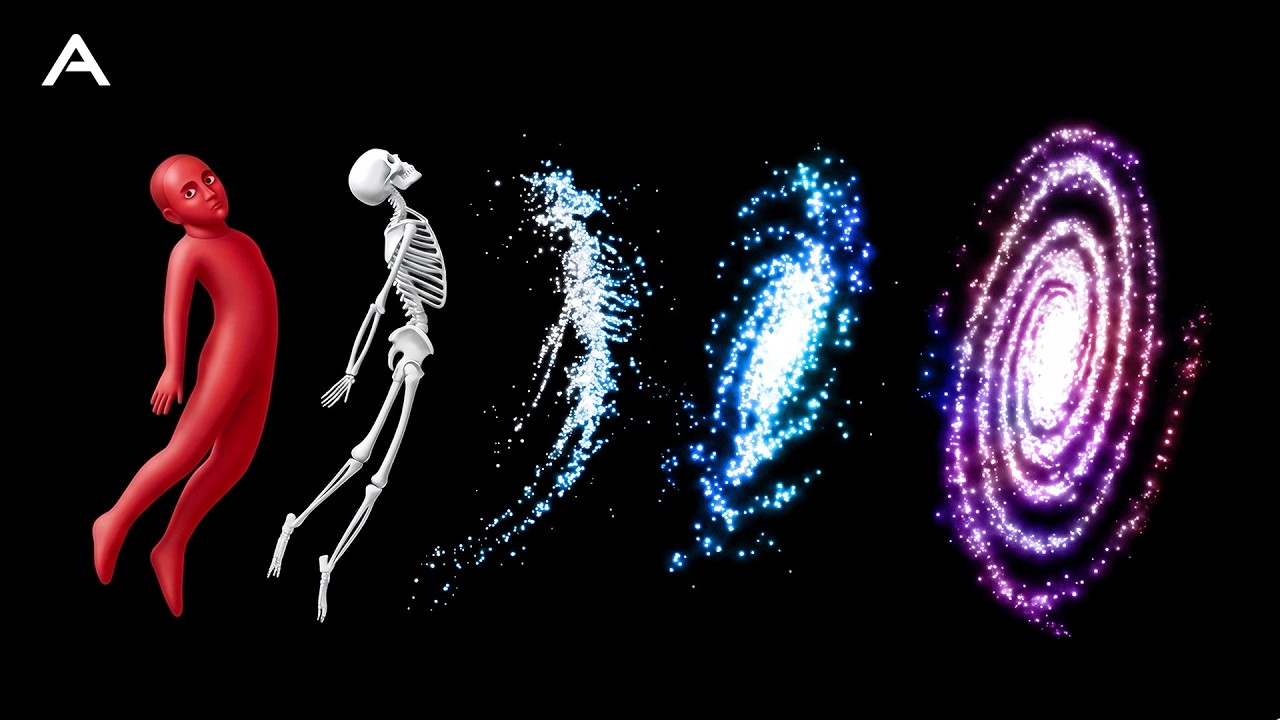
At a glance
A forty two minute narrated essay with one argument, pursued without a single detour: the compulsion to vanish that you have been treating as a symptom is actually the healthiest signal your psyche has produced in years. The video builds it in stages. First, that permanent visibility is psychologically dangerous, because the version of you that stays endlessly available is a persona that eventually stops being a mask and starts being a prison. Then, that withdrawal is a diagnostic instrument: the people who become irritated, cold, or suddenly frantic when you go quiet are not revealing affection, they are revealing that their emotional stability was partly built on your predictability. Then, that silence strips the audience away and the false self, which needs constant reinforcement to survive, begins to starve, which is when you finally meet the shadow, the buried anger and ambition and envy and exhaustion you traded away for belonging. And finally, that you come back changed, able for the first time to tell the difference between someone who wants to know you and someone who wants access to you.
This page is the whole essay rebuilt in its own order, every movement, every distinction, every uncomfortable observation, including the four comment prompts the narrator drops through it and the music stings that punctuate the delivery. A reader could skip the audio and lose only the voice. At the end there is an honest accounting of which ideas here are genuinely Carl Jung and which are the channel extending him, plus where in Jung's own writing to go if you want the primary text.
The thing nobody warns you about
The opening is a list of who failed to warn you. Not your parents. Not your closest friends. Not any self help book you have ever closed and placed on the nightstand at two in the morning. That last detail is doing real work: it establishes the reader as someone who has already tried the available answers, at an hour that implies the trying did not go well.
What nobody told you is this. One of the most psychologically dangerous things a human being can do is remain visible to everyone, always, for years, without interruption, without retreat, without silence.
The framing is deliberately inverted, because the culture warns about the opposite. It warns you about isolation. It pathologizes withdrawal. It tells you that pulling away from people is a symptom of depression, of damage, of something broken inside you that needs fixing. Jung, the narrator says, saw something different, something most people spend their entire lives never confronting: the person who never disappears, who is always reachable, always present, always performing, is often the most psychologically fractured of all.
Then the thesis in one line. Staying perpetually visible to the wrong people does not make you connected. It makes you consumed.
And the essay immediately turns to the reader's own body for corroboration, because the argument is built on recognition rather than evidence. Somewhere inside you, you already know this. You have felt it. The slow, almost imperceptible drain that begins after years of constant interaction. The moment conversations start sounding hollow. When the laughter around you feels rehearsed. When your phone buzzes and instead of reaching for it with anticipation, you feel something closer to dread.
That sensation, that quiet persistent urge to vanish, is not dysfunction. According to Jung, it may be the first genuinely honest signal your psyche has sent you in years.
Most people suppress it immediately. They call it antisocial. They push through it, reply anyway, show up anyway, perform anyway. And they lose themselves, slowly, completely, without ever understanding how it happened.
The opening closes by naming what the next forty minutes are: the story of what silence reveals, and why disappearing, truly, deliberately, unapologetically withdrawing, may be the most psychologically courageous act a modern human being can undertake.
Then, at 2:54, the first of four comment prompts: Drop 11. I am finally ready to hear my own mind. They arrive at roughly ten minute intervals for the rest of the video and function as chapter breaks, which is how this page treats them.
The noise is not traffic, it is performance
Jung believed the human mind cannot hear itself clearly when surrounded by relentless noise. But the noise in question is not traffic or crowded rooms. It is the deeper and more insidious noise of social performance: the constant hum of managing impressions, calibrating emotional availability, and maintaining the version of yourself that the people around you have come to rely upon.
The reason this noise is so hard to escape is that it does not present itself as noise. It is seductive. It feels like connection. It masquerades as relationship. Beneath the surface, though, something far more mechanical is running.
Here the essay makes its first genuinely uncomfortable claim, and it is worth stating exactly as it is delivered rather than softening it. People do not always seek your presence because they value who you are. They often seek it because of what your presence provides them. Comfort. Validation. A mirror that reflects them favorably. A predictable emotional anchor they can pull toward themselves whenever they feel unsteady.
That distinction, between being valued and being useful, is the seed of everything that follows. Nearly every later section is an application of it.
The persona: a tool that became a prison
The personality you constructed to survive constant availability has a shape, and the essay describes it precisely. The agreeable version. The endlessly patient version. The one that always had capacity for everyone else's difficulties. That construction becomes so practiced, so automatic, that it eventually drowns out the quieter voice underneath, the one that has opinions it never expressed, boundaries it never enforced, desires it quietly abandoned because the social cost of acknowledging them felt too steep.
Jung called this the persona: the mask constructed for the world. The essay is careful not to condemn it. The persona is necessary to a degree, because every human being needs the capacity to adapt to social environments. A person with no mask at all is not authentic, they are unemployable and mostly unbearable.
The failure mode is duration, not existence. When the persona becomes permanent, when it stops being a tool and starts being a prison, the real self does not simply wait patiently beneath it. It begins to suffocate.
That verb, suffocate, is the hinge of the whole video. Everything before it describes a mask. Everything after it describes something underneath the mask running out of air.
Why people keep performing
So people keep going. They reply instantly. They explain themselves constantly. They maintain friendships that already died emotionally years ago.
And the essay is emphatic that this is not because they want to. It is because they are terrified of what silence might reveal if they ever truly stopped.
What silence exposes
This is the first list in the video, and it is the most quotable passage in the first ten minutes. Silence exposes things:
- Which relationships depended entirely on your emotional accessibility. Not on shared history, not on affection, on access.
- How many people feel connected to you only when they have uninterrupted access to your attention, your energy, your time.
- Which bonds were built on genuine understanding and which were built on the quiet, unspoken agreement that you would continue to be whoever they needed you to be.
- And most uncomfortably, the version of yourself you became just to remain tolerated.
That last item is the one the essay lingers on, because it is the one that implicates you rather than other people. Most people never notice how profoundly their personality has been sculpted around keeping others comfortable, and the reason is that the process is gradual and imperceptible. It happens one small adjustment at a time. Softening an opinion here. Swallowing a frustration there. Laughing at something that did not feel funny. Agreeing with something that felt wrong.
Until the accumulated weight of all those adjustments becomes the person they recognize in the mirror.
The mechanism matters more than the moral, so it is worth drawing. No single adjustment is a betrayal. Each one is small, reasonable, and socially correct in the moment it is made. The damage is entirely in the integral.
The response to your absence is not what you expected
Then you disappear for a while, and something deeply unsettling begins to surface: the people who claim to care about you respond differently to your absence than you expected.
The essay sorts the reactions into three, and the taxonomy is the most practically useful thing in the video.
Some become irritated almost immediately. Others grow strangely cold, withdrawn in a way that mirrors your own withdrawal but carries a faint, punishing edge. And some become suddenly, almost frantically interested in you again, reaching out with an urgency they never demonstrated during your constant availability.
That third reaction is the one people misread, so the narrator names it flatly. This is not affection. This is not concern. This is the psychological discomfort of losing predictability.
| Reaction to your silence | How it presents | What the essay says it actually is |
|---|---|---|
| Irritation | Fast, almost immediate annoyance. A short reply, a comment about how you have been "weird lately." | loss of control Their ability to anticipate you has been removed and the discomfort surfaces as anger. |
| Punishing coldness | They mirror your withdrawal, but with an edge. A drop in warmth. Delayed responses that carry a message. Passive aggression cloaked in humor. | correction Emotional unavailability deployed with precision, to remind you that deviation from their expectations carries a cost. |
| Frantic re engagement | Sudden urgent interest, reaching out with an intensity they never showed while you were always there. | not affection The discomfort of losing a predictable anchor, mistaken by everyone involved for concern. |
| Quiet continuation | Nothing. They are simply still there when you come back, without a scene and without a ledger. | the real ones Revealed only at the end of the video: they never required performance as the price of their regard. |
Predictability is the currency, and you were spending yourself
Why does unpredictability hurt other people so much? Because predictable people make others feel psychologically safe. That, the essay argues, is why society subtly and consistently rewards overexplaining, emotional openness, and constant availability.
The reasoning is mechanical and it is stated without euphemism. A person who is always reachable is easier to emotionally manage. Their reactions can be anticipated. Their responses can be relied upon. Their availability can be consumed without negotiation.
So the moment you become less accessible, something shifts beneath the surface of your social world. People can no longer position themselves with certainty in relation to you. And uncertainty, particularly the uncertainty of not knowing where you stand with someone who was previously always available, activates a deeply uncomfortable psychological response in those who have unconsciously depended on your consistency.
Note the word unconsciously. It is load bearing, and it is the closest the video comes to actual Jungian method. Nobody in this description is a villain. They are running a program they cannot see.
What looks like loneliness is psychological recovery
At 9:08 the essay makes its central reframe, and this is the sentence the rest of the video defends.
Jung understood that what most people call loneliness when they withdraw is not loneliness at all. It is psychological recovery. A retreat from unconscious performance. A temporary dissolution of the false self, the version built not from authentic desire but from accumulated social survival.
The justification follows immediately. When you surround yourself with people continuously, you gradually lose the capacity to distinguish who you genuinely are from who you became in order to navigate the social world without being abandoned.
And then the part the narrator calls terrifying, the part most people never reach because they never stay quiet long enough: this erosion happens entirely beneath the threshold of conscious awareness. You do not notice it happening. You only notice the aftermath, years later, when you realize you can no longer identify what actually brings you peace, what you genuinely want, who you actually are when no one is watching and nothing is required of you.
At 10:37, the second prompt: Write 444. I trust myself enough to finally stop performing.
The guilt arrives first
Having made the case, the essay turns to what actually happens when you try it, and the first thing that happens is not peace. It is guilt.
At first, disappearing feels morally wrong. Your fingers instinctively reach for the phone. A message goes unanswered for two hours and you feel a creeping guilt that is almost physical. You rehearse explanations for your absence before anyone has even requested one. You imagine people interpreting your silence as hostility, as coldness, as evidence of some fundamental flaw in your character.
The narrator reads that reaction as data rather than as conscience. That immediate reflexive guilt reveals how completely social conditioning has restructured your nervous system.
And then the specific beliefs, named so they can be looked at. Somewhere along the way, many people absorbed a set of propositions so thoroughly that they stopped feeling like beliefs and began feeling like reality:
- That constant availability is a moral virtue.
- That replying quickly is evidence of love.
- That always being present makes you valuable.
- That disappearing, even briefly, even for your own psychological survival, makes you selfish.
Listed out like that, none of them survives inspection. That is the point of listing them.
Not the fear of losing people, the fear of being forgotten
Beneath the conditioning, the essay says, Jung believed something more disturbing hides. Most people are not afraid of losing others. They are afraid of being forgotten. Of becoming irrelevant. Of discovering that the relationships they invested years into maintaining were not nearly as substantial as they appeared, sustained in many cases by the sheer force of their own continuous effort and their relentless willingness to be available.
That is the real reason people stay reachable, and the consequences are itemized. They remain emotionally accessible long after it has begun quietly destroying them from the inside. They continue conversations they no longer find meaningful. They sustain friendships that drain rather than restore, that leave them more exhausted after spending time together than before. They laugh among people who secretly tire them.
And slowly, in the accumulation of all these small performances repeated across years, they become strangers to themselves.
Unconscious adaptation: which version is actually you
The most frightening dimension of prolonged social exposure, the essay argues, is that human beings are unconsciously adaptive creatures. Around one group you instinctively become softer. Around another, more guarded. Around others, more entertaining, more agreeable, more silent.
And the adaptation is biological, social, and entirely unconscious. There is no moment of decision to point at.
After enough time you stop being able to identify which version is actually you. You only know which version keeps people comfortable. Which version keeps the relationships intact. Which version allows you to move through your social world without friction, without conflict, without the unbearable discomfort of being genuinely misunderstood.
That last phrase deserves attention, because it names what the whole adaptive apparatus is defending against. Not rejection. Being misunderstood. Which means the apparatus is protecting a self it never actually shows anyone.
Remove the audience and the false self starves
This is where isolation becomes genuinely psychologically terrifying, because when the noise falls away there is no audience left to perform for. And without an audience, the false self begins to starve.
The essay gives the mechanism in one clean sentence. The persona, built meticulously over years of social navigation, requires constant reinforcement. It needs to be seen, reflected, validated, maintained through interaction. Remove the interaction and it begins to dissolve.
And most people, the moment they feel this dissolution beginning, run. Back to their phones. Back to meaningless exchanges. Back to the constant low grade stimulation that keeps the mind occupied and prevents it from turning inward.
Silence is confrontation
The line that follows is the single best sentence in the video, and it is the one that separates this essay from the ambient genre of calm meditation content. Silence is not peaceful in the beginning. Silence is confrontation.
In silence, things become visible that were impossible to perceive through the noise. You begin noticing that certain people only reached out when they required emotional support. That some friendships were constructed almost entirely on a shared mutual distraction from the discomfort of being alone. That you frequently violated your own boundaries, your own needs, your own sense of what felt right, simply to avoid the social consequence of disappointing someone else.
Kindness without boundaries
Then, in the middle of the confrontation section, a single sentence that functions as the essay's practical thesis. Kindness without boundaries quietly teaches people how to use you.
What follows is the most generous passage in the whole video, and it is what keeps the piece from curdling into a grievance. The most disorienting dimension of the realization is that most of the people who benefited from your unlimited accessibility were not malicious. They were simply human.
Human beings naturally gravitate toward emotional convenience. If you always listen, they will always unload. If you always forgive, they will continue crossing the same lines. If you always remain, they will assume you are permanent. Not because they are calculating, but because humans adapt with remarkable speed to whatever is consistently available to them.
That reframe changes the whole moral shape of the argument. The problem is not that you were surrounded by users. The problem is that availability is a training signal, and you were broadcasting it continuously.
Why your silence lands harder than your anger
This is precisely why your disappearance unsettles people more profoundly than your anger ever could.
The reasoning is exact. Anger still provides them with something. It keeps the engagement alive. It confirms that you still care enough to react. Silence removes all of that entirely, and it forces the people around you into an uncertainty they are not accustomed to experiencing in relation to you.
Suddenly they begin wondering. Did something change? Are they pulling away? Did I do something wrong?
But what truly disturbs them, the narrator says, is not your physical absence. It is the emerging realization that your interior world, your thoughts, your attention, your emotional life, may be continuing, even flourishing, without them positioned at the center of it.
Emotional possession is not connection
People frequently confuse emotional possession with genuine connection. They believe that frequent access signifies intimacy, that constant communication represents loyalty, that an immediate reply means love.
The counterexample is offered without elaboration and does not need any. Some of the most profound psychological bonds in human experience exist in silence, without performance, without maintenance, without the constant exchange of reassurance that signals the relationship is still intact.
And when you disappear for a while, you begin, perhaps for the first time, to separate authentic connection from psychological dependency. That distinction changes everything, because once you have seen it clearly you cannot unsee it.
Distance removes the haze
Distance does something terrifying to human perception: it removes the emotional haze that constant exposure creates. Patterns begin emerging that were concealed in plain sight the entire time.
You notice who only contacted you out of restlessness or boredom. Who quietly competed with you, subtly undermining your confidence while presenting a surface of genuine support.
And most disturbingly, you begin noticing with uncomfortable precision how frequently people punished you emotionally the moment you stopped behaving in the way they had come to expect. Not openly, not with honest communication. Psychologically. A drop in warmth. Delayed responses carrying a faint edge. Passive aggression cloaked in humor. Subtle emotional unavailability deployed with precision to remind you that deviation from their expectations carries a cost.
Relational control and the structure that trembles
The human mind is extraordinarily sensitive to shifts in relational control. When someone becomes less accessible, less readable, less emotionally predictable, the people most accustomed to that person's consistency feel it immediately. Not as a conscious observation, but as a visceral discomfort they cannot fully articulate.
Then the image the section is built to deliver. Their emotional stability, without their awareness, was partially constructed on the foundation of your predictability. And when that foundation begins to shift, the entire structure above it trembles.
At 20:48, the third prompt: Drop 77 77. I am releasing every version of myself that was built for someone else's comfort.
Your boundaries force other people into their own confrontation
Jung understood that much of human interaction operates beneath the threshold of consciousness. People rarely have accurate insight into the true motivations behind their emotional reactions. They experience the reaction, the irritation, the sudden coldness, the inexplicable sense of threat, without understanding what produced it.
That is why some individuals become disproportionately unsettled when you begin protecting your own psychological space. Your boundaries do not just affect them externally. They force them into an internal confrontation they were actively avoiding through you.
And then three portraits, each of which will be recognizable to anyone who has actually done this:
- The friend who has organized their sense of importance around being constantly needed. Remove the need and you have removed their function.
- The person who relies on your attention to escape the discomfort of their own interior silence. You were not a friend, you were a distraction with a name.
- The one who has mistaken emotional dependency for closeness, because authentic intimacy, the kind that requires genuine vulnerability, has always felt too dangerous.
Your silence exposes all of it with a precision that words could never achieve, the narrator says, because silence has a particular way of surfacing truths that language was actively concealing.
That is a sharper claim than it first appears. Language is the medium in which the persona operates. An explanation, an apology, a clarifying text, all of them are moves inside the game. Silence does not argue with the game, it stops supplying it.
They knew the version of you that was always available
Sometimes you realize, slowly and then all at once, that the people around you never truly knew you. They knew the version of you that was endlessly available. The version that tolerated everything. The version that consistently sacrificed internal equilibrium to maintain external harmony. The version that absorbed rather than expressed, that accommodated rather than asserted.
Once that version disappears, relationships begin malfunctioning. The word is well chosen: not ending, malfunctioning, the way a machine does when a part is removed.
Roles, not relationships
The reason they malfunction is that many social bonds are quietly, almost invisibly constructed on roles rather than authentic understanding. The essay names three:
- The therapist. Always available to absorb and process the emotional weight of others.
- The entertainer. Responsible for keeping energy elevated and the atmosphere pleasant.
- The emotional caretaker. Whose function is to sense and respond to the needs of everyone in the room before those needs are even articulated.
And the moment someone stops performing their assigned role, people become uncomfortable in a way they cannot quite name. Almost offended. As though individuality itself, the simple act of no longer being who they needed you to be, constitutes a form of betrayal.
Relationships end when awareness arrives
Then the line that reframes every breakup you have ever had. Most relationships do not end when respect dissolves. They end when awareness arrives, because awareness transforms your tolerance.
The consequences follow as a short list of things that stop. You stop romanticizing emotional imbalance. You stop rationalizing manipulative patterns. You stop investing energy in people who only recognize your value when you are easy to access.
Note that nothing in that list is a decision to leave anyone. It is a change in what you are willing to metabolize, and the leaving happens on its own afterward.
The calm detached view of human nature
Strangely and paradoxically, the more genuinely comfortable you become with solitude, the more clearly you begin to perceive human nature. The essay is careful about the register here: not through bitterness, not through suspicion, but through a kind of calm detached understanding that was impossible to access while you were still submerged in the noise.
What you begin recognizing is that many people are not emotionally connected to others in the way they believe themselves to be. They are connected through unconscious need, through the specific psychological functions other people serve for them. Validation. Attention. Security. Distraction from the discomfort of being alone with their own thoughts.
Once you perceive this clearly, ordinary conversations begin carrying an almost surreal quality, because beneath the surface of casual interaction you start sensing the invisible psychological negotiations constantly in motion between people. Who is seeking approval. Who is maneuvering for dominance. Who fears abandonment and disguises that fear as indifference. Who harbors quiet resentment beneath a surface of warmth and accommodation.
Most people never perceive these things, the narrator says, because they never remain still and silent long enough to observe them.
Modern life is engineered against stillness
Which leads to the one structural claim in the video about the world rather than the psyche. You begin understanding how thoroughly modern life is structured to keep people psychologically occupied at all times. Constant messages, constant updates, constant stimulation, an unrelenting stream of noise preventing anyone from sitting alone long enough to confront what waits beneath the surface.
And that confrontation is precisely what Jung believed most people spend the entirety of their lives evading.
The shadow
Here the essay reaches the concept the whole thing has been building toward, and its definition is unusually good, because it refuses the melodrama the word usually attracts.
Beneath the social personality, beneath the carefully maintained image, beneath the performance that has become so practiced it feels like identity, something far less comfortable waits. The shadow. Not evil. Not darkness in any dramatic sense. Simply rejected. The fragments of yourself you learned to bury in order to remain accepted.
The inventory it gives is specific:
- Your anger.
- Your fierce ambition.
- Your quiet envy.
- Your exhaustion.
- Your desire to simply vanish from everyone and everything without the obligation of an explanation.
And then the verdict, which is the moral center of the video. These are not pathological impulses. They are the most honest parts of the self. They were buried not because they were wrong, but because the social world required their absence as the price of belonging.
That is a genuinely Jungian move and it is worth flagging as the place the video is most faithful to its source. In Jung's own writing the shadow is not the sum of your sins, it is the sum of what did not fit the persona. It contains vitality as often as it contains cruelty, which is exactly why he described integrating it as a gain rather than a cleanup.
Suppression reroutes, it does not erase
Suppression does not erase anything psychologically. It reroutes it. It drives it deeper into the unconscious, where it continues operating without your awareness, shaping behavior and generating reactions you cannot trace to their source.
And this, the essay says, is why:
- People who have spent years being agreeable suddenly fracture without warning.
- Individuals become emotionally numb without being able to identify when or how the numbness began.
- Someone wakes up one morning feeling profoundly disconnected from a life they constructed with considerable effort and intention.
The shadow was ignored too long, and silence forces you to meet it.
Meeting yourself: the kindness that was fear
This is the stage where disappearing becomes genuinely, uncomfortably transformative, because eventually there is no one left to redirect your attention toward. No distractions. No ambient noise of relationship maintenance and social performance. No constant conversations filling the space where your own thoughts would otherwise emerge.
Only you and the parts of yourself you have spent years carefully avoiding.
And what you notice with uncomfortable clarity is a set of substitutions you never consented to:
- How frequently your kindness was driven not by genuine generosity but by fear. Fear of disapproval, of conflict, of being perceived as cold or selfish.
- How many of your relationships were sustained not by authentic affection but by guilt.
- How much of your personality, the patient version, the agreeable version, was constructed not from who you are but from who the people around you needed you to be.
Personality as adaptation
Deep solitude reveals something more difficult still. Large portions of what felt like personality were adaptations. Social survival strategies rehearsed so consistently for so long that they stopped feeling like strategies and began feeling like self.
The endlessly patient version. The emotionally available version. The one who could always find a way to stay, to forgive, to absorb, to remain.
Masks. Functional masks, the narrator concedes, but masks nonetheless.
And once you become genuinely conscious of them, social interaction changes in ways that cannot be undone. You begin perceiving the subtle manipulation concealed within ordinary conversations. People testing boundaries to locate their edges. Seeking reassurance through indirect means. Working, without knowing they are working, to maintain emotional control over how they are perceived and how they are responded to.
Jung's caution: the darkness you only see in others
Then, at 31:28, the essay does the single most important thing it does, which is turn the lens around before the reader gets too comfortable with their new X ray vision.
Jung cautioned that people who perceive darkness only in others remain unconscious of their own shadow. True psychological awareness does not begin when you see the patterns in those around you. It begins when you recognize the same patterns operating within yourself.
And the list that follows is the video's proof that it is not simply flattering the viewer:
- The hunger for validation.
- The desire to be admired, to be missed, to be valued.
- The quiet satisfaction when someone who ignored you suddenly notices your absence.
None of this makes you broken, the narrator says. It makes you human. Genuinely, honestly human, rather than the curated, carefully managed version most people present to the world and to themselves.
This is the paragraph that keeps the whole essay honest. Everything before it could be read as permission to look down on the people in your life. This says the withdrawal is worthless if the only shadow it reveals belongs to someone else.
Unconscious patterns become fate
Jung believed that until a person becomes conscious of their unconscious patterns, those patterns will govern their life entirely, and they will experience that governance not as compulsion but as fate.
Which, the essay says, is precisely what occurs in most human relationships. Emotional cycles repeating across years, across decades, across entirely different people and contexts, because the underlying pattern was never examined:
- The one who perpetually pursues emotionally unavailable people.
- The one who confuses being needed with being loved.
- The one who continues sacrificing themselves in relationship after relationship, convinced that if they give enough for long enough, the loyalty they have been offering will eventually be reciprocated.
Patterns, not destiny. And solitude exposes these patterns with a directness that is almost brutal.
Withdrawal symptoms
The word withdrawal gets used in both senses here, and the pun is deliberate. When you withdraw from everyone for a period of genuine duration, withdrawal symptoms emerge:
- You reach for your phone without any specific purpose.
- You find yourself imagining conversations that never occurred.
- You wonder who has noticed your absence.
And this is when you recognize what the narrator calls possibly the most important insight of the entire process. Constant communication was not always connection. Sometimes it was dependency. A loop of emotional stimulation sustaining the mind and keeping the deeper discomfort at bay.
This is why genuine solitude feels unbearable to so many people. In silence there are no external interruptions shielding you from the contents of your own mind. No validation. No performance. No audience. Only the awareness that you have perhaps been running for a very long time from a confrontation that has been waiting patiently at the center of yourself.
At 34:57, the fourth and final prompt: Comment 333. I am whole. I am complete. I am finally free to become myself.
The return
Eventually you return. Not dramatically, without announcement. Most people will not register the exact moment it happens, but you will notice it, because something inside you no longer moves in the way it used to.
The changes are given as three specific losses of grip:
- The old hunger for constant validation has quieted.
- The compulsion to have every message answered immediately has loosened.
- The sense of responsibility for maintaining every relationship regardless of what it costs you has begun to lift.
And for the first time, perhaps, you understand the distinction the whole video has been circling.
Loneliness and solitude
Loneliness is the pain of being invisible to others. Solitude is the profound, almost sacred peace of finally being visible to yourself.
Most people never arrive at that distinction. They spend their lives running from silence, because silence removes the witnesses their identity depends upon. Without the constant reflection of other people's attention, they no longer know who they are. Remove the audience and the performance stops, and with it the only sense of self they have ever known.
That is the clearest statement of what is genuinely at stake in the video. The fear of solitude is not a fear of being alone. It is a fear that the self was never anything but a reflection, and that with no one there to reflect it, there will be nothing in the room.
| The test | What it looks like from the inside | What withdrawal reveals |
|---|---|---|
| Loneliness vs solitude | Both are the same physical situation: nobody around, nothing required of you. | loneliness the pain of being invisible to others. solitude the peace of finally being visible to yourself. |
| Connection vs dependency | Both feel like closeness. Frequent access, constant communication, immediate replies. | dependency a loop of stimulation that keeps the deeper discomfort at bay. connection survives silence, because it never needed maintenance to prove it was intact. |
| Missing you vs missing the feeling | Both sound identical when spoken: "I miss you." | the feeling the security, the confirmation of their own significance, the function you performed. you the person, not the access. |
| Knowing you vs accessing you | Both produce a long history of contact and a real sense of familiarity. | access stops making the effort the moment convenience is withdrawn. knowing remains, quietly, without demanding performance as the price of regard. |
When access disappears, reality surfaces
This section is the payoff of the whole exercise, and it is delivered without any triumph in the voice.
The people who only reached out when they needed emotional labor quietly ceased to reach out. The ones who claimed connection but maintained it only through the convenience of your constant availability gradually stopped making the effort that genuine connection actually requires.
And the ones who truly valued you, not the accessible version, not the functional version, not the version that served a particular psychological purpose, they remain. Quietly. Without demanding performance as the price of their regard.
That recognition, the narrator says, reorganizes the architecture of your relationships permanently. You become more deliberate. Not from ego, from the clarity that comes when you have finally seen how many of your interactions were organized around unconscious emotional exchange rather than genuine understanding.
Some people love the access, not the person
You begin recognizing that some people love the sensation of access more than they love the person they are accessing. That many people who tell you they miss you are not missing you. They are missing the feeling your presence produced in them. The security. The confirmation of their own significance. The specific emotional function you performed in their lives.
There is a difference, the narrator says, a painful one to recognize, but an important one.
Becoming yourself is almost violent
Carl Jung believed the great privilege of a human life is becoming who you truly are. What most people fail to understand is how psychologically demanding, how almost violent, that process genuinely is.
The reason it is violent is stated directly and it is the best sentence of the closing movement. Becoming yourself requires dismantling the versions of yourself that were constructed to keep others comfortable. The agreeable version. The infinitely patient version. The version terrified of disappointing anyone, of being misunderstood, of being left.
And not everyone will be comfortable with what emerges. Some people were attached not to you but to their ability to influence and predict you. The moment that predictability becomes unavailable, the relationship reveals its actual foundation.
Then the image the whole essay has been earning. Some foundations, seen clearly, cannot support the weight of what was built upon them.
Silence does not create this. It only illuminates it. And once something has been genuinely seen, once the pattern has been perceived with the clarity that only solitude can produce, it cannot be unseen.
You carry the perception back with you
You carry that perception back when you return. It changes the way you listen, the way you choose, the way you recognize in the first moments of interaction the difference between someone who wants to know you and someone who simply wants access to you.
That distinction, the narrator says, is everything.
The closing instruction
The final movement addresses the viewer directly and softens the register for the first time in forty minutes.
If you have ever felt the quiet persistent pull toward disappearing, not from despair but from exhaustion, from the accumulated weight of constant performance, from the simple profound need to hear your own thinking without the noise of everyone else's needs drowning it out, then you already understand what Jung spent a lifetime trying to articulate.
The self cannot be found in the crowd. It cannot be recovered through more connection, more communication, more contact. It waits in the silence you have been running from. And it has been waiting patiently through every performance, every accommodation, every small and quiet sacrifice of authenticity, for the moment you finally become still enough to hear it.
Then the instruction the title promised, and the guardrails on it, which matter as much as the instruction:
Disappear for a while. Not forever. Not dramatically. Not to punish anyone or prove anything to anyone. Simply to remember who was there before the world taught you to be someone else.
Four qualifications in one breath. Not forever, so this is a retreat and not an exit. Not dramatically, so no announcement post. Not to punish and not to prove, which rules out the two most common reasons anyone actually goes quiet. What is left is the only version of the practice the essay endorses: withdrawal as recovery, with a return built into it from the start.
The form: four prompts and a bed of music
Worth naming, because it is part of what watching this is actually like. The video is a single continuous narration over ambient music, with the music swelling into short stings at emotional beats, and it is punctuated four times by a direct address asking the viewer to post a number and an affirmation in the comments:
- 2:54 · Drop 11. I am finally ready to hear my own mind.
- 10:37 · Write 444. I trust myself enough to finally stop performing.
- 20:48 · Drop 77 77. I am releasing every version of myself that was built for someone else's comfort.
- 34:57 · Comment 333. I am whole. I am complete. I am finally free to become myself.
These are engagement mechanics, and the numbers carry the numerology flavor common to the genre. They are also, structurally, the only chapter markers the video has, arriving at roughly ten minute intervals and each landing at the end of a completed movement. There is a small irony in an essay about refusing to perform for an audience pausing four times to ask its audience to perform, and it is worth noticing rather than pretending away.
Where it stands: what is Jung and what is the channel
The essay is built out of Jungian vocabulary used mostly correctly, with one important thing it does not do: it never quotes Jung. Not once in forty two minutes is there a citation, a work, a date, or a verbatim line. Every attribution is of the form "Jung believed" or "Jung understood." So it is worth separating the layers.
| Claim in the video | Standing | Where it actually comes from |
|---|---|---|
| The persona is a mask for the world, useful in moderation, damaging when permanent | core Jung | Jung's own definition, from Two Essays on Analytical Psychology (CW 7) and The Archetypes and the Collective Unconscious (CW 9i): a mask designed to make a definite impression on others while concealing the true nature of the individual. The danger of identifying with it is Jung's, not the channel's. |
| The shadow is not evil, it is the rejected | core Jung | Faithful. In Psychology and Religion (CW 11) Jung writes that everyone carries a shadow, and the less it is embodied in conscious life, the blacker and denser it is. The video's inventory of buried vitality (ambition, anger, exhaustion) is a fair reading. |
| Unexamined patterns govern your life and you will call it fate | core Jung, loosely worded | The closest documented original is in Aion (CW 9ii): when an inner situation is not made conscious, it appears outside as fate. The popular one line version the video uses is a paraphrase that circulates without a source. |
| Seeing darkness only in others means you are unconscious of your own shadow | core Jung | This is the projection mechanism, which is central to Jung's clinical writing and to Aion. It is the video's most important paragraph and its most faithful one. |
| Becoming who you truly are is the great privilege of a human life | attributed, not sourced | The idea is individuation and it is unmistakably Jung's. The sentence itself is most reliably traced to Joseph Campbell and circulates widely under Jung's name. Treat the concept as Jung and the phrasing as folklore. |
| Withdrawal is psychological recovery rather than pathology | extension | Jung valued solitude enormously and lived it, but the specific modern claim, that going unreachable is a diagnostic instrument for sorting your relationships, is the channel's construction on a Jungian frame. It is a good construction. It is not in the Collected Works. |
| People punish you psychologically for becoming unpredictable | assertion | Presented as observation, not evidence. It maps loosely onto attachment and social exchange research in modern psychology, but the video offers no study, no experiment, and no citation for any of it. Take it as a hypothesis you can test on your own life rather than a finding. |
The honest verdict is that this is a well made piece of Jungian pop philosophy: the concepts are used correctly, the moral turn near the end is genuinely Jungian, and the central practical claim, that availability is a training signal and silence is the only way to read what your relationships actually run on, is worth more than most of what the genre produces. What it is not is scholarship. There are no sources, no studies, and no verbatim Jung, and the strongest empirical sounding claims (the three reaction types, the punishment patterns) are assertions the narrator makes with total confidence and zero evidence.
If you want the real Jung on this
The strongest argument for the video's thesis is one it never makes, which is that Jung did exactly this himself, twice, and documented both.
- The confrontation with the unconscious, 1913 to 1917. After the break with Sigmund Freud, Jung resigned his lectureship at the University of Zurich, withdrew from professional life, and spent years deliberately descending into his own imagery. The record of it is The Red Book (Liber Novus), unpublished until 2009. This is the primary document of a deliberate disappearance, and everything in the video about the shadow surfacing when the audience is removed is a description of what happened to him during it.
- The Tower at Bollingen, from 1923 onward. Jung built a stone tower on the upper lake of Zurich and went there to be unreachable. No electricity. Water pumped by hand. He chopped his own wood and cooked his own food, and he described feeling most deeply himself there. The chapter called The Tower in Memories, Dreams, Reflections is, functionally, this video's thesis written by Jung in the first person, with a building attached.
- On the shadow and the work of making it conscious, the primary texts are Psychology and Religion: West and East (CW 11) and Aion: Researches into the Phenomenology of the Self (CW 9ii). The line most worth carrying out of them, from the essay on the philosophical tree in Alchemical Studies (CW 13): one does not become enlightened by imagining figures of light, but by making the darkness conscious.
- On the persona and identifying with it, go to Two Essays on Analytical Psychology (CW 7), which is also the standard first Jung to read if you have never read any.
If you want the version of this material with an actual scholar in the room, the Curt Jaimungal conversation with Becca Tarnas on Jung and Tolkien covers the Red Book period, active imagination as a practice, and the line between gnosis and psychosis, which is the risk this video's prescription never mentions. And for the same channel working the individuation material from the other direction, as a morning practice rather than a withdrawal, there is This Will Find You Right Before the BEST CHAPTER of Your Life Begins.
The one caution the video never gives
Worth saying plainly, because the essay does not. The video's entire diagnostic rests on the claim that the urge to withdraw is a healthy signal rather than a symptom. Sometimes it is. Sometimes it is not, and social withdrawal is also a well documented feature of depression, which the narrator names in the opening only to dismiss it as the culture's mistake.
The distinction the video draws, and it is a real one, is exhaustion versus despair: withdrawing because you need to hear your own thinking is not the same as withdrawing because nothing feels worth doing. The essay itself insists on "not forever" and on a return. If the pull is toward vanishing permanently rather than recovering, that is the version of this the video is explicitly not describing, and it is the version worth talking to someone about.
Key takeaways
- Permanent visibility is the risk the culture never warns about. Isolation gets pathologized. Being always reachable, always performing, for years, does not.
- The persona is a tool, not a crime. The failure mode is duration. When the mask becomes permanent, the self underneath does not wait patiently, it suffocates.
- Availability is a training signal. If you always listen, people will always unload. Not because they are calculating, but because humans adapt with remarkable speed to whatever is consistently available.
- Withdrawal is a diagnostic instrument. The three reactions to your silence, irritation, punishing coldness, and frantic re engagement, are all the same thing: the discomfort of losing a predictable anchor, which is routinely mistaken by everyone involved for concern.
- Their stability was partly built on your predictability. When that foundation shifts, the structure above it trembles, and that trembling is what you are actually observing when someone reacts badly to your boundaries.
- Silence is confrontation before it is peace. Guilt first, withdrawal symptoms second, dissolution of the false self third. Most people quit at the third stage, which is why they never reach clarity.
- The shadow is not evil, it is rejected. Anger, ambition, envy, exhaustion, and the desire to vanish were buried not because they were wrong, but because the social world charged their absence as the price of belonging.
- Suppression reroutes, it does not erase. What goes under the line keeps running, and it comes back as effects with no traceable cause: the sudden fracture, the numbness with no start date, the morning of feeling disconnected from a life you built on purpose.
- The lens has to turn around or the whole exercise is worthless. Seeing darkness only in others means you are still unconscious of your own shadow. The hunger for validation and the quiet satisfaction when someone notices your absence are yours too.
- Loneliness is the pain of being invisible to others. Solitude is the peace of being visible to yourself. That single distinction is what the forty two minutes is built to deliver.
- The instruction has guardrails. Not forever, not dramatically, not to punish, not to prove. Withdrawal with a return built into it, or it is something else.
Chapters
The video ships with no creator chapters, so these are derived from position in the transcript at a constant speaking rate of about 103 words per minute across the 41:59 runtime. Expect a few seconds of drift, more toward the end.
- 0:00 Nobody warns you about staying permanently visible
- 0:42 Visible to the wrong people does not make you connected, it makes you consumed
- 1:20 The urge to vanish is not dysfunction, it is a signal
- 2:54 Drop 11: the first comment prompt
- 3:00 The noise is not traffic, it is social performance
- 3:50 People seek what your presence provides, not always who you are
- 4:20 The agreeable version drowns out the voice underneath
- 4:53 The persona: a tool that becomes a prison
- 5:26 Why people keep performing: fear of what silence reveals
- 5:45 What silence exposes about your relationships
- 6:35 Sculpted one small adjustment at a time
- 7:15 You disappear, and the responses are not what you expected
- 7:56 Not affection, not concern, the discomfort of losing predictability
- 8:20 Why society rewards constant availability
- 9:08 What looks like loneliness is psychological recovery
- 9:45 The erosion happens below conscious awareness
- 10:37 Write 444: the second comment prompt
- 10:45 At first, disappearing feels morally wrong
- 11:20 The four beliefs that stopped feeling like beliefs
- 12:03 Not the fear of losing people, the fear of being forgotten
- 12:45 Conversations you no longer find meaningful, friendships that drain
- 13:19 Unconscious adaptation: which version is actually you
- 14:13 Remove the audience and the false self starves
- 14:45 The run back to the phone
- 15:10 Silence is not peaceful, silence is confrontation
- 15:59 Kindness without boundaries teaches people how to use you
- 16:20 They were not malicious, they were human
- 16:52 Why your silence unsettles people more than your anger
- 17:40 What disturbs them is that your interior world continues without them
- 18:00 Emotional possession is not connection
- 18:54 Distance removes the haze and the patterns appear
- 19:30 The punishment nobody says out loud
- 20:05 Their stability was built on your predictability
- 20:48 Drop 77 77: the third comment prompt
- 20:59 Your boundaries force them into their own confrontation
- 21:47 The friend organized around being needed
- 22:33 They knew the version of you that was always available
- 23:20 Roles, not relationships: therapist, entertainer, caretaker
- 24:16 Relationships end when awareness arrives, not when respect dies
- 24:41 The calm detached view of human nature
- 25:37 The invisible negotiations inside ordinary conversation
- 26:23 Modern life is engineered to keep you occupied
- 27:12 The shadow: not evil, simply rejected
- 27:50 Anger, ambition, envy, exhaustion, the urge to vanish
- 28:02 Suppression reroutes, it does not erase
- 28:49 The stage where disappearing becomes transformative
- 29:31 The kindness that was fear, the relationships sustained by guilt
- 30:14 Personality as adaptation: functional masks
- 31:03 Seeing the manipulation inside ordinary conversation
- 31:28 Jung's caution: the darkness you only see in others
- 32:00 The hunger for validation is yours too
- 32:25 Unconscious patterns govern your life and you call it fate
- 32:59 The repeating patterns across years and different people
- 33:27 Withdrawal symptoms: reaching for the phone with no purpose
- 34:07 Constant communication was not always connection
- 34:22 Why genuine solitude feels unbearable
- 34:57 Comment 333: the fourth comment prompt
- 35:08 Eventually you return, without announcement
- 35:58 Loneliness versus solitude
- 36:20 They run from silence because it removes the witnesses
- 36:43 When access disappears, reality surfaces
- 37:31 The architecture of your relationships reorganizes
- 37:55 Some people love the access more than the person
- 38:37 The great privilege: becoming who you truly are
- 39:17 Not everyone will be comfortable with what emerges
- 39:46 Silence does not create it, it illuminates it
- 40:06 You carry the perception back with you
- 40:34 If you have ever felt the pull
- 41:07 The self cannot be found in the crowd
- 41:40 Disappear for a while, not forever
Notable quotes
All from the narrator of Carl Jung Philosophy. Captions are auto generated, so punctuation and paragraphing are restored here, wording is not.
Nobody tells you that one of the most psychologically dangerous things a human being can do is remain visible to everyone, always, for years, without interruption, without retreat, without silence. narrator, 0:21
Staying perpetually visible to the wrong people does not make you connected. It makes you consumed. narrator, 0:42
That sensation, that quiet, persistent urge to vanish, is not dysfunction. According to Jung, it may be the first genuinely honest signal your psyche has sent you in years. narrator, 1:20
People do not always seek your presence because they value who you are. They often seek it because of what your presence provides them. narrator, 3:50
When the persona becomes permanent, when it stops being a tool and starts being a prison, the real self does not simply wait patiently beneath it. It begins to suffocate. narrator, 4:53
This is not affection. This is not concern. This is the psychological discomfort of losing predictability. narrator, 7:56
What most people call loneliness when they withdraw is not loneliness at all. It is psychological recovery. narrator, 9:08
Because silence is not peaceful in the beginning. Silence is confrontation. narrator, 15:10
Kindness without boundaries quietly teaches people how to use you. narrator, 15:59
That is precisely why your disappearance unsettles people more profoundly than your anger ever could. Anger still provides them with something. It keeps the engagement alive. narrator, 16:52
Their emotional stability, without their awareness, was partially constructed on the foundation of your predictability. And when that foundation begins to shift, the entire structure above it trembles. narrator, 20:05
Most relationships do not end when respect dissolves. They end when awareness arrives, because awareness transforms your tolerance. narrator, 24:16
The shadow. Not evil, not darkness in any dramatic sense, simply rejected, the fragments of yourself you learned to bury in order to remain accepted. narrator, 27:12
Jung cautioned that people who perceive darkness only in others remain unconscious of their own shadow. narrator, 31:28
Jung believed that until a person becomes conscious of their unconscious patterns, those patterns will govern their life entirely, and they will experience that governance not as compulsion but as fate. narrator, 32:25
Constant communication was not always connection. Sometimes it was dependency. narrator, 34:07
Loneliness is the pain of being invisible to others. Solitude is the profound, almost sacred peace of finally being visible to yourself. narrator, 35:58
Some people love the sensation of access more than they love the person they are accessing. narrator, 37:55
Carl Jung believed the great privilege of a human life is becoming who you truly are. What most people fail to understand is how psychologically demanding, how almost violent, that process genuinely is. narrator, 38:37
Some foundations, seen clearly, cannot support the weight of what was built upon them. narrator, 39:17
The self cannot be found in the crowd. narrator, 41:07
Disappear for a while. Not forever, not dramatically, not to punish anyone or prove anything to anyone. Simply to remember who was there before the world taught you to be someone else. narrator, 41:40
Resources mentioned
The video cites nothing on screen and names no book, so this list is the primary material behind the ideas it uses, plus the channel itself. Everything here is linked.
The source
- You Need to Disappear for a While | Carl Jung, the video this page rebuilds.
- Carl Jung Philosophy, the channel.
The people
- Carl Gustav Jung, 1875 to 1961, Swiss psychiatrist, founder of analytical psychology, the source of every concept in the video.
- Sigmund Freud, whose break with Jung in 1913 triggered the withdrawal that produced the Red Book.
- Joseph Campbell, the most likely origin of the "privilege of a lifetime" line the video attributes to Jung.
The concepts, in the order the video uses them
- The persona, the mask constructed for the social world.
- The shadow, everything rejected to remain acceptable.
- Psychological projection, the mechanism behind seeing darkness only in others.
- The unconscious and the collective unconscious.
- The Self, the center the whole process moves toward.
- Individuation, becoming who you actually are, the video's closing thesis.
- Active imagination, Jung's actual method for doing this work in solitude, which the video never mentions.
Jung's own writing
- Memories, Dreams, Reflections, the autobiography, and specifically the chapter on the Tower.
- The Red Book (Liber Novus), the record of his own deliberate disappearance, 1913 to 1917.
- Two Essays on Analytical Psychology, Collected Works volume 7, where the persona is defined.
- The Archetypes and the Collective Unconscious, Collected Works volume 9i.
- Aion: Researches into the Phenomenology of the Self, Collected Works volume 9ii, the source of the inner situation that appears outside as fate.
- Psychology and Religion: West and East, Collected Works volume 11, on the shadow growing denser the less it is lived.
- Alchemical Studies, Collected Works volume 13, containing the line about making the darkness conscious.
- The Collected Works of C. G. Jung, the full twenty volume set, for orientation.
Places
- The Bollingen Tower, the stone retreat on Lake Zurich that Jung built to be unreachable in.
Related pages here
- Did Jung and Tolkien Enter the Same World?, Becca Tarnas on the Red Book, active imagination, and the line between gnosis and psychosis.
- This Will Find You Right Before the BEST CHAPTER of Your Life Begins, the same channel on individuation and the nigredo.