youtube.nixfred.com nixfred.com
Creator

Veritasium

10videos

← All videos

41:30
Veritasium

If Prime Numbers Become Increasingly Rare, Then Why Do They Keep Showing Up In Pairs?

Veritasium tells the full story of the twin prime conjecture, the 2000 year old claim that prime pairs two apart like 11 and 13 never run out even as primes thin away. It walks both lines of attack: Viggo Brun adapting the sieve of Eratosthenes into a war of main term against error term, and the bounded gap program that hit a 'one half barrier' everyone believed was a wall. The hero is Yitang Zhang, a former Subway bookkeeper who in isolation pushed past that barrier by one part in 584 and proved infinitely many prime pairs sit within 70 million of each other. James Maynard and Terence Tao's Polymath collaboration then showed the half barrier was a mirage and drove the gap to 246, where it stands today.

SciencePhilosophyJun 14, 2026
29:54
Veritasium

Google Maps is unreasonably fast. Let me explain

Veritasium, with the animation channel 2swap, rebuilds the chain of algorithms that lets Google Maps route across a 64 million intersection continent in seconds when brute force would take longer than the age of the universe. It starts with Edsger Dijkstra inventing his shortest path algorithm in 20 minutes over coffee in Amsterdam in 1956, then climbs through breadth first search, Dijkstra's cheapest cost first method, A star with a straight line distance heuristic, bidirectional search, and the manual road hierarchies of 1990s GPS units. The payoff is contraction hierarchies, which rank every intersection by importance using graph cuts and nested dissection, add shortcut edges, and search only upward to hit roughly 200 microseconds on North America, about 35,000 times faster than Dijkstra. The throughline is that every modern routing method still has Dijkstra's 70 year old algorithm at its core.

ScienceDevOpsNetworkingMay 30, 2026
21:18
Veritasium

The CIA's new tech doesn't make sense

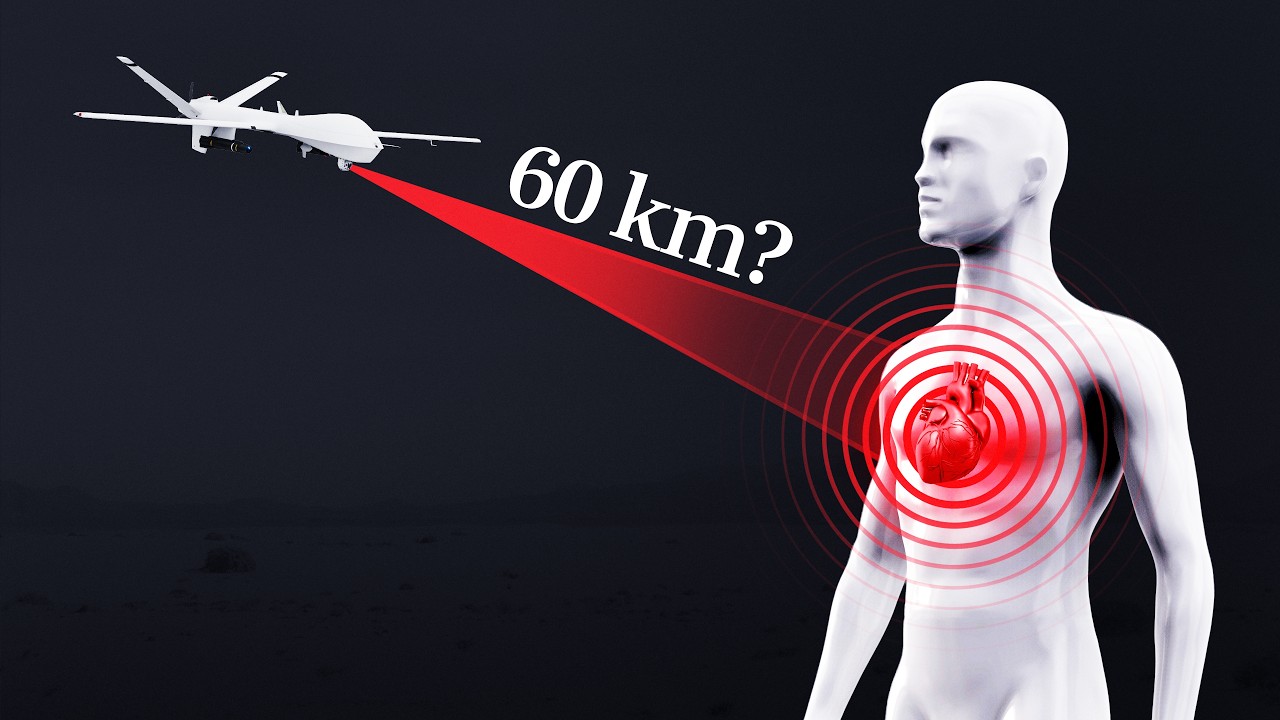
A New York Post story claimed the CIA pulled off something out of a Tom Clancy novel. A downed American weapon system officer was hiding, injured, deep in Iranian mountains, and the agency supposedly found him by detecting the faint magnetic field of his beating heart from kilometers away with a device they nicknamed Ghost Murmur. Veritasium takes that claim apart bit by bit. The heart really does make a magnetic field, synthetic diamonds really can sense magnetic fields at room temperature, and the CIA really does use both deception and exotic sensors. But when you run the numbers, the distance kills it.

ScienceSecurityMay 3, 2026
25:40
Veritasium

This Paradox Splits Smart People 50/50

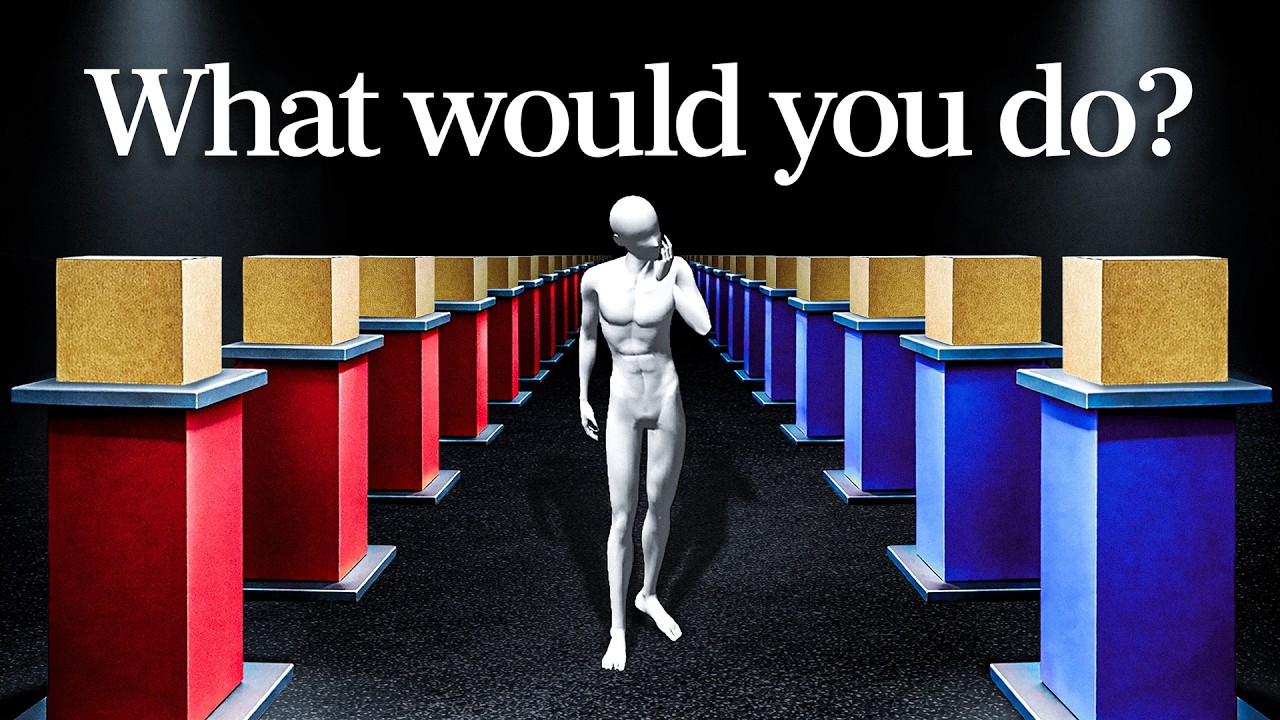
You walk into a room. Two boxes. One is open with $1,000 you can see. The other is sealed. A supercomputer that has correctly predicted thousands of people before you has already decided what is inside the sealed box: $1 million if it predicted you would take only the sealed box, nothing if it predicted you would grab both. The boxes are set. The prediction is locked. Now choose. Take both, or take only the mystery box. This is Newcomb's paradox, and the unsettling thing is not that it is hard.

SciencePhilosophyMar 9, 2026
53:00
Veritasium

The Internet Was Weeks Away From Disaster and No One Knew

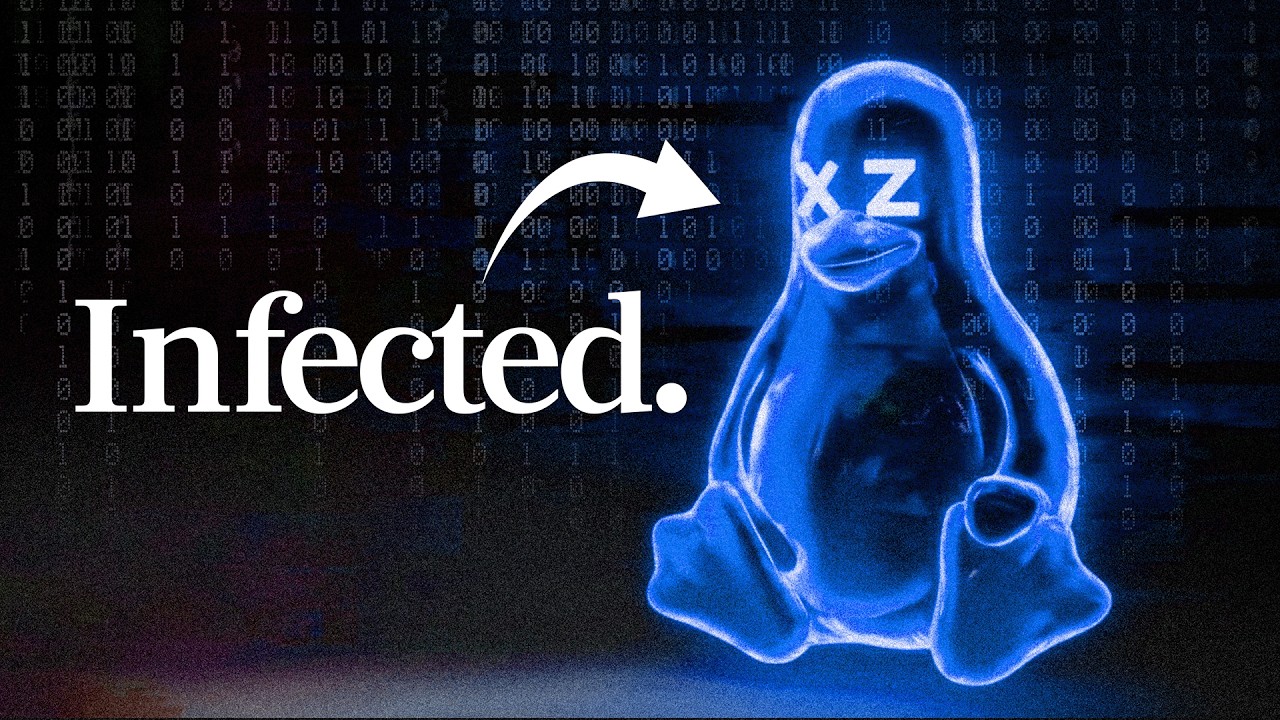
In late March 2024 the internet came within weeks of catastrophe, and almost nobody outside a small circle of engineers noticed. A patient attacker operating under the name Jia Tan spent more than two years grooming his way into a tiny, beloved data compression tool called XZ, then planted a backdoor so surgically engineered that it would have handed him a master key to OpenSSH, the lock on essentially every Linux server on Earth.

SecurityDevOpsFeb 25, 2026
54:46
Veritasium

The asbestos problem is worse than we thought

Asbestos is a rock you can weave, and that single uncanny property is the whole story. Veritasium opens with researchers crawling over bright blue mineral outside Las Vegas, picking up something that looks like fluffy cotton but will not burn, then widens out into a 55 minute investigation of how a naturally fireproof mineral became the most useful and the most lethal building material of the twentieth century. The video does three things at once. It explains the chemistry, why a silica tetrahedron makes a rock and why a tiny mismatch between two mineral layers makes that rock curl into weavable fibers.

ScienceHealthFeb 17, 2026
30:09
Veritasium

What Happens If You Keep Slowing Down?

It opens with a magic trick. A bottle, a laser, and a video of light itself crawling through the glass at 250 billion frames per second. Then the camera starts to move, sweeping across the scene faster than the light pulse it is filming, and so the camera appears to outrun light, which should be impossible. That illusion is the hook for the whole video, which sets out to do one thing three different ways: keep slowing down time until you can see what is normally invisible.

SciencePhysicsJan 19, 2026
24:01
Veritasium

Why People Are So Confident When They're Wrong

Veritasium uses rogue trader Nick Leeson, whose hidden bets sank Barings Bank for $2.8 billion, as the spine of an argument that overconfidence is the most dangerous human bias. It walks through the calibration research showing people who feel 90% sure are right only 75% of the time, debunks the famous Mount Stupid graph that everyone mistakes for the real Dunning-Kruger curve, and shows overconfidence is partly a side effect of finite working memory. The twist is that overconfidence survived evolution because it wins status and triggers reward activity in listeners' brains, even when it cannot deliver. The fix is not more knowledge but feedback, calibration, and the humility to listen hardest to people who disagree with you.

ScienceHealthBusinessNov 12, 2025
46:58
Veritasium

Exposing Why Farmers Can't Legally Replant Their Own Seeds

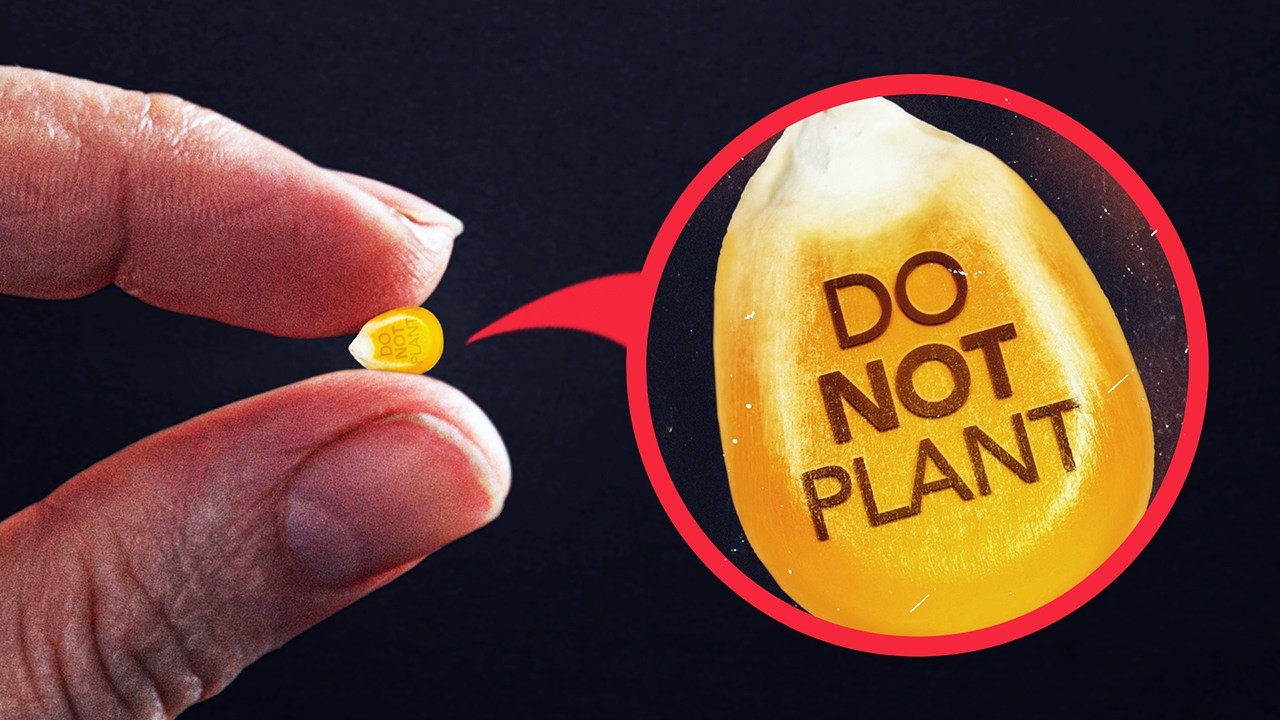
Veritasium traces how Monsanto came to own more than 80% of US seeds, starting from the 1942 discovery of the selective herbicides 2,4-D and 2,4,5-T and the dioxin contamination the company hid from its own poisoned workers and from Agent Orange in Vietnam. It explains the chemistry of glyphosate and Roundup, then how Monsanto fired a salmonella resistance gene into crops with a gene gun to create patented Roundup Ready seeds it could legally stop farmers from replanting. The film documents the enforcement machine of private detectives, the 1-800-ROUNDUP hotline, and over 400 lawsuits, then the 2015 IARC cancer ruling that unlocked the Monsanto Papers showing buried tumor data and ghostwritten safety studies. It ends with Bayer's acquisition, the $289 million Dewayne Johnson verdict, over $10 billion in settlements, and the lesson of what happens when industry captures the science meant to regulate it.

ScienceBusinessPoliticsAug 31, 2025
21:48
Veritasium

The Science Behind Dogs' Incredible Sense Of Smell

Veritasium visits a NIST fluid dynamics lab where researcher Matt Staymates photographs air with mirrors, lights and lasers. The hook is dogs: a dog smells by breathing out and in about five times a second, and the turbulent backward exhale is what pulls a fresh scent sample toward its nose, a bellows action that extends reach by roughly a factor of 18. Staymates 3D printed dog style nostrils onto a commercial vapor detector and improved its detection performance 16 to 18 times. From there the video becomes a tour of flow visualization: Schlieren imaging, shadowgraphs that read a bullet's speed and loudness from its shock cone, and laser sheets that reveal invisible gunshot residue and drug contamination. It closes on trace detection, Locard's principle, and mask research that shows exactly how much air escapes a face mask.

SciencePhysicsSecurityDec 24, 2022